
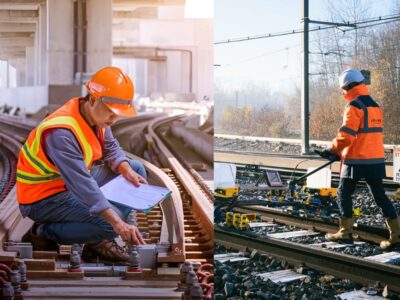
Rail systems are some of the most complex and high-stakes infrastructures in the world, where even a small failure can have serious consequences. Functional safety testing plays a critical role in ensuring that every component, from signaling systems to control software, operates reliably and safely under all conditions.
This article will explore the essentials of functional safety testing for the rail industry, including key standards, testing methods, and rail safety certification.
Readers will gain a clear understanding of the rail functional safety life-cycle, common challenges, and the benefits of rigorous safety testing, providing a practical guide for engineers, operators, and stakeholders aiming for safer, compliant railway systems.
Key Standards for Rail Functional Safety
Ensuring the safety of modern rail systems requires strict adherence to recognised standards. Functional safety testing in the rail industry relies heavily on these frameworks to manage risks, maintain reliability, and achieve rail safety certification.
Without a clear understanding of the standards, safety testing may be inconsistent or incomplete, leaving systems vulnerable to failures.
EN 50126, EN 50128, EN 50129
These three European standards form the backbone of rail functional safety:
- EN 50126 (RAMS): Focuses on Reliability, Availability, Maintainability, and Safety. It provides guidelines for hazard identification, risk assessment, and safety management across the entire lifecycle of a railway system.
- EN 50128: Covers software for railway control and protection systems. It outlines rigorous development, verification, and testing processes to ensure software operates safely under all conditions.
- EN 50129: Focuses on safety-related electronic systems in signalling. It ensures that safety requirements are correctly implemented, verified, and documented for compliance.
IEC 62279 and EN 50657
Beyond the EN standards, additional frameworks support rail functional safety:
- IEC 62279: Applies to railway control and protection systems, defining requirements for safety management, system design, and verification.
- EN 50657: Focuses on software safety testing for rolling stock, detailing how to plan and execute functional safety testing to meet regulatory standards.
Together, these standards form the foundation of railway safety compliance testing, ensuring that every system, from trackside equipment to onboard software, meets strict safety requirements. But standards alone are not enough, understanding the full life-cycle of functional safety is the next step.
Functional Safety Life-Cycle in Rail Systems
The life-cycle of rail functional safety covers every stage of a system’s development and operation. Each step ensures that potential hazards are identified, tested, and controlled, forming a roadmap for functional safety testing in the rail industry.
Safety Concept, Hazard Analysis, and SIL Determination
The first stage establishes the framework for safe operation:
- Safety concept: Defines the intended safety goals for the system.
- Hazard analysis: Identifies potential failure modes and their impact on passengers, staff, and infrastructure.
- Safety Integrity Level (SIL) determination: Assigns risk-based safety levels to components and systems, guiding the intensity of functional safety testing required.
Design, Development, Integration, Verification, and Validation
Once safety goals are set, the system moves through the design and testing phases:
- Design and development: Safety requirements are implemented in both hardware and software
- Integration: Components are combined to ensure the system functions as intended.
- Verification and validation: Extensive testing confirms that the system meets all safety criteria and regulatory standards.
Operation, Maintenance, and Decommissioning
Even after deployment, functional safety remains a continuous responsibility:
- Operation: Ongoing monitoring and incident reporting maintain safety in day-to-day use.
- Maintenance: Regular inspections and updates prevent degradation of safety functions.
- Decommissioning: Safe removal or replacement of systems ensures no hazards remain when equipment reaches the end of its life.
Understanding the life-cycle highlights why functional safety testing is more than a single step, it is a continuous process that protects rail operations at every stage. Next, we will explore the specific testing methods that make this process effective.
Functional Safety Testing Methods
Once rail systems are designed and integrated, functional safety testing ensures that every component operates safely under real-world conditions. Testing is not only about finding faults, it’s about verifying that the system meets strict rail functional safety standards and supports railway safety compliance testing.
Common Testing Techniques
Several established methods are used in the rail industry:
- FMEA (Failure Modes and Effects Analysis): Identifies potential failures in hardware or software and evaluates their impact on system safety.
- FTA (Fault Tree Analysis): Provides a visual approach to analyse causes of system failures and assess risks systematically.
- HIL (Hardware-in-the-Loop): Tests physical components within a simulated system environment to validate interactions under realistic conditions.
- SIL (Software-in-the-Loop): Focuses on software behaviour before full hardware integration, allowing early detection of errors and compliance with SIL requirements.
Independent Safety Assessment (ISA)
To maintain objectivity, Independent Safety Assessment (ISA) is often conducted by external experts. This process:
- Reviews system design and documentation
- Confirms that safety requirements have been correctly implemented
- Provides an independent verification for rail safety certification
Testing methods alone are not enough. Ensuring ongoing compliance with national and international safety standards is critical before certification can be granted.
Rail Safety Certification
Achieving rail safety certification is the final step in validating that a railway system is safe, reliable, and compliant. This certification protects passengers, operators, and infrastructure while demonstrating adherence to rail functional safety requirements.
Certification Bodies and Their Role
Specialised organisations, such as TÜV SÜD and other national safety authorities, provide certification services. Their responsibilities include:
- Assessing documentation and test results from functional safety testing
- Confirming compliance with standards like EN 50126, EN 50128, and EN 50129
- Issuing official certification for systems or components
Conformity Assessment by Authorities
Regulatory authorities ensure that rail systems meet legal and safety requirements through conformity assessments. This process involves:
- Reviewing safety cases and technical documentation
- Performing audits of system design and maintenance procedures
- Authorising operation only after all safety requirements are met
System vs. Personnel Certification
Rail safety certification is not limited to systems. Personnel involved in functional safety also require formal certification to demonstrate competency in:
- Implementing safety standards
- Conducting and interpreting functional safety testing
- Maintaining safety compliance throughout the system life-cycle
With certification achieved, rail operators can confidently deploy systems knowing they meet rigorous safety standards. Yet, even certified systems face ongoing challenges and risks, topics we will explore in the next section on challenges and benefits of functional safety testing.
Challenges and Benefits
Implementing functional safety testing in the rail industry comes with its share of challenges. Modern rail systems are highly complex, often integrating multiple suppliers, software platforms, and hardware components.
Managing this complexity across the full system life-cycle, from design and development to operation and decommissioning, requires careful planning and continuous monitoring.
Key Challenges
- Complex system integration: Combining multiple subsystems while maintaining safety integrity can be difficult.
- Lifecycle management: Safety must be maintained at every stage, requiring detailed documentation and frequent updates.
- Compliance consistency: Ensuring all components meet the latest standards, including EN 50126, EN 50128, EN 50129, and IEC 62279, can be challenging.
Despite these hurdles, the benefits of thorough functional safety testing far outweigh the difficulties.
Key Benefits
- Risk reduction: Early identification of potential failures prevents accidents and operational disruptions.
- Cost savings: Detecting issues during testing is far cheaper than correcting failures after deployment.
- Improved reliability: Systems consistently operate as intended, increasing passenger safety and confidence.
- Regulatory compliance: Meeting national and international standards secures rail safety certification and avoids legal or operational penalties.
While challenges exist, these advantages show why investing in robust rail functional safety processes is essential. But the evolution of rail safety testing doesn’t stop here, emerging technologies are shaping the future.
Future Trends and Conclusion
The future of functional safety testing in the rail industry is closely tied to innovation. Advanced technologies are transforming how testing is performed and how safety is maintained.
Emerging Trends
- Simulation and digital twins: Virtual models of rail systems allow engineers to test scenarios and identify risks before physical deployment.
- Artificial intelligence (AI): AI can analyse vast amounts of data to detect patterns, predict failures, and optimise safety procedures.
- Automated testing tools: Automation speeds up functional safety testing, reduces human error, and improves accuracy.
Conclusion
In conclusion, functional safety testing is a cornerstone of safe and reliable rail operations. From adhering to key standards to performing rigorous testing and achieving certification, every step protects passengers, staff, and infrastructure.
Investing in robust rail functional safety measures not only ensures compliance but also enhances system reliability, reduces risks, and prepares rail networks for the future.
By embracing evolving technologies such as digital twins and AI, the rail industry can continue to raise safety standards, demonstrating that functional safety testing is both a regulatory requirement and a strategic advantage.
Key Points
- Functional safety testing ensures all rail systems operate safely and reliably under real-world conditions.
- Key European standards for rail safety include EN 50126, EN 50128, and EN 50129, which cover system safety, software, and signalling.
- Additional standards like IEC 62279 and EN 50657 support software and rolling stock safety compliance.
- The functional safety life-cycle involves safety concept, hazard analysis, SIL determination, design, integration, verification, operation, maintenance, and decommissioning.
- Common testing methods include FMEA, FTA, Hardware-in-the-Loop (HIL), and Software-in-the-Loop (SIL).
- Independent Safety Assessment (ISA) provides objective verification of system safety and compliance.
- Rail safety certification is issued by specialised bodies and regulatory authorities, covering both systems and personnel.
- Major challenges include system complexity, integration risks, lifecycle management, and maintaining compliance with evolving standards.
- Benefits of functional safety testing include risk reduction, cost savings, improved reliability, and regulatory compliance.
- Emerging trends like digital twins, simulation, AI, and automated testing are shaping the future of rail functional safety, improving accuracy and efficiency.