
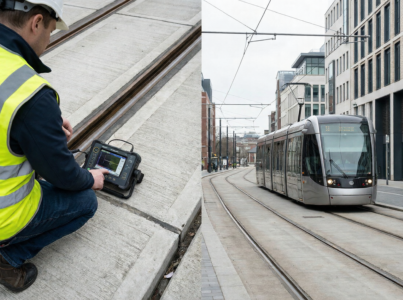
Urban rail systems move thousands of passengers every hour, leaving no room for hidden track failures. Ultrasonic rail testing plays a critical role in detecting internal rail defects before they turn into service disruptions or safety incidents.
This article explains how Ultrasonic rail testing supports the safe operation of metro and light rail networks. It covers why this testing method is essential, the types of defects it detects, the standards it follows, and the benefits it delivers to transit operators managing high-traffic urban rail systems.
What Is Ultrasonic Rail Testing
Urban rail systems, from busy metro lines to light rail networks, rely heavily on the integrity of their tracks. Ultrasonic Rail Testing (URT) is a nondestructive testing method that uses high-frequency sound waves to inspect rails for hidden flaws that are not visible to the naked eye.
Unlike traditional visual inspections, which can only detect surface defects, ultrasonic testing penetrates the rail material to detect internal cracks, voids, and other anomalies that could compromise safety and reliability.
How It Works
Ultrasonic rail testing involves sending high-frequency sound waves through the rail using specialised probes or transducers. When these waves encounter a defect, such as a crack or inclusion, they reflect back to the detector, allowing technicians to pinpoint the exact location and size of the flaw. The process typically includes:
- Transducer placement: Probes are placed on the rail surface at precise angles to optimise wave penetration.
- Wave propagation: High-frequency pulses travel through the rail steel.
- Signal detection: Reflected waves are captured by the device and analysed.
- Defect mapping: Detected flaws are logged for maintenance planning.
URT can be carried out manually, using handheld equipment, or automatically, with vehicle-mounted systems that scan long stretches of track efficiently. This flexibility makes it suitable for both small light rail lines and high-traffic metro networks.
Why It Matters
Internal rail defects can grow over time, leading to broken rails, service interruptions, or even derailments. Ultrasonic rail testing identifies these flaws early, giving maintenance teams a chance to repair or replace affected sections before they become critical. Its precision ensures that repairs are targeted, reducing unnecessary track downtime and costs.
But detecting defects is only part of the story. Understanding the types of faults that ultrasonic testing can reveal is equally crucial.
Why Ultrasonic Rail Testing Is Critical for Metro & Light Rail
Metro and light rail systems operate in densely populated urban areas, often carrying thousands of passengers every hour. This high frequency of use puts immense stress on the rails, increasing the risk of wear, fatigue, and hidden internal defects. Ultrasonic rail testing is critical because it identifies problems that would otherwise remain undetected, preventing costly disruptions and serious safety incidents.
Safety First
Passenger safety is the primary concern for urban transit authorities. Undetected rail flaws can lead to:
- Sudden rail fractures
- Derailments
- Unexpected service interruptions
By performing regular ultrasonic inspections, operators can mitigate these risks and ensure a safer commuting experience.
Cost Efficiency
While installing and maintaining rail infrastructure is expensive, addressing defects early with Ultrasonic rail testing saves money in the long run:
- Targeted repairs reduce downtime
- Avoids large-scale emergency maintenance
- Extends the lifespan of rail assets
Operational Reliability
Frequent inspections allow operators to maintain consistent service levels. Metro and light rail networks cannot afford unexpected track closures, and ultrasonic testing ensures that any issues are flagged well in advance.
With safety, cost, and reliability addressed, the next logical question is: what exactly is being detected during these inspections? That brings us to the most common rail defects revealed by ultrasonic testing.
Common Rail Defects Found Using Ultrasonic Testing
Ultrasonic rail testing is a highly effective method for detecting hidden rail flaws in metro and light rail systems, ensuring safe and reliable operations. Many defects develop gradually and remain invisible until they become serious, making regular inspections essential.
Internal Cracks
Internal cracks typically form due to repeated stress from frequent train traffic. These cracks often originate deep within the rail head or web, growing over time. If left undetected, they can lead to sudden rail breaks, posing significant safety hazards. Early detection through ultrasonic testing allows maintenance teams to intervene before these cracks compromise rail integrity.
Transverse Defects
Transverse defects run perpendicular to the rail’s length and commonly occur in high-stress areas such as welds or switch points. These flaws are particularly dangerous because they can cause sudden rail failure, creating operational disruptions and safety risks in densely trafficked urban networks. Detecting transverse cracks early is vital to preventing service interruptions.
Vertical Split Head
Vertical split head defects are vertical cracks in the rail head that develop gradually under heavy and repeated traffic. They often remain unnoticed until the rail surface starts to separate, which can lead to costly repairs and potential service delays. Regular ultrasonic inspections are key to catching these defects before they escalate.
Weld-Related Flaws
Rail welds, including thermite welds, can sometimes develop flaws such as porosity, inclusions, or misalignment. These defects are a frequent source of rail failures if not monitored carefully. Ultrasonic testing provides precise data on weld integrity, enabling targeted maintenance and reducing unnecessary downtime.
Surface Anomalies
While ultrasonic testing primarily identifies internal flaws, some equipment can also highlight surface issues such as minor spalling, head wear, or corrugation. These surface anomalies may indicate underlying internal weaknesses and can help maintenance teams prioritise repairs effectively.
Detecting these defects is only part of the process. The next step is understanding the methods used for ultrasonic rail testing in metro and light rail systems, which determine how quickly and accurately these defects can be found.
Ultrasonic Rail Testing Methods Used in Metro Systems
Ultrasonic rail testing can be performed using several methods, each tailored to the operational needs of metro and light rail systems.
The choice of method depends on factors such as track access, traffic density, and the length of track to be inspected. These methods ensure that hidden defects are accurately detected while minimising disruption to urban transit operations.
Manual Ultrasonic Testing
Manual testing uses handheld devices and probes, allowing technicians to inspect critical track areas in detail. This method is highly flexible, making it suitable for inspecting welds, switch points, or other high-risk zones.
Technicians can adjust probe angles and settings to target specific types of defects. However, manual testing is time-consuming and generally limited to shorter sections of track.
Trolley-Based Ultrasonic Testing
Trolley-mounted systems offer a semi-automated solution, combining mobility with high-precision inspection. The trolley moves along the track, with ultrasonic probes scanning the rail continuously.
Data is recorded in real time, allowing maintenance teams to analyse defect locations and severity immediately. This method is particularly useful for medium-length urban rail lines where manual inspection would be too slow.
Vehicle-Mounted Ultrasonic Testing
For extensive metro networks, vehicle-mounted ultrasonic testing provides the fastest and most comprehensive solution. Specially equipped rail vehicles carry multiple probes and sensors, scanning long stretches of track at operational speeds.
This method reduces downtime and allows frequent inspections without affecting normal service schedules. Advanced systems often integrate data analysis software for defect mapping and predictive maintenance planning.
With these methods, urban transit operators can ensure accurate detection of internal rail flaws. But identifying defects is only one side of the equation, rail testing must also adhere to strict standards and compliance requirements to guarantee safety and reliability.
Standards and Compliance for Ultrasonic Rail Testing
Ensuring that ultrasonic rail testing meets recognised standards is essential for safety, reliability, and regulatory compliance. Metro and light rail systems must follow both national and international guidelines to maintain operational integrity and prevent accidents.
FRA and AREMA Guidelines
In the United States, the Federal Railroad Administration (FRA) sets regulations for rail inspection frequency, methodology, and defect reporting. Similarly, the American Railway Engineering and Maintenance-of-Way Association (AREMA) provides detailed technical standards for ultrasonic testing.
Compliance with these guidelines ensures inspections are performed systematically, with clear criteria for identifying and classifying defects.
Transit Authority Requirements
Local transit authorities often supplement national standards with their own specifications, particularly for metro and light rail systems operating in densely populated areas. These requirements may include:
- Minimum inspection frequency for high-traffic lines
- Use of specific testing equipment or methods
- Reporting protocols for defect severity and maintenance follow-up
International Standards
For operators outside the United States, international standards such as ISO 17640 provide additional guidance on ultrasonic testing techniques and documentation. Following these standards helps maintain consistency across inspections and supports global best practices.
By adhering to these standards, metro and light rail operators not only improve passenger safety but also enhance track longevity and operational efficiency. Understanding compliance naturally leads to recognising the challenges faced when conducting ultrasonic rail testing in urban environments, which we explore next.
Challenges in Ultrasonic Testing for Urban Rail Systems
While ultrasonic rail testing offers unmatched precision, conducting inspections in metro and light rail networks comes with its own set of challenges. Urban rail systems operate in dense environments with high passenger volumes, which can limit access and complicate testing schedules.
Limited Track Access
One of the biggest obstacles is restricted track access. Metro and light rail lines often operate almost continuously, leaving narrow windows for inspections. Night-time testing or service interruptions may be required, but these can disrupt schedules and increase operational costs.
Environmental Interference
Urban environments also introduce noise, vibration, and electromagnetic interference, which can affect the accuracy of ultrasonic readings. Technicians must carefully calibrate equipment and account for these factors to avoid false readings or missed defects.
Complex Track Layouts
Metro networks frequently include tight curves, switches, junctions, and grade changes, making it harder for probes to maintain consistent contact with the rail. Vehicle-mounted and trolley systems must be carefully adapted to navigate these areas without compromising inspection quality.
Despite these challenges, the advantages of ultrasonic rail testing far outweigh the difficulties. When implemented effectively, it provides tangible benefits that impact safety, cost, and operational reliability.
Benefits of Ultrasonic Rail Testing for Transit Operators
Implementing ultrasonic rail testing delivers significant advantages for metro and light rail operators. By detecting internal rail defects before they cause failures, operators can maintain safer, more reliable, and cost-effective rail networks.
Enhanced Passenger Safety
The primary benefit of ultrasonic testing is improved safety. By identifying hidden flaws such as internal cracks, transverse defects, or weld-related issues, operators can prevent derailments and other serious incidents that could put passengers at risk.
Reduced Maintenance Costs
Targeted defect detection allows for repairs only where they are needed, reducing unnecessary maintenance and material costs. Timely intervention extends the lifespan of rails, saving operators from expensive emergency repairs or premature rail replacements.
Operational Reliability
Frequent ultrasonic inspections help maintain uninterrupted service by detecting potential problems early. Operators can plan maintenance activities strategically, avoiding sudden disruptions that affect commuter schedules.
Data-Driven Maintenance Planning
Modern ultrasonic systems often integrate advanced data analytics, enabling predictive maintenance. Operators can track defect trends over time, forecast potential failures, and make informed decisions about track replacement or upgrades.
With these benefits in mind, it becomes clear why ultrasonic rail testing has become an indispensable part of metro and light rail system management. The next step for transit operators is selecting the right service provider to ensure inspections are accurate, efficient, and compliant.
Overall, metro and light rail systems demand precise inspections to ensure passenger safety and operational reliability. Our ultrasonic examination detects hidden rail flaws, while our Level III services provide expert oversight for accurate and compliant inspections. Keep urban rail networks safe and efficient with our professional NDT solutions.
Conclusion
Ultrasonic rail testing is a vital tool for ensuring the safety, reliability, and efficiency of metro and light rail systems. By detecting hidden internal defects that visual inspections cannot see, it helps operators prevent accidents, reduce maintenance costs, and maintain uninterrupted service for passengers.
From identifying internal cracks and weld flaws to adhering to strict standards and overcoming urban inspection challenges, ultrasonic testing offers a comprehensive approach to rail safety.
For transit authorities, investing in regular ultrasonic inspections is not just about compliance, it is a proactive strategy that protects passengers, extends rail life, and optimises operational performance.
With the right testing methods, trained technicians, and adherence to regulatory standards, ultrasonic rail testing ensures urban rail networks remain safe and reliable in the long term.
Key Points
- Ultrasonic Rail Testing (URT) uses high-frequency sound waves to detect internal rail defects invisible to the naked eye.
- URT is essential for metro and light rail systems due to high traffic, heavy loads, and passenger safety requirements.
- Common defects detected include internal cracks, transverse defects, vertical split head, weld-related flaws, and some surface anomalies.
- Testing methods include manual inspections, trolley-mounted systems, and vehicle-mounted systems for longer tracks.
- Manual testing is precise for small areas, trolley systems balance mobility and accuracy, and vehicle-mounted systems allow rapid inspections of long rail sections.
- Compliance with standards such as FRA, AREMA, local transit authority specifications, and ISO guidelines is critical for safety and reliability.
- Challenges in urban rail inspections include limited track access, environmental interference, and complex track layouts.
- Benefits of URT include enhanced passenger safety, reduced maintenance costs, improved operational reliability, and data-driven maintenance planning.
- Early defect detection prevents rail failures, reduces emergency repairs, and extends the lifespan of rail infrastructure.
- Selecting the right ultrasonic testing method, trained technicians, and adhering to standards ensures metro and light rail systems operate safely and efficiently.
FAQs
What are the limitations of ultrasonic rail testing?
Certain environmental factors, complex track layouts, and tight access windows in urban rail systems can affect test accuracy. Strong surface imperfections can also impede sound wave coupling, reducing detection reliability in specific cases.
How does ultrasonic testing compare with visual rail inspection?
Visual inspections can detect surface defects but miss internal flaws. Ultrasonic testing penetrates rail material to reveal hidden cracks and weld discontinuities that visual checks cannot, making it more reliable for internal condition assessment.
Can ultrasonic rail testing be performed without disrupting train operations?
Yes. Vehicle‑mounted ultrasonic systems are designed to scan rails at speeds that minimise disruption to service, and inspections can be scheduled during off‑peak hours or maintenance windows to reduce impact.
What benefits does ultrasonic rail testing offer to transit operators?
The primary benefits are enhanced passenger safety, reduced maintenance costs, improved operational reliability, and the ability to plan maintenance based on data trends rather than react to failures.