

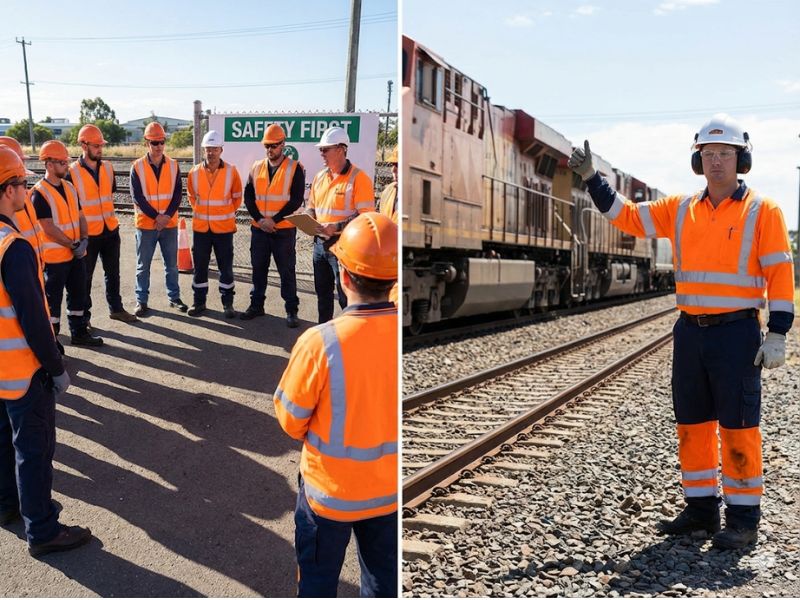
Railway safety rules exist because one small mistake on the railway can lead to serious injuries, major damage, or loss of life. For every worker on or near the tracks, railway safety rules are not optional guidelines but daily requirements that protect people, trains, and infrastructure.
This article explains the most important railway safety rules every worker should know, from basic conduct to emergency response. It offers clear guidance on staying safe around tracks, moving trains, electrical systems, and equipment, while also highlighting training and responsibility. By the end, workers will understand how following these rules helps reduce risks and create a safer railway workplace.
What Are Railway Safety Rules
Railway safety rules are formal instructions designed to protect workers, passengers, and railway property from harm. These rules govern how tasks are performed on tracks, in stations, yards, depots, and other railway environments. At their core, railway safety rules exist to reduce risk by setting clear, standard procedures for working in high-risk conditions.
Rather than relying on personal judgement, railway safety rules create consistency across all roles and locations. Whether a worker is carrying out inspections, maintenance, or operational duties, the same safety principles apply. This consistency is essential in preventing accidents, injuries, and operational failures.
Role in Preventing Accidents and Injuries
Railway safety rules are often developed after incidents, near misses, or long-term risk studies. Each rule addresses a specific hazard, such as moving trains, live electrical systems, or heavy machinery. By following these rules, workers can identify dangers early and take action before an incident occurs.
In addition to physical safety, railway safety rules also support legal compliance and accountability. Employers are required to enforce them, and workers are legally responsible for following them. Ignoring safety rules can result in injuries, service disruption, and serious legal consequences.
These rules are not created for compliance alone. They exist to protect lives. Once workers understand what railway safety rules are and why they exist, the focus shifts to how they must be followed every day on the job.
That brings us to the general safety rules that apply to all railway workers, regardless of experience or job role.
General Safety Rules All Railway Workers Must Follow
General safety rules apply to every railway worker, regardless of job role, experience, or location. These rules form the foundation of safe working practices and support all other railway safety rules used across the rail network. When followed correctly, they help control daily risks and prevent common accidents before they occur.
Safe Conduct and Awareness
General safety rules focus on how workers behave in the railway environment. Staying alert at all times is essential, as conditions can change quickly. Trains may approach without warning, equipment may be active, and electrical hazards may be present. Loss of focus, rushing tasks, or making assumptions can lead to serious accidents.
Workers must always assess their surroundings before starting work and remain aware throughout the task. Even routine activities can become dangerous if awareness is lost.
Reporting Hazards and Unsafe Conditions
One of the most important railway safety rules is the duty to report hazards. Small issues, if ignored, can quickly turn into major incidents. Reporting hazards helps protect not only the individual worker but also colleagues and future crews.
Common hazards that must be reported include:
- Damaged track components or loose materials
- Faulty tools or equipment
- Poor lighting or visibility
- Unsafe working conditions or near misses
Prompt reporting allows corrective action to be taken before injuries occur.
Following Instructions and Approved Procedures
Railway work must only be carried out under proper authority. Workers are required to follow instructions from supervisors, controllers, and signallers without deviation. Permits, briefings, and safety plans exist to control risk, especially when working near tracks or moving trains.
Ignoring instructions or taking shortcuts undermines railway safety rules and increases the chance of accidents. Personal experience should never replace approved procedures.
Fitness for Duty and Personal Responsibility
Workers must be physically and mentally fit for duty at all times. Fatigue, illness, or impairment reduces reaction time and decision-making ability. Railway safety rules require workers to declare if they are unfit for work, as one unsafe individual can place an entire team at risk.
These general safety rules form the foundation of railway safety. When they are followed, risks are controlled. When they are ignored, even advanced safety systems can fail. And as workers move closer to specific hazards such as moving trains and electrical systems, these rules become even more critical.
Track and Train Movement Safety Rules
Track and train movement safety rules are among the most critical railway safety rules, as they deal with live tracks and moving trains. These environments leave little room for error. A moment of inattention near the track can result in severe injury or fatal accidents, which is why strict behaviour standards must be followed at all times.
Working Safely Near Tracks
Tracks must always be treated as live unless formally confirmed otherwise. Workers should never assume a line is clear, even if no train is visible. Visibility, noise, and weather conditions can all affect how quickly a train approaches.
Safe behaviour near tracks includes:
- Staying within authorised walking routes
- Maintaining a safe distance from the running line
- Crossing tracks only at approved locations
- Checking both directions before stepping onto any track
Maintaining constant awareness is essential, especially in areas with limited sightlines or multiple tracks.
Safety Rules for Moving Trains
Moving trains present one of the highest risks on the railway. Trains may approach at high speed and may not be able to stop quickly. Workers must always remain visible, maintain communication, and avoid standing too close to passing trains.
Key safety practices include:
- Never turning your back on an approaching train
- Standing in a position of safety when trains pass
- Avoiding loose clothing or equipment near moving trains
- Following lookout and warning system procedures
These railway safety rules are designed to prevent workers from being struck or dragged by passing trains.
Safety in Yards and Stations
Yards and stations are busy environments with frequent train movements, shunting operations, and pedestrian activity. Workers must remain alert at all times and follow local safety instructions, as movements may occur from multiple directions.
Clear communication and strict adherence to signals are essential in these areas. Workers should never cross tracks or move between vehicles unless it is safe and authorised to do so.
Track and train movement safety rules form the frontline of railway risk control. However, even when trains are stationary, other invisible dangers remain present, especially electrical hazards and powered equipment.
Electrical and Equipment Safety Rules
Electrical and equipment safety rules address hazards that are often less visible but equally dangerous. Overhead lines, powered rails, and heavy machinery can cause severe injury or death if handled incorrectly. These railway safety rules exist to control risks that cannot be seen or heard.
Overhead Line and Powered Rail Safety
Overhead lines and powered rails carry high-voltage electricity at all times unless officially isolated. Workers must never assume that power is switched off without formal confirmation and authorisation.
Essential electrical safety rules include:
- Keeping a safe distance from live overhead lines
- Never touching or approaching powered rails
- Using approved isolation and earthing procedures
- Following electrical permits and instructions exactly
Even indirect contact can result in serious injury, making strict compliance essential.
Tools and Machinery Safety
Railway work often involves heavy tools and machinery, which can cause injury if used incorrectly. All equipment must be checked before use and operated only by trained and authorised personnel.
Basic equipment safety rules include:
- Inspecting tools before use
- Never using damaged or faulty equipment
- Using machinery only for its intended purpose
- Following lock-out and isolation procedures during maintenance
Responsibility When Working Around Equipment
Workers must remain aware of others when operating equipment. Poor communication or unsafe positioning can place colleagues at risk. Railway safety rules require clear signals, safe distances, and controlled movements when machinery is in use.
Electrical and equipment hazards demand constant respect and discipline. While these dangers may not always be obvious, the consequences of ignoring safety rules are severe. And when systems fail or unexpected situations arise, workers must be prepared to respond correctly under emergency conditions.
Emergency Safety Rules and Incident Response
Emergency situations on the railway develop quickly and often without warning. Accidents, fires, and derailments require immediate and controlled action. Railway safety rules for emergencies are designed to protect lives, limit damage, and prevent further incidents during high-stress situations.
Immediate Actions During an Emergency
When an emergency occurs, workers must prioritise personal safety and the safety of others. Panic, delay, or unauthorised action can worsen the situation. Workers should follow emergency procedures exactly as trained.
Key immediate actions include:
- Stopping work and moving to a place of safety
- Alerting control, supervisors, or emergency services
- Following site-specific emergency instruction
- Assisting others only if it is safe to do so
Clear communication is critical. Accurate information helps emergency teams respond faster and more effectively.
Fire and Derailment Response
Fires and derailments present extreme risks due to unstable vehicles, live electrical systems, and hazardous materials. Workers must never attempt to manage these situations without authority or training.
During fires or derailments, workers must:
- Keep clear of damaged rolling stock
- Avoid contact with electrical equipment and overhead lines
- Secure the area where possible to prevent further danger
- Follow evacuation and isolation procedures
Railway safety rules exist to prevent secondary injuries, which often occur after the initial incident.
Reporting and Post-Incident Duties
Once the immediate danger has passed, workers are required to report the incident accurately. This includes providing details of what occurred, actions taken, and any injuries or damage observed. Reporting supports investigations and helps prevent future accidents.
Emergency response does not end when the incident is over. The actions taken afterwards are just as important for long-term railway safety.
However, effective emergency response is only possible when workers are properly trained and understand their responsibilities before an incident occurs.
Training, Compliance, and Worker Responsibility
Training and compliance form the backbone of all railway safety rules. Without proper training, even well-written rules cannot be applied correctly. Every railway worker has a legal and professional duty to understand and follow safety requirements.
Safety Training Requirements
Railway workers must complete mandatory safety training before carrying out any duties. This training ensures workers understand risks, procedures, and emergency response actions.
Training typically includes:
- Induction and site safety training
- Role-specific safety instruction
- Regular refresher courses
- Emergency and evacuation drills
Ongoing training keeps safety knowledge current and reinforces correct behaviour.
Legal Duties and Compliance
Railway safety rules are supported by national laws and industry standards. Workers are legally required to comply with these rules at all times. Employers must provide safe systems of work, while workers must follow instructions and report unsafe conditions.
Failure to comply can lead to serious consequences, including injury, service disruption, and legal action.
Consequences of Breaking Railway Safety Rules
Breaking railway safety rules places lives at risk and undermines the entire safety system. Consequences may include:
- Disciplinary action or dismissal
- Fines or legal penalties
- Loss of certification or authorisation
- Increased risk of serious accidents
Personal Responsibility for Safety
Every worker plays a direct role in railway safety. Following rules, reporting hazards, and speaking up about unsafe practices are shared responsibilities. Safety is not only managed by systems and supervisors but by individual actions taken every day.
When training is taken seriously and rules are followed without exception, railway safety becomes part of daily work culture. And it is this culture that ultimately prevents accidents, protects lives, and keeps the railway running safely.
Overall, safety on the railway starts with informed and responsible workers. Strengthen compliance and reduce on-site risks with professional inspection and training support. Explore our rail inspection and NDT services to ensure safety rules are followed, hazards are identified early, and operations remain safe and reliable across your rail network.
Conclusion
Railway safety rules exist to protect lives, prevent serious injuries, and keep railway operations running safely and efficiently. From working near live tracks and moving trains to handling electrical systems, equipment, and emergency situations, every rule plays a critical role in reducing risk. When these rules are followed consistently, accidents become less likely and unsafe conditions are identified before they cause harm.
For railway workers, safety is a daily responsibility, not a one-time requirement. Following railway safety rules, completing proper training, reporting hazards, and responding correctly during emergencies all contribute to a strong safety culture. By taking these responsibilities seriously, workers protect themselves, their colleagues, and the railway network as a whole.
Key Points
- Railway safety rules are designed to protect workers, passengers, and railway infrastructure from accidents and injuries.
- These rules apply to all railway environments, including tracks, stations, yards, and maintenance areas.
- General safety rules focus on alertness, safe conduct, and following approved procedures at all times.
- Reporting hazards and near misses early helps prevent serious incidents and protects other workers.
- Working near tracks and moving trains requires constant awareness and strict positioning rules.
- Yards and stations present higher risks due to frequent train movements and require clear communication.
- Electrical hazards from overhead lines and powered rails are always present unless formally isolated.
- Tools and machinery must only be used by trained workers and inspected before use.
- Emergency safety rules guide workers on how to respond during accidents, fires, and derailments.
- Training, legal compliance, and personal responsibility are essential for maintaining railway safety and preventing rule violations.
FAQs
What are the main hazards for railway workers?
Railway workers face risks from moving trains, slips on tracks, heavy machinery, and electrified lines. Other concerns include fatigue from long hours, harsh weather exposure, and ergonomic strains from physical tasks.
What PPE must railway workers wear?
Workers need high-visibility vests, hard hats, gloves, steel-toed boots, and eye protection. PPE must be maintained and fitted properly to guard against falling objects, electrical hazards, and train movements.
What training is required for railway safety?
Training covers on-track procedures, equipment operation, emergency response, fatigue management, and electrical hazards. Certification is needed for machinery and electrified areas.
How to prevent slips and falls on tracks?
Wear traction footwear, clear debris, use handrails, and manage fatigue with rest. Avoid shortcuts and stay alert in wet conditions.
