
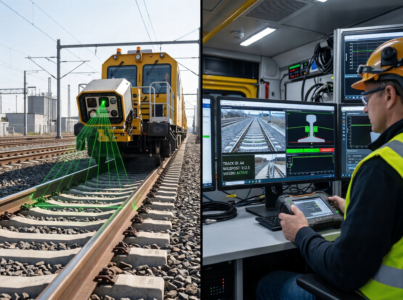
Railway networks form the backbone of global transportation, carrying millions of passengers and goods every single day. As these networks expand rapidly, the pressure on infrastructure safety and operational efficiency continues to grow. This is where automatic vision based inspection of railway track emerges as a transformative solution for modern rail systems. In fact, automatic vision based inspection of railway track is redefining how railway authorities monitor track conditions and prevent failures.
The importance of automatic vision based inspection of railway track becomes even more evident when considering the limitations of traditional inspection systems. Conventional approaches rely heavily on manual labor, which introduces inconsistencies and delays. By contrast, modern vision-based systems provide continuous monitoring, precise defect detection, and real-time insights. As outlined in structured content guidelines, combining clarity, technical depth, and real-world relevance ensures the topic remains accessible while delivering value .
Railways today demand systems that are faster, smarter, and more reliable. Vision-based inspection technologies meet these demands by integrating artificial intelligence, high-speed imaging, and advanced analytics into one cohesive system.
What Is Automated Track Inspection?
Automated track inspection refers to the use of advanced technologies to monitor railway tracks with minimal human intervention while maintaining high accuracy and consistency.
Traditionally, railway inspection involved teams physically walking along tracks or using basic inspection vehicles. While these methods served the industry for decades, they lack the scalability required for modern rail operations. Automated inspection systems address this gap by delivering faster and more reliable results.
The differences between manual and automated inspection methods highlight this shift clearly:
- Inspection Frequency and Coverage
Manual inspections occur at scheduled intervals and often leave gaps between checks. Automated systems operate continuously, ensuring broader coverage. - Human Error vs. Machine Precision
Human inspectors can miss subtle defects due to fatigue or environmental conditions. Machines maintain consistent accuracy regardless of external factors. - Real-Time Data vs. Delayed Reporting
Manual inspections require time for data collection and reporting. Automated systems provide immediate insights and alerts.
By adopting automatic vision based inspection of railway track, railway operators transition from reactive maintenance to proactive monitoring. This significantly reduces risks while improving operational efficiency.
The Growing Need for Smarter Track Monitoring
Railway infrastructure faces increasing pressure due to rising passenger demand and higher train speeds. Even minor defects can escalate quickly under such conditions, leading to serious consequences.
Globally, track-related failures contribute to a significant portion of railway accidents. These incidents not only result in financial losses but also impact public trust. As rail networks grow more complex, traditional inspection methods struggle to keep up.
Modern railway systems operate almost continuously, leaving little time for manual inspections. This creates blind spots where defects can develop unnoticed. At the same time, regulatory authorities are enforcing stricter safety standards, pushing operators to adopt advanced technologies.
The Limitations of Traditional Inspection Methods
Traditional inspection approaches face several challenges that limit their effectiveness:
- Inspector fatigue increases the likelihood of missed defects
- Limited inspection frequency on high-traffic routes
- Absence of real-time monitoring capabilities
- High operational and labor costs
These limitations make it clear that relying solely on manual inspection is no longer sufficient. Automatic vision based inspection of railway track addresses these challenges by introducing automation, consistency, and real-time intelligence.
Now that the shortcomings of traditional methods are evident, the next question naturally arises what technology enables such advanced inspection capabilities? The answer lies in machine vision systems.
What Is a Machine Vision Inspection System for Railways?
A machine vision inspection system for railways is a technology that uses high-speed cameras, controlled lighting, and artificial intelligence to automatically detect defects on railway tracks.
These systems are typically mounted on inspection vehicles or integrated into regular trains. As the train moves, cameras capture continuous, high-resolution images of the track surface. The system processes these images instantly, identifying defects and anomalies.
The effectiveness of automatic vision based inspection of railway track depends heavily on this real-time image processing capability. Unlike traditional systems, which rely on delayed analysis, machine vision systems provide immediate feedback.
Core Components of a Machine Vision System
Several components work together to ensure accurate and efficient inspection:
- High-resolution line-scan cameras for continuous imaging
- Structured lighting systems for consistent illumination
- Onboard AI processors for real-time analysis
- GPS modules for precise location tracking
- Data storage systems for recording inspection results
Each component contributes to the system’s overall performance. For example, structured lighting eliminates shadows, ensuring clear image capture, while AI processors analyze data instantly.
These systems operate seamlessly without interrupting train schedules, making them ideal for modern railway networks.
But understanding the technology alone is not enough. What truly defines its value is the range of defects it can detect and that is where the discussion becomes even more interesting.
Types of Track Defects Detected by Vision Systems
Vision-based inspection systems are designed to detect a wide variety of defects that can compromise railway safety. These systems identify issues early, allowing maintenance teams to take timely action.
Surface Cracks and Rail Head Defects
Surface-level defects are among the most dangerous issues affecting railway tracks. These include:
- Transverse cracks
- Head checks
- Spalling
- Corrugation
Such defects can develop rapidly due to repeated stress and environmental factors. Automatic vision based inspection of railway track ensures these issues are detected at an early stage.
Gauge Deviations and Misalignments
Track geometry plays a critical role in ensuring safe train movement. Vision systems can identify:
- Gauge widening
- Track twist
- Alignment errors
Even minor deviations can lead to instability, especially at high speeds. Automated systems measure these variations with exceptional accuracy.
Fastener and Sleeper Anomalies
Structural components like fasteners and sleepers are essential for maintaining track stability. Vision systems detect:
- Missing clips
- Broken sleepers
- Loose or damaged bolts
By identifying these issues early, railway operators can prevent further deterioration and avoid costly repairs.
With such comprehensive detection capabilities, the next logical question emerges how do these systems function during an actual inspection run?
A Closer Look at the Inspection System in Action
An inspection process begins when a specialized vehicle equipped with vision systems travels along the railway track. As it moves, cameras continuously capture detailed images of the rail surface.
The onboard system processes these images in real time using advanced AI algorithms. It identifies defects, classifies their severity, and records their exact location using GPS technology.
The workflow remains seamless and efficient:
- Continuous image capture without stopping train operations
- Instant defect detection and classification
- Real-time alerts sent to maintenance teams
- Data storage for future analysis and trend tracking
Below is a structured overview of system components and their roles:
| Component | Function | Benefit |
| Line-scan camera | Captures continuous rail images | High-resolution defect detection |
| Structured lighting | Ensures uniform illumination | Eliminates shadows and distortion |
| AI processor | Analyzes images instantly | Immediate defect identification |
| GPS module | Tags precise locations | Enables accurate maintenance planning |
| Data storage | Logs inspection data | Supports predictive maintenance |
This integrated approach allows railway operators to shift from reactive repairs to predictive maintenance strategies. Automatic vision based inspection of railway track not only identifies defects but also helps anticipate potential failures before they occur.
The ability to convert raw visual data into actionable insights represents a major leap forward in railway technology. It ensures higher safety standards while optimizing maintenance efforts.
However, vision systems do not operate in isolation. There are additional technologies that enhance their performance and accuracy even further. What are these supporting systems, and how do they contribute to smarter inspection? That is where the next part of this discussion begins.
What Are the Sensors Used in Railway Track Inspection?
Railway track inspection relies on a combination of advanced sensors that work alongside vision systems to deliver accurate and reliable data.
While cameras form the core of automatic vision based inspection of railway track, additional sensors enhance the system’s ability to detect defects beyond surface-level issues. These sensors capture structural, geometric, and internal data that cameras alone cannot provide.
Modern railway inspection systems use multi-sensor integration to achieve higher accuracy. This approach ensures that no defect goes unnoticed, whether it appears on the surface or deep within the rail structure.
Types of Sensors Commonly Used
Several sensor technologies play a crucial role in railway inspection:
- Vision/Optical Cameras
These capture high-resolution images of the rail surface for detecting visible defects. - LiDAR Sensors
These measure track geometry and surrounding clearances using 3D mapping. - Inertial Measurement Units (IMUs)
These monitor vibrations and track alignment, helping detect irregularities in motion. - Ultrasonic Sensors
These identify internal flaws like cracks that are not visible on the surface. - Eddy Current Sensors
These detect surface and near-surface defects with high precision.
Studies show that combining multiple sensors can improve defect detection accuracy by over 90 percent. This makes automatic vision based inspection of railway track significantly more reliable than single-method inspection systems.
With so much data being collected from multiple sources, the next challenge becomes clear how is this data processed and transformed into actionable decisions? The answer lies in artificial intelligence.
How AI and Data Processing Power Real-Time Decisions
Artificial intelligence plays a central role in converting raw inspection data into meaningful insights. Without AI, the massive volume of data generated during inspections would be impossible to manage effectively.
Modern inspection systems use edge computing, which allows data to be processed directly on the inspection vehicle. This reduces latency and enables real-time decision-making.
Machine learning models are trained using thousands of defect images. These models learn to recognize patterns and classify defects based on severity. Over time, the system becomes more accurate and efficient.
The strength of automatic vision based inspection of railway track lies in its ability to combine AI with real-time processing. This ensures that defects are not only detected but also prioritized based on urgency.
From Raw Data to Maintenance Action
The process of turning data into action follows a structured workflow:
- Image data is captured by onboard cameras
- AI algorithms analyze and classify the defect
- GPS tags the exact location of the issue
- Alerts are sent to maintenance teams instantly
- Work orders are generated for corrective action
This streamlined process reduces response time significantly. Maintenance teams can act quickly, preventing minor issues from escalating into major failures.
As AI continues to evolve, the efficiency of these systems will only improve. But how effective are these technologies in real-world railway networks? That is where practical applications provide valuable insights.
Real-World Applications and Proven Results
Railway networks across the world have already adopted vision-based inspection systems to enhance safety and efficiency. These deployments demonstrate the real value of this technology.
Countries with advanced railway systems, like the United Kingdom, Germany, and Japan, have integrated automatic vision based inspection of railway track into their operations. These systems allow continuous monitoring without disrupting train schedules.
Organizations like Network Rail and Deutsche Bahn have reported significant improvements in defect detection and maintenance planning. High-speed networks, like Japan’s Shinkansen, rely heavily on automated inspection systems to maintain strict safety standards.
Key Outcomes From Global Deployments
The adoption of vision-based inspection systems has produced measurable results:
- Up to 60 percent reduction in unplanned maintenance costs
- Detection accuracy exceeding 95 percent for surface defects
- Inspection speeds reaching up to 200 km/h
- Significant decrease in track-related accidents
These outcomes highlight the effectiveness of automatic vision based inspection of railway track in improving both safety and operational efficiency.
With proven success in global applications, the next step is understanding how this data translates into actual maintenance practices on the ground.
What Are the Tools Used for the Maintenance of Railway Track?
Railway track maintenance relies on specialized tools and machines that repair, align, and restore track conditions based on inspection data.
Inspection systems identify defects, but maintenance tools ensure those defects are corrected efficiently. The integration of inspection and maintenance creates a complete ecosystem for railway safety.
Common Track Maintenance Tools
Several tools are commonly used in railway maintenance operations:
- Tamping machines for ballast compaction and track leveling
- Rail grinding machines for removing surface defects
- Ultrasonic testing vehicles for detecting internal flaws
- Vision inspection vehicles for continuous monitoring
- Track geometry cars for measuring alignment and elevation
The data generated through automatic vision based inspection of railway track directly informs how and where these tools are deployed. This ensures targeted maintenance rather than unnecessary repairs.
This data-driven approach improves efficiency while reducing costs. It also minimizes downtime, allowing railway operations to continue smoothly.
Benefits of Automatic Vision Based Inspection of Railway Track
The adoption of advanced inspection systems marks a turning point in railway safety and maintenance. These systems offer numerous benefits that go beyond traditional methods.
Automatic vision based inspection of railway track enhances safety by detecting defects early and preventing potential failures. It also improves operational efficiency by reducing manual intervention.
Key benefits include:
- Improved passenger and worker safety
- Reduced long-term maintenance costs
- Increased inspection frequency without service disruption
- Data-driven decision-making for predictive maintenance
- Reduced human exposure to hazardous environments
- Consistent and objective defect reporting
These advantages make vision-based inspection systems an essential component of modern railway infrastructure.
Final Thoughts
Railway infrastructure is entering a new era where safety, speed, and precision must coexist without compromise. In this evolving landscape, automatic vision based inspection of railway track stands out as a transformative solution that addresses long-standing challenges in inspection and maintenance.
By combining high-resolution imaging, artificial intelligence, and multi-sensor integration, this technology ensures that even the smallest defects are detected before they escalate into major failures.
The shift from manual to automated systems allows railway operators to move toward predictive maintenance, reducing downtime and improving overall efficiency. It also enhances safety for both passengers and maintenance personnel by minimizing human exposure to hazardous conditions.
As global rail networks continue to expand and modernize, the role of automatic vision based inspection of railway track will only grow stronger. This technology not only meets current demands but also sets a solid foundation for smarter, safer, and more resilient railway systems in the future.
Key Takeaways
- Automatic vision based inspection of railway track enables continuous monitoring across long rail networks without requiring frequent manual intervention.
- Advanced imaging systems combined with AI significantly improve defect detection accuracy compared to traditional inspection methods.
- Multi-sensor integration allows detection of both surface-level and internal rail defects with high reliability.
- Real-time data processing ensures that railway operators receive instant alerts for critical track issues.
- Predictive maintenance becomes possible by analyzing historical inspection data and identifying recurring defect patterns.
- Automated systems reduce dependency on human inspectors, minimizing risks associated with hazardous inspection environments.
- High-speed inspection capabilities allow monitoring without interrupting regular railway operations or schedules.
- Data-driven insights help optimize maintenance planning, reducing unnecessary repairs and operational costs.
- Global railway networks have already demonstrated measurable improvements in safety and efficiency using these systems.
- Automatic vision based inspection of railway track continues to evolve with advancements in artificial intelligence and machine learning technologies.
FAQs
What is the process of automated inspection?
The process of automated inspection involves capturing track data using cameras and sensors, analyzing it with AI algorithms, and generating real-time alerts. In systems like automatic vision based inspection of railway track, this process happens continuously, allowing operators to detect defects, classify their severity, and take immediate corrective action.
What is track inspection?
Track inspection is the process of examining railway tracks to identify defects, wear, or misalignments that could affect safety and performance. Traditionally done manually, it is now increasingly performed using automated systems that improve accuracy and efficiency.
What are the three types of machine vision?
The three types of machine vision include 1D vision for line scanning, 2D vision for flat image analysis, and 3D vision for depth and structural assessment. In railway applications, these systems work together to enhance automatic vision based inspection of railway track.
What are 5 sensors used in inspection systems?
Common sensors used in railway inspection include optical cameras, LiDAR sensors, ultrasonic sensors, inertial measurement units (IMUs), and eddy current sensors. These sensors complement vision systems to provide a complete analysis of track conditions.
What are the 4 types of maintenance?
The four main types of maintenance are preventive, predictive, corrective, and condition-based maintenance. Automatic vision based inspection of railway track plays a key role in predictive and condition-based maintenance by identifying issues before they become critical.