

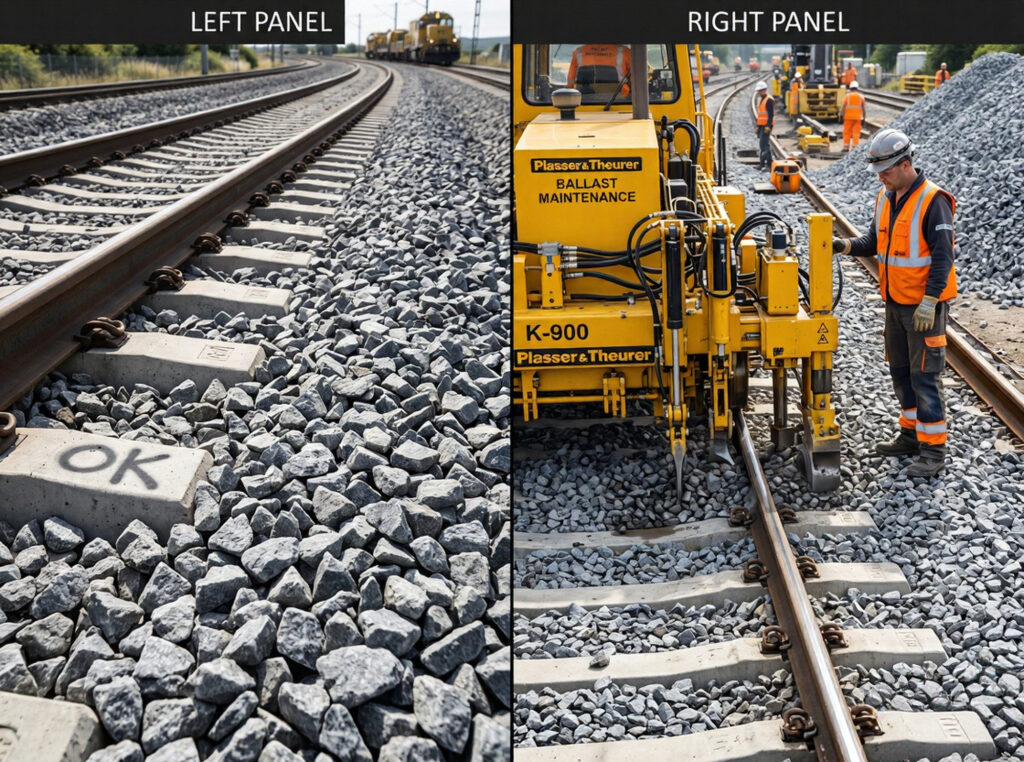
Railroad ballast plays a vital role in supporting railway tracks and ensuring long-term structural stability. Railroad ballast forms the foundation that absorbs heavy loads and distributes pressure evenly beneath the rails.
Railway infrastructure depends on more than visible components like rails and sleepers. Beneath every functioning railway lies a carefully engineered system designed to handle constant stress and environmental exposure. This article explores what ballast is, how it works, and why it remains essential for modern railway systems. It also examines different types of ballast and their suitability for various applications.
Rail networks operate under demanding conditions, carrying heavy loads across long distances every day. Even small weaknesses in the foundation can lead to major operational issues. Understanding the role of ballast provides insight into how railway systems maintain safety and reliability over time.
Railroad tracks may appear simple at first glance, but what lies beneath them tells a much more complex story.
What Is Railroad Ballast?
Railroad ballast refers to a layer of crushed stones or aggregates placed beneath and around railway sleepers. It serves as a stable base that supports the track structure while allowing slight flexibility under load. This layer sits directly between the sleepers and the subgrade, forming a critical component of railway construction.
The materials used for ballast must meet strict engineering standards. Engineers typically choose hard rocks like granite or basalt because they resist wear and maintain their shape under repeated stress. The stones are usually angular rather than rounded. This shape allows them to interlock tightly, which improves stability and prevents unwanted movement.
Ballast performs several important functions beyond simply supporting the track. It prevents the rails from sinking into the ground and keeps them aligned even when trains pass at high speeds. It also creates a protective layer between the track and the underlying soil, reducing the effects of moisture and ground movement.
Without ballast, railway tracks would quickly lose their stability and become unsafe. The absence of a proper base would lead to uneven surfaces, frequent repairs, and reduced efficiency. This makes ballast an essential element in railway engineering.
Why Railroad Ballast Matters More Than Most People Think
Railway safety depends heavily on the condition and quality of ballast. It supports the track by distributing the weight of trains across a wider surface area. This reduces pressure on individual points and prevents damage to the subgrade.
Ballast also helps maintain the alignment of the track. As trains move, they generate forces that push and pull the rails. The interlocking stones resist these forces and keep the sleepers firmly in place. This ensures that the track remains straight and stable during operation.
Another important role is load distribution. When a train passes, its weight transfers from the rails to the sleepers and then into the ballast layer. The ballast spreads this load evenly across the ground. This prevents excessive pressure from damaging the foundation.
In addition, ballast helps control vegetation growth. The coarse stones create an environment where plants struggle to take root. This reduces maintenance requirements and prevents damage caused by plant growth.
Although ballast remains out of sight, it directly affects the performance and safety of railway systems. Its importance often becomes clear only when problems arise due to poor quality or inadequate maintenance.
How Does Railway Ballast Work?
Railway ballast works by distributing train loads, absorbing vibrations, and allowing water to drain away from the track structure. When a train moves along the rails, it generates significant forces that must be managed effectively to maintain stability.
The process begins when the train’s weight is applied to the rails. This load transfers to the sleepers, which act as intermediaries. The sleepers then pass the load into the ballast layer. The interlocking stones spread this force evenly across the subgrade, reducing the risk of concentrated stress.
Ballast also plays a key role in drainage. The spaces between the stones allow water to pass through easily. This prevents water from accumulating around the track, which could weaken the foundation and lead to instability.
In addition to load distribution and drainage, ballast absorbs vibrations caused by moving trains. These vibrations can lead to wear and tear on track components. By reducing the impact of these forces, ballast helps extend the lifespan of the railway system.
Step-by-Step Breakdown of Ballast Function
- A moving train applies load onto the rails.
- The rails transfer this load to the sleepers.
- The sleepers pass the force into the ballast layer.
- Ballast spreads the load across a wider surface.
- Voids between stones allow water to drain efficiently.
- The ballast absorbs vibrations and maintains alignment.
This continuous process ensures that railway tracks remain stable and efficient under heavy use.
What Are the Four Functions of Railway Ballast?
Railway ballast performs four essential functions that ensure the stability and efficiency of railway tracks. These functions include load distribution, drainage, track alignment, and vibration damping.
- Load Distribution
Ballast spreads the weight of trains across a larger area. This prevents excessive pressure on the subgrade and reduces the risk of structural failure. Proper load distribution ensures that the track can handle heavy traffic over long periods. - Drainage
The spaces between ballast stones allow water to flow away from the track. This prevents water from accumulating and weakening the foundation. Effective drainage also protects the track from erosion and long-term damage. - Track Alignment and Stability
Ballast holds sleepers firmly in place and maintains the correct alignment of the track. It resists movement caused by train forces, ensuring that the rails remain stable during operation. - Vibration Damping
Ballast absorbs shocks and vibrations generated by moving trains. This reduces stress on the track components and improves the durability of the railway system.
Each function contributes to maintaining a strong and reliable track structure. Together, they ensure that railway systems can operate safely and efficiently under demanding conditions.
These functions may seem straightforward, but not all ballast materials deliver the same level of performance.
What Are the Different Types of Railway Ballast?
Railway systems use different types of ballast depending on operational needs, environmental conditions, and budget considerations. Each type offers unique characteristics that influence performance and durability.
Types of Railroad Ballast
| Type | Material | Best Used For | Key Advantage |
| Crushed Stone | Granite, Basalt | Heavy-load lines | High durability |
| Gravel | Natural gravel | Light or secondary lines | Cost-effective |
| Slag | Industrial by-product | Budget applications | Recycled material |
| Sand | Fine aggregate | Temporary use | Easy availability |
Crushed stone is the most widely used type of railroad ballast. Its angular shape allows the stones to interlock tightly, providing excellent stability. This makes it ideal for high-speed and heavy-load railway lines where durability is essential.
Gravel offers a more economical option but does not provide the same level of strength. It is commonly used in lighter railway systems or areas with lower traffic. Slag serves as a recycled alternative, making it suitable for projects that prioritise cost efficiency and sustainability.
Sand is typically used for temporary or low-load applications. While it is easy to obtain and handle, it does not offer long-term stability. This limits its use in permanent railway infrastructure.
Selecting the right type of ballast requires careful consideration of several factors. Engineers must evaluate load requirements, environmental conditions, and maintenance needs before making a decision. The choice of material directly affects the performance and lifespan of the railway system.
What Are the Requirements of Ballast in a Railway System?
Ballast in a railway system must meet specific physical and mechanical requirements to ensure durability, stability, and long-term performance. These requirements define how well the material can support the track under continuous stress and changing environmental conditions.
Selecting the right ballast is not only about availability but also about quality. Engineers carefully evaluate several key properties before approving any material for railway use.
Key Requirements of Railway Ballast
- Adequate angularity and roughness
Angular stones interlock more effectively than smooth ones. This interlocking action improves stability and prevents movement under heavy loads. - High compressive strength
Ballast must withstand the immense weight of trains without breaking down. Strong materials maintain their structure over time and reduce the need for frequent replacement. - Resistance to weathering
Exposure to rain, heat, and temperature changes can weaken materials. High-quality ballast resists weathering and retains its strength even in harsh conditions. - Proper gradation and sizing
Uniform sizing ensures that the stones fit together properly while maintaining enough space for drainage. Poor gradation can lead to instability and reduced performance. - Low water absorption
Materials that absorb less water maintain their strength better. Low water absorption also prevents moisture retention, which can weaken the track foundation.
These requirements ensure that ballast performs effectively under demanding conditions. Railway authorities often follow strict standards when selecting materials to ensure safety and efficiency.
Meeting these standards reduces maintenance needs and improves the lifespan of railway tracks. It also helps maintain consistent performance across different sections of the network.
How Is Railroad Ballast Installed and Maintained?
The installation of railroad ballast involves a structured process designed to create a stable and durable track foundation. Each step plays a crucial role in ensuring that the track performs efficiently under heavy loads.
Engineers follow a systematic approach to prepare the ground, place materials, and align the track accurately.
Installation Steps
- Sub-grade preparation
The process begins with preparing the subgrade, which serves as the base layer. Engineers level and compact the ground to create a stable foundation. - Sub-ballast layer placement
A sub-ballast layer is added to improve load distribution and prevent fine particles from moving upward. This layer enhances overall stability. - Main ballast layer spreading
The primary ballast layer is spread evenly across the prepared surface. This layer forms the main support structure for the track. - Track laying
Sleepers and rails are placed on top of the ballast. Proper positioning is essential to ensure correct alignment and spacing. - Tamping and compaction
Specialised machines compact the ballast beneath the sleepers. This process increases interlocking and improves stability. - Final alignment check
Engineers check the alignment and make adjustments if necessary. This ensures that the track meets required standards before use.
Modern railway systems rely on advanced equipment to maintain ballast. Tamping machines play a key role in restoring alignment by compacting ballast beneath sleepers. Cleaning machines remove debris that may reduce drainage efficiency.
Regular maintenance ensures that ballast continues to perform effectively over time. Without proper upkeep, even high-quality materials can lose their effectiveness.
Over time, even well-maintained ballast begins to deteriorate, raising an important question about when replacement becomes necessary.
When Does Railroad Ballast Need to Be Replaced?
Railroad ballast does not remain effective indefinitely. Continuous exposure to heavy loads, environmental conditions, and operational stress leads to gradual deterioration. Recognising the signs of wear is essential for maintaining safe railway operations.
Signs of Ballast Deterioration
One of the most common issues is fouling. This occurs when fine particles such as dust, soil, or debris fill the gaps between ballast stones. Fouling reduces drainage and weakens the structure.
Another sign is the loss of angular shape. Over time, ballast stones can break down into smaller, smoother pieces. This reduces their ability to interlock and maintain stability.
Settlement or uneven track geometry also indicates deterioration. When ballast loses its strength, the track may shift or sink unevenly. This can lead to alignment issues and increased maintenance needs.
The Ballast Replacement Process
When ballast reaches a point where it can no longer perform effectively, engineers carry out replacement procedures. One common method is undercutting, which involves removing the old ballast from beneath the track.
New ballast is then added to restore stability and improve performance. In many cases, old ballast is cleaned and reused where possible. Recycling helps reduce costs and minimise environmental impact.
Timely replacement ensures that railway tracks remain safe and efficient. Delaying this process can lead to more serious structural issues and higher repair costs.
EMA Quality Industries and Railroad Ballast
EMA Quality Industries plays an important role in supplying high-quality railroad ballast for railway infrastructure projects. The company focuses on providing materials that meet strict engineering standards and performance requirements.
By selecting durable and well-graded materials, EMA Quality Industries ensures that each batch of railroad ballast delivers consistent results. Their approach emphasises reliability, strength, and long-term performance.
Quality control remains a key priority throughout the supply process. This ensures that the ballast meets the demands of modern railway systems, including heavy loads and high-speed operations.
The company’s commitment to quality supports railway operators in maintaining safe and efficient track systems. Reliable materials reduce maintenance needs and improve overall performance.
Final Thoughts
Railway systems depend on a strong and reliable foundation, and railroad ballast remains at the centre of that stability. It supports the track structure, distributes heavy loads, and ensures effective drainage under continuous operational stress. Without properly selected and maintained railroad ballast, even the most advanced railway systems would struggle to maintain safety and performance standards.
Understanding its requirements, functions, and lifecycle highlights how critical this component is in modern rail infrastructure. From installation to maintenance and eventual replacement, each stage plays a role in preserving track integrity. High-quality materials and proper engineering practices significantly reduce long-term costs and operational risks.
As railway networks continue to expand and evolve, the demand for durable and efficient track systems will only increase. This makes it essential to rely on experienced professionals and trusted suppliers when sourcing ballast materials. A well-informed approach ensures that railroad ballast delivers consistent performance, supporting safe and efficient railway operations for years to come.
Key Takeaways
- Railroad ballast forms the essential foundation that supports and stabilises railway track systems effectively.
- High-quality railroad ballast ensures proper load distribution and prevents excessive stress on subgrade layers.
- The angular shape of ballast stones improves interlocking and enhances overall track stability significantly.
- Effective drainage through ballast prevents water accumulation and protects the track from structural damage.
- Proper ballast selection depends on factors such as load requirements, environment, and long-term durability.
- Regular maintenance, including tamping and cleaning, helps extend the lifespan of railway ballast systems.
- Ballast deterioration can lead to uneven tracks, requiring timely inspection and replacement procedures.
- Installation quality directly impacts the performance and reliability of railway ballast over time.
- Different types of ballast materials offer varying advantages based on cost, strength, and application needs.
- Reliable suppliers play a crucial role in delivering consistent and high-performance ballast materials.
