
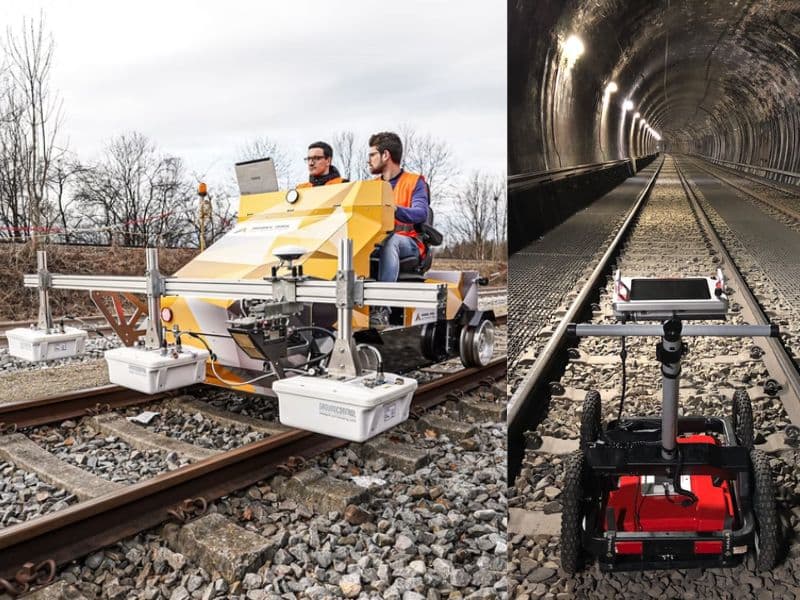
Railway networks are the lifelines of modern transportation, and keeping them safe and efficient is a constant challenge. The advantages of GPR in railways make it a game-changer for inspecting tracks and substructures without causing damage, allowing engineers to detect hidden issues before they escalate.
In this article, we will explore the benefits of ground penetrating radar in railways, including how it helps with railway track bed evaluation and maintenance planning. We will also discuss the limitations of GPR in railways, providing a balanced view of its pros and cons and practical applications for improving railway safety and performance.
Advantages of GPR in Railways
Ground Penetrating Radar (GPR) has become an indispensable tool for modern railway maintenance. The advantages of GPR in railways go far beyond simple inspections, offering insights that were once impossible without disruptive testing. From saving time and costs to enhancing safety, GPR technology is transforming how rail networks are monitored.
1. Non-Destructive Testing
One of the most important benefits of ground penetrating radar in railways is its non-destructive nature. Unlike traditional inspection methods that may require digging or disassembling track components, GPR allows engineers to assess the condition of tracks, ballast, and subgrade layers without causing any damage.
This means that trains can continue to operate safely while inspections are carried out, minimising disruptions and protecting the integrity of critical infrastructure.
- Preserves track and ballast condition
- Avoids costly service interruptions
- Ensures accurate assessment without physical disturbance
But detecting surface-friendly issues is just the beginning, GPR can also uncover problems hidden beneath the surface that traditional methods often miss.
2. Detection of Subsurface Anomalies
Another key advantage of GPR in railways is its ability to reveal subsurface anomalies. These can include ballast fouling, uneven settlement, moisture accumulation, and problems in the subgrade that are invisible to the naked eye.
Early detection of such issues allows maintenance teams to intervene before minor problems escalate into major safety hazards or costly repairs.
- Identifies areas of ballast degradation
- Detects moisture or voids in the subgrade
- Helps prevent long-term track failures
While knowing what lies beneath the track is essential, speed is equally important for large railway networks, otherwise, maintenance planning becomes a slow, reactive process.
3. High-Speed Data Collection
GPR enables rapid assessment of extensive railway sections, allowing engineers to gather critical information quickly. High-speed data collection is particularly valuable for busy networks where time on the tracks is limited. With detailed subsurface maps, teams can prioritise which areas need immediate attention and which sections are performing well.
- Surveys long stretches of railway efficiently
- Reduces time required for inspections
- Supports faster maintenance decision-making
Collecting data fast is great, but acting on it efficiently is what truly saves money and resources. That leads us to one of the most practical benefits of GPR, cost-effective maintenance planning.
4. Cost-Effective Maintenance Planning
By providing detailed information about the track bed and underlying structures, GPR helps railway operators prioritise maintenance activities. This prevents unnecessary repairs and ensures that resources are allocated to areas where they are needed most. Over time, this approach can significantly reduce operational costs and increase the lifespan of track infrastructure.
- Helps target maintenance to high-risk areas
- Reduces unnecessary interventions
- Optimises resource allocation
With all this data at hand, the potential of GPR grows even further when combined with other technologies.
5. Compatibility with Other Diagnostic Tools
GPR is highly versatile and can be integrated with other diagnostic technologies, such as LiDAR, GPS mapping, and track geometry systems. This combination allows for a comprehensive evaluation of railway infrastructure, providing both surface and subsurface insights in a single analysis. Such integration improves decision-making and ensures more precise maintenance interventions.
- Works alongside LiDAR and GPS systems
- Provides a complete view of track health
- Enhances predictive maintenance strategies
With these capabilities, GPR has proven itself as a cornerstone of modern railway inspection. However, no technology is without its challenges, and it’s important to understand the limitations of GPR in railways before fully relying on it.
Limitations of GPR in Railways
While the advantages of GPR in railways are significant, it is equally important to understand its limitations. Recognising these constraints ensures that railway operators use the technology effectively and avoid misinterpretation of data.
1. Depth Penetration Constraints
GPR performance can be restricted by the properties of the materials it penetrates. In high-conductivity soils, such as clay or wet subgrade layers, radar signals may not travel deep enough, limiting the ability to detect deeper anomalies. This means that while shallow defects can be identified accurately, some issues in the lower layers of the track bed may go unnoticed.
- Limited depth in conductive soils
- Reduced accuracy in heavily saturated areas
- May require complementary inspection methods
Even with perfect depth penetration, the data collected is only useful if it is interpreted correctly, which brings us to another key challenge.
2. Data Interpretation Challenges
One of the main limitations of GPR in railways is the complexity of the data. GPR scans produce large volumes of information that require experienced professionals to analyse. Incorrect interpretation can lead to false conclusions, such as misidentifying normal variations as defects, which could result in unnecessary maintenance or missed problems.
- Requires specialised training for accurate analysis
- Complex visualisation of subsurface layers
- Risk of human error if handled by inexperienced staff
Even skilled interpretation can be affected by external factors, meaning that environmental conditions play a critical role in GPR effectiveness.
3. Sensitivity to Environmental Factors
GPR results can be significantly influenced by environmental conditions. Moisture content, soil heterogeneity, and temperature variations can distort radar signals, making it harder to accurately detect anomalies. Seasonal changes, such as heavy rain or freezing conditions, may further affect data quality, requiring inspections to be carefully timed.
- Performance affected by moisture levels
- Soil composition impacts radar signal quality
- May require multiple surveys for accurate assessment
Finally, while GPR can detect the presence of anomalies, it does not always provide full clarity about the materials or exact nature of the problem.
4. Limited Material Identification
Another limitation is that GPR cannot always identify the exact materials causing anomalies. It can indicate that there is a void, wet spot, or ballast degradation, but it may not determine the specific composition or cause. This means follow-up investigations using other methods are sometimes necessary to fully understand the problem.
- Can detect anomalies but not always material type
- May require complementary testing for confirmation
- Limits ability to fully diagnose complex track issues
Despite these limitations, GPR remains a highly effective tool for railway track bed evaluation GPR and GPR railway maintenance, especially when combined with other inspection methods. Understanding its constraints allows engineers to use the technology strategically, maximising the benefits while minimising errors.
Applications of GPR in Railway Track Bed Evaluation
The advantages of GPR in railways extend beyond simple inspections, its real power lies in evaluating the track bed and identifying hidden issues that could compromise safety or performance. By providing a clear view of subsurface conditions, GPR allows engineers to take a proactive approach to track management.
1. Assessing Ballast Condition and Thickness
GPR is highly effective for measuring ballast thickness and quality. It can detect areas where ballast has settled unevenly or become fouled with fines, which can reduce track stability. Maintaining proper ballast conditions ensures smooth train operations and reduces wear on the tracks and rolling stock.
- Detects uneven ballast distribution
- Identifies fouled ballast requiring cleaning or replacement
- Supports predictive maintenance planning
However, the ballast is only part of the story, issues in the subgrade beneath the tracks can be even more critical.
2. Identifying Subgrade Issues and Moisture Levels
Subgrade problems, such as weak soil layers or high moisture content, can lead to track settlement and alignment issues. GPR railway evaluations can pinpoint these areas before they cause major problems, allowing engineers to reinforce or stabilise the subgrade as needed. Early detection also helps prevent costly repairs and service disruptions.
- Detects weak or soft soil layers
- Identifies water accumulation affecting track stability
- Supports early intervention strategies
Once subgrade issues are identified, the focus shifts to water management, which is another area where GPR proves invaluable.
3. Evaluating Drainage Systems and Detecting Voids
Poor drainage can undermine the track bed, leading to subsidence or washouts. GPR can detect voids, water pockets, and drainage inefficiencies, helping maintenance teams address problems before they escalate. By ensuring proper water management, railways can maintain safer and more durable track infrastructure.
- Locates voids beneath tracks
- Identifies blocked or ineffective drainage systems
- Helps plan targeted remedial actions
With a clear understanding of the track bed, GPR data becomes a critical asset for ongoing maintenance operations.
Nevertheless, Ground Penetrating Radar (GPR) offers unique insights, but thorough testing ensures complete railway safety. Our ultrasonic examination detects hidden rail flaws, while our Level III services provide expert oversight for accurate inspections. Enhance your railway maintenance program with our professional NDT solutions.
Conclusion
Ground Penetrating Radar has firmly established itself as a transformative technology in railway infrastructure management. The advantages of GPR in railways, from non-destructive testing and high-speed data collection to early detection of subsurface anomalies, enable engineers to maintain safer, more reliable tracks while optimising resources.
Its ability to evaluate ballast condition, subgrade stability, and drainage systems makes it an invaluable tool for railway track bed evaluation GPR and long-term network performance.
However, it is equally important to acknowledge the limitations of GPR in railways. Depth penetration constraints, environmental sensitivity, challenges in data interpretation, and limited material identification mean that GPR should be used strategically and often in combination with other diagnostic tools.
By understanding both the pros and cons of GPR railway applications, operators can make informed decisions, enhance maintenance planning, and achieve cost-effective results.
As technology continues to evolve, GPR’s role in GPR railway maintenance is likely to expand, offering even more precise insights and supporting predictive maintenance strategies. When used thoughtfully, GPR not only detects existing issues but also helps prevent future problems, ensuring railway networks remain safe, efficient, and resilient for years to come.
Key Points
- GPR inspects railway components without causing damage, preserving track integrity and reducing service interruptions.
- GPR identifies hidden issues like ballast fouling, moisture accumulation, and subgrade problems not visible on the surface.
- GPR can survey large sections of railway efficiently, enabling timely maintenance decisions.
- GPR data helps prioritise repairs, optimise resources, and reduce operational costs.
- GPR can be integrated with technologies like LiDAR and GPS for comprehensive infrastructure assessment.
- GPR performance can be restricted in high-conductivity soils, limiting detection of deeper anomalies.
- GPR requires skilled professionals to analyse complex data accurately, reducing the risk of misinterpretation.
- Soil composition, moisture content, and weather conditions can affect GPR signal quality and reliability.
- GPR can detect anomalies but may not identify the exact materials causing the issue, often requiring additional testing.
- GPR is valuable for railway track bed evaluation, detecting ballast and subgrade problems, assessing drainage, and supporting predictive and preventive maintenance strategies.
FAQs
How is GPR used to assess ballast condition and thickness?
GPR can detect variations in ballast thickness and identify areas where ballast has become fouled or degraded, providing valuable information for maintenance planning.
Can GPR detect subgrade issues and moisture levels?
Yes, GPR is effective in identifying weak or soft soil layers and areas with high moisture content, which can lead to track settlement and alignment issues.
How does GPR evaluate drainage systems and detect voids?
GPR can locate voids beneath tracks and identify blocked or ineffective drainage systems, helping to prevent subsidence or washouts.
How does GPR contribute to railway maintenance planning?
By providing detailed subsurface information, GPR helps railway operators prioritise maintenance activities, optimise resource allocation, and reduce operational costs.