Railway networks form the backbone of global transportation, carrying millions of passengers and tons of freight daily. In this vast ecosystem, computer vision in railway track inspection is transforming how safety and efficiency are maintained. As infrastructure ages and demand rises, computer vision in railway track inspection continues to emerge as a reliable solution to replace outdated manual processes. With increasing complexity, computer vision in railway track inspection offers a smarter, faster, and more accurate approach to monitoring rail systems.
Traditional inspection methods rely heavily on human effort. Inspectors walk long stretches of track and visually identify defects. This process consumes time and often misses subtle issues. Fatigue, environmental conditions, and human error increase the risk of oversight. As rail networks expand globally, these limitations become more evident.
Modern railway systems demand precision and speed. This is where advanced technologies step in. Among them, computer vision stands out as a game-changer. It enables machines to interpret visual data with remarkable accuracy. The result is a system that not only detects faults but also predicts potential failures.
What Is Computer Vision in Railway Track Inspection?
Computer vision refers to a field of artificial intelligence that allows machines to interpret and analyze visual data. In railway systems, it plays a crucial role in identifying track defects through images and video feeds. Computer vision in railway track inspection uses cameras, sensors, and algorithms to monitor rail conditions in real time.
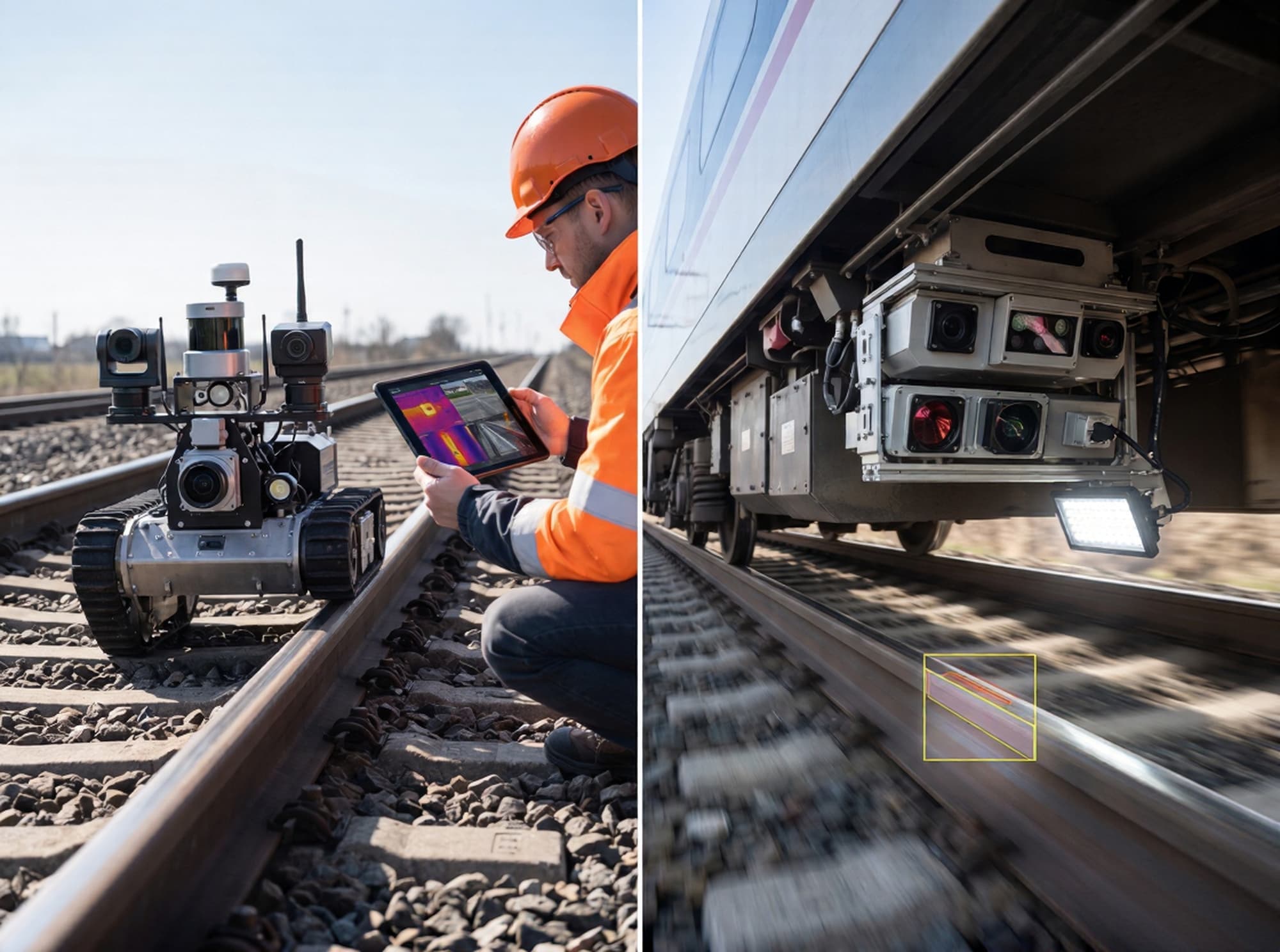
These systems capture high-resolution images of tracks while trains move at operational speeds. Algorithms then analyze these images to detect abnormalities. This process eliminates the need for slow, manual inspections. It also improves consistency and accuracy.
Railway networks span thousands of kilometers worldwide. According to global transport data, rail infrastructure exceeds 1.3 million kilometers. Monitoring such vast systems manually becomes impractical. Computer vision provides a scalable solution that ensures continuous surveillance.
The integration of artificial intelligence enhances the system further. Machine learning models improve over time as they process more data. This means defect detection becomes more precise with each inspection cycle. However, understanding the broader technological ecosystem reveals even more possibilities.
How Is ICT Used by the Railway Department?
Information and Communication Technology plays a vital role in modern railway operations. It supports communication, monitoring, and data management across the network. When combined with computer vision in railway track inspection, ICT creates a powerful, interconnected system.
Railway departments use ICT to collect and transmit data from inspection systems to centralized control rooms. This allows engineers to analyze track conditions in real time. Decisions can then be made quickly to prevent accidents or service disruptions.
Key ICT applications in railway systems include:
- Automated track geometry measurement systems that ensure alignment and stability
- Remote condition monitoring for continuous data collection from track components
- Predictive maintenance scheduling based on historical and real-time data
- Incident alert and reporting systems that notify operators instantly
These systems reduce downtime and improve operational efficiency. They also enhance safety by enabling faster response to potential issues.
ICT acts as the backbone that connects inspection technologies with decision-makers. Without it, data would remain isolated and underutilized. But even with this strong foundation in place, another question arises; how do these systems actually interpret visual data so accurately? The answer unfolds in the next section.
The Technology Behind Computer Vision for Railway Inspection
The effectiveness of computer vision systems depends on the technology that powers them. Several advanced tools work together to ensure accurate inspection. Computer vision in railway track inspection relies on high-performance hardware and intelligent software.
Key components include high-resolution line-scan cameras, LiDAR sensors, and thermal imaging systems. These tools capture detailed information about track conditions. Structured light systems further enhance surface analysis by detecting even minor irregularities.
Once the data is captured, machine learning algorithms process it. These algorithms are trained using thousands of images of rail defects. Over time, they learn to recognize patterns and classify issues with high precision.
Machine Learning and Defect Detection
Machine learning forms the core of defect detection systems. Convolutional Neural Networks (CNNs) analyze images and identify anomalies in track structures. These models can detect cracks, misalignments, and wear patterns with impressive accuracy.
Studies show that advanced systems achieve detection accuracy rates exceeding 95%. This level of precision significantly reduces the risk of undetected faults. Experts in railway engineering often highlight the importance of automation in improving safety standards.
As technology evolves, these systems continue to improve. They adapt to different environments and conditions. Yet, understanding the technology is only part of the picture. What truly matters is the range of problems these systems can identify; and that scope is broader than expected.
Types of Defects Detected by Computer Vision Systems
Computer vision systems detect a wide range of defects that affect railway safety and performance. Computer vision in railway track inspection ensures early detection, preventing costly repairs and accidents.
Common defects identified include:
- Rail surface cracks that develop due to stress and fatigue
- Gauge deviation that affects train stability
- Broken or missing fasteners that compromise track integrity
- Weld abnormalities that weaken connections
- Ballast irregularities that reduce support strength
- Track geometry deformation caused by heavy loads
- Corrugation and wear patterns that affect ride quality
Detecting these issues early plays a critical role in maintaining safety. Undetected defects can lead to derailments, resulting in significant financial and human losses. Reports indicate that railway accidents caused by track failures cost millions annually.
By identifying problems before they escalate, computer vision systems reduce maintenance costs and improve reliability. This proactive approach marks a shift from reactive maintenance to predictive strategies.
What Is Computer Vision for Automated Inspection?
Computer vision for automated inspection refers to the use of AI-powered visual systems to monitor and analyze infrastructure without human intervention. Computer vision in railway track inspection enables continuous monitoring, unlike manual inspections that occur periodically.
Automated systems operate at high speeds. They capture and analyze data in real time. This ensures that no section of track goes unchecked. In contrast, manual inspections depend on scheduled checks and human availability.
A comparison highlights the difference clearly:
| Feature | Manual Inspection | Automated (Computer Vision) |
| Speed | Slow and labor-intensive | High-speed and continuous |
| Accuracy | Prone to human error | Consistent and data-driven |
| Cost Over Time | High operational cost | Lower long-term cost |
| Data Recording | Manual logs | Digital and real-time storage |
| Coverage Frequency | Periodic | Near-continuous monitoring |
Automated inspection improves efficiency across the board. It reduces reliance on manual labor and minimizes risks associated with human error. Data collected through these systems also supports long-term planning and infrastructure development.
The shift toward automation reflects a broader trend in the railway industry. Operators increasingly adopt technologies that enhance performance and safety. However, the real impact becomes clearer when examining real-world applications and global adoption trends.
How Is Computer Vision Used in Transportation?
Computer vision plays a vital role across modern transportation systems. It enables machines to interpret surroundings and make informed decisions. In railways, computer vision in railway track inspection stands as one of the most impactful applications.
Beyond railways, this technology supports road traffic monitoring, airport security, and port operations. On roads, it powers autonomous vehicles and traffic management systems. In aviation, it helps detect runway debris and monitor aircraft movement. Ports use it to track cargo and improve logistics efficiency.
However, railways present unique challenges. Tracks extend across remote and harsh environments. Manual monitoring becomes difficult and risky. This is where computer vision systems prove essential. They ensure consistent inspection regardless of location or conditions.
Rail operators increasingly rely on these systems to improve reliability. They integrate visual data with analytics platforms to gain deeper insights. This approach transforms maintenance from reactive to predictive.
Real-World Applications and Global Case Studies
Railway organizations worldwide have started implementing advanced inspection technologies. Computer vision in railway track inspection has moved beyond theory and into real-world deployment.
European Railways
European rail operators lead in adopting intelligent inspection systems. Germany’s Deutsche Bahn uses automated inspection trains equipped with high-speed cameras. These systems scan tracks while trains operate at normal speeds.
The United Kingdom’s Network Rail has also invested heavily in digital monitoring. Their systems use AI to analyze track conditions and detect early signs of wear. This reduces delays and improves passenger safety.
Reports suggest that automated inspections have reduced manual inspection time by nearly 50% in some regions. This improvement highlights the efficiency of modern systems.
Asia-Pacific Leaders
Asia-Pacific countries have taken innovation even further. Japan’s Shinkansen network uses advanced inspection trains with integrated computer vision systems. These trains monitor tracks at high speeds without disrupting services.
China’s high-speed rail network also employs AI-driven inspection tools. With one of the largest rail systems globally, China relies on automation to maintain performance and safety. Computer vision in railway track inspection helps manage this vast infrastructure effectively.
North American Rail Networks
In North America, freight rail operators use computer vision to ensure compliance with safety standards. The Federal Railroad Administration supports the adoption of automated inspection technologies.
Freight companies use track-side cameras and onboard systems to monitor conditions continuously. This reduces the risk of accidents and improves operational efficiency.
Across all regions, results remain consistent. Automated inspection reduces downtime, lowers maintenance costs, and enhances safety. Yet, despite these benefits, implementing such systems is not always straightforward.
Real-world success stories show the potential clearly; but they also raise another question. What challenges must organizations overcome to fully adopt computer vision in railway track inspection? The next section explores this critical aspect.
Challenges in Implementing Computer Vision for Rail Inspection
Despite its advantages, adopting advanced inspection technology presents several challenges. Computer vision in railway track inspection requires careful planning and investment.
Key challenges include:
- High initial investment costs for hardware and system integration
- Difficulty integrating with existing legacy railway infrastructure
- Managing large volumes of data generated during inspections
- Environmental factors such as rain, fog, and poor lighting affecting image quality
- Regulatory requirements and safety certifications that delay deployment
Organizations must address these challenges to ensure successful implementation. High costs often act as a barrier, especially for developing regions. However, long-term savings usually outweigh initial expenses.
Data management also poses a significant issue. Inspection systems generate massive datasets. Processing and storing this data requires advanced infrastructure.
Environmental conditions further complicate operations. Poor visibility can affect image accuracy. Engineers continue to develop solutions like enhanced sensors and adaptive algorithms to overcome these limitations.
Regulatory frameworks also evolve slowly. Approval processes can delay the adoption of new technologies. Still, ongoing collaboration between governments and industry players helps accelerate progress.
While these obstacles exist, innovation continues to push boundaries. The future of railway inspection looks increasingly automated and intelligent.
The Future of Computer Vision in Railway Track Inspection
The future of railway inspection is driven by rapid technological advancement. Computer vision in railway track inspection will continue to evolve with emerging innovations.
One promising trend involves drone-based inspection systems. Drones equipped with cameras can access remote areas easily. They provide flexible and efficient monitoring solutions.
Autonomous inspection vehicles also represent the next step. These vehicles operate independently and collect data continuously. They reduce reliance on manual processes even further.
Artificial intelligence models are becoming more advanced. Self-learning algorithms improve detection accuracy over time. These systems adapt to new types of defects without extensive retraining.
Integration with digital twin technology offers another exciting possibility. Digital twins create virtual models of railway infrastructure. Engineers can simulate conditions and predict failures before they occur.
Experts predict that automation will dominate railway maintenance within the next decade. Computer vision in railway track inspection will play a central role in this transformation.
As innovation accelerates, railway systems will become safer, faster, and more reliable. The shift toward intelligent infrastructure is no longer optional; it is inevitable.
Final Thoughts
Railway systems continue to evolve alongside technological advancements. Computer vision in railway track inspection has emerged as a powerful solution to modern challenges. It replaces slow manual inspections with fast, accurate, and data-driven processes.
From detecting defects early to enabling predictive maintenance, the benefits are clear. Computer vision in railway track inspection improves safety, reduces costs, and enhances operational efficiency across global rail networks.
Organizations that adopt this technology gain a competitive advantage. They ensure reliable service while minimizing risks. As adoption grows, the railway industry moves closer to fully automated infrastructure management.
For businesses seeking advanced inspection solutions, exploring expert services becomes essential. Learn more about innovative inspection technologies through EMA Quality Industries and stay ahead in railway safety and performance.
For further insights on railway safety standards, refer to reputable organizations such as the International Union of Railways (UIC).
Key Takeaways
- Computer vision in railway track inspection significantly improves detection accuracy by identifying defects that human inspectors often overlook during routine inspections.
- Automated inspection systems reduce dependency on manual labor while increasing inspection speed, consistency, and overall operational efficiency across railway networks.
- Early defect detection through computer vision in railway track inspection helps prevent derailments and reduces costly emergency maintenance repairs.
- Integration of ICT with computer vision enables seamless real-time data transmission and faster, more informed decision-making for railway maintenance teams.
- Advanced machine learning and artificial intelligence technologies continuously improve system accuracy as more inspection data becomes available over time.
- Computer vision systems can detect various track defects including cracks, misalignments, fastener issues, and structural weaknesses effectively.
- Although initial setup costs are high, long-term savings in maintenance and operational efficiency make these systems highly valuable investments.
- Environmental challenges such as poor lighting and harsh weather conditions are being addressed through improved sensors and adaptive imaging technologies.
- Railway operators across the world increasingly adopt computer vision in railway track inspection to enhance safety compliance and infrastructure reliability.
- Future innovations including drones, autonomous inspection vehicles, and digital twin technology will further revolutionize railway maintenance and monitoring processes.
FAQs
How does computer vision improve railway track inspection?
Computer vision improves railway track inspection by automating defect detection using cameras and AI algorithms. It reduces human error, increases inspection speed, and ensures consistent monitoring across long railway networks.
What types of defects can computer vision detect in railway tracks?
Computer vision systems can detect cracks, misalignments, missing fasteners, weld defects, and track deformation. These systems identify issues early, helping prevent accidents and reducing maintenance costs.
Why is computer vision important for railway safety?
Computer vision enhances railway safety by enabling real-time monitoring and early fault detection. It allows railway operators to take preventive actions before defects become critical, reducing the risk of derailments.
How accurate is computer vision in railway track inspection?
Modern computer vision systems achieve high accuracy, often exceeding 90–95 percent in defect detection. Continuous learning through AI models further improves performance over time.
What is the future of computer vision in railway track inspection?
The future includes advanced AI models, drone-based inspections, and autonomous monitoring systems. Computer vision in railway track inspection will continue to evolve, making railway maintenance more efficient and predictive.