

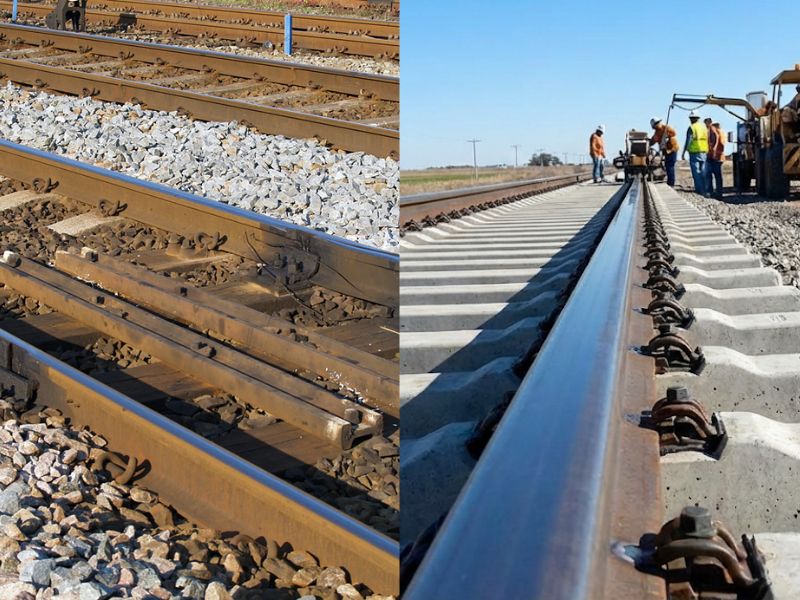
Railways depend on strong, smooth tracks to move trains safely at high speeds and heavy loads. Continuous Welded Rail plays a major role in making modern rail networks more reliable and efficient.
Unlike older jointed tracks, Continuous Welded Rail uses long, uninterrupted rail lengths to reduce vibration, noise, and maintenance issues. This article explains what Continuous Welded Rail is, how it is made and installed, how it handles temperature changes, and why rail operators prefer it. It also covers key benefits, challenges, safety concerns, and where this rail system is commonly used.
What Continuous Welded Rail Is
Continuous Welded Rail is a modern rail track system where individual rail sections are welded together to form one long, uninterrupted rail. Instead of frequent gaps and joints, the rail runs continuously for hundreds of metres, and in some cases several kilometres. This design allows trains to travel more smoothly while placing less stress on the track structure over time.
In simple terms, Continuous Welded Rail removes the weak points found in older rail systems. By eliminating joints, the track becomes stronger, quieter, and more stable under both passenger and heavy freight traffic. This is why it is now the standard choice for mainline railways, high-speed routes, and busy freight corridors.
Definition
Continuous Welded Rail refers to rails that are permanently joined together using specialised welding techniques to create long, seamless lengths. These rails are then firmly fixed to sleepers and supported by ballast to control movement caused by temperature changes.
Key characteristics include:
- No regular gaps between rail sections
- Welded joints instead of bolted connections
- Designed to handle higher speeds and axle loads
However, removing joints introduces new engineering challenges, especially when temperature comes into play. That challenge becomes clearer when compared to older track systems.
Difference from Jointed Rail
Jointed rail uses shorter rail lengths connected by fishplates and bolts, with small gaps left between each section. These gaps allow for thermal expansion but also create impact points every time a train passes over them.
The main differences are clear:
- Jointed rail creates noise and vibration at every joint
- Continuous Welded Rail offers smoother and quieter operation
- Jointed rail needs frequent maintenance
- Continuous Welded Rail reduces long-term maintenance needs
While jointed rail still appears on lightly used or older lines, it struggles to meet modern performance demands. This is why rail networks moved towards welded rails. But how are these long, seamless rails actually created and placed on the track?
How Continuous Welded Rail Is Made and Installed
Creating Continuous Welded Rail is a carefully controlled process that combines precision welding with strict installation methods. Every step is designed to ensure the rail can safely handle stress, speed, and changing weather conditions.
Welding Process
The process begins by joining standard rail lengths into much longer sections. This is done either in rail plants or directly on site using proven welding methods.
Common welding methods include:
- Flash-butt welding, usually done in factories
- Thermite welding, often used on site for joining rails
Once welded, the joints are ground smooth so train wheels pass over them without impact. Each weld is inspected to ensure strength and alignment, as even small defects can affect rail safety. But welding is only part of the story. How the rail is installed matters just as much.
Installation Basics
After welding, the Continuous Welded Rail is positioned onto sleepers and secured using strong fastening systems. The rail is then aligned and packed with ballast to hold it firmly in place. A critical part of installation is setting the correct rail temperature, often called the neutral temperature, to control expansion and contraction.
Installation usually involves:
- Laying welded rail strings along the track
- Fixing rails to sleepers with elastic fasteners
- Compacting ballast to lock the track in position
If this step is done incorrectly, the rail can develop dangerous internal stresses. And that leads directly to the next major topic: how Continuous Welded Rail handles temperature changes and why stress management is so critical for safety.
How Continuous Welded Rail Works
Continuous Welded Rail works by spreading forces evenly along long lengths of rail instead of concentrating them at joints. Because the rail is welded into a single, continuous length, it behaves as one unit rather than many separate pieces. This allows trains to run smoothly while the track structure absorbs and controls movement.
However, removing joints means the rail cannot freely move on its own. Instead, Continuous Welded Rail relies on careful design, correct installation, and strong track components to manage stress. The key factor behind this system is how the rail reacts to temperature changes.
Expansion and Contraction
Like all steel structures, rails expand in hot weather and contract in cold conditions. In Continuous Welded Rail, this movement cannot happen freely because the rail is firmly fixed in place. As a result, thermal forces build up inside the rail.
To manage this, rails are installed at a set neutral temperature. At this temperature, the rail is neither in tension nor compression. When temperatures rise or fall, the internal stress changes, but the rail remains stable if the track is properly maintained.
In simple terms:
- Hot weather creates compressive forces
- Cold weather creates tensile forces
- Poor stress control increases failure risk
If these forces are not controlled, serious problems such as track buckling or rail breaks can occur. This is where the supporting track components become critical.
Role of Track Components
Continuous Welded Rail does not work alone. It depends on the combined strength of sleepers, fasteners, and ballast to keep the rail in position and resist thermal movement.
Each component has a clear role:
- Sleepers distribute loads and keep rails correctly spaced
- Elastic fasteners hold the rail firmly while allowing slight flexibility
- Ballast provides resistance against lateral and longitudinal movement
When all components work together, the rail can safely handle heavy loads and temperature changes. But even with this support, CWR brings both clear benefits and unavoidable challenges.
Benefits and Challenges of Continuous Welded Rail
The move to Continuous Welded Rail transformed modern railways, but it also introduced new technical risks. Understanding both sides is essential to see why proper design and maintenance are so important.
Advantages
The main strength of Continuous Welded Rail lies in performance and efficiency. Removing joints improves both train operation and track lifespan.
Key advantages include:
- Smoother and quieter train movement
- Reduced wear on wheels and rails
- Lower long-term maintenance costs
- Better support for high-speed and heavy freight trains
These benefits explain why most mainline and high-traffic routes now rely on welded rail. Yet these gains come with added responsibility.
Common Problems
Despite its advantages, Continuous Welded Rail is sensitive to poor installation and maintenance. Most problems arise when thermal stress is not properly controlled.
Common issues include:
- Track buckling during extreme heat
- Rail fractures in very cold conditions
- Higher repair impact when failures occur
These risks do not make CWR unsafe, but they do demand strict monitoring and precise maintenance. And this leads directly to the next key topic: how rail operators inspect, maintain, and protect Continuous Welded Rail to keep trains running safely year-round.
Maintenance and Safety of Continuous Welded Rail
Continuous Welded Rail requires a proactive maintenance approach because small issues can quickly turn into major safety risks. Since the rail acts as one long unit, defects or stress problems affect a wider section of track. For this reason, regular monitoring is essential to keep Continuous Welded Rail safe and reliable.
Modern maintenance focuses on early detection and stress management rather than reactive repairs. This approach helps rail operators maintain smooth operations while reducing unexpected failures.
Inspections and Stress Control
Routine inspections are carried out to check rail condition, track alignment, and stress levels. These inspections become more frequent during extreme weather, when thermal forces are highest.
Common inspection and control methods include:
- Visual checks for signs of movement or distortion
- Ultrasonic testing to detect internal rail flaws
- Measuring rail temperature and stress levels
- Destressing rails when stress exceeds safe limits
Stress control is especially important after maintenance work or track renewal. If rails are not correctly destressed, the risk of failure increases. This makes safety management the next critical concern.
Safety Risks and Prevention
The main safety risks associated with Continuous Welded Rail come from uncontrolled thermal stress. These risks are well known and can be managed with strict procedures.
Key risks include:
- Track buckling in hot weather
- Rail breaks in cold conditions
- Increased derailment risk if defects go unnoticed
Prevention relies on proper installation, strong track components, and consistent inspections. Speed restrictions may also be applied during heatwaves to reduce stress on the track. With these measures in place, CWR remains one of the safest track systems in use today. But where is it actually used, and how is it evolving?
Uses and Future of Continuous Welded Rail
The performance benefits of Continuous Welded Rail have made it the preferred choice for many modern rail networks. Its ability to support speed, weight, and efficiency continues to drive wider adoption.
Where It Is Used
Continuous Welded Rail is mainly used on routes where reliability and smooth operation are critical.
Typical applications include:
- Mainline passenger railways
- High-speed rail corridors
- Heavy freight and mineral routes
- Urban rail systems with high traffic volumes
Older or lightly used lines may still rely on jointed rail, but upgrades increasingly replace it with welded rail.
Future Developments
The future of Continuous Welded Rail focuses on smarter monitoring and stronger materials. New technologies are improving how stress and defects are detected before they become dangerous.
Future developments include:
- Automated track monitoring systems
- Sensors for real-time stress measurement
- Improved rail steel and fastening designs
As rail networks expand and climate conditions become more extreme, the role of Continuous Welded Rail will only grow. This makes understanding its maintenance, safety, and long-term potential more important than ever for modern railway systems.
Conclusion
Continuous Welded Rail has become a key part of modern railway infrastructure because it delivers smoother, quieter, and more reliable train operations. By removing joints, it reduces wear on both rails and rolling stock while supporting higher speeds and heavier loads. However, this performance depends on precise design, correct installation, and effective control of thermal stress.
When properly maintained, Continuous Welded Rail offers long-term efficiency and safety across mainline, high-speed, and freight networks. Regular inspections, strong track components, and advanced monitoring systems help manage risks such as buckling and rail breaks. As technology continues to improve, Continuous Welded Rail will remain essential to building safer, more durable, and more efficient railways for the future.
Key Points
- Continuous Welded Rail (CWR) is a rail track system where individual rails are welded into long, seamless lengths, eliminating joints.
- Unlike jointed rail, CWR provides smoother, quieter, and more stable train operations with reduced maintenance needs.
- CWR is manufactured using welding techniques such as flash-butt welding in factories and thermite welding on-site.
- Rails are installed on sleepers with fasteners and supported by ballast, with a neutral temperature set to manage thermal expansion and contraction.
- CWR relies on track components like sleepers, fasteners, and ballast to resist stress from temperature changes and train loads.
- Thermal expansion and contraction create compressive and tensile forces, which must be carefully controlled to prevent rail buckling or fractures.
- Benefits of CWR include reduced noise, lower wear on rails and wheels, better performance for high-speed and heavy freight trains, and decreased long-term maintenance costs.
- Common challenges include rail buckling in heat, rail breaks in cold, and higher repair impacts when failures occur.
- Maintenance involves routine inspections, ultrasonic testing, stress measurement, and rail destressing to ensure safe operation.
- CWR is widely used on mainline, high-speed, and freight railways, with future developments focusing on smarter monitoring, improved materials, and stronger fastening systems.
FAQs
What maintenance does Continuous Welded Rail need?
CWR requires regular inspections for stress, alignment, and rail condition, as well as periodic rail destressing to maintain safe operation and prevent failures.
What are common problems with Continuous Welded Rail?
Common issues include rail buckling in extreme heat and rail breaks in extreme cold if thermal forces exceed track resistance.
Where is Continuous Welded Rail commonly used?
CWR is widely used on mainline passenger routes, high‑speed lines, and busy freight tracks because of its performance benefits and reduced need for joint maintenance.
What future improvements are expected for Continuous Welded Rail?
Future developments focus on better stress monitoring systems, advanced rail materials, and improved fastening systems to enhance safety and durability.
