

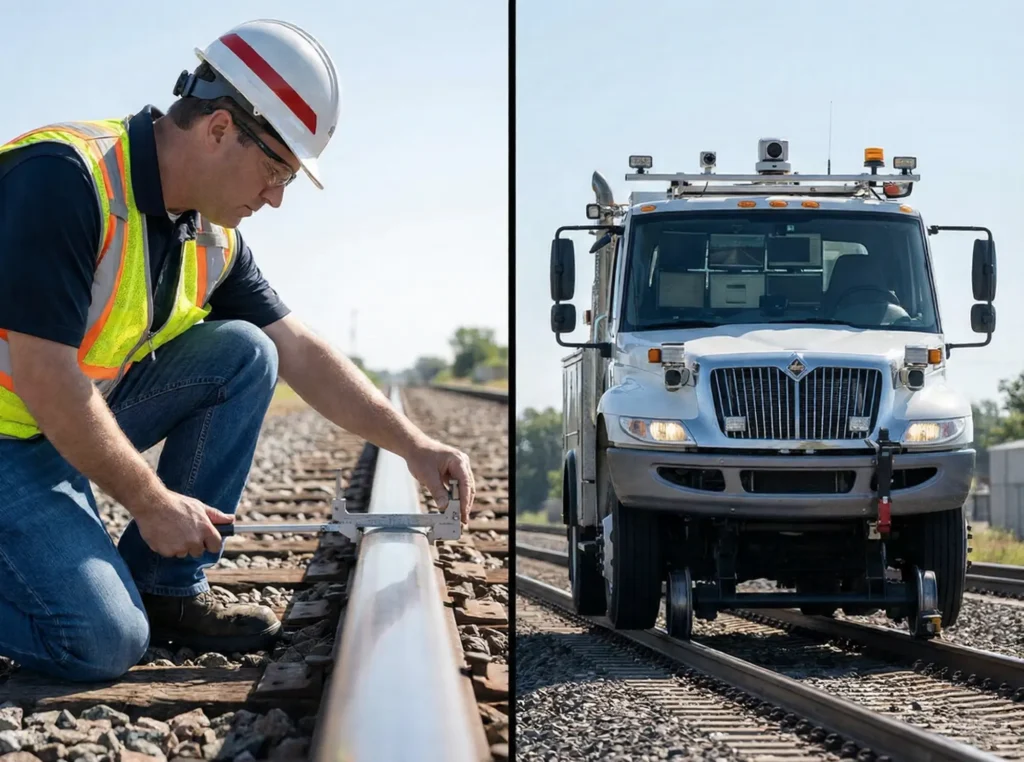
A single unnoticed defect in a railway track can lead to delays, costly repairs, or serious accidents. This guide to railway track inspection explains why regular inspections are essential for keeping rail networks safe, reliable, and efficient.
Railway tracks face constant stress from heavy loads, weather, and daily operations. This article offers a clear, practical breakdown of railway track inspection, including what inspections involve, how often they are carried out, what components are checked, common defects to watch for, and the tools used to detect problems early.
By the end of this guide, you will understand how proper inspection helps prevent failures, reduce maintenance costs, and support long-term track performance.
What Railway Track Inspection Is
Railway track inspection is the process of checking the condition of railway tracks to make sure they are safe for train operations. This guide to railway track inspection focuses on how inspections help detect defects early, before they turn into serious safety risks or costly failures.
At its core, track inspection is about prevention. Rails, sleepers, fasteners, ballast, and track alignment are exposed to constant pressure from train loads, vibration, and weather. Over time, even small issues can grow unnoticed. Inspection ensures these problems are identified, assessed, and fixed at the right time.
The main purpose of railway track inspection includes:
- Protecting passenger and worker safety
- Preventing derailments and service disruptions
- Extending the life of track components
- Reducing long-term maintenance costs
Inspections can be carried out visually by trained staff or with specialised equipment that detects flaws not visible to the naked eye. Both approaches work together to provide a clear picture of track health.
However, knowing what inspection is only solves part of the problem. The real question is how often inspections should happen and what types are needed, and that is where the next section becomes critical.
Types and Frequency of Track Inspections
Railway track inspections are not one-size-fits-all. Different inspection types are used depending on traffic levels, track condition, and external factors. This guide to railway track inspection breaks them down into clear categories to show how each one plays a role in maintaining safety.
Scheduled Inspections
Scheduled inspections are planned checks carried out at regular intervals. They form the backbone of railway safety programmes and ensure tracks are monitored consistently.
These inspections are usually based on:
- Train speed limits
- Track class and usage
- Volume of rail traffic
- Past defect history
They may be conducted daily, weekly, or monthly, depending on risk level. Higher-speed or heavily used lines are inspected more frequently to reduce the chance of sudden failures.
Special Inspections
Special inspections are carried out when something unusual happens. These are not routine but are essential after events that could damage the track.
Common triggers include:
- Heavy rainfall or flooding
- Extreme heat or cold
- Derailments or collisions
- Construction or maintenance work nearby
These inspections focus on identifying hidden damage that regular schedules may not catch in time.
How Often Inspections Are Done
Inspection frequency is driven by risk, not convenience. Tracks with higher speeds and heavier loads demand closer attention, while lower-risk lines may allow longer gaps between checks. Rail authorities use inspection results to adjust schedules and prioritise problem areas.
Yet inspections alone do not stop failures. The methods and tools used to carry them out often make the difference between catching a defect early or missing it entirely, which leads directly into the next section on inspection methods and tools.
Key Track Components Checked
Every railway track is made up of several parts that must work together under constant load. This guide to railway track inspection highlights the key components inspectors focus on, as a defect in any one area can affect the entire track system.
Rails
Rails carry the full weight of trains and are under the most stress. Inspectors check the rail head, web, and foot for signs of wear, cracks, or surface damage. Even minor rail defects can grow quickly if left untreated, especially on high-speed or heavy-traffic lines.
Sleepers (Ties)
Sleepers keep the rails in position and maintain the correct gauge. During inspection, their condition is checked to ensure they can still support loads and hold fasteners securely. Damaged sleepers reduce track stability and can lead to alignment problems.
Fasteners
Fasteners hold the rails firmly to the sleepers. Inspectors look for:
- Loose or missing clips and bolts
- Corrosion or fatigue
- Movement between rail and sleeper
Small fastening issues are easy to overlook, yet they often signal larger structural problems beneath the track.
Ballast
Ballast supports the track structure and helps with drainage. Inspection focuses on ballast depth, cleanliness, and settlement. Poor ballast condition allows track movement, which increases wear on rails and sleepers.
Track Geometry
Track geometry refers to alignment, gauge, cross-level, and curvature. These measurements ensure trains run smoothly and safely. Geometry defects may not always be visible, making them a key focus during inspections.
Switches and Crossings
Switches and crossings experience high impact forces. Inspectors pay close attention to wear, cracks, and correct operation, as failures in these areas often cause service disruptions.
Each component tells part of the story. But once inspectors know what they are checking, the next challenge is recognising what can go wrong, which leads directly to common track defects.
Common Track Defects Found During Inspection
Track defects develop over time due to load, movement, and environmental conditions. This guide to railway track inspection outlines the most common issues inspectors aim to detect early.
Rail Damage
Rail defects are among the most serious findings. These include surface wear, internal cracks, and broken rails. If undetected, rail damage can quickly escalate into derailment risks.
Loose or Damaged Fittings
Fasteners may loosen due to vibration or ageing. Common signs include:
- Missing clips or bolts
- Visible rail movement
- Worn fastening points
These defects often appear small but can affect track stability over long distances.
Weak or Damaged Sleepers
Sleepers may crack, rot, or lose strength over time. Weak sleepers fail to hold the rail correctly, leading to gauge widening and uneven load distribution.
Ballast Problems
Ballast issues usually develop below the surface. Inspectors look for fouling, settlement, or poor drainage, all of which allow the track to shift under passing trains.
Alignment and Geometry Defects
Geometry defects include misalignment, uneven levels, and gauge variation. These problems reduce ride quality and increase stress on rolling stock and track components.
Many of these defects start small and remain hidden until inspection reveals them. However, finding defects depends heavily on how inspections are carried out and which tools are used, the focus of the next section.
Track Inspection Methods and Tools
Railway track inspection relies on a mix of traditional checks and modern technology. This guide to railway track inspection explains how different methods work together to give a complete view of track condition.
Visual Checks
Visual inspection is the foundation of all track inspections. Trained inspectors walk the track or observe it from slow-moving vehicles, looking for visible signs of damage or movement.
These checks focus on:
- Rail surface wear and cracks
- Loose or missing fasteners
- Damaged sleepers
- Ballast condition and drainage issues
Visual checks are simple but effective, especially for spotting early warning signs that machines may later investigate in detail.
Ultrasonic Testing
Ultrasonic testing is used to detect internal rail defects that cannot be seen from the surface. High-frequency sound waves travel through the rail to identify cracks or weaknesses inside the metal.
This method is critical because many serious rail failures begin internally, showing no visible signs until it is too late.
Track Geometry Cars
Geometry cars measure alignment, gauge, cross-level, and curvature while moving along the track. They collect precise data at speed, making them ideal for long routes and busy lines.
The data helps engineers:
- Spot gradual alignment changes
- Identify areas of uneven wear
- Prioritise maintenance work
Drones and Automated Systems
Drones are increasingly used for hard-to-reach areas such as bridges, tunnels, and remote sections. Automated systems, often supported by sensors and AI, provide continuous monitoring and real-time alerts.
Technology is changing how inspections are done. But even the best tools are only useful if the findings lead to action, which brings us to what happens after inspection.
After the Inspection: Reporting and Repairs
Inspection does not end when the checks are complete. This guide to railway track inspection stresses that accurate reporting and timely repairs are just as important as finding defects.
Recording Inspection Results
All findings must be clearly documented. Inspection reports usually include defect location, severity, and recommended action. Accurate records help track trends and support future inspection planning.
Good reporting allows teams to:
- Compare current and past conditions
- Identify recurring problem areas
- Support safety and compliance requirements
Fixing Identified Defects
Once defects are recorded, repairs are prioritised based on risk. Minor issues may be scheduled for routine maintenance, while serious defects require immediate action to prevent failures.
Repairs may involve:
- Replacing damaged rails or sleepers
- Tightening or renewing fasteners
- Restoring ballast and correcting alignment
Planning Follow-Up Inspections
After repairs, follow-up inspections confirm the issue has been resolved and no new problems have developed. These checks also help refine inspection frequency and methods for the future.
Inspection, repair, and review form a continuous cycle. When done correctly, this process keeps railway tracks safe, reliable, and ready for long-term service.
Conclusion
Railway track inspection plays a vital role in keeping rail networks safe, reliable, and efficient. This Guide to Railway Track Inspection has shown how regular checks, timely inspections, and the right tools help identify defects before they develop into serious failures. From understanding what inspection involves to recognising common defects and applying the correct methods, each step contributes to safer train operations.
Consistent inspection, accurate reporting, and prompt repairs work together to protect infrastructure and reduce long-term costs. When inspections are carried out properly and followed by effective maintenance, railway tracks remain stable under daily stress and changing conditions.
A well-planned inspection programme is not just a safety requirement, it is a key factor in maintaining dependable rail services over time.
Key Points
- Railway track inspection is essential for preventing accidents, service disruptions, and costly infrastructure failures.
- The Guide to Railway Track Inspection explains how inspections help detect defects early and extend track life.
- Inspections focus on key components including rails, sleepers, fasteners, ballast, track geometry, and switches.
- Scheduled inspections are carried out at regular intervals based on track usage, speed, and risk level.
- Special inspections are triggered by events such as extreme weather, derailments, or nearby construction.
- Common track defects include rail damage, loose fittings, weak sleepers, ballast problems, and alignment issues.
- Visual checks remain the foundation of railway track inspection and help identify visible warning signs.
- Advanced tools such as ultrasonic testing, geometry cars, drones, and automated systems detect hidden defects.
- Inspection findings must be accurately recorded to support maintenance planning and safety compliance.
- Timely repairs and follow-up inspections ensure defects are resolved and tracks remain safe over time.
FAQs
What are the main parts of track inspected?
Inspectors focus on rails, sleepers (ties), fasteners, ballast, alignment and geometry, and switches/crossings to ensure all components are in safe working order.
What common defects are found during inspection?
Common defects include rail cracks or wear, loose fittings, broken or rotten sleepers, ballast settlement, and misaligned track geometry.
Do inspections require shutting down train operations?
It depends on the method used. Some detailed inspections require planned track closures, while automated or non-intrusive scans can often take place without stopping train services.
How are inspection results recorded and used?
Findings are documented in inspection reports with defect details, severity, and location. These records guide repair prioritisation, maintenance planning, and compliance reporting.
What happens after a defect is found?
After detection, defects are assessed for severity and urgency, repairs are scheduled or conducted immediately for critical issues, and follow-up inspections verify the effectiveness of repairs.
