

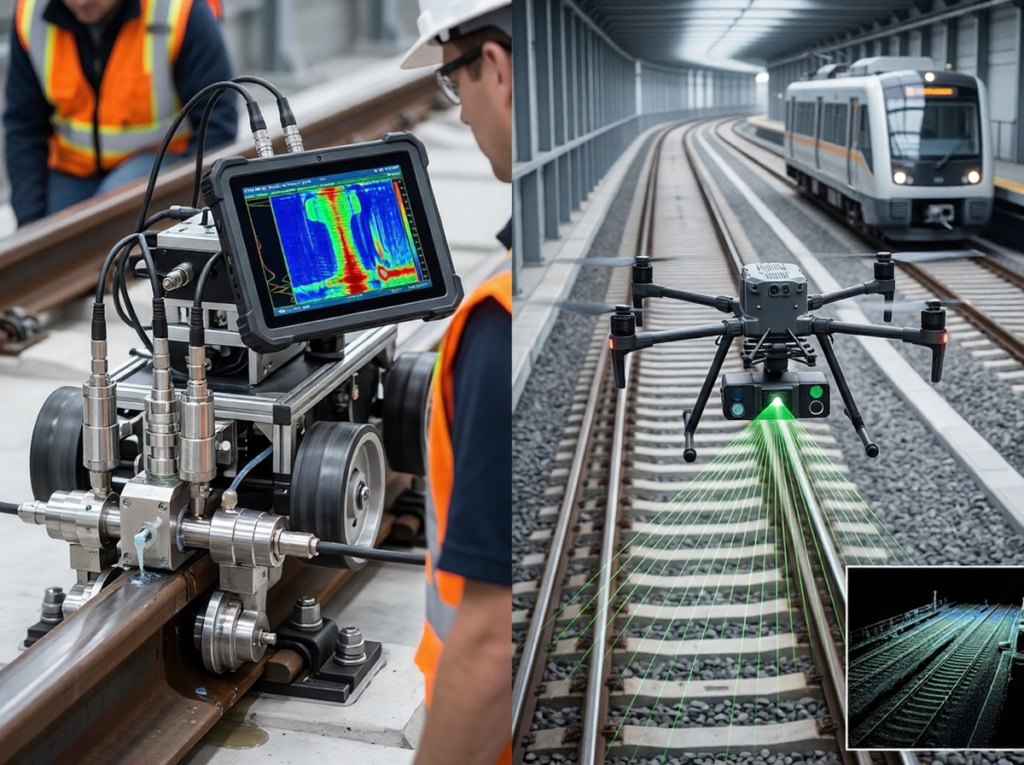
Rail networks carry millions of passengers and tons of freight every day. Maintaining these systems requires constant monitoring, and rail inspection technology plays a central role in ensuring safe operations. As railway infrastructure ages and traffic increases, rail inspection technology continues to evolve with advanced digital solutions that improve accuracy and efficiency. Modern rail inspection technology now combines automation, artificial intelligence, and sensor networks to detect faults before they become serious problems.
Rail transport remains one of the most reliable modes of transportation in the world. However, safety depends heavily on the condition of rail tracks and supporting infrastructure. Even small defects can lead to delays, costly repairs, or serious accidents. For this reason, railway operators increasingly rely on modern rail inspection technology to monitor track conditions and predict maintenance needs.
Technological innovation has transformed the inspection process. Traditional inspection methods depended on manual observation and scheduled checks. Today, digital tools allow rail systems to detect problems in real time. Advanced inspection systems can identify cracks, track misalignment, or structural stress long before they threaten safety. These developments highlight how modern rail systems continue to evolve.
The Growing Importance of Rail Inspection Technology
Railway infrastructure experiences constant pressure. Heavy trains, environmental conditions, and daily usage gradually affect the integrity of tracks and components. Continuous monitoring helps prevent failures and ensures smooth operations.
Modern rail systems cannot rely solely on routine maintenance. Instead, operators increasingly adopt rail inspection technology to monitor rail health continuously. These systems provide data that helps engineers understand how tracks behave under real-world conditions.
Why Railway Infrastructure Needs Constant Monitoring
Railway tracks face multiple stress factors every day. Weather conditions cause expansion and contraction in metal rails. Heavy loads from trains generate vibrations and pressure on track structures.
Several factors highlight the need for regular monitoring:
- High train frequency increases track wear.
- Environmental exposure affects metal strength and stability.
- Aging infrastructure requires closer supervision.
- Small cracks may develop into major structural problems.
Regular inspections help identify these issues before they escalate. Engineers rely on detailed track assessments to maintain safety standards across rail networks.
Traditional Rail Inspection Methods
For many decades, railway maintenance teams relied on manual inspection techniques. Workers walked along the tracks and visually examined rail components.
Traditional inspection methods included:
- Visual inspection of rails and fasteners
- Manual measurement of track alignment
- Hammer testing to detect internal flaws
- Scheduled inspection vehicles
These techniques helped railway systems maintain safety for years. However, manual methods often require large teams and significant time. Inspections also depended heavily on human observation.
Limitations of Conventional Inspection Systems
Manual inspections remain useful, but they have clear limitations. Human inspectors may overlook small defects that develop deep inside rail materials. Additionally, visual inspections cannot always detect early structural problems.
Some challenges associated with traditional inspection methods include:
- Limited inspection frequency
- Human fatigue affects accuracy
- Difficulty detecting internal rail defects
- Slow reporting and analysis
Rail networks continue to expand globally. With increasing traffic volumes, operators require faster and more reliable monitoring systems.
Traditional inspections built the foundation for railway safety. However, modern rail networks demand tools that can detect problems earlier and with greater precision. What technologies are transforming the inspection process today? The next section reveals the innovations shaping the future of railway safety.
Key Innovations Transforming Rail Inspection Technology
Technological progress has introduced several advanced tools that enhance inspection accuracy. These innovations allow rail operators to detect faults quickly and plan maintenance effectively.
Modern rail inspection technology integrates artificial intelligence, sensors, and automated inspection systems. These technologies collect large amounts of data and convert it into actionable insights for maintenance teams.
Artificial Intelligence and Machine Learning
Artificial intelligence has become a powerful tool in railway inspection. Machine learning systems analyze large datasets collected from rail sensors and inspection vehicles.
AI algorithms detect patterns that indicate potential failures. By studying vibration data and structural measurements, the system identifies abnormalities before they become serious defects.
Key advantages of AI-driven inspections include:
- Early detection of track defects
- Faster analysis of inspection data
- Improved predictive maintenance planning
- Reduced reliance on manual inspections
Machine learning models improve over time as they process more inspection data. This ability allows rail systems to become smarter and more efficient.
Drone-Based Rail Inspections
Drones now support railway inspections in areas that are difficult to access. Remote locations, bridges, and tunnels often require special inspection methods.
Drone technology allows inspectors to capture high-resolution images of rail infrastructure. These images help engineers identify potential issues without sending workers into hazardous areas.
Benefits of drone inspections include:
- Faster coverage of long rail sections
- Improved safety for inspection teams
- Detailed aerial imaging of infrastructure
- Reduced operational disruptions
Drones also help railway authorities monitor large rail networks quickly. The technology supports faster decision-making when maintenance issues arise.
Smart Sensors and IoT Monitoring
Sensor technology is another important development in rail inspection. Engineers install sensors along rail tracks to monitor structural conditions continuously.
These sensors collect real-time data about rail vibrations, temperature, and pressure. The information travels through Internet of Things (IoT) networks to centralized monitoring systems.
Continuous monitoring offers several advantages:
- Real-time detection of unusual track behavior
- Immediate alerts when abnormal conditions appear
- Better understanding of long-term track performance
- Improved maintenance scheduling
With sensor networks in place, railway systems gain constant visibility into track health.
Automated Track Inspection Vehicles
Automated inspection vehicles represent one of the most advanced developments in railway monitoring. These specialized vehicles travel along rail tracks while scanning the infrastructure.
Inspection vehicles often use laser scanners and ultrasonic testing equipment. These tools detect internal rail defects that cannot be seen from the surface.
Key capabilities of automated inspection vehicles include:
- High-speed track scanning
- Detection of microscopic cracks
- Measurement of track geometry
- Collection of detailed inspection data
These systems significantly improve inspection efficiency. Engineers receive accurate data without interrupting normal rail operations.
Modern technologies have already improved railway monitoring in remarkable ways. Yet these tools represent only the beginning. The next generation of inspection systems combines automation with advanced analytics to transform rail safety even further.
How Automation Improves Safety and Efficiency
Automation has changed how railway inspections operate. Advanced monitoring systems collect and process large volumes of data quickly.
With automation, railway operators no longer depend entirely on scheduled inspections. Instead, intelligent systems continuously evaluate rail conditions.
Real-Time Data Collection
Modern inspection tools gather information in real time. Sensors and automated vehicles transmit data instantly to monitoring platforms.
This continuous data flow provides several advantages:
- Immediate detection of track defects
- Faster maintenance responses
- Reduced risk of unexpected failures
Engineers can now respond to potential problems much earlier than before.
Predictive Maintenance Systems
Predictive maintenance represents one of the most valuable outcomes of modern inspection technology. By analyzing historical and real-time data, engineers can forecast potential failures.
Predictive systems evaluate patterns in track wear, vibration, and environmental conditions. When the system detects unusual trends, maintenance teams receive early warnings.
Benefits of predictive maintenance include:
- Prevention of costly infrastructure failures
- Better planning of maintenance schedules
- Reduced downtime for railway operations
Predictive systems allow rail operators to repair infrastructure before problems escalate.
Cost Savings for Railway Operators
Automated inspection technology also improves financial efficiency. Rail infrastructure maintenance often requires significant investment.
Advanced inspection systems reduce unnecessary maintenance activities. Instead of performing routine repairs, operators focus on areas that require attention.
Automation supports cost savings by:
- Reducing manual labor requirements
- Preventing large-scale infrastructure failures
- Improving maintenance resource allocation
The combination of automation and data analytics helps railway operators manage complex infrastructure systems more effectively.
Automation delivers impressive improvements in railway monitoring. However, the rail industry still faces several operational challenges that slow innovation. Understanding these obstacles reveals why continuous improvement remains necessary.
What Are the Biggest Challenges Facing the Rail Industry?
Railway systems around the world continue to expand. Despite technological progress, the industry faces several structural challenges that affect maintenance and safety.
Aging Rail Infrastructure
Many railway networks were built decades ago. As infrastructure ages, maintenance demands increase.
Older rail components may not support modern train speeds or heavy freight loads. Continuous monitoring becomes essential to ensure safe operations.
High Implementation Costs
Advanced inspection systems require substantial investment. Technologies like AI monitoring platforms and automated inspection vehicles involve high costs.
Some railway operators struggle to allocate funding for large-scale technology upgrades.
Data Integration Issues
Modern inspection systems produce enormous amounts of data. Integrating this information into a unified monitoring platform can be challenging.
Rail operators must ensure that different systems communicate effectively.
Workforce Training Requirements
New technologies require skilled technicians. Maintenance teams must learn how to interpret digital inspection data and operate advanced monitoring tools.
Training programs play a critical role in successful technology adoption.
Despite these challenges, innovation in railway monitoring continues to accelerate. Emerging technologies promise to reshape the way rail systems inspect and maintain their infrastructure.
Emerging Technologies Shaping the Future of Rail Inspection Technology
Railway inspection systems continue to develop rapidly. New digital tools now support more detailed infrastructure monitoring and maintenance planning. These emerging technologies strengthen the capabilities of modern rail inspection technology and provide rail operators with deeper insights into track performance.
Digital Twins for Railway Systems
Digital twin technology creates virtual models of real-world railway infrastructure. Engineers use these models to simulate track behavior under various conditions.
A digital twin collects real-time information from sensors installed along the rail network. The system then updates the virtual model with current data. Engineers can analyze the model to detect potential structural issues before they occur.
Digital twins provide several advantages:
- Real-time visualization of track conditions
- Accurate simulation of stress and load patterns
- Improved infrastructure planning
- Better risk assessment during maintenance
Railway operators benefit from the ability to test maintenance strategies within a virtual environment. These simulations reduce uncertainty and improve decision-making.
Satellite Monitoring Systems
Satellite technology now plays an important role in railway inspection. Advanced satellite imaging systems monitor track alignment and infrastructure stability across large geographic areas.
Satellite monitoring helps detect subtle ground movements that affect rail infrastructure. These shifts may occur due to soil instability, earthquakes, or underground construction activity.
Important benefits of satellite monitoring include:
- Detection of ground deformation near rail tracks
- Monitoring of long rail corridors
- Support for large-scale infrastructure planning
- Reduced need for manual surveys
Satellite-based inspection methods complement other monitoring tools within rail inspection technology systems. Together, these technologies create a comprehensive monitoring network.
Autonomous Inspection Robots
Robotic systems represent another major development in rail inspection. Autonomous robots now inspect tunnels, bridges, and other complex infrastructure areas.
Robots equipped with cameras and sensors navigate through difficult environments where manual inspections would be dangerous. These machines capture detailed visual and structural data.
Robotic inspection systems offer several advantages:
- Improved safety for inspection teams
- Detailed imaging of confined infrastructure areas
- Continuous monitoring capability
- Faster identification of structural damage
Robotic technologies expand the reach of modern inspection systems. Rail operators can now examine infrastructure that was previously difficult to access.
What Are the New Innovations in Railway?
Railway innovation extends beyond inspection systems. The entire industry continues to adopt digital technologies that improve operational efficiency and passenger safety.
Modern rail networks integrate several technological developments that complement rail inspection technology. These innovations create safer and more reliable transportation systems.
Smart Railway Infrastructure
Smart infrastructure combines sensors, automated monitoring systems, and advanced communication networks. These systems allow railway authorities to monitor rail conditions continuously.
Sensors embedded in rails and supporting structures collect valuable data about vibration levels, temperature changes, and structural stress. This information helps engineers evaluate track performance and detect abnormalities.
Smart infrastructure improves railway operations by:
- Providing continuous monitoring of rail components
- Delivering early warnings of infrastructure problems
- Supporting predictive maintenance strategies
This infrastructure forms the foundation of modern railway monitoring systems.
High-Speed Data Processing Systems
Modern rail networks generate enormous amounts of inspection data. High-speed computing platforms analyze this information quickly and efficiently.
Data processing systems evaluate inspection results from multiple sources. These sources may include drones, sensors, and automated inspection vehicles.
Fast data analysis supports several operational improvements:
- Faster identification of rail defects
- Improved maintenance planning
- More accurate infrastructure assessments
Advanced computing systems ensure that inspection data leads to timely decisions.
Integrated Monitoring Platforms
Integrated monitoring platforms bring together different inspection technologies into a single system. Engineers can review information from sensors, drones, satellites, and inspection vehicles through one platform.
This integration simplifies infrastructure management. Maintenance teams gain a complete view of railway conditions across the entire network.
Integrated monitoring platforms help railway operators:
- Manage inspection data efficiently
- Coordinate maintenance activities
- Improve communication between operational teams
By combining multiple monitoring tools, integrated platforms strengthen the overall performance of rail inspection technology.
The Future Outlook of Rail Inspection Technology
The future of railway infrastructure depends heavily on technological innovation. Rail operators continue to adopt advanced monitoring tools that enhance safety and efficiency.
Artificial intelligence will likely play an even larger role in inspection systems. AI algorithms can analyze enormous datasets and identify patterns that human inspectors might miss.
Several trends will shape the future development of rail inspection technology:
- Greater automation in inspection processes
- Expansion of predictive maintenance systems
- Wider use of robotics and drones
- Integration of cloud-based monitoring platforms
These technologies will allow railway operators to maintain infrastructure more effectively while reducing operational risks.
Continuous monitoring will become standard practice across modern rail networks. Inspection systems will operate alongside trains, collecting and analyzing data in real time.
These developments promise to improve railway reliability and reduce the likelihood of infrastructure failures.
Final Thoughts
Railway infrastructure remains a critical component of global transportation systems. Ensuring the safety and reliability of these networks requires continuous monitoring and effective maintenance strategies. Modern rail inspection technology plays a vital role in detecting defects, improving maintenance planning, and protecting passengers and cargo.
Technological innovations like artificial intelligence, drones, sensors, and robotic inspection systems continue to transform railway monitoring practices. These tools enable engineers to identify potential issues earlier and respond more quickly to infrastructure challenges. As rail networks expand and traffic volumes increase, the importance of rail inspection technology will only grow.
Future railway systems will rely heavily on data-driven monitoring and automated inspection processes. By adopting advanced technologies and integrating multiple monitoring tools, railway operators can ensure safer and more reliable transportation networks for decades to come.
Key Points
- Rail inspection technology plays a critical role in maintaining railway safety and preventing infrastructure failures.
- Advanced rail inspection technology systems help engineers detect early signs of rail defects before accidents occur.
- Artificial intelligence improves inspection accuracy by analyzing large volumes of rail infrastructure data efficiently.
- Drone-based inspection systems allow railway operators to monitor remote or dangerous rail locations safely.
- Smart sensors embedded in rail tracks provide continuous monitoring of temperature, vibration, and structural stress.
- Automated inspection vehicles scan railway tracks quickly while detecting microscopic cracks and alignment problems.
- Predictive maintenance powered by rail inspection technology helps railway operators schedule repairs before major failures.
- Satellite monitoring and digital twin systems provide broader insights into railway infrastructure performance.
- Integrated monitoring platforms combine data from multiple technologies to improve maintenance planning decisions.
- Continued innovation in rail inspection technology will strengthen railway safety, efficiency, and long-term infrastructure reliability.
FAQs
What are the 5 emerging technologies in railway systems?
Key emerging railway technologies include artificial intelligence for predictive maintenance, IoT sensors for real-time monitoring, drone inspections, satellite-based infrastructure monitoring, and robotic inspection systems.
What is the future of railway technology?
The future of railway technology focuses on automation, predictive maintenance, smart monitoring systems, and advanced rail inspection technology that improves safety and infrastructure reliability.
What are the different types of railways?
Common railway types include high-speed railways, freight railways, metro systems, light rail systems, and conventional passenger railways used for long-distance transport.
Why is WAP-7 famous?
The WAP-7 locomotive is famous for its high power, reliability, and ability to haul long passenger trains efficiently at high speeds.
What are some examples of innovation in railways?
Examples include automated track inspection vehicles, AI-based defect detection, drone infrastructure monitoring, smart sensor networks, and predictive maintenance systems.
