

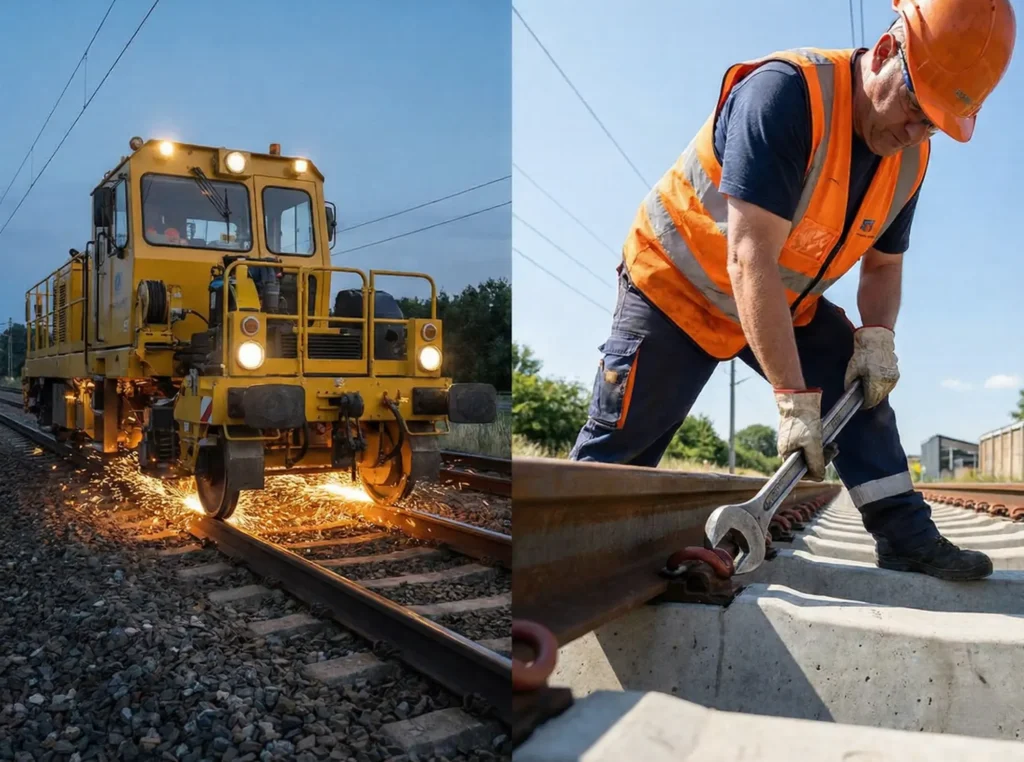
Rail tracks carry heavy loads every day, yet small maintenance issues can shorten their service life faster than expected. Rail maintenance tips to extend track life focus on preventing early wear, reducing failures, and keeping rail systems safe and reliable over time.
This article offers clear, practical guidance on track inspection, wear control, ballast care, drainage, and preventive planning. It explains how consistent maintenance decisions help extend track life, lower repair costs, and improve long-term rail performance.
Why Rail Maintenance Matters
Railways operate under constant pressure from heavy loads, tight schedules, and public safety expectations. Rail maintenance tips to extend track life play a direct role in keeping trains running smoothly while reducing unexpected failures. When maintenance is proactive rather than reactive, small defects are addressed before they turn into major disruptions.
Safety and smooth operations
Well-maintained track reduces the risk of derailments, speed restrictions, and service delays. Regular inspections, timely repairs, and proper alignment help trains maintain stable contact with the rail, even under high-speed or heavy-haul conditions. This improves ride quality and protects both passengers and freight.
Key safety benefits include:
- Fewer rail fractures and broken components
- Improved track geometry and alignment
- Reduced emergency repairs and shutdowns
In addition, smooth operations support better timetable reliability. Trains can operate at intended speeds without frequent slow orders, which improves network efficiency and customer confidence.
Lower long-term costs
Ignoring early signs of wear often leads to higher repair costs later. Preventive rail maintenance spreads costs over time and avoids expensive track renewals. Simple actions such as grinding, tamping, and drainage cleaning can extend asset life by several years.
Long-term cost advantages include:
- Reduced need for full rail replacement
- Lower labour and equipment costs over time
- Better use of maintenance budgets
However, even the best maintenance strategy can fail if the root causes of track damage are not addressed. That leads directly to the next issue every rail operator must face.
Common Causes of Track Damage
Track damage rarely happens overnight. It builds gradually due to repeated stress and environmental exposure. Understanding these causes is essential when applying rail maintenance tips to extend track life effectively.
Heavy loads and traffic
Modern rail networks carry heavier axle loads and higher traffic volumes than ever before. This constant pressure accelerates rail head wear, fatigue cracking, and sleeper movement. Curves, junctions, and braking zones are especially vulnerable due to higher forces.
Common load-related issues include:
- Rail head wear and side wear
- Fatigue cracks from repeated stress
- Loosened fasteners and disturbed ballast
Without proper monitoring, these issues can remain hidden until they cause serious failures.
Weather and drainage issues
Weather has a major impact on track condition. Temperature changes cause rail expansion and contraction, while poor drainage weakens the track foundation. Standing water leads to ballast fouling, sleeper movement, and loss of track stability.
Typical weather-related problems include:
- Track buckling during hot conditions
- Flooded ballast beds and soft formation
- Accelerated corrosion of rail components
When combined with heavy traffic, these factors can rapidly shorten track life. This is why identifying damage early is critical, which brings us to the next stage: regular track inspection and monitoring.
Regular Track Inspection
Regular inspections form the backbone of effective track care. Without frequent checks, defects can develop unnoticed and lead to sudden failures. Applying rail maintenance tips to extend track life starts with identifying problems early and tracking how they change over time.
Visual checks and measurements
Visual inspections remain one of the most effective ways to detect early signs of track damage. Inspectors look for surface defects, loose components, and changes in alignment that indicate deeper issues. These checks are often combined with basic measurements to confirm track condition.
Key focus areas include:
- Rail head cracks, spalling, and wear
- Sleeper condition and spacing
- Fastener tightness and missing components
- Track gauge, alignment, and level
Routine measurements help confirm whether the track remains within safe limits. When small deviations are caught early, corrective work can be planned instead of rushed. However, not all defects are visible on the surface, which is why deeper testing becomes essential.
Ultrasonic testing schedules
Ultrasonic testing detects internal rail defects that cannot be seen during visual inspections. It identifies cracks, inclusions, and fatigue damage within the rail head and web before they reach a critical stage.
Effective ultrasonic testing relies on:
- Scheduled testing based on traffic levels
- Higher frequency checks on curves and high-stress zones
- Accurate defect recording and trend analysis
By following structured testing schedules, maintenance teams can remove or repair damaged rails before failure occurs. Once defects are identified and controlled, attention must turn to managing wear caused by daily train movement.
Rail Grinding and Wear Control
Rail grinding plays a critical role in controlling wear and maintaining rail health. It is one of the most practical rail maintenance tips to extend track life, especially on busy routes where rail stress is constant.
Managing rail profile
Over time, rail profiles change due to wheel contact, braking forces, and curvature. An incorrect profile increases wheel-rail forces, accelerates wear, and raises the risk of cracking. Rail grinding restores the correct shape, allowing wheels to roll smoothly and evenly.
Benefits of proper profile management include:
- Reduced wheel and rail wear
- Improved train stability
- Lower noise and vibration levels
Consistent grinding schedules help prevent severe damage rather than correcting it after the fact.
Reducing fatigue and defects
Grinding also removes surface cracks and early fatigue damage before they grow deeper into the rail. This slows crack growth and extends the usable life of the rail.
Key advantages include:
- Delayed onset of rolling contact fatigue
- Fewer broken rails and emergency repairs
- Longer intervals between rail replacements
When grinding is combined with inspection data, it becomes far more effective. However, even perfectly profiled rails rely on a stable track foundation, which leads to the next critical area of maintenance: ballast, sleepers, and drainage care.
Regular Track Inspection
Regular inspections form the backbone of effective track care. Without frequent checks, defects can develop unnoticed and lead to sudden failures. Applying rail maintenance tips to extend track life starts with identifying problems early and tracking how they change over time.
Visual checks and measurements
Visual inspections remain one of the most effective ways to detect early signs of track damage. Inspectors look for surface defects, loose components, and changes in alignment that indicate deeper issues. These checks are often combined with basic measurements to confirm track condition.
Key focus areas include:
- Rail head cracks, spalling, and wear
- Sleeper condition and spacing
- Fastener tightness and missing components
- Track gauge, alignment, and level
Routine measurements help confirm whether the track remains within safe limits. When small deviations are caught early, corrective work can be planned instead of rushed. However, not all defects are visible on the surface, which is why deeper testing becomes essential.
Ultrasonic testing schedules
Ultrasonic testing detects internal rail defects that cannot be seen during visual inspections. It identifies cracks, inclusions, and fatigue damage within the rail head and web before they reach a critical stage.
Effective ultrasonic testing relies on:
- Scheduled testing based on traffic levels
- Higher frequency checks on curves and high-stress zones
- Accurate defect recording and trend analysis
By following structured testing schedules, maintenance teams can remove or repair damaged rails before failure occurs. Once defects are identified and controlled, attention must turn to managing wear caused by daily train movement.
Rail Grinding and Wear Control
Rail grinding plays a critical role in controlling wear and maintaining rail health. It is one of the most practical rail maintenance tips to extend track life, especially on busy routes where rail stress is constant.
Managing rail profile
Over time, rail profiles change due to wheel contact, braking forces, and curvature. An incorrect profile increases wheel-rail forces, accelerates wear, and raises the risk of cracking. Rail grinding restores the correct shape, allowing wheels to roll smoothly and evenly.
Benefits of proper profile management include:
- Reduced wheel and rail wear
- Improved train stability
- Lower noise and vibration levels
Consistent grinding schedules help prevent severe damage rather than correcting it after the fact.
Reducing fatigue and defects
Grinding also removes surface cracks and early fatigue damage before they grow deeper into the rail. This slows crack growth and extends the usable life of the rail.
Key advantages include:
- Delayed onset of rolling contact fatigue
- Fewer broken rails and emergency repairs
- Longer intervals between rail replacements
When grinding is combined with inspection data, it becomes far more effective. However, even perfectly profiled rails rely on a stable track foundation, which leads to the next critical area of maintenance: ballast, sleepers, and drainage care.
Preventive Maintenance Planning
Preventive maintenance shifts rail care from reactive fixes to long-term control. It brings together inspection results, wear data, and operational demands into one structured approach. Among all rail maintenance tips to extend track life, planning ahead is what turns good maintenance into consistent results.
Planned maintenance cycles
Planned maintenance cycles ensure work is carried out at the right time, not after failures occur. These cycles are based on traffic levels, axle loads, track type, and environmental conditions. High-stress areas receive attention more often, while stable sections follow longer intervals.
Effective maintenance cycles typically include:
- Scheduled inspections and testing
- Routine grinding and tamping windows
- Timely replacement of worn components
By spreading maintenance activities across the year, operators avoid sudden service disruptions and reduce emergency repair costs. However, schedules alone are not enough without accurate information to guide decisions.
Use of track data and records
Track data turns maintenance planning into a targeted process. Inspection reports, ultrasonic test results, and geometry measurements reveal patterns that help predict future issues. When this data is recorded and reviewed consistently, maintenance teams can act before defects worsen.
Key data benefits include:
- Early identification of recurring problem areas
- Better prioritisation of maintenance resources
- Clear tracking of asset condition over time
Reliable records also support long-term budgeting and compliance requirements. When planning is backed by data, maintenance becomes proactive rather than reactive. This final step ties together every inspection, repair, and control method used to extend track life and protect rail assets for the future.
Overall, extending track life starts with precise maintenance and early defect detection. Our ultrasonic examination identifies hidden rail flaws, while our magnetic particle examination detects surface defects. Supported by Level III services, we help keep your railway infrastructure safe, reliable, and long-lasting.
Conclusion
Effective rail upkeep depends on consistency, planning, and early action. By applying rail maintenance tips to extend track life, operators can control wear, detect defects early, and maintain stable track conditions under daily operational stress.
Regular inspections, timely grinding, and structured maintenance cycles work together to prevent small issues from becoming major failures.
In the long term, a preventive approach supported by accurate track data improves safety, reduces costs, and extends asset life. When maintenance decisions are guided by inspection results and clear planning, rail networks remain reliable, resilient, and fit for continued service demands.
Key Points
- Rail maintenance is essential for safe operations and consistent train performance.
- Preventive maintenance helps avoid sudden failures and service disruptions.
- Early defect detection reduces the risk of derailments and speed restrictions.
- Heavy axle loads and high traffic accelerate rail wear and fatigue.
- Weather and poor drainage weaken track structure and reduce stability.
- Regular visual inspections help identify surface defects and loose components.
- Ultrasonic testing detects internal rail defects before they become critical.
- Rail grinding restores proper rail profile and controls wear growth.
- Managing fatigue cracks extends rail life and reduces emergency repairs.
- Data-driven maintenance planning improves long-term track reliability and cost control.
FAQs
What equipment or tools are used in rail maintenance to extend track life?
Tools include inspection systems (e.g., ultrasonic), rail grinders, ballast regulators/tampers, and machines for sleeper replacement. These help maintain safe condition and extend track service.
How does drainage affect rail track life?
Proper drainage prevents water buildup that weakens ballast and formation, reducing stability and accelerating wear. Regular checks and system cleaning help maintain track integrity.
What common problems cause track damage?
Track damage often results from heavy loads and traffic, weather extremes, poor drainage, or neglected inspections that allow early wear to worsen.
What is preventive rail maintenance and why does it matter?
Preventive rail maintenance refers to scheduled inspection and corrective tasks before failures occur. It matters because it enhances safety, extends track life, and reduces overall costs.
