

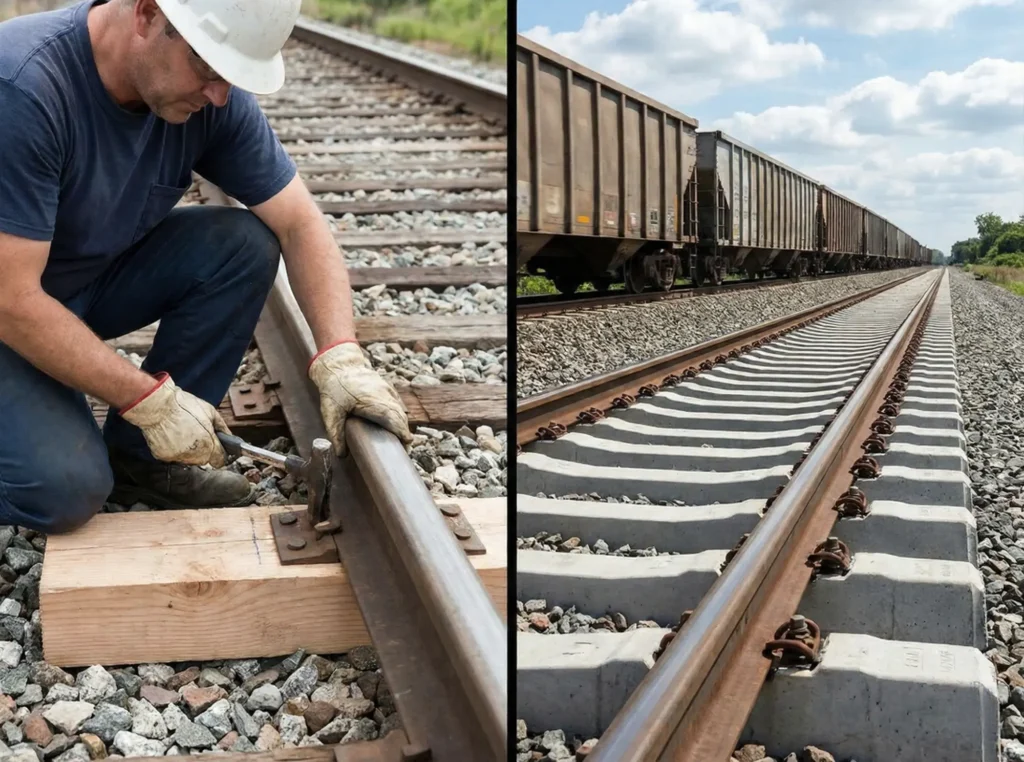
Rail ties are the unsung heroes of every railway, quietly supporting thousands of tons of steel wheels every day. Without them, trains wouldn’t stay on track, and the entire rail network would lose stability.
In this article, we’ll explore what rail ties are, the materials they’re made from, and how they work to keep trains running safely and efficiently. You’ll also learn about the differences between tie materials, why maintenance matters, and the critical role these components play in railway safety and performance.
What Rail Ties Are
Rail ties, also known as sleepers, are rectangular supports that sit perpendicular to the rails on a railway track. They form the backbone of the track structure, ensuring that the rails remain properly spaced and aligned. While “rail ties” is the term most commonly used in North America, “sleepers” is widely used in the UK and other parts of the world, but both refer to the same essential component of the railway system.
The primary purpose of rail ties is simple yet critical: they keep the rails stable under the immense weight of trains while distributing that weight evenly to the track bed. They also provide a foundation for the fasteners that secure rails in place, preventing movement that could derail a train.
Key features of rail ties include:
- Shape and size: Usually rectangular, long enough to span the width of the track.
- Material options: Wood, concrete, steel, or composite, each with different durability and maintenance requirements.
- Placement: Positioned at regular intervals along the track to maintain gauge and stability.
Although their appearance may seem ordinary, the role of rail ties extends beyond mere support. Their design and material directly affect safety, track longevity, and ride comfort. But understanding their purpose is only the beginning, to see why rail ties are indispensable, we must first look at exactly how they work on the rails.
How Rail Ties Work
Rail ties perform several critical functions that keep trains running safely. At a basic level, they hold the rails in place and maintain the correct gauge, the distance between the two rails. A stable gauge is essential because even small shifts can cause derailments or uneven train movement.
The weight of every passing train is enormous, yet rail ties help distribute this weight across the track bed, preventing damage to the ballast and the ground underneath. Without ties, the rails would sink or shift, making the track unsafe.
Here’s how rail ties achieve this:
- Holding the rails: Fasteners attach rails securely to the tie, keeping them from moving laterally.
- Maintaining gauge: Ties are set at precise intervals to ensure the spacing between rails remains consistent.
- Distributing weight: Each tie spreads the train’s load over a wider area, reducing pressure on the underlying ballast.
- Absorbing vibration: Ties cushion the impact of wheels passing over the track, reducing wear on both rails and trains.
Different materials affect performance: concrete ties handle heavy freight well but are less forgiving under vibration, while wooden ties absorb shock better but require more maintenance. Steel and composite ties offer other advantages, which we’ll explore in the next section.
The effectiveness of rail ties in these roles demonstrates why they are far more than just pieces of wood or concrete on a track. Their design and placement directly influence the safety, efficiency, and durability of an entire railway system, and the choices made here can make a world of difference in operational performance.
Materials Used for Rail Ties
Rail ties can be made from a variety of materials, each chosen for specific track requirements, environmental conditions, and load demands. The main types include wood, concrete, steel, and composite ties, each with unique characteristics that influence performance and maintenance.
Wooden Ties
Wood has been the traditional choice for rail ties for over a century. They are relatively easy to produce, flexible under load, and naturally absorb vibration, reducing wear on rails and trains. Wooden ties are usually treated with preservatives to resist rot and insect damage.
- Advantages: Shock absorption, easy to handle, widely available.
- Disadvantages: Shorter lifespan (20–30 years), prone to weather damage, requires regular maintenance.
Concrete Ties
Concrete ties are favoured in modern heavy-traffic railways due to their strength and durability. They are rigid and can support higher loads, making them ideal for freight lines. Concrete ties resist decay and require less frequent replacement than wood.
- Advantages: High durability, long lifespan, low maintenance.
- Disadvantages: Less flexible, heavier to install, higher initial cost.
Steel Ties
Steel ties are strong and resistant to environmental damage, often used in areas prone to fire or extreme weather. They are lighter than concrete but more durable than untreated wood.
- Advantages: Strong, fire-resistant, durable in extreme climates.
- Disadvantages: Susceptible to corrosion without proper treatment, less shock absorption.
Composite Ties
Composite ties are made from recycled plastics, rubber, or a mixture of materials. They combine durability with environmental benefits, reducing reliance on timber and resisting rot, insects, and weathering.
- Advantages: Long lifespan, low maintenance, environmentally friendly.
- Disadvantages: Higher initial cost, limited availability in some regions.
Each material brings strengths and weaknesses, and the choice often depends on track load, climate, and maintenance capabilities. But how do these differences translate to real-world performance? That brings us to comparing rail tie materials.
Comparison of Rail Tie Materials
When selecting rail ties, engineers consider durability, lifespan, cost, and typical use cases. Here’s how each material compares:
Durability
- Concrete and steel ties excel under heavy loads and harsh conditions.
- Wooden ties are less durable but absorb shock better.
- Composite ties resist rot, insects, and corrosion effectively.
Lifespan
- Wooden ties: 20–30 years with treatment.
- Concrete ties: 40–50 years.
- Steel ties: 30–40 years.
- Composite ties: 40–50 years.
Cost
- Wooden ties are inexpensive initially but need more maintenance.
- Concrete and composite ties are higher upfront but cheaper long-term.
- Steel ties are mid-range for installation and maintenance.
Use Cases
- Wooden ties: Light rail, low-speed tracks, rural lines.
- Concrete ties: Heavy freight, high-speed lines, busy networks.
- Steel ties: Fire-prone or harsh-weather areas.
- Composite ties: Environmentally sensitive projects or where longevity is key.
Choosing the right material affects safety, performance, and total cost of ownership over decades. But material alone isn’t enough, proper installation and maintenance are crucial to ensure rail ties continue to perform under heavy traffic, which we’ll cover next.
Maintenance and Replacement of Rail Ties
Rail ties may be built to last, but they are not permanent. Continuous train loads, weather exposure, and ground movement slowly degrade even the strongest materials. Regular maintenance and timely replacement are essential to keep tracks safe, stable, and compliant with rail standards.
Inspection of Rail Ties
Inspection is the first line of defence against track failure. Rail ties are routinely checked during scheduled track inspections and maintenance cycles. These checks focus on structural condition, alignment, and the ability of the tie to hold fasteners securely.
Common inspection checks include:
- Cracks, splits, or rot in wooden rail ties
- Surface cracking or internal fractures in concrete ties
- Corrosion or deformation in steel ties
- Fastener loosening or rail seat damage
- Loss of ballast support beneath the tie
Early detection allows maintenance teams to fix small issues before they escalate. However, when damage exceeds safe limits, repair is no longer enough.
When Rail Ties Need Replacement
Rail ties are replaced when they can no longer support rail loads or maintain proper gauge. Replacement schedules depend on material type, traffic levels, and environmental conditions.
Typical replacement triggers include:
- Failure to hold rail fasteners
- Excessive wear at the rail seat
- Structural cracking or decay
- Repeated alignment issues in the same track section
While wooden ties may need replacement more frequently, concrete and composite ties often remain in service for decades. However, no tie material is immune to failure if maintenance is ignored.
Risks of Failing Rail Ties
Failing rail ties pose serious safety and operational risks. When ties lose their ability to support and position rails, the track can quickly become unstable.
Key risks include:
- Rail movement and gauge widening
- Increased vibration and rail wear
- Speed restrictions and service delays
- Higher derailment risk in severe cases
A single failing tie may seem insignificant, but multiple weakened ties in one section can compromise an entire stretch of track. This is why proactive maintenance is critical.
Rail ties quietly carry the burden of every passing train, but their condition determines how safely and efficiently a railway operates. When maintenance and replacement are done right, problems are prevented long before they reach the surface, and that’s what keeps rail networks running smoothly year after year.
Conclusion
Rail ties play a vital role in keeping railway networks safe, stable, and efficient. By holding rails in position, maintaining correct gauge, and distributing immense train loads, they form the foundation of reliable track infrastructure. Without well-designed and properly maintained rail ties, even the strongest rails and ballast systems would quickly fail.
From material selection to regular inspection and timely replacement, every decision surrounding rail ties directly affects railway performance. Strong, well-maintained ties reduce derailment risks, extend track life, and support smoother, faster rail operations. In the end, rail ties may sit quietly beneath the rails, but their impact on safety, efficiency, and long-term reliability is impossible to ignore.
Key Points
- Rail ties, also called sleepers, are the structural foundation of railway tracks.
- Rail ties keep rails aligned, maintain correct gauge, and prevent track movement.
- Rail ties distribute train weight evenly to the ballast and ground below.
- Wooden rail ties absorb vibration well but have a shorter lifespan.
- Concrete rail ties offer high durability and suit heavy freight and high-speed lines.
- Steel rail ties perform well in harsh or fire-prone environments but need corrosion protection.
- Composite rail ties provide long service life and environmental benefits at higher initial cost.
- Regular inspection of rail ties helps identify damage before safety is compromised.
- Failing rail ties increase risks such as rail movement, speed restrictions, and derailments.
- Proper maintenance and timely replacement of rail ties improve railway safety and efficiency.
FAQs
Can rail ties be repaired instead of replaced?
Minor problems, like small cracks in concrete ties, may be repaired, but significant structural damage usually requires full replacement for safety.
Are there alternatives to wooden rail ties?
Yes, concrete, steel and composite rail ties are widely used alternatives that can offer greater durability or specific performance benefits.
How do rail ties help trains run smoothly?
Rail ties maintain correct gauge and alignment, absorb vibrations and distribute loads, which helps reduce wear on rails and improves ride quality.
Can old rail ties be reused for other purposes?
Yes, old wooden rail ties are sometimes repurposed for landscaping or construction, but care should be taken due to chemical treatments in the wood.
