
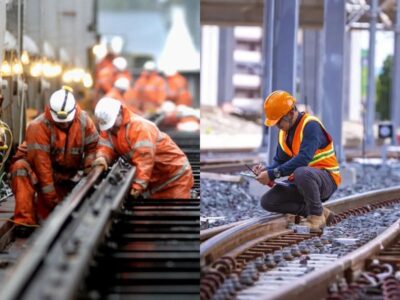
Railways keep the world moving, but what happens when something suddenly breaks down? That’s where corrective maintenance comes into play. Many people ask, “What is corrective maintenance in railway?”
It refers to the repairs and restorations carried out after a fault or failure has occurred in the railway system. From damaged tracks to faulty signals, corrective maintenance ensures that trains get back on track quickly and safely.
In this article, we’ll explain the definition, scope, and importance of corrective maintenance in railway systems. You’ll learn how it differs from preventive maintenance, where it fits into railway operations, and why it remains an essential part of keeping trains running efficiently.
Whether you’re a student, rail professional, or curious reader, this guide will help you understand how reactive maintenance keeps railway infrastructure reliable and secure.
What is Corrective Maintenance in Railway?
In simple terms, it’s the type of maintenance carried out after a fault, defect, or failure has already occurred in railway infrastructure or equipment.
This process involves identifying the issue, repairing or replacing the faulty component, and restoring the system to normal operation. It’s often referred to as corrective railway maintenance because the primary goal is to “correct” the fault and return the system to its intended performance level.
Corrective maintenance is closely related to what’s known as reactive maintenance railway infrastructure, which focuses on reacting to unexpected breakdowns or malfunctions. Unlike preventive or predictive methods, reactive maintenance doesn’t involve planned inspections or condition monitoring.
Instead, it kicks in only after something has gone wrong, for instance, fixing a cracked rail, replacing a burnt-out signal light, or repairing a failed train door mechanism.
To better understand how it differs, here’s a quick breakdown of the three key maintenance types used in railway operations:
- Preventive maintenance: Performed at regular intervals to prevent failures before they occur.
- Predictive maintenance: Uses technology and data (like vibration sensors or thermal imaging) to predict potential faults before they lead to failure.
- Corrective maintenance: Carried out after a failure has occurred to restore normal function.
While preventive and predictive methods aim to avoid problems, corrective maintenance remains crucial for tackling unforeseen issues that no amount of planning can fully eliminate. In other words, even the most advanced railway systems will always need corrective maintenance as a safety net. But where exactly does it apply within the railway network? Let’s find out in the next section.
Scope of Corrective Maintenance in Railway Systems
The scope of corrective maintenance in railway systems is wide-ranging, covering nearly every part of the network that can fail or malfunction. From tracks and signalling systems to rolling stock and bridges, corrective actions ensure the smooth and safe running of rail operations.
Let’s look at some of the key areas where corrective maintenance plays a vital role:
- Tracks: Repairing rail fractures, joint failures, or alignment defects that threaten safety.
- Signalling systems: Fixing communication failures or broken signal lamps that can disrupt train schedules.
- Rolling stock: Addressing mechanical or electrical faults in trains, such as brake issues or door malfunctions.
- Bridges and tunnels: Restoring structural components or drainage systems after damage or wear.
Corrective maintenance can be classified into two main types:
- Immediate corrective maintenance: Actions taken as soon as a fault occurs to restore service quickly, for example, fixing a track circuit failure during service hours.
- Deferred corrective maintenance: Repairs that can be postponed until a more convenient time, such as minor faults identified during inspections but not critical to safety.
Corrective maintenance doesn’t operate in isolation. It forms part of a broader railway maintenance programme, which combines preventive, predictive, and corrective strategies to keep infrastructure reliable. Effective maintenance planning ensures that urgent repairs are addressed immediately, while less critical issues are scheduled to minimise service disruption.
In essence, corrective maintenance bridges the gap between planned and unplanned interventions. It acts as the railway’s safety net, ready to step in when all else fails. And that’s exactly why understanding its importance is the next crucial step.
Key Processes and Examples
Corrective maintenance in railway systems involves a structured approach to diagnosing and fixing faults after they occur. It ensures that damaged or malfunctioning components are restored efficiently, keeping trains and infrastructure safe and operational.
The process typically begins when a failure is detected, through system alerts, inspection teams, or driver reports, and continues until the asset is fully restored to working condition.
Common Corrective Maintenance Activities
Some of the most frequent corrective maintenance tasks in railway infrastructure include:
- Fault repair: Addressing issues such as cracked rails, faulty wiring, or broken points.
- Part replacement: Installing new components like bearings, switches, or signal relays to replace worn-out ones.
- System restoration: Re-aligning tracks, recalibrating signals, or restoring power after breakdowns.
- Emergency repairs: Quick, on-site interventions to prevent service disruption or safety risks.
These actions are often part of reactive maintenance railway infrastructure, meaning they take place only after a problem has occurred. This ensures that any fault impacting operations is dealt with swiftly to maintain system reliability.
Examples of reactive maintenance in railway infrastructure include:
- Repairing a broken rail after a driver reports abnormal noise or vibration.
- Replacing a failed track switch motor to restore correct route control.
- Fixing a signal failure that causes delays during rush-hour operations.
- Restoring overhead line power following an electrical short circuit.
These examples show how corrective railway maintenance acts as a vital safeguard, ensuring that unexpected issues don’t compromise safety or efficiency. Each repair represents more than a fix, it’s a step toward preventing greater disruption.
And while these processes are reactive by nature, they’re far from optional. In fact, corrective maintenance is essential to the continued success of railway operations, let’s see why.
Importance of Corrective Maintenance in Railway Operations
Corrective maintenance is the backbone of railway reliability. Even in highly automated systems, unplanned faults are inevitable, and when they occur, fast and efficient corrective action keeps everything moving. Beyond simply fixing failures, it helps maintain safety standards, operational consistency, and customer trust.
1. Safety and Reliability
Safety is the number one priority in any railway system. Corrective maintenance ensures that defects, such as rail fractures, faulty signals, or mechanical breakdowns, are promptly repaired to prevent accidents. For example:
- Repairing a cracked rail prevents derailments.
- Fixing a signal malfunction avoids potential collisions.
- Restoring brake systems maintains train control and passenger safety.
These timely repairs reinforce the reliability of the network, ensuring smooth and dependable service.
2. Service Continuity
Every minute counts in rail transport. When faults occur, corrective maintenance teams act fast to restore operations and reduce downtime. This prevents cascading delays, cancellations, and passenger inconvenience. Quick response times not only maintain punctuality but also build public confidence in the railway system’s resilience.
3. Cost and Downtime Implications
While reactive maintenance railway infrastructure can be more costly than planned maintenance, it’s often unavoidable. Emergency repairs, overtime labour, and equipment replacement can increase short-term expenses.
However, prompt corrective action helps prevent more expensive consequences, such as prolonged shutdowns, safety incidents, or large-scale infrastructure damage. In short, a quick repair is cheaper than a major disruption.
4. Why Corrective Maintenance Remains Essential
Even the most advanced preventive and predictive maintenance strategies can’t stop every failure. Equipment wears out, weather interferes, and unexpected conditions arise. Corrective railway maintenance provides the flexibility to respond effectively when these inevitable failures occur.
It acts as the railway’s final line of defence, ensuring that when something breaks, it doesn’t stay broken for long. This reactive capability keeps networks safe, reliable, and resilient, proving that even in a world of predictive analytics, corrective maintenance will always matter.
But just like any approach, it’s not without its challenges, and understanding those is key to building a stronger, more balanced maintenance strategy.
Challenges and Limitations
While corrective maintenance plays a critical role in keeping railways operational, it also comes with several challenges and limitations. Because it’s a reactive maintenance railway infrastructure approach, it often deals with unexpected issues, making it harder to plan, control costs, or manage resources efficiently.
Unpredictability of Failures
The biggest drawback of corrective railway maintenance is its unpredictability. Failures can occur at any time and in any location, from a snapped rail joint during peak hours to a power failure on a busy route. This sudden nature of faults forces maintenance teams to act quickly, often with limited preparation.
Unplanned breakdowns can:
- Cause service interruptions and passenger delays.
- Demand emergency repair crews at odd hours.
- Lead to logistical challenges in accessing remote or hazardous sites.
This unpredictability makes it difficult for railway operators to allocate manpower and materials efficiently, often resulting in delayed responses or temporary fixes.
Higher Costs and Resource Strain
Compared to preventive or predictive maintenance, corrective maintenance tends to be more expensive in the long run. Because it involves emergency work, costs can rise due to:
- Overtime labour and out-of-hours shifts.
- Urgent equipment procurement or transport.
- Additional safety measures for on-site repairs.
These unplanned expenses can quickly strain a railway’s maintenance budget. Moreover, frequent breakdowns may also increase long-term wear on components, reducing their lifespan and driving up replacement costs.
Scheduling and Operational Disruptions
Corrective maintenance doesn’t always fit neatly into planned maintenance schedules. When unexpected faults occur, trains may need to be delayed, rerouted, or even cancelled. This creates a ripple effect throughout the network, affecting passengers, freight deliveries, and staff operations.
Coordinating repairs in high-traffic areas or during busy service hours can also be challenging. Maintenance teams must often work around train movements and tight time windows, increasing both pressure and risk.
Risks of Over-Reliance on Corrective Maintenance
Relying too heavily on corrective maintenance can lead to inefficiency and safety risks. While it’s effective for addressing unexpected issues, depending on it as the main maintenance strategy can create long-term instability.
Potential risks include:
- Increased downtime: More frequent failures mean more time spent on emergency repairs.
- Reduced safety margins: Unchecked faults could escalate before being noticed.
- Lower asset reliability: Constant breakdowns shorten the life of critical components.
- Operational uncertainty: Difficulty maintaining consistent service levels.
To avoid these risks, corrective maintenance should be balanced with preventive and predictive approaches. Together, they create a proactive system where minor issues are caught early, and reactive measures are reserved for true emergencies.
Conclusion
Corrective maintenance is the unsung hero of railway reliability. When things go wrong, whether it’s a broken rail, a faulty signal, or a power failure, this maintenance approach steps in to restore safety and efficiency. So, when someone asks, “What is corrective maintenance in railway?”, the answer is simple: it’s the process that keeps trains running when the unexpected happens.
Throughout this article, we’ve explored the definition, scope, and importance of corrective railway maintenance, along with its processes, examples, and challenges.
While it may be reactive by nature, its role in ensuring safety, reducing downtime, and maintaining service continuity cannot be understated. However, over-reliance on corrective methods can lead to higher costs, scheduling issues, and operational stress.
The most effective railway maintenance strategies balance preventive, predictive, and corrective maintenance. Preventive measures help avoid faults, predictive systems warn of potential issues, and corrective maintenance provides the critical response when failure strikes. Together, they form a complete and resilient framework that keeps railway networks dependable and safe.
Overall, corrective maintenance is essential for restoring track integrity after faults occur. Our ultrasonic examination and magnetic particle examination services help identify and assess rail defects quickly, ensuring timely, effective repairs. Rely on our Level III services for expert oversight and safer railway operations.
Key Points
- Corrective maintenance in railway refers to repairing or restoring components after a fault or failure has occurred.
- It is a reactive maintenance railway infrastructure approach, triggered by unexpected breakdowns in equipment or systems.
- The main goal of corrective railway maintenance is to return assets, such as tracks, signals, or rolling stock, to full working order quickly and safely.
- It differs from preventive maintenance, which aims to stop faults before they happen, and predictive maintenance, which uses data to forecast failures.
- The scope of corrective maintenance covers multiple areas including track repairs, signalling faults, bridge restoration, and rolling stock repairs.
- Corrective actions can be immediate (urgent repairs carried out right away) or deferred (non-critical faults fixed later).
- Common corrective maintenance tasks include fault repair, part replacement, system restoration, and emergency fixes.
- Despite being essential, corrective maintenance comes with challenges such as unpredictability, high costs, and scheduling difficulties.
- Over-reliance on corrective maintenance increases the risk of service disruptions, safety issues, and long-term equipment damage.
- The most effective railway maintenance strategy combines preventive, predictive, and corrective methods to create a balanced and reliable system.
FAQs
Which parts of a railway system require corrective maintenance?
Corrective maintenance may be required across many parts of a railway system: tracks (rails, fasteners, joints), signalling systems (signals, relays, circuitry), rolling stock (trains, doors, brakes, motors), bridges and tunnels (structural elements, drainage, supports) and other infrastructure components. Whenever an asset fails or performs below its intended level, corrective maintenance becomes necessary.
What is the difference between immediate and deferred corrective maintenance in railways?
Immediate corrective maintenance refers to repair or restoration that must happen right away because the fault critically affects safety or service continuity; deferred corrective maintenance is used when the fault is non-critical and the repair can be scheduled for a later time without immediate danger or major disruption. Both are corrective in nature, but the timing and urgency differ.
Why does corrective maintenance matter for railway operations?
Corrective maintenance matters because unplanned failures can have major safety implications, cause service disruption, lead to higher cost of repairs and damage asset lifespan.
By having a reactive capability to restore assets, rail operators protect safety, uphold reliability and maintain service continuity when unexpected faults occur, even if preventive and predictive maintenance are in place.
What are the risks of relying too heavily on corrective railway maintenance?
Relying too heavily on corrective railway maintenance carries risks such as unpredictable repair costs, frequent service interruptions, reduced reliability of assets, higher downtime and the possibility that minor issues escalate into major failures.
If corrective maintenance becomes the main strategy rather than part of a broader balanced programme, the railway system may become less resilient and more expensive to operate.