

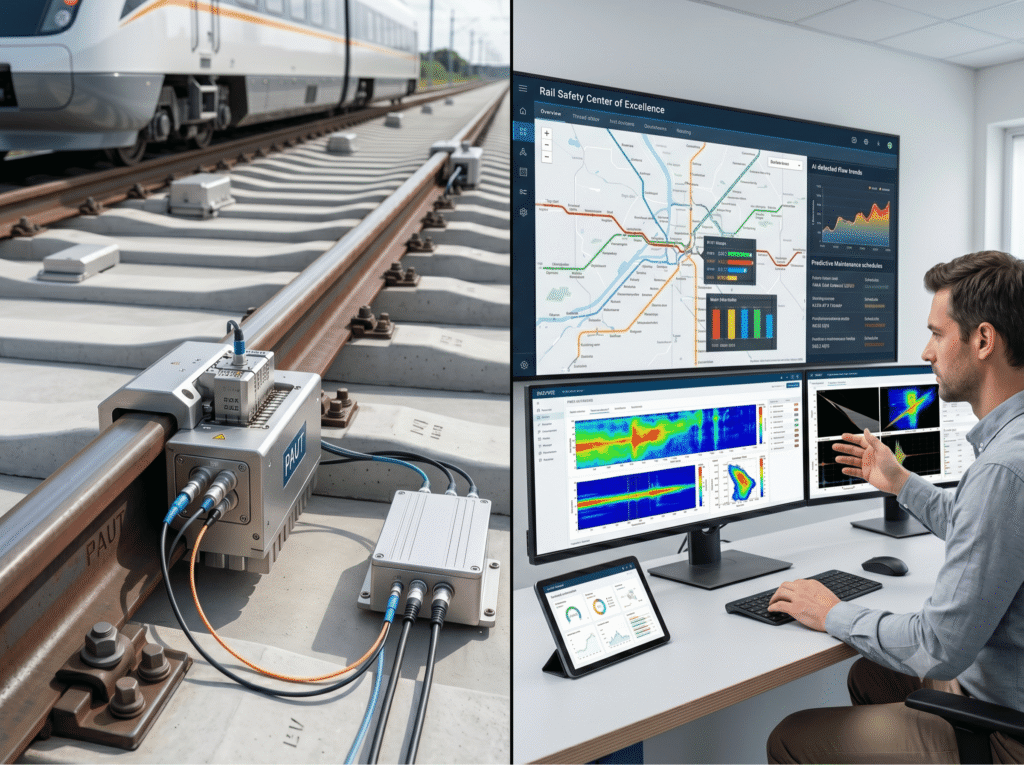
Railway systems transport millions of people every single day across the globe. Safety remains the top priority for every railway operator, yet traditional inspection methods often fall short of modern demands. Ultrasonic testing technology for rail safety has emerged as a revolutionary solution that transforms how engineers detect and prevent track defects.
The ultrasonic testing technology rail safety approach represents a fundamental shift from reactive maintenance to proactive asset protection. This advanced methodology employs sound waves traveling at frequencies beyond human hearing to identify structural problems invisible to the naked eye. Understanding how ultrasonic testing technology rail safety works becomes essential for anyone involved in railway infrastructure management and operation.
Understanding Ultrasonic Testing Technology and Modern Rail Safety
Railway infrastructure faces unprecedented pressure from increased traffic volumes and aging systems. The stakes have never been higher for maintaining track integrity and passenger safety. Traditional visual inspections and basic measurements cannot detect the internal flaws that lead to catastrophic failures.
Ultrasonic testing technology rail safety fills this critical gap by enabling thorough, non-destructive examination of rail materials. The technology relies on high-frequency sound waves that travel through metal and bounce back when encountering defects or boundaries. These reflected signals create detailed maps of the internal structure, revealing problems long before they become dangerous.
The fundamental principle behind this technology is straightforward yet powerful. Sound waves move through solid materials at predictable speeds. When these waves encounter cracks, corrosion, or material separation, they reflect back to the source. Engineers interpret these reflections to determine defect location, size, and severity.
What is Ultrasonic Testing?
Ultrasonic testing is a non-destructive evaluation method that uses sound energy to examine materials. Unlike destructive testing, it preserves the integrity of railway infrastructure while gathering critical data. The frequencies used typically range from 20 kilohertz to several megahertz, far above human hearing capability.
Key characteristics of ultrasonic testing technology rail safety include:
- Operates at frequencies above human hearing range – These high frequencies penetrate deep into rail steel without causing damage
- Non-destructive testing method – Inspection occurs without damaging or removing components from the track
- Identifies internal defects without material damage – Cracks, corrosion, and material separation become visible to trained operators
- Real-time detection capabilities – Inspectors receive immediate feedback about rail condition during examination
This precision represents a dramatic improvement over outdated inspection techniques. Railway systems benefit from knowing exactly where problems exist before they compromise safety. Early detection through ultrasonic testing technology rail safety prevents expensive emergency repairs and potential catastrophes.
The technology adapts to various railway conditions and environments. Extreme temperatures, moisture, and vibration don’t prevent effective ultrasonic testing technology rail safety operations. Equipment remains reliable whether inspecting high-speed rail systems or industrial branch lines.
But how exactly does this technology pinpoint dangers that human inspectors might miss? The answer lies in understanding the science behind ultrasonic waves and their interaction with railway steel.
What is Ultrasonic Testing and How Does It Work in Railways?
The technical process behind ultrasonic testing technology rail safety combines physics with practical engineering expertise. Understanding this process clarifies why railways worldwide increasingly adopt this proven methodology. The application of ultrasonic testing technology rail safety in rail inspection has transformed preventive maintenance programs globally.
The Technical Process
A transducer serves as both the transmitter and receiver in ultrasonic testing operations. This specialized device converts electrical signals into mechanical vibrations at ultrasonic frequencies. The transducer contacts the rail surface through a couplant material that ensures proper sound wave transmission.
Once activated, the transducer emits ultrasonic waves into the rail structure below. These waves travel through the metal at approximately 5,960 meters per second, depending on material composition. The high speed enables rapid coverage of extensive track sections, making inspection efficient for railway operators.
When ultrasonic waves encounter a defect, they reflect back toward the transducer. The device captures these returning signals and converts them back into electrical pulses. A specialized analyzer then processes these signals, displaying them on screens in formats operators understand easily.
Advanced software interprets the complex signal patterns automatically. Machine learning algorithms now assist in identifying defects with remarkable accuracy. This combination of technology and human expertise strengthens decision-making about track maintenance needs.
How It Works in Practice: A Step-by-Step Overview
The inspection process follows a systematic approach that ensures comprehensive coverage:
- Transducer emits ultrasonic waves into rail structure – Sound waves begin their journey into the steel material
- Waves travel through the material at controlled speeds – Predictable propagation allows accurate measurement and analysis
- Sound reflects back when encountering defects – Cracks, corrosion, and voids create distinctive reflection patterns
- Reflected signals create detailed imaging – Visual representations show exactly where problems exist
- Advanced software interprets the data patterns – Computer systems analyze results and alert operators to concerns
This systematic approach ensures that ultrasonic testing technology rail safety covers entire rail sections uniformly. Operators can scan hundreds of kilometers within reasonable timeframes. The data collection process remains objective and consistent regardless of weather conditions or operator fatigue.
Real-World Application in Rail Systems
Modern railways integrate ultrasonic testing technology rail safety into their infrastructure seamlessly. Automated scanning systems now ride along tracks, continuously monitoring rail condition. These systems collect data that feeds directly into maintenance scheduling systems.
Integration with existing railway infrastructure requires minimal modifications to track layout or operations. Most ultrasonic testing technology rail safety equipment is attached to standard railway vehicles. Some systems operate independently on specialized inspection cars that require only occasional track access.
Coverage areas extend deep into rail material, detecting defects at various depths. Detection capabilities reach several inches below the rail surface, identifying problems developing internally. This depth penetration distinguishes ultrasonic methods from surface-level inspection techniques.
While the technology itself is fascinating, the real question is whether ultrasonic testing technology rail safety can actually prevent catastrophic failures. Recent data shows dramatic improvements in railway safety metrics. Let’s explore what this means for railway operators worldwide.
The Critical Role of Ultrasonic Testing Technology Rail Safety in Modern Infrastructure
Railway infrastructure supports economic activity and connects communities across nations. Failure of critical track sections disrupts commerce and endangers lives. Modern railways cannot afford the risks associated with inadequate inspection methods.
Ultrasonic testing technology rail safety provides the confidence that tracks remain safe for operations. The methodology identifies problems that might escape notice for years with traditional inspection approaches. Early intervention prevents escalation of minor defects into major failures.
Why Railways Need Advanced Testing
Train speeds continue increasing on modern rail networks worldwide. Higher speeds mean greater forces acting on track materials during each passage. Standard inspection intervals cannot keep pace with the escalating stress that rails experience.
Additionally, many railway networks operate infrastructure built decades ago. Aging steel experiences fatigue effects that accumulate over millions of train passages. The combination of increased stress and aging materials creates urgent safety challenges.
Regulatory compliance also drives adoption of ultrasonic testing technology rail safety methods. International standards now require thorough, documented inspections using non-destructive methods. Railways that ignore these requirements face penalties and legal liability when accidents occur.
Critical reasons railways implement ultrasonic testing technology rail safety include:
- Detects surface cracks and subsurface defects – Problems invisible to routine visual inspection become apparent through ultrasonic analysis
- Identifies metal fatigue before failure – Early detection prevents sudden, catastrophic track failure
- Monitors weld integrity continuously – Welded rail sections receive extra attention as potential weak points
- Prevents costly emergency repairs – Proactive maintenance costs far less than emergency response and track replacement
Public safety imperatives override all other considerations in railway operations. Every preventive measure that reduces accident risk becomes justified. Ultrasonic testing technology rail safety represents an investment in human lives and community safety.
Current Industry Standards
International bodies establish standardized protocols for ultrasonic testing technology rail safety inspections. The International Union of Railways (UIC) publishes comprehensive guidelines for equipment and procedures. These standards ensure consistency across different railway networks and countries.
Frequency specifications balance detection capability against practical limitations. Lower frequencies penetrate deeper but provide less detailed information about small defects. Higher frequencies detect smaller problems but cannot reach as deeply into rail material.
Regulatory agencies require documentation proving that ultrasonic testing technology rail safety procedures meet established standards. Railways maintain records showing inspection dates, coverage areas, findings, and corrective actions taken. This documentation demonstrates commitment to safety and compliance.
Benefits of Implementing Ultrasonic Testing Technology Rail Safety Systems
The advantages of adopting ultrasonic testing technology rail safety extend far beyond basic safety considerations. Economic, operational, and strategic benefits make this technology invaluable for modern railways.
Safety Enhancements
Derailment prevention stands as the primary safety benefit of ultrasonic testing technology rail safety implementation. Track defects cause many derailment accidents, particularly at higher speeds. Early detection through ultrasonic methods prevents these tragic events.
Worker safety improves when ultrasonic testing technology rail safety reduces the need for workers to conduct physical track inspections. Remote monitoring systems keep personnel away from dangerous track areas and moving trains. This reduction in personnel exposure directly translates to fewer workplace injuries.
Passenger safety receives maximum protection through comprehensive track monitoring. Travelers benefit from the peace of mind that advanced inspection methodologies provide. Reduced accident rates and increased reliability create confidence in railway transportation.
Economic Advantages
Cost savings emerge as a compelling reason for ultrasonic testing technology rail safety adoption. Preventive maintenance through early detection costs substantially less than emergency repairs. Replacing entire rail sections costs dramatically more than addressing developing problems early.
Maintenance budgets benefit from predictive approaches enabled by ultrasonic testing technology rail safety. Rather than replacing components on fixed schedules, railways maintain equipment based on actual condition. This precision targeting of maintenance activities reduces unnecessary spending.
Railway infrastructure lifespan extends significantly through ultrasonic testing technology rail safety practices. Components receive intervention exactly when needed rather than deteriorating until failure. This data-driven approach maximizes the return on infrastructure investment.
Key Benefits Overview
Railways implementing ultrasonic testing technology rail safety experience measurable improvements across multiple dimensions:
- Enhanced safety records and reduced accidents – Documented decreases in derailment and failure incidents
- Significant cost savings (up to 40% maintenance reduction) – Preventive maintenance costs less than reactive emergency repairs
- Extended infrastructure lifespan – Strategic interventions preserve assets longer
- Improved operational efficiency – Scheduled maintenance minimizes service disruptions
- Better regulatory compliance documentation – Complete records demonstrate adherence to safety standards
- Reduced liability and insurance costs – Proactive safety measures lower financial risk exposure
Challenges and Barriers to Implementing Ultrasonic Testing Technology Rail Safety
Despite clear advantages, railways face substantial hurdles when adopting ultrasonic testing technology rail safety systems. Understanding these obstacles reveals why transformation occurs gradually across the industry. Implementation complexity extends beyond simple equipment acquisition and installation processes.
Initial Investment and Infrastructure Costs
Capital expenditure represents the most obvious barrier to ultrasonic testing technology rail safety adoption. Specialized equipment requires significant funding that strains many railway budgets. Transducers, analyzers, automated scanning systems, and supporting technology represent millions in investment.
Beyond equipment costs, infrastructure modifications often prove necessary. Railway systems must establish data storage and analysis capabilities supporting ultrasonic testing technology rail safety programs. IT infrastructure upgrades enable proper handling of vast amounts of inspection data collected continuously.
Staff training demands additional resources that complicate implementation. Personnel must learn how ultrasonic testing technology rail safety systems operate, interpret results, and maintain equipment properly. Comprehensive training programs extend implementation timelines significantly.
Technical and Operational Challenges
Environmental factors complicate ultrasonic testing technology rail safety operations in specific conditions. Temperature extremes, moisture, and contamination affect signal quality and measurement accuracy. Railways operating in harsh climates must develop specialized protocols for ultrasonic testing technology rail safety inspections.
Integration with existing railway operations requires careful planning and coordination. Inspection vehicles must access tracks without disrupting regular train schedules. Coordinating maintenance windows challenges busy railway networks operating near capacity.
Primary implementation challenges facing railway operators include:
- Capital equipment costs – Multi-million dollar investments required for comprehensive systems
- Staff training requirements – Personnel must develop expertise in ultrasonic technology and data interpretation
- Data management complexity – Processing and storing massive datasets demands robust IT infrastructure
- Scheduling coordination – Fitting inspections into crowded operating schedules proves difficult
- Environmental factors – Harsh conditions affect accuracy of ultrasonic testing technology rail safety measurements
However, successful railways demonstrate that overcoming these barriers yields tremendous returns. Early adopters have proven the viability of ultrasonic testing technology rail safety systems across diverse railway environments. Their experience provides valuable lessons for other operators considering implementation.
Success Stories from Leading Railways
European railways pioneered many ultrasonic testing technology rail safety innovations. High-speed rail operators in France, Germany, and Switzerland invested heavily in advanced inspection capabilities. Their commitment demonstrates that ultrasonic testing technology rail safety investment creates safer, more reliable networks.
Major Asian railway systems now deploy ultrasonic testing technology rail safety on unprecedented scales. Japanese railways combine advanced technology with meticulous operational discipline. Indian railways implement ultrasonic testing technology rail safety to modernize aging infrastructure serving millions daily.
North American railways increasingly recognize the competitive advantage of advanced inspection methodology. Class I railroads adopt ultrasonic testing technology rail safety to reduce derailment risks on high-tonnage freight corridors. The data collected through ultrasonic testing technology rail safety enables informed maintenance decisions.
Technological Advancements Enhancing Ultrasonic Testing Technology Rail Safety
Innovation continues accelerating capabilities of ultrasonic testing technology rail safety systems. Emerging technologies promise to enhance detection, automate analysis, and reduce implementation barriers. The future trajectory of ultrasonic testing technology rail safety points toward even greater sophistication.
Automated Systems and Artificial Intelligence
Automated scanning systems now conduct ultrasonic testing technology rail safety inspections without human intervention. Robotic platforms move along tracks, collecting data continuously at consistent standards. This automation dramatically increases inspection coverage and reduces labor costs.
Artificial intelligence revolutionizes data interpretation for ultrasonic testing technology rail safety programs. Machine learning algorithms analyze signal patterns with accuracy exceeding human capability. AI-assisted interpretation reduces false positives and false negatives that previously complicated maintenance decisions.
Predictive analytics powered by ultrasonic testing technology rail safety data forecast defect development. Systems model crack growth rates and predict when intervention becomes necessary. This predictive capability transforms maintenance from reactive to truly proactive.
Integration with Connected Systems
The Internet of Things connects ultrasonic testing technology rail safety equipment with railway management systems. Data flows automatically from inspection platforms into centralized databases. Real-time alerts notify operators immediately when critical defects are detected.
Cloud computing supports ultrasonic testing technology rail safety data storage and analysis. Railways access inspection results from anywhere, enabling rapid decision-making. Distributed computing power processes vast datasets efficiently.
Real-Time Monitoring Capabilities
Modern railways deploy ultrasonic testing technology rail safety sensors continuously monitoring track condition. Permanent installations provide ongoing surveillance between scheduled inspection campaigns. This continuous monitoring catches developing problems faster than periodic inspections.
Wireless technology enables ultrasonic testing technology rail safety data transmission without physical cables. Installation becomes simpler and faster, reducing infrastructure modification requirements.
Advanced technologies enhancing ultrasonic testing technology rail safety include:
- Artificial intelligence and machine learning – Autonomous defect identification and analysis
- Automated robotic inspection systems – Unmanned platforms conducting continuous scanning
- Cloud-based data management – Centralized storage and analysis of inspection results
- Real-time monitoring sensors – Permanent installations providing continuous surveillance
- Predictive analytics – Forecasting defect development and maintenance needs
- Wireless data transmission – Eliminating cables and simplifying installation
These advancements make ultrasonic testing technology rail safety increasingly accessible to railways of all sizes. Smaller operators can now leverage capabilities previously available only to large systems.
The Future of Rail Safety: Ultrasonic Testing Technology Rail Safety Evolution
Railway safety technology stands at an inflection point where comprehensive monitoring becomes standard practice. Ultrasonic testing technology rail safety will play an increasingly central role in this transformation. The convergence of multiple emerging technologies promises revolutionary improvements in track safety.
Integration into Comprehensive Safety Systems
Ultrasonic testing technology rail safety no longer stands alone as an isolated inspection method. Integration with other condition monitoring systems creates comprehensive asset management platforms. Vibration analysis, thermal imaging, and acoustic monitoring combine with ultrasonic testing technology rail safety data.
These integrated systems provide holistic views of track and infrastructure condition. Operators make maintenance decisions based on complete information rather than fragmented data sources. Ultrasonic testing technology rail safety contributes critical input to these decision-making frameworks.
Industry Standardization and Regulatory Evolution
International standards for ultrasonic testing technology rail safety continue evolving toward greater standardization. Harmonized protocols enable data sharing across railway networks and countries. Regulatory requirements increasingly mandate ultrasonic testing technology rail safety as part of safety compliance.
European Union regulations now require specific intervals for ultrasonic testing technology rail safety inspections on passenger lines. Similar regulatory trends will likely spread globally as safety consciousness increases.
Accessibility and Affordability
Equipment costs for ultrasonic testing technology rail safety systems continue declining as technology matures. Increased competition among manufacturers drives innovation while reducing prices. Eventually, even small regional railways will implement ultrasonic testing technology rail safety programs.
Training programs become more standardized and accessible. Universities and technical schools increasingly offer ultrasonic testing technology rail safety education. This talent pipeline ensures qualified personnel for implementation.
The integration of ultrasonic testing technology rail safety into IoT platforms creates unprecedented visibility into track condition. Real-time alerts will prevent failures before they threaten lives.
Final Thoughts
Ultrasonic testing technology rail safety revolutionizes railway infrastructure by detecting internal defects invisible to conventional methods. Despite implementation challenges, safety benefits and 40 percent maintenance cost reductions far outweigh expenses. This technology identifies cracks, corrosion, and fatigue damage while artificial intelligence and automation increase accessibility across all railway sizes.
International regulations increasingly mandate ultrasonic testing technology rail safety for passenger operations, and early adopters demonstrate measurably safer networks. IoT integration enables predictive maintenance and proactive resolution, while declining equipment costs make investment increasingly attractive. Within the next decade, ultrasonic testing technology rail safety will become the global railway industry standard.
Key Takeaways
- Ultrasonic testing technology rail safety identifies internal defects invisible to conventional inspection methods through advanced sound wave technology
- Implementation challenges including capital costs and staff training are outweighed by safety benefits and long-term economic advantages
- Detection capabilities encompass longitudinal cracks, transverse defects, corrosion, weld discontinuities, and subsurface fatigue damage
- Artificial intelligence and automated systems are making ultrasonic testing technology rail safety more accessible to railways of all sizes
- International regulatory trends increasingly mandate ultrasonic testing technology rail safety as a compliance requirement for passenger rail operations
- Early adopters of ultrasonic testing technology rail safety demonstrate that systematic implementation creates safer, more reliable railway networks
- Integration with IoT and real-time monitoring systems enables predictive maintenance and proactive problem resolution
- Equipment costs continue declining while capabilities expand, making ultrasonic testing technology rail safety investment increasingly attractive
- Railways report up to 40 percent maintenance cost reductions through early defect detection and preventive intervention strategies
- Within the next decade, ultrasonic testing technology rail safety will likely become the global industry standard for all railways
FAQs
How accurate is ultrasonic testing for detecting rail fractures?
Ultrasonic testing technology rail safety achieves over 95 percent detection accuracy for rail fractures and internal cracks. The technology measures defect size and location within millimeters, with AI improving accuracy further.
What are the latest innovations in ultrasonic rail inspection technology?
Recent innovations include automated robotic systems, machine learning algorithms for defect identification, and cloud-based real-time monitoring. Wireless sensor technology eliminates installation complexity.
What is the cost of implementing ultrasonic testing in railway systems?
Initial investment ranges from several million dollars depending on network size. Equipment costs decline steadily, and 40 percent maintenance savings quickly offset implementation expenses.
How does automated ultrasonic testing improve inspection efficiency?
Automated systems scan continuously without fatigue, increasing coverage while reducing labor costs. They maintain consistent standards regardless of weather conditions.
What is the difference between conventional and advanced ultrasonic testing methods?
Conventional methods require manual operation and human interpretation, limiting consistency. Advanced ultrasonic testing technology rail safety uses automation, AI, and real-time data analysis for superior accuracy and speed.
SEO DATA
- SEO title: How Advanced Ultrasonic Testing Technology Is Shaping the Next Era of Rail Safety
- SEO Meta Description: Advanced ultrasonic testing technology rail safety transforms railway infrastructure management through non-destructive defect detection.
