Aluminothermic Weld Inspection stands at the core of safety assurance in rail and heavy engineering industries. From the very beginning of any project involving thermite welds, Aluminothermic Weld Inspection ensures that structural integrity is not left to chance. In fact, Aluminothermic Weld Inspection forms the backbone of quality control where welded joints must endure extreme stress and continuous use.
Aluminothermic welding, commonly known as thermite welding, is widely used in railway systems and infrastructure projects due to its efficiency and portability. The process creates strong joints by pouring molten metal into a mold where it solidifies and bonds rail sections. While this technique eliminates the need for external power sources, it introduces a different challenge, ensuring that the weld is free from internal defects.
Even a minor imperfection inside a weld can develop into a serious issue over time. Hidden cracks, porosity, or incomplete fusion can compromise the strength of the joint. Because these flaws are not visible externally, industries rely on advanced inspection methods to detect them early. Ultrasonic testing has emerged as one of the most reliable non-destructive techniques for this purpose.
Our article explores how ultrasonic testing procedures support accurate weld evaluation. It explains the process, tools, and techniques that define modern inspection practices and highlights why precision matters more than ever in today’s demanding industrial environments.
What Is Aluminothermic Welding and Why Does Inspection Matter?
Aluminothermic welding is a chemical welding process that uses a reaction between aluminum powder and metal oxide to generate intense heat. This reaction produces molten steel that flows into a mold placed around the joint, fusing the metal pieces together as it cools.
The process is especially common in railway construction because it allows technicians to weld rails directly on-site. This eliminates the need for large machinery and makes repairs faster and more efficient. However, the very nature of the process introduces variables that can affect weld quality.
Temperature fluctuations, mold alignment, and cooling rates all influence the final structure of the weld. As a result, internal defects can form even when the weld appears perfect on the surface. These defects include shrinkage cavities, slag inclusions, and incomplete bonding between materials.
Aluminothermic Weld Inspection plays a vital role in identifying these hidden issues before they lead to failure. In railway systems, a defective weld can result in derailments or severe operational disruptions. In structural applications, it can weaken load-bearing components.
Industry reports have shown that a significant percentage of rail failures are linked to weld defects. This makes inspection not just a precaution, but a necessity for maintaining safety standards.
Experts often describe inspection as the “final checkpoint between construction and catastrophe.” This statement highlights the importance of detecting defects early and taking corrective action before the weld is put into service.
With the stakes this high, the question becomes , what inspection method can reliably detect flaws that the naked eye simply cannot? The answer lies in a technology far more precise than any visual check.
What Is Ultrasonic Weld Inspection Procedure?
Ultrasonic weld inspection is a non-destructive testing method that uses high-frequency sound waves to evaluate the internal structure of a weld. It allows inspectors to detect flaws without damaging the material, making it ideal for critical applications.
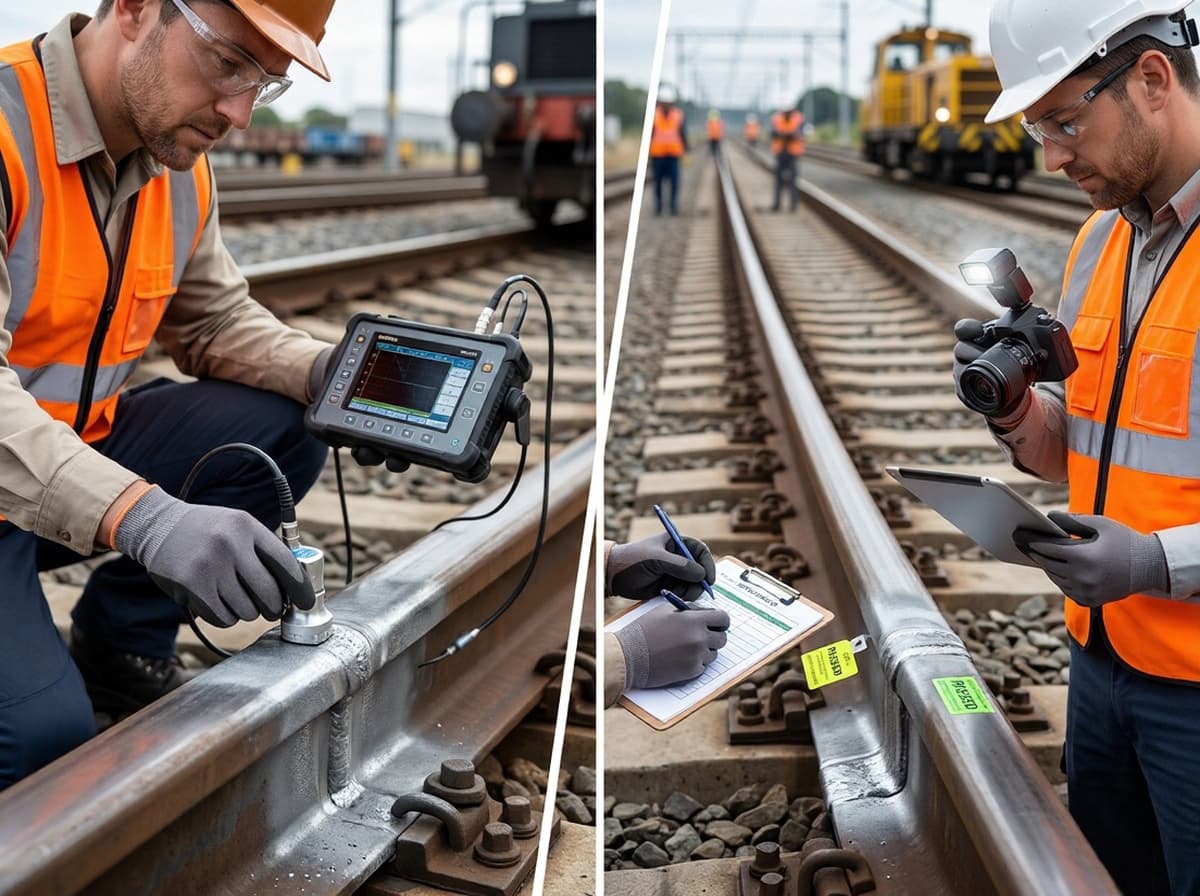
In Aluminothermic Weld Inspection, ultrasonic testing works by sending sound waves into the weld using a probe. When these waves encounter a discontinuity, such as a crack or void, they reflect back to the equipment. The device then converts these reflections into signals that can be analyzed.
The procedure involves several key steps that ensure accurate results:
First, the surface of the weld is prepared. This includes cleaning and smoothing the area to allow proper contact between the probe and the material. Any irregularities on the surface can interfere with sound wave transmission.
Next, the inspector selects the appropriate probe. The type of probe determines the angle and frequency of the sound waves. This choice depends on the weld geometry and the type of defects being targeted.
Calibration follows, where the equipment is adjusted using reference standards. This step ensures that the readings are accurate and consistent. Without proper calibration, the results may not reflect the true condition of the weld.
The scanning phase involves moving the probe across the weld in a controlled manner. The inspector monitors the signals on the screen, looking for patterns that indicate potential defects.
Finally, data interpretation translates these signals into meaningful conclusions. Experienced inspectors analyze the amplitude, shape, and location of echoes to determine whether a defect exists and how severe it is.
Aluminothermic Weld Inspection depends heavily on this structured approach. Each step builds on the previous one, creating a process that delivers reliable and repeatable results.
The effectiveness of ultrasonic testing lies in its ability to detect internal flaws that are invisible to other inspection methods. However, achieving this level of accuracy requires more than just technology, it requires proper equipment setup and expertise.
Equipment and Setup for Aluminothermic Weld Inspection
The success of any inspection process begins with the right equipment and careful setup. Ultrasonic testing requires precision tools that must be configured correctly to deliver accurate results.
Selecting the Right Ultrasonic Probe
The ultrasonic probe is responsible for transmitting and receiving sound waves. Choosing the right probe is essential for effective inspection.
Inspectors typically use two main types of probes:
Contact probes are placed directly on the weld surface. They are simple to use and suitable for most field applications. Immersion probes, on the other hand, use a liquid medium to transmit sound waves. These are often used in controlled environments for higher accuracy.
For thermite welds, angle beam probes are commonly used. These probes generate shear waves that travel at an angle, allowing them to detect defects that are not aligned with the surface.
Frequency selection also plays a critical role. Lower frequencies penetrate deeper into the material but provide less detail. Higher frequencies offer better resolution but may not reach deeper sections of the weld.
Calibration Standards and Reference Blocks
Calibration ensures that the ultrasonic equipment produces reliable readings. Inspectors use reference blocks with known dimensions and properties to adjust the device.
Below is a commonly used calibration table:
| Reference Block | Standard | Purpose |
| IIW Block | ISO 2400 | General calibration |
| V2 / A2 Block | BS 2704 | Sensitivity setting |
| Step-Wedge | AREMA | Rail-specific calibration |
Proper calibration is essential for Aluminothermic Weld Inspection because it directly impacts defect detection accuracy. Even a small error in calibration can lead to incorrect conclusions.
Calibration sets the foundation , but the real precision comes in how the inspector moves the probe across the weld. That scanning technique makes all the difference, as the next section reveals.
Scanning Techniques Used in Aluminothermic Weld Inspection
Scanning techniques determine how effectively defects are detected within a weld. Even with advanced equipment, poor scanning methods can result in missed flaws.
Inspectors use both manual and automated scanning approaches. Manual scanning allows flexibility and is often used in field conditions where weld geometry varies. Automated scanning systems provide consistency and are ideal for large-scale inspections.
Two primary types of sound waves are used in ultrasonic testing:
Longitudinal waves travel directly through the material and are useful for detecting flaws parallel to the surface. Shear waves travel at an angle and are more effective for identifying cracks and other irregularities within the weld.
In Aluminothermic Weld Inspection, shear wave scanning is widely preferred because it provides better coverage of the weld structure.
Key scanning positions include:
- Longitudinal scanning from the rail foot
- Transverse scanning at the weld collar
- Angled scanning from the running surface
- Edge scanning around the weld collar
Each position targets a specific area where defects are likely to occur. By combining multiple scanning angles, inspectors can achieve comprehensive coverage of the weld.
Advanced technologies such as Phased Array Ultrasonic Testing (PAUT) have further improved inspection capabilities. PAUT uses multiple elements to create detailed images of the weld, allowing for better defect characterization.
Aluminothermic Weld Inspection benefits significantly from these innovations, as they enhance both accuracy and efficiency.
But scanning alone does not guarantee reliable results. The interpretation of signals plays an equally important role, and that is where expertise becomes indispensable. What exactly happens when a suspicious signal appears on the screen? That deeper layer of inspection unfolds next.
How to Test Thermite Welds: A Step-by-Step UT Procedure
Testing thermite welds requires a systematic approach to ensure accuracy and repeatability. In Aluminothermic Weld Inspection, inspectors follow a sequence of steps that minimize errors and maximize defect detection.
The process begins with a visual inspection. Inspectors examine the weld surface for visible issues such as misalignment, excess material, or surface cracks. This step provides an initial understanding of weld quality before ultrasonic testing begins.
Next comes surface preparation. The weld area must be clean and smooth to allow proper probe contact. Dirt, rust, or uneven surfaces can distort sound wave transmission. A couplant, typically gel or oil-based, is applied to eliminate air gaps between the probe and the weld.
The ultrasonic equipment is then set up and calibrated. Calibration ensures that the instrument produces accurate readings. Inspectors use reference blocks to verify sensitivity and adjust the device according to weld specifications.
Once the setup is complete, scanning begins. The probe is placed on the weld and moved across different positions. Inspectors carefully monitor signal reflections on the screen. Each reflection represents a change in material density, which may indicate a defect.
Echo mapping follows the initial scan. Inspectors analyze signal patterns to determine the location and size of potential defects. If a suspicious indication appears, a second scan is performed to confirm the finding.
In Aluminothermic Weld Inspection, this structured process ensures that results are consistent and reliable. Each step builds on the previous one, reducing the chances of missed defects.
Common Weld Flaws Detected During Aluminothermic Weld Inspection
Ultrasonic testing reveals internal flaws that cannot be seen with the naked eye. Each defect type produces a unique signal pattern, allowing inspectors to identify it accurately.
One of the most critical defects is lack of fusion. This occurs when the weld metal does not bond properly with the base material. It creates a weak interface that can fail under stress. Ultrasonic signals for this defect appear as strong, consistent reflections.
Porosity is another common issue. Gas trapped during solidification forms small voids within the weld. These voids scatter sound waves, producing multiple small echoes on the display.
Shrinkage cracks develop when the weld cools unevenly. These cracks often appear as linear indications and can grow over time if not addressed.
Inclusions, such as slag or oxide particles, become trapped within the weld during the process. These foreign materials disrupt the uniform structure of the weld and produce irregular signal patterns.
Cold shuts occur when molten metal fails to merge completely. This results in weak zones that can compromise weld strength.
Aluminothermic Weld Inspection focuses on detecting these defects early. Early detection allows corrective actions before the weld is subjected to operational loads.
However, identifying defects is only part of the evaluation process. Inspectors must determine whether these flaws fall within acceptable limits defined by industry standards.
Acceptance Criteria and Reporting Standards
Inspection results must be evaluated against established standards to ensure safety and consistency. These standards define acceptable defect sizes, testing methods, and documentation requirements.
International Standards That Govern Aluminothermic Weld Inspection
Several global standards guide the inspection of thermite welds. EN 14730-2 is widely used in Europe and specifies requirements for rail welding and inspection. It outlines acceptable defect levels and testing procedures.
The AREMA Manual, particularly Chapter 4, is used in North America. It provides detailed guidelines for railway track construction and maintenance, including weld inspection requirements.
AWS D1.1 applies to structural welding and offers additional guidance on inspection and acceptance criteria. While it is not specific to rail welding, it is often referenced in related applications.
Aluminothermic Weld Inspection must align with these standards to ensure compliance and maintain safety. Each standard provides a framework for evaluating weld quality and determining whether it is fit for service.
How Inspection Results Are Documented
Proper documentation is essential for traceability and quality control. Inspection reports serve as official records of weld evaluation and provide valuable data for future reference.
A typical inspection report includes:
- Identification details of the weld location
- Equipment used and calibration settings
- Scanning techniques and probe types
- Detected defects and their positions
- Final assessment and acceptance status
Digital reporting systems are becoming more common in modern inspection practices. These systems allow inspectors to store, analyze, and share data efficiently. However, paper-based reports are still used in many field operations.
Accurate documentation ensures that inspection results can be reviewed and verified. It also helps organizations maintain compliance with regulatory requirements.
Meeting the minimum standard is necessary , but what truly protects infrastructure long-term goes beyond compliance. The best practices that follow define the difference between routine checks and genuinely reliable aluminothermic weld inspection programs.
How Ultrasound Can Be Used for Weld Inspection: Advanced Applications
Ultrasonic testing continues to evolve, offering advanced techniques that improve inspection accuracy and efficiency. These innovations enhance the effectiveness of Aluminothermic Weld Inspection in modern industries.
Phased Array Ultrasonic Testing (PAUT) is one of the most advanced methods. It uses multiple elements to send sound waves at different angles, creating detailed images of the weld. This allows inspectors to detect and size defects with greater precision.
Time-of-Flight Diffraction (TOFD) is another powerful technique. It measures the time taken for diffracted waves to travel from a defect to the receiver. This method is highly effective for sizing cracks and determining their depth.
Automated Ultrasonic Testing (AUT) is used in large-scale operations, such as railway networks. It provides consistent results and reduces human error by automating the scanning process.
These advanced methods significantly improve the reliability of Aluminothermic Weld Inspection. They provide more detailed data and allow inspectors to make informed decisions quickly.
As technology advances, ultrasonic testing will continue to play a critical role in ensuring weld quality and safety.
Final Thoughts
Aluminothermic Weld Inspection continues to play a decisive role in maintaining the safety and durability of thermite welds across critical industries. By combining structured ultrasonic testing procedures with skilled interpretation, inspectors can detect even the smallest internal flaws before they escalate into serious failures. This proactive approach not only safeguards infrastructure but also ensures long-term operational efficiency.
The integration of advanced techniques such as phased array and automated ultrasonic testing has further strengthened the reliability of modern inspection practices. As a result, industries can now achieve higher levels of precision and consistency in weld evaluation.
Ultimately, Aluminothermic Weld Inspection is not just about meeting standards, it is about preventing risks and ensuring confidence in every welded joint. As infrastructure demands continue to grow, the importance of accurate and dependable inspection methods will only increase, making ultrasonic testing an essential part of quality assurance in the years ahead.
Key Takeaways
- Aluminothermic welding is widely used in railway and infrastructure projects due to its efficiency and flexibility.
- Aluminothermic Weld Inspection ensures weld integrity by identifying internal defects before they cause failure.
- Ultrasonic testing is the most reliable non-destructive method for detecting hidden weld discontinuities.
- Proper surface preparation is essential for accurate ultrasonic signal transmission and defect detection.
- Calibration using standard reference blocks ensures consistency and accuracy in inspection results.
- Angle beam probes are commonly used because they detect flaws in complex weld geometries effectively.
- Scanning techniques must cover multiple angles and positions to ensure complete weld evaluation.
- Common defects include porosity, cracks, inclusions, and lack of fusion within the weld.
- International standards such as EN and AREMA guide inspection procedures and acceptance criteria.
- Advanced technologies like PAUT and TOFD significantly improve inspection accuracy and efficiency.
FAQs
What are the two types of ultrasonic inspection?
The two primary types are straight beam (longitudinal wave) testing and angle beam (shear wave) testing. Straight beam testing detects defects parallel to the surface, while angle beam testing identifies flaws at different orientations. In Aluminothermic Weld Inspection, angle beam testing is more commonly used due to the complex geometry of thermite welds.
What are the procedures for weld inspection?
Weld inspection typically follows a structured process that includes visual examination, surface preparation, equipment calibration, ultrasonic scanning, and data interpretation. Each step ensures that defects are accurately detected and evaluated. This systematic approach is essential in Aluminothermic Weld Inspection to maintain consistency and reliability.
What is the ultrasonic inspection method?
Ultrasonic inspection is a non-destructive testing method that uses high-frequency sound waves to detect internal flaws in materials. The waves travel through the weld and reflect back when they encounter discontinuities. Inspectors analyze these reflections to determine the presence and size of defects during Aluminothermic Weld Inspection.
What are the 7 NDT methods?
The seven common non-destructive testing methods include ultrasonic testing (UT), radiographic testing (RT), magnetic particle testing (MT), dye penetrant testing (PT), eddy current testing (ET), visual testing (VT), and acoustic emission testing (AE). Among these, ultrasonic testing is widely preferred for Aluminothermic Weld Inspection due to its ability to detect internal defects.
Does temperature affect ultrasonic testing?
Yes, temperature can significantly affect ultrasonic testing results. High temperatures may alter sound wave velocity and reduce signal clarity, leading to inaccurate readings. During Aluminothermic Weld Inspection, inspectors must account for temperature conditions and adjust calibration settings accordingly to maintain accuracy.