
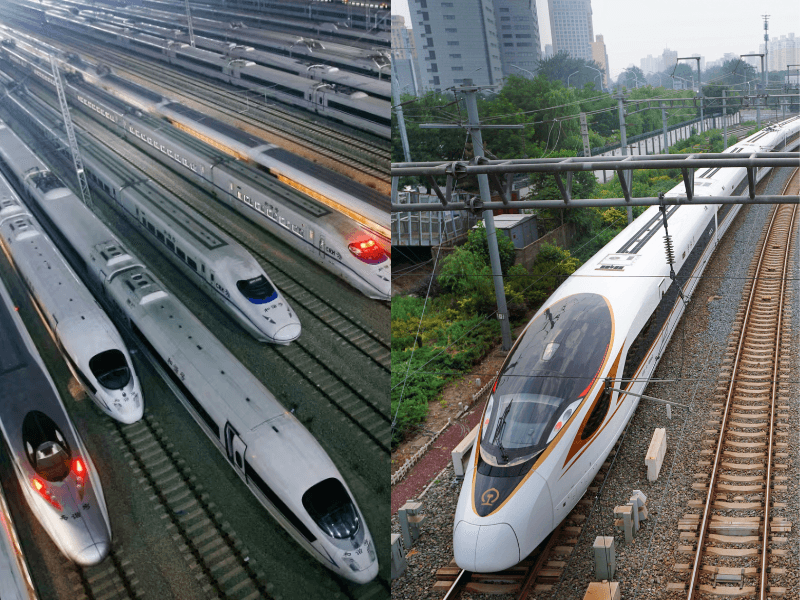
What if traveling from Los Angeles to San Francisco took under three hours, without the hassle of airports or traffic jams? The US high speed rail system is turning that vision into a reality, promising faster, cleaner, and more efficient travel across major American cities.
In this article, we’ll break down the top American high speed rail projects, including the ambitious California high speed rail, and show how they’re reshaping the future of transportation. You’ll learn about the benefits, challenges, and the growing momentum behind high speed rail in the United States.
The Need for High-Speed Rail in the U.S.
The U.S. transportation system is reaching a breaking point. Highways are packed with traffic, airports are overcrowded, and public transit options in many regions are underdeveloped. Daily commutes and intercity travel often involve long delays, high costs, and stress-inducing conditions. Much of this stems from over-reliance on personal vehicles and short domestic flights. These modes not only contribute to traffic congestion but also result in high carbon emissions. According to the Environmental Protection Agency, transportation is the largest contributor to greenhouse gases in the U.S. In addition, limited transportation alternatives mean fewer options for travelers, especially in areas lacking rail infrastructure. This imbalance puts added pressure on already strained roads and skies. The key issues include:- Long and unreliable travel times
- Overcrowded highways and airports
- High environmental impact
- Lack of efficient intercity alternatives
The Potential of High-Speed Rail to Address These Issues
This is where US high speed rail comes in as a powerful solution. High-speed rail systems can connect major cities in hours rather than days, reducing dependence on short-haul flights and car travel. With speeds of 180 mph and above, these trains can rival airplanes in travel time, while offering far more convenience. Environmentally, high-speed trains are a major upgrade. They are typically electric-powered, meaning they can run on clean energy and drastically cut down emissions. This helps states like California meet aggressive climate targets. Beyond speed and sustainability, high-speed rail enhances regional connectivity. By linking cities and towns, it can spur economic growth, attract new businesses, and increase job opportunities in construction, maintenance, and operations. Key benefits include:- Fast, reliable intercity travel
- Reduction in traffic and air congestion
- Lower greenhouse gas emissions
- Economic stimulation through infrastructure investment
Major High-Speed Rail Projects in the U.S.
As the demand for modern transportation grows, several American high speed rail projects are moving forward with bold goals. These projects not only aim to shorten travel times but also to lay the foundation for a national rail network that rivals those in Europe and Asia.- California High-Speed Rail: Connecting San Francisco to Los Angeles: The California high-speed rail project is one of the most ambitious infrastructure efforts in the country. It aims to connect San Francisco and Los Angeles, a route currently plagued by airline delays and long road trips via a 494-mile electrified rail line.
- Brightline West: Linking Las Vegas to Southern California: Brightline West is a privately funded rail project that will connect Las Vegas, Nevada to Rancho Cucamonga in Southern California. With trains expected to reach speeds over 186 mph, it will cut the travel time to just over two hours, offering a strong alternative to the often gridlocked I-15 freeway.
- Texas Central Railway: Connecting Dallas and Houston: The Texas Central Railway project aims to build a 240-mile high-speed line between Dallas and Houston using Japanese Shinkansen technology. If completed, the journey would take just 90 minutes, compared to four hours by car.
California High-Speed Rail: A Closer Look
The California high-speed rail project is at the heart of the US high speed rail movement. Designed to connect the San Francisco Bay Area to the Los Angeles Basin, this project spans approximately 494 miles and promises speeds of up to 220 mph. Once completed, it will be the first true high-speed rail system in the United States. The first segment currently under construction lies in California’s Central Valley, stretching from Merced to Bakersfield. The goal is to complete this portion by 2030, with plans to eventually extend the route north to San Francisco and south to Los Angeles and Anaheim.Environmental and Economic Benefits
This project isn’t just about speed, it's a long-term investment in sustainability and the economy. California plans to power the trains entirely with renewable energy, making it a major win for emissions reduction. The line is expected to significantly reduce the number of cars on the road and lower short-haul flights, cutting both traffic congestion and pollution. Projected benefits include:- Reduction of 93 million vehicle miles traveled annually
- Estimated 2.2 million metric tons of carbon dioxide avoided per year
- Creation of over 77,000 jobs during construction and thousands more in maintenance and operations
Challenges Faced
Despite its promise, California high-speed rail has faced serious roadblocks. Initial projections underestimated the costs, which have since ballooned from $33 billion to over $100 billion. Construction delays and land acquisition issues continue to slow progress, especially in urban sections like the Bay Area and Los Angeles. Major challenges include:- Funding gaps and shifting budgets
- Lawsuits and political opposition
- Skepticism from the public due to delays and rising costs
Brightline West: Connecting the Southwest
Brightline West is one of the most promising American high speed rail projects, offering a much-needed link between Las Vegas, Nevada and Southern California. The 218-mile line will run from Las Vegas to Rancho Cucamonga, with plans for a future extension into downtown Los Angeles. Trains on this route are expected to travel at speeds over 186 mph, making the journey roughly two hours long, nearly half the time it currently takes by car. As a primarily private venture, Brightline West is poised to become the first high-speed rail project in the U.S. completed and operational.Environmental Impact and Road Traffic Relief
Brightline West is expected to deliver big environmental wins. By diverting millions of car trips from the notoriously congested I-15 freeway, it aims to significantly lower traffic emissions between Nevada and California. Key environmental projections:- 3 million fewer car trips annually
- 400,000+ tons of CO₂ emissions avoided each year
- All-electric, zero-emission trains
Funding Sources and Construction Timeline
What sets Brightline West apart is its financing model. It’s backed by private investors but supported by more than $3 billion in federal grants and bonds. Construction is expected to begin in 2024, with service projected to launch in time for the 2028 Summer Olympics in Los Angeles. Project highlights:- Privately led development with public support
- Expected completion: Before 2028
- Estimated cost: Over $12 billion
Benefits of High-Speed Rail
One of the biggest selling points of US high speed rail is the time it can save travelers. Imagine cutting your journey from San Francisco to Los Angeles down to under three hours and doing it without dealing with airport lines or highway traffic. High-speed trains offer quick, convenient travel between major cities, making them a competitive alternative to flying or driving. But the benefits go beyond just speed. Environmentally, high speed rail in the United States presents a much cleaner option. Electric trains produce far fewer emissions compared to airplanes and personal vehicles. As more people make the switch, the system could play a key role in reducing America’s carbon footprint. Environmental advantages:- Significant reduction in greenhouse gas emissions
- Less reliance on fossil fuels and short-haul flights
- Reduced highway congestion
- Job creation in construction, engineering, and operations
- Increased access to affordable housing outside urban cores
- More business travel and tourism across connected cities
Challenges and Considerations
Despite the clear promise of US high speed rail, the road to building it is full of obstacles. One of the biggest barriers is cost. Projects like the California high speed rail have seen budgets soar into the tens of billions, often due to unforeseen issues like inflation, legal battles, and land use restrictions.Key funding challenges:
- Massive upfront construction costs
- Ongoing reliance on government subsidies and federal grants
- Difficulty attracting long-term private investors
Other logistical hurdles:
- Securing environmental approvals
- Working around existing infrastructure
- Legal disputes over eminent domain
Public and political challenges:
- Resistance in rural or low-density areas
- Shifting priorities with each election cycle
- Misconceptions about cost vs. benefit
The Future of High-Speed Rail in the U.S.
The future of US high speed rail is gaining momentum, and there’s a growing sense that the country is on the verge of a transportation revolution. While current projects like the California high speed rail and Brightline West are just the beginning, dozens of proposed routes and expansion plans are being explored across the country. These projects aim to create a nationwide network that connects major cities in hours, not half-days. Proposed high-speed rail corridors include:- Chicago to St. Louis – A key Midwest route with major ridership potential
- Seattle to Portland – A Northwest line that could ease regional road and air traffic
- Atlanta to Charlotte – Designed to link key economic hubs in the Southeast
- Las Vegas to Phoenix – A proposed expansion that would complement Brightline West
Technological Advancements and Innovations
What makes the future even more exciting is the technology behind it. The next wave of American high speed rail projects could introduce even more advanced systems, including maglev (magnetic levitation) trains and driverless control systems. These innovations promise even faster travel times, smoother rides, and safer journeys. Emerging technologies to watch:- Maglev trains capable of speeds over 300 mph
- AI-powered traffic control for better scheduling and reliability
- Green energy integration with solar, wind, and regenerative braking systems
The Role of Federal and State Governments
Public support alone isn’t enough. Government leadership both federal and state is essential to turn high-speed rail visions into reality. Recent investments from the Biden administration have injected billions into rail infrastructure through programs like the Bipartisan Infrastructure Law. These funds are helping projects overcome early-phase hurdles like environmental review and land acquisition. Key actions governments can take:- Increase and streamline funding
- Accelerate approval processes
- Encourage public-private partnerships
- Coordinate multi-state efforts for cross-regional lines
Conclusion
The rise of US high speed rail marks a pivotal moment in the evolution of American transportation. With growing congestion on highways, increasing emissions, and outdated travel infrastructure, the need for a faster, cleaner alternative is more urgent than ever. Projects like the California high speed rail, Brightline West, and Texas Central Railway are paving the way, showing what's possible when innovation meets determination. Still, the journey is far from over. Challenges like funding, land acquisition, and political support continue to slow progress. But with the right investments and commitment from both federal and state governments, high-speed rail can become a backbone of modern mobility in the United States. From environmental gains to economic growth, the benefits are too significant to ignore. As more Americans demand efficient and sustainable travel options, the momentum behind high speed rail in the United States will only continue to build.Key Points
- US high speed rail aims to reduce congestion, cut emissions, and offer a faster, greener alternative to air and road travel.
- Existing transportation systems in the U.S. are strained by traffic, pollution, and limited regional options, making high-speed rail a timely solution.
- California High-Speed Rail is the nation’s most ambitious project, with plans to connect key cities while providing environmental and economic benefits, despite facing delays and funding challenges.
- Brightline West is a promising public-private project aimed at easing highway traffic and cutting emissions in the Southwest corridor.
- Benefits of high-speed rail include reduced travel time, lower greenhouse gas emissions, job creation, and better urban connectivity.
- Challenges include high construction costs, land acquisition disputes, regulatory red tape, and uneven political and public support.
- Future high-speed rail expansions are being proposed in regions like the Midwest, Northwest, and Southeast, potentially linking cities such as Chicago, Seattle, and Atlanta.
- Technological innovations like maglev trains, AI-driven operations, and green energy integration could redefine the high-speed rail experience.
- Federal and state government support is critical for growth, with recent infrastructure bills injecting billions into rail development across the U.S.