

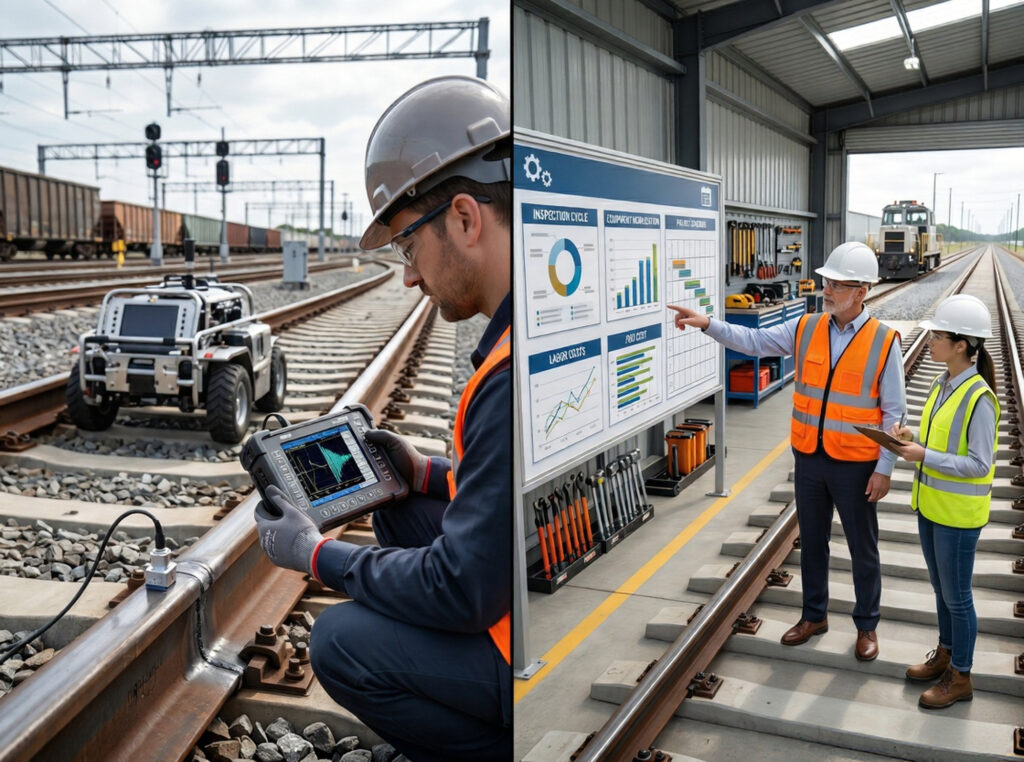
Ultrasonic rail testing cost has become a critical concern for modern rail networks striving to maintain safety and efficiency. As infrastructure ages and traffic volumes increase, ultrasonic rail testing costs continue to rise alongside stricter regulatory demands. Industry experts consistently emphasize that understanding ultrasonic rail testing cost is no longer optional but essential for long-term planning and risk mitigation.
Rail operators, infrastructure managers, and government bodies face mounting pressure to ensure track integrity without overspending. A single missed defect can lead to derailments, service disruptions, and costly liabilities. On the other hand, over-investing without a structured plan can strain budgets unnecessarily.
This balance between safety and cost creates a pressing question: what truly drives these expenses, and how can organizations plan effectively? The answer begins with understanding the technology itself, but the deeper story unfolds beyond the surface.
Understanding Ultrasonic Rail Testing: The Basics
Ultrasonic rail testing uses high-frequency sound waves to detect internal flaws within steel rails. These sound waves travel through the rail and reflect back when they encounter defects like cracks, voids, or inclusions.
Unlike visual inspections, this method identifies subsurface issues that remain invisible to the naked eye. This advantage makes it one of the most reliable techniques in modern railway maintenance programs.
Rail networks across the globe rely on ultrasonic testing to prevent failures before they occur. High-speed passenger lines and heavy freight corridors depend on it to maintain operational safety.
When defects go undetected, the consequences can escalate quickly. Minor cracks can grow into critical fractures, leading to catastrophic failures. This reality explains why ultrasonic testing has become a standard practice rather than an optional measure.
Beyond safety, ultrasonic testing also supports operational continuity. Rail networks that maintain consistent inspection cycles often experience fewer unexpected disruptions. This reliability translates into better service performance and reduced long-term repair costs.
But the technology itself is only part of the story. The method chosen for testing plays a direct role in determining cost and efficiency.
What Are the Two Types of Ultrasonic Testing?
The two main types of ultrasonic testing are the pulse-echo method and the through-transmission method.
The pulse-echo method sends sound waves into the rail and measures the echoes that return. Technicians analyze these echoes to identify internal defects. This method works well for pinpointing the exact location of flaws.
The through-transmission method uses two probes placed on opposite sides of the material. One probe sends the signal, and the other receives it. Any disruption in the signal indicates a defect within the rail.
Each method offers distinct advantages and cost implications:
- Pulse-Echo Method
- Moderate cost
- High precision
- Ideal for detailed inspections
- Through-Transmission Method
- Lower equipment complexity
- Faster scanning in certain conditions
- Suitable for detecting larger defects
The selection between these methods influences inspection speed, accuracy, and ultimately ultrasonic rail testing cost. Advanced methods often deliver better results but require higher investment.
In real-world scenarios, many rail operators combine both methods to achieve comprehensive results. While this approach increases upfront costs, it often prevents expensive failures later.
Key Factors That Influence Ultrasonic Rail Testing Cost
No two rail networks cost the same to inspect. Ultrasonic rail testing cost varies widely due to a combination of technical, operational, and environmental factors.
A fixed pricing model rarely applies in this field. Instead, service providers evaluate multiple variables before determining costs. Understanding these factors helps organizations plan budgets more accurately.
Moreover, decision-makers must recognize that cost fluctuations are not random. Each variable directly connects to risk, efficiency, and inspection quality. Ignoring these connections often leads to inaccurate budgeting and operational setbacks.
Track Length and Network Complexity
Track length remains one of the most significant cost drivers. Longer networks require more time, equipment, and manpower.
However, length alone does not define complexity. Curves, bridges, tunnels, and elevated sections introduce additional challenges. These features slow down inspection processes and increase labor requirements.
For example, a short urban rail line may cost significantly less to inspect than a long freight corridor. Even if both networks use similar technology, accessibility and layout create major differences in cost.
Remote locations further increase expenses due to travel, logistics, and mobilization requirements. In some cases, crews must transport specialized vehicles across difficult terrain, adding hidden costs to the overall project.
These complexities often surprise organizations that expect linear pricing based solely on distance.
Equipment and Technology Type
The type of equipment used directly impacts ultrasonic rail testing cost. Manual handheld devices typically cost less upfront but require more time to complete inspections.
Automated hi-rail vehicles offer faster coverage and improved efficiency. These systems scan large sections of track quickly, reducing labor hours. However, their daily operational costs remain higher.
Phased Array Ultrasonic Testing (PAUT) represents another advanced option. It delivers highly detailed results but comes with premium pricing.
Technological innovation continues to reshape the industry. Modern systems now integrate data analytics and digital reporting tools, improving accuracy and decision-making. While these systems cost more initially, they often reduce long-term maintenance expenses.
Organizations that invest in the right technology often achieve a balance between cost and performance.
Labor, Certification Level, and Crew Size
Labor plays a crucial role in determining overall costs. Certified Level 2 ultrasonic technicians command higher wages due to their expertise and qualifications.
Crew size depends on project scale and time constraints. Larger networks require bigger teams to complete inspections within limited track access windows.
Regional labor markets also influence pricing. Unionized environments often result in higher labor costs compared to non-unionized settings.
Experience levels also matter. Skilled technicians identify defects more accurately, reducing the need for repeat inspections. This efficiency directly impacts ultrasonic rail testing cost by lowering long-term expenses.
Cutting corners on technician quality may reduce short-term expenses but often leads to inaccurate results and costly rework.
Testing Frequency and Regulatory Requirements
Regulations dictate how often rail inspections must occur. Different countries and rail authorities enforce varying standards based on track classification and usage.
Higher-frequency inspections increase annual ultrasonic rail testing cost. However, they significantly reduce the risk of failures and long-term expenses.
Non-compliance with regulatory requirements can result in penalties far exceeding the cost of testing. This reality reinforces the importance of consistent inspection schedules.
Additionally, regulatory bodies continue to update standards as rail usage increases. This evolution means that inspection costs may rise over time, making proactive budgeting even more important.
Top 6 Factors That Affect Ultrasonic Rail Testing Cost
- Total track length
- Method of testing used
- Equipment type and technology level
- Technician certification and crew size
- Testing frequency required by regulation
- Geographic location and site accessibility
Each of these elements interacts with the others, creating a complex pricing structure that varies from project to project.
With all these variables in play, the natural next question is: what do operators actually pay? The numbers might be surprising.
What Is the Cost of Ultrasonic Rail Testing?
Ultrasonic rail testing cost typically ranges based on method, scale, and geographic location.
Manual testing often costs more per mile due to slower inspection speeds. In contrast, automated systems reduce per-mile costs when used across large networks.
Contracted ultrasonic testing crews may charge daily rates depending on expertise and equipment. Large-scale programs often operate on annual budgets that account for multiple inspection cycles.
For smaller projects, costs may appear manageable. However, large rail networks must consider recurring inspections, which significantly increase total expenditure over time.
Below is a comparison of typical cost structures:
| Testing Method | Approx. Cost Range | Coverage Speed | Best Suited For |
| Manual Handheld UT | Higher per mile | Low | Targeted inspections |
| Hi-Rail Automated UT | Lower at scale | High | Network-wide scanning |
| Phased Array UT (PAUT) | Premium pricing | Medium-High | Critical infrastructure |
Geographic location also affects pricing. Regions with higher labor costs and stricter regulations tend to have higher testing expenses.
Accurate cost estimation requires detailed project analysis. Organizations often request multiple quotes to understand pricing variations and scope differences.
Understanding these numbers provides clarity, but cost alone does not tell the full story. The real value of ultrasonic testing becomes clearer when viewed through the lens of quality management.
The Cost of Quality: Where Does Rail Testing Fit?
Ultrasonic rail testing falls under appraisal costs within the cost of quality framework.
The cost of quality divides expenses into four categories: prevention, appraisal, internal failure, and external failure. Appraisal costs include inspection and testing activities that ensure product or infrastructure quality.
Ultrasonic testing plays a crucial role in this category. It identifies defects before they escalate into larger problems.
Prevention costs focus on training and maintenance programs. Internal failure costs arise when defects are detected before service disruption. External failure costs occur after failures, often leading to severe consequences.
A single rail failure can result in millions in damages, legal claims, and operational losses. In comparison, consistent inspection programs require a fraction of that investment.
Industry professionals often highlight that proactive inspection delivers strong returns. Investing in appraisal costs like ultrasonic testing helps avoid catastrophic failures.
This perspective shifts the conversation from cost to value. Instead of viewing ultrasonic rail testing cost as an expense, organizations begin to see it as a strategic safeguard.
Planning, Budgeting, and Optimizing Ultrasonic Rail Testing Cost
A clear understanding of ultrasonic rail testing cost sets the foundation for smarter financial and operational decisions. However, understanding the numbers alone does not guarantee efficiency. Many rail operators still struggle because they fail to translate that knowledge into a structured budgeting strategy.
In practice, ultrasonic rail testing cost becomes difficult to manage when it is treated as a reactive expense. Organizations often respond only after issues arise, leading to rushed inspections and inflated costs. A proactive approach, on the other hand, transforms ultrasonic rail testing cost into a predictable and controllable investment.
The challenge lies in bridging the gap between cost awareness and cost control. That is where structured planning begins to make a difference.
How to Build a Realistic Budget for Ultrasonic Rail Testing Cost
Building a reliable budget for ultrasonic rail testing cost requires careful planning, accurate data, and a long-term perspective. Organizations that approach budgeting systematically tend to achieve better cost efficiency and improved safety outcomes.
A common mistake involves relying on outdated assumptions. Rail networks evolve over time, and inspection requirements change with them. Without regular updates, budgets quickly become inaccurate and ineffective.
A well-designed budget does more than estimate expenses. It aligns inspection activities with operational goals, regulatory requirements, and risk management strategies. This alignment ensures that ultrasonic rail testing cost supports both safety and financial stability.
A Step-by-Step Budgeting Framework
A structured framework simplifies the process of estimating and managing ultrasonic rail testing cost. Each step builds a clearer picture of actual requirements.
- Conduct a comprehensive network assessment
The process begins with mapping the entire rail network. This assessment includes total track length, classification, and usage patterns. High-traffic lines often require more frequent inspections, increasing overall costs. - Understand regulatory obligations
Regulatory bodies define inspection intervals based on safety standards. These rules directly influence ultrasonic rail testing cost by determining how often inspections must occur. - Evaluate internal versus external resources
Some organizations develop in-house testing capabilities, while others outsource to specialized providers. Internal teams offer long-term savings, but they require upfront investment in training and equipment. - Request multiple detailed proposals
Comparing proposals from different service providers reveals variations in pricing, technology, and scope. This step helps organizations identify the most cost-effective option. - Account for indirect expenses
Costs extend beyond inspection services. Travel, logistics, equipment mobilization, and operational downtime all contribute to ultrasonic rail testing cost. - Include contingency planning
Unexpected defects often require additional inspections or repairs. A contingency buffer of 10–15% helps manage these uncertainties without disrupting budgets. - Implement periodic reviews
Regular budget reviews ensure alignment with changing network conditions and regulatory updates. This practice keeps ultrasonic rail testing cost predictable and manageable.
This framework creates a structured approach that reduces uncertainty and improves financial planning. Organizations that follow these steps gain better visibility into their expenses and avoid unexpected financial strain.
A solid budget is the foundation, but even the most carefully planned budgets can fail without efficient execution. The next section explores how leading operators reduce costs without compromising safety.
Proven Strategies to Reduce Ultrasonic Rail Testing Cost Without Sacrificing Safety
Reducing ultrasonic rail testing cost does not mean lowering safety standards. In fact, the most successful rail operators achieve both goals simultaneously through strategic planning and innovation.
Efficiency begins with identifying areas where resources can be optimized without affecting inspection quality. These improvements often come from better coordination, smarter technology use, and long-term planning.
Cost Optimization Strategies
- Integrate inspections with maintenance schedules
Aligning ultrasonic testing with scheduled maintenance reduces the need for additional track closures. This coordination minimizes operational disruptions and lowers costs. - Leverage historical performance data
Analyzing past defect patterns helps prioritize high-risk areas. This targeted approach reduces unnecessary inspections and improves efficiency. - Negotiate long-term service agreements
Multi-year contracts provide stability in pricing and ensure consistent service quality. Service providers often offer discounts for long-term commitments. - Explore funding opportunities
Government grants and infrastructure programs often support rail safety initiatives. These programs can offset a portion of ultrasonic rail testing cost. - Adopt predictive maintenance technologies
Advanced systems use data analytics to predict potential failures. This approach allows operators to adjust inspection frequency based on actual risk levels. - Invest in workforce development
Training internal teams reduces reliance on external contractors. Over time, this investment stabilizes ultrasonic rail testing cost and improves operational control. - Standardize inspection processes
Consistent procedures reduce errors and improve efficiency. Standardization also shortens setup times and enhances productivity.
Among these strategies, predictive maintenance stands out as a transformative solution. Rail networks that adopt data-driven approaches often reduce unnecessary inspections while maintaining high safety standards.
Long-term contracts also play a crucial role. They provide cost stability and allow service providers to allocate resources more efficiently. This efficiency translates into lower overall expenses.
One of the most overlooked factors in cost optimization involves workforce expertise. Technician qualifications significantly influence both inspection quality and cost efficiency. That leads to an important question often raised in the industry.
How Many Hours Are Required for Level 2 UT Certification?
Level 2 ultrasonic testing certification requires extensive training and practical experience. Industry standards like ASNT SNT-TC-1A and ISO 9712 define these requirements to ensure competency.
Typically, candidates must complete a combination of theoretical instruction, hands-on practice, and supervised work experience.
Common requirements include:
- Classroom training: Approximately 80–120 hours
- Practical training: Around 100–200 hours
- Work experience: Several months of supervised fieldwork
These requirements ensure that technicians can accurately detect and interpret defects.
The impact on ultrasonic rail testing cost becomes evident when considering labor expenses. Highly trained technicians command higher wages, but they also deliver more reliable results. Accurate inspections reduce the need for repeat testing and prevent costly failures.
In contrast, underqualified personnel may miss critical defects. This oversight often leads to additional inspections, increased costs, and potential safety risks.
Organizations that invest in internal training programs gain a competitive advantage. They reduce dependency on external providers and achieve greater control over ultrasonic rail testing cost.
Timing and Scheduling: A Hidden Lever on Ultrasonic Rail Testing Cost
Timing plays a critical role in determining ultrasonic rail testing cost, yet many organizations overlook this factor. Proper scheduling can significantly reduce expenses while improving efficiency.
Conducting inspections during off-peak hours minimizes disruptions to rail operations. Reduced disruptions translate into lower operational costs and improved service continuity.
Seasonal conditions also influence scheduling decisions. Extreme weather can limit access to certain areas, increasing logistical complexity and costs. Planning inspections during favorable conditions helps avoid these challenges.
Coordinating inspections with maintenance activities further enhances efficiency. This approach reduces redundancy and maximizes resource utilization.
Regulatory deadlines add another layer of complexity. Missing inspection deadlines can result in fines and penalties that exceed the original testing cost. Proper scheduling ensures compliance and prevents unnecessary expenses.
A well-planned schedule transforms ultrasonic rail testing cost from an unpredictable expense into a manageable and optimized investment.
Final Thoughts
Ultrasonic rail testing cost is not just a financial figure—it represents a critical investment in safety, compliance, and long-term infrastructure reliability. Organizations that understand ultrasonic rail testing cost gain the ability to plan effectively and allocate resources wisely.
Throughout this discussion, it becomes clear that ultrasonic rail testing cost depends on multiple interconnected factors. Budgeting frameworks, cost optimization strategies, workforce expertise, and scheduling decisions all play essential roles in shaping overall expenses.
A proactive approach allows organizations to move beyond reactive spending. Instead of responding to failures, they prevent them through consistent and strategic inspection programs. This shift not only improves safety but also reduces long-term costs.
As rail networks continue to expand and evolve, the importance of managing ultrasonic rail testing cost will only increase. Advances in technology and data analytics will further enhance efficiency and accuracy.
Organizations that embrace these developments and adopt structured planning methods will position themselves for long-term success. Ultrasonic rail testing cost, when managed effectively, becomes a powerful tool for ensuring safety, reliability, and financial sustainability.
Key Takeaways
- Ultrasonic rail testing cost varies significantly depending on track size, complexity, and inspection technology used
- Understanding ultrasonic rail testing cost helps organizations avoid both overspending and dangerous underfunding risks
- Different ultrasonic testing methods influence accuracy, speed, and overall inspection pricing structures across rail networks
- Budgeting for ultrasonic rail testing cost requires a structured, step-by-step planning approach for accuracy
- Regulatory inspection requirements directly impact how frequently testing must occur and overall annual costs
- Skilled Level 2 certified technicians increase labor costs but significantly improve inspection accuracy and reliability
- Integrating testing schedules with maintenance operations reduces downtime and lowers overall operational expenses
- Predictive maintenance technologies help optimize inspection frequency and reduce unnecessary testing costs over time
- Long-term contracts with testing providers often result in better pricing and improved service consistency
- Effective scheduling and planning transform ultrasonic rail testing cost into a controlled and strategic investment
FAQs
What is the normal charge of ultrasound?
The normal charge of ultrasound varies depending on the application, scale, and technology used. In rail inspection, costs are typically calculated per mile or per day, making ultrasonic rail testing cost dependent on project scope and equipment.
What are the two types of ultrasonic?
The two main types of ultrasonic testing are pulse-echo and through-transmission. Each method differs in how it detects internal defects and directly influences accuracy, speed, and overall inspection cost.
What are the limitations of ultrasonic testing?
Ultrasonic testing may struggle with highly irregular surfaces, complex geometries, or materials with high attenuation. It also requires skilled technicians, and inaccurate readings can occur if calibration is not properly maintained.
What are the 4 types of quality costs?
The four types of quality costs include prevention costs, appraisal costs, internal failure costs, and external failure costs. Ultrasonic testing falls under appraisal costs, as it involves inspection and defect detection.
Does temperature affect ultrasonic testing?
Yes, temperature can affect ultrasonic testing results by altering sound wave velocity within materials. Extreme temperatures may impact accuracy, requiring adjustments in calibration and testing procedures.
