
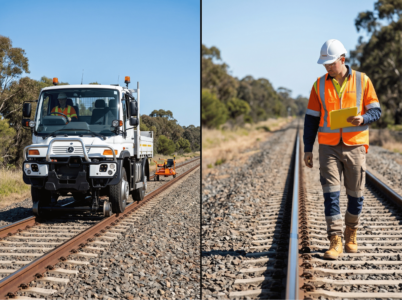
Railway inspection methods continue to evolve as rail operators demand faster and safer testing systems. The debate around Hi-Rail Truck vs Inspection Cart has become more important because modern rail networks now handle heavier loads and tighter schedules. When comparing Hi-Rail Truck vs Inspection Cart methods alongside walking inspections, each approach offers unique strengths that affect speed, cost, and inspection quality.
Rail infrastructure depends on routine testing. A missed defect can delay operations, damage cargo, or even cause derailments. Because of this, rail operators constantly evaluate inspection methods to improve efficiency without sacrificing safety. While some systems prioritize rapid coverage, others focus on detailed fault detection.
The rail industry no longer relies on one inspection method alone. Instead, companies combine technologies and manual expertise to build a more reliable inspection strategy. Understanding the differences between these approaches helps operators select the right solution for each rail environment.
Understanding the Three Track Inspection Methods
What Is a Hi-Rail Truck?
A Hi-Rail truck is a road vehicle fitted with retractable rail wheels. This design allows the vehicle to travel on highways and rail tracks without requiring separate transport equipment.
Rail operators often use Hi-Rail vehicles for long-distance inspections because they can move quickly between locations. Many modern systems also support advanced testing technology.
Key features include:
- Retractable rail guidance wheels
- GPS-based inspection tracking
- Ultrasonic testing systems
- Thermal imaging support
- Track geometry monitoring tools
The Hi-Rail Truck vs Inspection Cart comparison often begins with mobility because Hi-Rail vehicles can transition between roads and rails rapidly.
What Is an Inspection Cart?
An inspection cart is a lightweight platform that travels directly on the rails. Some versions operate manually, while others use small electric or gas-powered motors.
Inspection carts work best in confined spaces or smaller rail sections. Rail teams frequently use them inside tunnels, switching yards, and bridge areas where larger vehicles struggle to operate safely.
Important characteristics include:
- Portable and lightweight structure
- Quick deployment on short track sections
- Modular sensor attachments
- Lower operating costs
- Easier access to tight rail environments
Although smaller than Hi-Rail vehicles, inspection carts still support valuable testing functions.
What Is Walking Inspection?
Walking inspection represents the oldest rail testing approach. A trained inspector physically walks along the track while examining rails, fasteners, joints, and surrounding infrastructure.
Despite technological advances, walking inspections remain important. Human inspectors can identify subtle issues that automated systems may overlook.
Walking inspections are commonly used for:
- Emergency damage assessments
- Switch and turnout evaluations
- Detailed follow-up inspections
- Areas inaccessible to vehicles
The Hi-Rail Truck vs Inspection Cart discussion becomes more interesting when walking inspections enter the comparison because manual inspections still play a critical role in railway safety.
Hi-Rail Truck vs Inspection Cart: Coverage and Speed
Coverage speed creates one of the largest differences between inspection methods. Rail operators managing large networks usually prioritize systems that inspect longer distances in less time.
Hi-Rail trucks can inspect between 50 and 200 miles daily, depending on terrain and testing complexity. Their ability to transition directly from roads to rails reduces travel delays significantly.
Inspection carts move much slower. Most carts inspect only 2 to 10 miles daily because operators use them in targeted areas rather than large corridors.
Walking inspections remain the slowest method. Inspectors often cover fewer than five miles daily, especially in dense rail environments.
| Method | Daily Coverage | Ideal Terrain | Speed |
| Hi-Rail Truck | 50–200 miles | Mainlines | High |
| Inspection Cart | 2–10 miles | Yards/Tunnels | Moderate |
| Walking | Up to 5 miles | Any terrain | Low |
The Hi-Rail Truck vs Inspection Cart comparison clearly favors Hi-Rail systems for large-scale coverage. However, speed alone does not determine inspection quality.
Inspection carts perform better in environments requiring careful maneuverability. Tight tunnels, bridge decks, and urban rail systems often limit the usefulness of larger vehicles.
Walking inspections, although slow, provide close-range evaluation that machines cannot always replicate. Human inspectors can notice unusual smells, loose fittings, or vibration patterns that automated systems may ignore.
Coverage is just one side of the coin: but what happens when accuracy and data quality enter the equation? The next section reveals a surprising gap.
Which Is More Efficient, a Train or a Truck?
Trucks generally offer greater operational flexibility than trains for inspection activities. Hi-Rail vehicles can travel on highways and rails without requiring separate transportation systems.
This flexibility improves scheduling efficiency. Rail crews can quickly reach inspection zones without waiting for rail traffic clearance. As a result, downtime decreases significantly.
Industry reports suggest that Hi-Rail inspection systems reduce setup time by nearly 40% compared to dedicated rail-bound inspection equipment. Faster deployment means crews can complete more inspections within shorter maintenance windows.
The Hi-Rail Truck vs Inspection Cart debate also reflects efficiency differences in staffing and logistics. A Hi-Rail unit often carries multiple technicians, onboard computers, and inspection equipment simultaneously.
Inspection carts require less fuel and lower maintenance costs. However, they cannot match the deployment range of Hi-Rail vehicles.
Rail consultant David Clarke once stated, “Operational flexibility now matters as much as inspection accuracy in modern rail systems.”
Walking inspections still maintain efficiency in very small areas. For example, inspecting a turnout or switch manually may take less preparation than deploying vehicles.
Still, larger networks usually depend on vehicle-based systems to maintain operational schedules.
Hi-Rail Truck vs Inspection Cart: Data Collection and Technology
Modern railway inspections depend heavily on data. Rail operators no longer rely only on visual assessments because hidden defects often develop beneath the rail surface.
The Hi-Rail Truck vs Inspection Cart comparison becomes more complex when advanced technology enters the discussion.
Sensor Technology on Hi-Rail Trucks
Hi-Rail trucks support sophisticated testing systems capable of collecting large volumes of rail data during operation.
Common onboard technologies include:
- Ultrasonic rail flaw detection
- Track geometry measurement systems
- Thermal imaging cameras
- GPS-based defect mapping
Ultrasonic systems identify internal rail cracks before visible damage appears. Geometry systems measure alignment, gauge width, and track elevation continuously.
Some advanced Hi-Rail vehicles also use artificial intelligence to analyze inspection data automatically. These systems improve defect detection speed while reducing human error.
Because Hi-Rail trucks support larger onboard power systems, they can operate multiple sensors simultaneously during high-speed inspections.
Sensor Technology on Inspection Carts
Inspection carts use simpler sensor configurations. However, they still provide valuable diagnostic capabilities for localized inspections.
Typical cart-based systems include:
- High-resolution visual cameras
- Portable geometry tools
- Laser measurement devices
- Compact ultrasonic units
Inspection carts cost less than Hi-Rail systems, making them attractive for smaller rail operators.
However, carts usually collect less comprehensive data because they lack the onboard computing capacity of larger vehicles.
Walking inspections rely mostly on visual observation and handheld tools. Success depends heavily on inspector experience and training quality.
The Hi-Rail Truck vs Inspection Cart discussion often highlights this technology gap because modern rail infrastructure increasingly depends on predictive maintenance systems.
The technology gap is clear: but does more technology always mean better results? The answer might not be what’s expected.
What Is the Most Important Reason to Inspect a Truck or Bus?
The most important reason to inspect a truck or bus is safety compliance and failure prevention. The same principle applies directly to rail inspection systems.
Rail defects create enormous operational risks. Cracked rails, loose fasteners, and alignment issues can escalate into severe accidents if inspectors miss early warning signs.
According to Federal Railroad Administration data, track defects remain one of the leading causes of derailments across North American rail systems.
Routine inspections help operators:
- Detect structural weaknesses early
- Reduce derailment risks
- Improve passenger and cargo safety
- Maintain regulatory compliance
- Extend rail infrastructure lifespan
The Hi-Rail Truck vs Inspection Cart comparison matters because inspection quality directly affects operational safety outcomes.
Hi-Rail trucks support faster large-scale inspections. Inspection carts provide detailed localized testing. Walking inspections allow close human evaluation in critical zones.
Rail operators often combine all three methods because no single system can address every inspection challenge effectively.
Cost Comparison: Hi-Rail Truck vs Inspection Cart
Cost remains one of the biggest deciding factors in rail inspection planning. Each method carries different equipment, labor, and maintenance expenses.
Hi-Rail trucks require the highest upfront investment. Advanced inspection vehicles can cost between $150,000 and $500,000 depending on sensor packages and customization.
However, large networks often achieve lower long-term costs per inspected mile because Hi-Rail systems cover significant distances quickly.
Inspection carts cost considerably less. Basic units may range from $5,000 to $50,000 depending on sensor configurations and motor systems.
Walking inspections require minimal equipment investment, but labor expenses increase substantially over time due to slower inspection speeds.
The Hi-Rail Truck vs Inspection Cart comparison often depends on inspection scale rather than equipment price alone.
Cost breakdown overview:
- Hi-Rail Truck: high investment, low per-mile cost at scale
- Inspection Cart: moderate investment, ideal for focused inspections
- Walking: low equipment cost, high labor intensity
Rail operators managing extensive corridors usually favor Hi-Rail systems because inspection speed offsets initial expenses.
Smaller rail yards and industrial tracks often benefit more from inspection carts due to lower operating requirements.
When to Use Each Method: A Practical Guide
Choosing the right inspection method depends on terrain, traffic levels, inspection goals, and available budget.
Best Use Cases for Hi-Rail Trucks
Hi-Rail systems work best in large operational environments.
Common applications include:
- Mainline rail inspections
- Post-storm network sweeps
- Overnight inspection programs
- FRA compliance surveys
The Hi-Rail Truck vs Inspection Cart discussion strongly favors Hi-Rail vehicles when speed and coverage matter most.
Best Use Cases for Inspection Carts
Inspection carts perform better in specialized environments requiring flexibility.
Ideal scenarios include:
- Tunnel inspections
- Bridge deck evaluations
- Yard inspections
- Low-clearance rail zones
Their lightweight structure allows operators to access areas unsuitable for larger vehicles.
When Walking Still Wins
Walking inspections remain essential in several situations.
They are especially useful for:
- Emergency follow-up inspections
- Detailed defect confirmation
- Areas inaccessible to inspection vehicles
The Hi-Rail Truck vs Inspection Cart comparison may dominate modern discussions, but walking inspections still provide unmatched close-range observation.
Safety Records: Hi-Rail Truck vs Inspection Cart vs Walking
Safety remains the foundation of every rail inspection program. Even the most advanced inspection technology becomes useless if it places workers or rail operations at unnecessary risk.
The Hi-Rail Truck vs Inspection Cart comparison often starts with operator protection because each method exposes crews to different hazards.
Hi-Rail trucks provide structured safety controls. Operators remain inside enclosed vehicles while traveling long distances. Modern systems also include communication radios, warning lights, braking systems, and GPS monitoring.
However, Hi-Rail operations still carry risks. Road-to-rail transitions require careful alignment procedures. Improper rail entry can damage wheels or derail the vehicle.
Inspection carts reduce many high-speed risks because they operate at lower speeds. Their lightweight design also improves maneuverability in confined rail environments.
Still, manual handling injuries sometimes occur during cart lifting, positioning, or removal from tracks.
Walking inspections expose personnel to the greatest environmental risk. Inspectors remain physically close to active rail lines, electrical systems, and uneven terrain throughout the inspection process.
Important safety practices include:
- Mandatory communication with dispatch centers
- Rail occupancy authorization procedures
- Reflective protective equipment
- Real-time weather monitoring
- Emergency evacuation planning
The Hi-Rail Truck vs Inspection Cart debate becomes even more important when rail operators evaluate worker exposure alongside inspection efficiency.
Safety records tell one story, but regulatory requirements tell another: and the rules might surprise operators who think one method is automatically compliant.
Regulatory Standards and Compliance
Rail inspection programs must follow strict safety regulations established by transportation authorities. In the United States, the Federal Railroad Administration governs most track inspection requirements under 49 CFR Part 213.
These regulations define inspection frequency, track classifications, geometry standards, and defect response procedures.
Hi-Rail vehicles support compliance for high-speed Class 4 to Class 6 rail systems because they can collect geometry and ultrasonic data efficiently across long corridors.
Inspection carts usually support lower-speed Class 1 to Class 3 track inspections. Their slower pace limits effectiveness on high-speed rail systems requiring rapid network coverage.
Walking inspections remain valuable, but regulators rarely accept them as the sole inspection method for major rail operations.
The Hi-Rail Truck vs Inspection Cart comparison often influences compliance strategy because different track classes require different inspection frequencies and technologies.
Rail operators also maintain digital inspection records to demonstrate regulatory compliance during audits and incident investigations.
Modern rail compliance programs increasingly combine automated vehicle data with manual inspection reports to create more reliable maintenance histories.
Can You Judge a Train Speed Accurately?
No, train speed cannot be judged accurately without calibrated equipment. Human observation alone often produces unreliable estimates, especially at higher operating speeds.
This issue directly affects rail inspections because speed measurements influence track classification and safety compliance.
Hi-Rail vehicles commonly use onboard speed monitoring systems integrated with GPS and geometry sensors. These tools measure inspection speed precisely while recording track conditions simultaneously.
Inspection carts may also support speed measurement tools, although their systems usually remain less advanced than Hi-Rail platforms.
Walking inspections cannot accurately estimate train speeds without specialized equipment. Human perception struggles to calculate velocity consistently across long rail corridors.
The Hi-Rail Truck vs Inspection Cart discussion becomes critical on high-speed rail networks where speed accuracy directly affects inspection quality.
Rail operators depend on calibrated measurement systems because small speed miscalculations can influence braking distances, defect severity analysis, and maintenance planning.
What Is Rail Transport Also Known As?
Rail transport is also known as railway transport or train transport. In technical engineering fields, professionals may also describe it as fixed guideway transport.
This term refers to transportation systems operating on predetermined tracks rather than flexible road routes.
The fixed nature of rail infrastructure explains why inspections matter so much. Rail systems cannot avoid defects by changing direction like road vehicles.
Because of this limitation, inspection quality directly influences operational safety.
The Hi-Rail Truck vs Inspection Cart discussion reflects the rail industry’s effort to improve inspection reliability across different rail environments.
Modern rail systems continue adopting advanced technologies because infrastructure durability depends heavily on early defect detection.
Environmental Impact: Hi-Rail Truck vs Inspection Cart
Environmental concerns now influence rail maintenance planning more than ever before. Rail operators increasingly evaluate inspection systems based on emissions and fuel efficiency.
Hi-Rail trucks typically use diesel engines. Their larger size and onboard systems create a higher carbon footprint during long inspection runs.
However, newer hybrid technologies are beginning to reduce fuel consumption in some fleets.
Inspection carts generally create lower emissions because many models use electric or battery-powered systems. Their smaller structure also requires less energy during operation.
Walking inspections remain the most environmentally friendly option because they produce no direct emissions.
The Hi-Rail Truck vs Inspection Cart comparison continues evolving as sustainability goals become more important across transportation industries.
Many rail companies now seek greener inspection technologies while maintaining operational efficiency and safety compliance.
Environmental performance may soon influence procurement decisions as strongly as inspection speed or equipment cost.
Hi-Rail Truck vs Inspection Cart: Which One Should Rail Operators Choose?
Choosing the correct inspection method depends on several operational factors. Rail operators must evaluate network size, inspection goals, terrain conditions, and available budgets carefully.
The Hi-Rail Truck vs Inspection Cart decision rarely produces a single universal answer.
Large rail corridors usually benefit most from Hi-Rail systems because they support high-speed inspections and large-scale data collection.
Inspection carts perform better in compact environments like tunnels, bridges, yards, and industrial rail facilities.
Walking inspections still provide unmatched flexibility during emergency response situations.
| Factor | Hi-Rail Truck | Inspection Cart | Walking |
| Large Networks | ✓ Best | Partial | ✗ |
| Budget-Limited Operations | ✗ | ✓ Best | ✓ |
| Tunnel and Yard Work | Partial | ✓ Best | ✓ |
| High-Speed Rail Lines | ✓ Best | ✗ | ✗ |
| Emergency Spot Inspections | Partial | Partial | ✓ Best |
The Hi-Rail Truck vs Inspection Cart comparison becomes easier when operators focus on operational priorities instead of selecting a single “best” method.
Most successful rail systems combine methods strategically to maximize inspection coverage and fault detection accuracy.
Final Thoughts
Rail inspection continues evolving as rail systems become faster, larger, and more technologically advanced. The Hi-Rail Truck vs Inspection Cart comparison shows that each method delivers different advantages depending on operational requirements.
Hi-Rail trucks provide rapid large-scale coverage and advanced sensor integration. Inspection carts offer flexibility and targeted inspection capability in confined environments. Walking inspections still deliver valuable close-range analysis during specialized evaluations.
The Hi-Rail Truck vs Inspection Cart debate should not focus on replacing one method with another. Instead, rail operators benefit most when combining these approaches strategically.
No single inspection system can address every rail maintenance challenge alone. The strongest inspection programs integrate technology, mobility, and human expertise together.
Key Takeaways
- Hi-Rail Truck vs Inspection Cart comparisons depend heavily on inspection speed, terrain, and operational requirements.
- Hi-Rail trucks provide faster large-scale inspections across long railway corridors and mainline networks.
- Inspection carts perform better in confined rail environments requiring detailed localized inspection access.
- Walking inspections remain valuable for emergency evaluations and close-range visual defect identification procedures.
- Modern Hi-Rail systems support advanced technologies including ultrasonic testing and geometry measurement equipment.
- Inspection carts offer lower upfront costs while maintaining strong flexibility for specialized inspection tasks.
- Rail operators often combine multiple inspection approaches to improve safety and maintenance accuracy significantly.
- The Hi-Rail Truck vs Inspection Cart decision should align carefully with operational inspection priorities.
- Regulatory compliance requirements often influence which inspection method best suits specific railway classifications.
- Effective rail inspection strategies balance technology, worker safety, operational efficiency, and long-term infrastructure reliability.
FAQs
What are the 4 types of inspection?
The four common types of inspection include visual inspection, ultrasonic inspection, geometry inspection, and automated sensor-based inspection. Rail operators often combine these methods to improve defect detection accuracy and overall track safety.
What are the 5 disadvantages of rail transport?
Rail transport can involve high infrastructure costs, limited route flexibility, expensive maintenance requirements, scheduling delays, and dependence on track conditions. These limitations increase the importance of regular inspection and preventive maintenance programs.
What are the 4 types of transport?
The four main types of transport are rail transport, road transport, air transport, and water transport. Rail systems remain one of the most efficient solutions for large-scale freight and passenger movement.
Is a train bigger than a truck?
Yes, trains are significantly larger than trucks in terms of carrying capacity, length, and operational scale. This larger size also means railway systems require more detailed inspection and maintenance procedures.
What is the formula for the speed of a train?
The basic formula for train speed is speed = distance ÷ time. Rail inspection systems often use GPS and digital sensors to calculate train speed accurately during testing operations.