
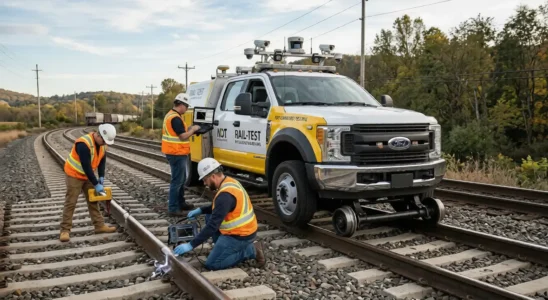
Every train journey depends on something passengers rarely notice: the condition of the tracks beneath the wheels. Hidden cracks, structural fatigue, and gradual wear develop over time, often without visible warning signs. This is where hi-rail track inspection services become a critical part of railway safety. In fact, hi-rail track inspection services ensure early detection of defects, and hi-rail track inspection services help operators prevent costly failures before they occur.
Railway infrastructure operates under constant stress. Heavy loads, environmental changes, and continuous usage push tracks to their limits. Without proper monitoring, even minor flaws can evolve into major safety risks. This article explores how modern inspection systems and non-destructive testing work together to protect rail networks. But what truly defines the efficiency of these inspections?
What Are Hi-Rail Track Inspection Services?
Hi-rail vehicles are uniquely designed machines that operate both on standard roads and railway tracks. This dual capability allows inspection teams to transition quickly between routes without needing additional transport systems. As a result, inspectors can reach remote or high-traffic rail corridors efficiently.
Hi-rail track inspection services involve the use of these vehicles equipped with specialized diagnostic tools. Inspectors assess track alignment, rail wear, joint conditions, and structural integrity. They perform these inspections while minimizing disruptions to ongoing rail operations.
Railway authorities, freight operators, and transit agencies typically schedule inspections based on regulatory requirements and operational demands. High-density routes often require frequent monitoring, while lower-traffic lines follow periodic inspection cycles.
These services combine human expertise with advanced technology. Inspectors rely on both experience and precision instruments to identify defects. They evaluate not only visible issues but also hidden structural problems that could compromise safety.
Environmental factors also play a major role in track degradation. Temperature fluctuations can cause expansion and contraction, while moisture can lead to corrosion. Hi-rail track inspection services help identify these risks early and guide preventive maintenance strategies.
Additionally, inspection teams monitor ballast conditions, rail fasteners, and track geometry. Each component contributes to the overall stability of the railway system. Ignoring even one element can lead to long-term complications.
Now that the role of hi-rail vehicles is clear, what exactly goes into inspecting a track from the inside out, and why does it take more than just a visual check? The answer lies in the inspection system itself.
What Is the Rail Track Inspection System?
A rail track inspection system is a structured combination of tools, technologies, and processes used to evaluate the condition and safety of railway tracks.
Modern systems have evolved significantly from manual inspections. Today, they rely on digital sensors, automated measurements, and data-driven analysis. These systems provide a deeper understanding of track conditions and allow engineers to make informed decisions.
One of the core elements of a rail track inspection system is geometry measurement. This process evaluates alignment, gauge, cross-level, and curvature. Even minor deviations can affect train stability and increase wear on components.
Ultrasonic sensors play a crucial role in detecting internal defects. These sensors send sound waves through the rail material and analyze reflections to identify cracks. This method allows inspectors to detect flaws that are invisible on the surface.
Data logging systems capture inspection results in real time. Engineers use this data to track trends, predict failures, and plan maintenance schedules. The integration of digital tools ensures accuracy and consistency in reporting.
GPS mapping adds another layer of precision. It enables inspectors to pinpoint the exact location of defects, making repairs more efficient. This level of accuracy reduces downtime and improves maintenance planning.
Key Components of a Rail Track Inspection System
- Geometry measurement tools that monitor alignment, gauge, and curvature
- Defect detection systems, such as ultrasonic sensors, for internal flaw identification
- Data capture systems that store inspection results for analysis
- Real-time reporting tools that support quick decision-making
- GPS mapping systems that provide accurate location tracking
These components work together to create a comprehensive inspection framework. Without them, many defects would remain undetected until they lead to serious consequences.
Rail operators increasingly depend on these systems to maintain safety and efficiency. The ability to collect and analyze data in real time has transformed the way inspections are conducted.
Inspection systems also support predictive maintenance strategies. By analyzing historical data, engineers can identify patterns and anticipate potential failures. This proactive approach reduces costs and improves reliability.
What Is NDT in Railway?
Non-Destructive Testing (NDT) in railway refers to techniques used to evaluate materials and components without causing any damage.
Railway systems require continuous operation, making destructive testing methods impractical. NDT allows inspectors to examine rails, welds, and other components while keeping them intact. This approach ensures both safety and operational continuity.
Within hi-rail track inspection services, NDT plays a central role. It enables inspectors to detect cracks, corrosion, and fatigue at an early stage. By identifying issues before they worsen, operators can avoid major failures and costly repairs.
NDT also enhances safety standards across the railway industry. Regulatory authorities require regular inspections and accurate reporting. NDT provides reliable data that meets these requirements.
Another advantage of NDT is its ability to extend the lifespan of railway assets. Early detection allows for targeted maintenance, reducing the need for full replacements. This approach not only saves costs but also minimizes disruptions.
Engineers rely on NDT to monitor critical components like weld joints and rail heads. These areas are particularly vulnerable to stress and fatigue. Regular testing ensures that they remain in optimal condition.
Understanding what NDT is only scratches the surface; the real question is which specific methods actually detect the defects that cause derailments. That breakdown comes next.
The 4 Types of NDT Used in Railway Inspection
Railway inspection uses multiple NDT methods to detect different types of defects. Each method serves a specific purpose and contributes to a comprehensive evaluation of track conditions.
- Ultrasonic Testing (UT): This method uses high-frequency sound waves to detect internal cracks within rails. It is highly effective for identifying defects deep inside the material.
- Magnetic Particle Testing (MT): This technique detects surface and near-surface defects by applying a magnetic field and observing particle patterns. It is commonly used for inspecting welds and joints.
- Eddy Current Testing (ET): This method uses electromagnetic induction to identify surface cracks and material inconsistencies. It is particularly useful for detecting corrosion and fatigue.
- Visual Testing (VT): This involves direct observation by trained inspectors. It helps identify visible defects like wear, misalignment, and surface damage.
Among these methods, ultrasonic testing and visual testing are most commonly used during hi-rail track inspection services. Ultrasonic testing provides insight into internal conditions, while visual testing offers immediate surface-level assessments.
Each method complements the others. Together, they create a layered inspection approach that significantly reduces the risk of undetected defects.
Railway operators rely on these techniques to maintain high safety standards. By combining multiple NDT methods, inspectors can detect issues early and prevent failures.
Hi-rail track inspection services integrate these testing methods into a unified process. This integration ensures that inspections remain thorough, accurate, and efficient.
As railway networks continue to expand, the importance of advanced inspection techniques becomes even more evident. Reliable inspections not only protect infrastructure but also ensure passenger safety.
Advanced Technologies Powering Modern Hi-Rail Inspections
Railway inspection has evolved far beyond manual observation and basic tools. Today, advanced technologies drive accuracy, speed, and reliability across every inspection cycle. Modern hi-rail track inspection services now integrate intelligent systems that detect defects faster and with greater precision than ever before.
LiDAR technology plays a key role in mapping track geometry with extreme accuracy. It uses laser pulses to create detailed 3D models of railway infrastructure. Engineers rely on these models to identify misalignments and structural inconsistencies.
Ground-penetrating radar (GPR) adds another layer of insight. It examines subsurface conditions like ballast integrity and moisture levels. This technology helps inspectors detect issues that lie beneath the visible track surface.
Automated defect recognition systems use artificial intelligence to analyze inspection data. These systems identify patterns and flag potential risks in real time. As a result, inspection teams can respond quickly to emerging issues.
The impact of these technologies is measurable. Industry reports indicate that advanced inspection systems reduce undetected defects by up to 40 percent. Inspection speeds have also improved significantly, allowing teams to cover more track in less time.
Hi-rail track inspection services now benefit from these innovations by delivering more accurate and efficient results. The combination of advanced tools and skilled operators ensures that inspections meet the highest safety standards.
Data integration has also transformed decision-making. Engineers can access real-time insights, compare historical data, and prioritize maintenance tasks effectively. This approach reduces downtime and enhances operational efficiency.
However, even the most advanced technology requires skilled professionals to interpret and act on the data.
The technology is impressive, but technology alone means nothing without a team that knows how to use it. So what does a truly expert hi-rail inspection crew bring to the table?
What Does EMA Quality Industries Bring to Hi-Rail Track Inspection Services?
EMA Quality Industries has established itself as a trusted provider of advanced inspection solutions. The company specializes in delivering reliable and accurate hi-rail track inspection services tailored to the needs of modern rail operators.
With a strong focus on quality and precision, EMA ensures that every inspection meets strict industry standards. The company adheres to regulatory frameworks like the Federal Railroad Administration (FRA) and the American Railway Engineering and Maintenance-of-Way Association (AREMA).
EMA Quality Industries serves a wide range of clients, including freight rail companies, transit authorities, and Class I railroads. Its expertise allows it to handle complex inspection requirements across diverse environments.
The company invests heavily in advanced equipment and skilled personnel. This combination ensures that inspections remain thorough, efficient, and compliant with regulations.
Safety remains a top priority for EMA. Each inspection follows a structured process designed to identify risks and provide actionable insights. Clients benefit from detailed reports that support informed decision-making.
EMA’s Inspection Process: Step by Step
- Pre-inspection planning: Teams assess project requirements, track conditions, and regulatory needs
- Mobilization: Hi-rail vehicles and equipment are deployed to the inspection site
- Data collection: Advanced tools gather detailed information on track conditions
- Analysis: Engineers evaluate data to identify defects and potential risks
- Reporting: Comprehensive reports provide clear insights and recommendations
- Follow-up: Teams support maintenance actions and ensure issues are resolved
This structured approach ensures consistency and accuracy across all inspections. It also allows clients to address issues proactively rather than reactively.
EMA’s commitment to innovation and quality makes it a reliable partner in railway safety. Its ability to combine advanced technology with expert analysis sets it apart in the industry.
Knowing the process is one thing, but what tangible results do rail operators actually see after bringing in professional hi-rail track inspection services? The numbers speak for themselves.
Key Benefits of Professional Hi-Rail Track Inspection Services
Professional inspections deliver measurable advantages that go beyond basic maintenance. Hi-rail track inspection services provide a proactive approach to railway safety and performance.
- Early detection of defects before they lead to failures
- Reduced maintenance costs through targeted repairs
- Assurance of compliance with regulatory standards
- Minimized service disruptions and downtime
- Improved safety for passengers and freight operations
Industry studies show that proactive inspection programs can reduce maintenance costs by up to 25 percent. Early detection also lowers the risk of derailments and other serious incidents.
Hi-rail track inspection services allow operators to plan maintenance activities more effectively. Instead of reacting to failures, they can address issues before they escalate.
These services also improve operational efficiency. By reducing unexpected disruptions, rail operators can maintain consistent schedules and improve service reliability.
Safety remains the most significant benefit. Accurate inspections protect both passengers and cargo, ensuring that railway systems operate without compromise.
Compliance and Regulatory Standards in Track Inspection
Railway inspection operates under strict regulatory frameworks designed to ensure safety and reliability. Organizations like the Federal Railroad Administration (FRA) set guidelines for inspection frequency, methods, and reporting.
Hi-rail track inspection services play a crucial role in helping operators meet these requirements. Regular inspections ensure that tracks remain within acceptable safety limits and comply with industry standards.
Non-Destructive Testing supports compliance by providing accurate and verifiable data. Inspectors can document findings and demonstrate adherence to regulations.
AREMA guidelines also influence inspection practices. These standards provide recommendations for track design, maintenance, and evaluation. Following these guidelines ensures consistency and reliability across the industry.
Operators who invest in professional inspection services reduce the risk of regulatory violations. They also improve their ability to respond to audits and inspections.
Compliance is not just about meeting requirements; it is about maintaining trust and ensuring long-term safety.
Final Thoughts
Railway safety depends on consistent monitoring, advanced technology, and expert analysis. Hi-rail track inspection services serve as a critical component in maintaining the integrity of rail infrastructure. From detecting hidden defects to ensuring regulatory compliance, hi-rail track inspection services provide the foundation for safe and efficient operations.
EMA Quality Industries stands out as a trusted partner in delivering these essential services. Its commitment to quality, innovation, and safety ensures that clients receive reliable and actionable insights.
As railway networks continue to expand, the importance of hi-rail track inspection services will only grow. Investing in professional inspections today helps prevent failures tomorrow and ensures a safer future for rail transportation.
Key Takeaways
- Hi-rail track inspection services play a crucial role in ensuring railway safety and operational reliability.
- Advanced inspection technologies significantly improve the accuracy and efficiency of detecting hidden rail defects.
- Non-Destructive Testing allows inspectors to evaluate track conditions without causing any structural damage.
- Regular inspections help identify minor issues early before they develop into major failures.
- Hi-rail vehicles provide flexible access to both remote and high-traffic railway corridors.
- Data-driven inspection systems enable better maintenance planning and informed decision-making processes.
- Professional inspection services help railway operators meet strict regulatory and compliance requirements.
- Early defect detection reduces long-term maintenance costs and prevents unexpected service disruptions.
- Combining multiple NDT methods ensures a comprehensive and reliable assessment of track conditions.
- Investing in hi-rail track inspection services enhances overall safety for passengers and freight transportation.
FAQs
What is ultrasonic testing of the railway track?
Ultrasonic testing uses high-frequency sound waves to detect internal cracks within rails. It identifies defects that are not visible on the surface. This method is widely used in hi-rail track inspection services for accurate fault detection.
What tool is used in NDT?
NDT uses tools like ultrasonic flaw detectors, magnetic particle equipment, and eddy current devices. These tools help inspectors detect internal and surface defects. Each tool serves a specific purpose depending on the inspection requirement.
What is the qualification for NDT?
NDT professionals typically require technical training and certification in specific testing methods. Certifications like Level I, II, or III validate their expertise. Many also have engineering or technical backgrounds related to inspection services.
What is a level 3 NDT inspector?
A Level 3 NDT inspector is the highest certification level in non-destructive testing. This expert develops testing procedures, interprets complex results, and supervises other inspectors. They ensure inspections meet industry standards and regulations.
Is NDT QA or QC?
NDT is primarily part of Quality Control because it focuses on detecting defects in materials. However, it also supports Quality Assurance by ensuring processes meet required standards. It plays a role in both maintaining and verifying quality.