
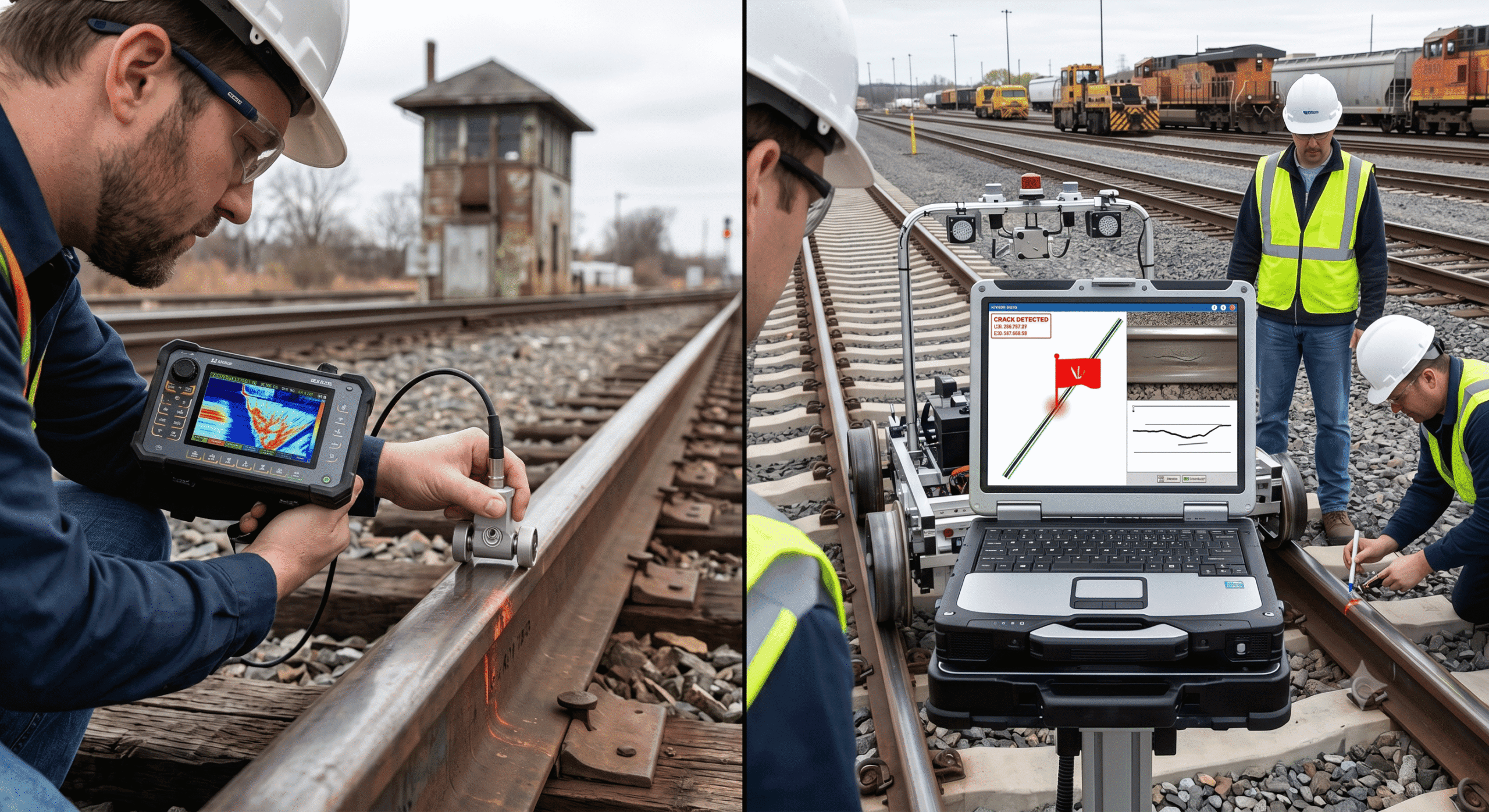
The safety of railway infrastructure depends entirely on the ability to detect and monitor potential defects before they become catastrophic failures. Rail fatigue crack represents one of the most dangerous threats to modern transportation systems worldwide. A single rail fatigue crack left undetected can lead to derailments, injuries, and loss of life. Every day, thousands of trains carry millions of passengers across the globe, and protecting them demands a comprehensive approach to identifying even the smallest flaws in track systems.
Railway networks face constant stress from heavy loads, temperature fluctuations, and repetitive cycles of expansion and contraction. These conditions create the perfect environment for rail fatigue crack development. The industry has long recognized that early detection saves lives and prevents millions in damage costs. Understanding how to identify and monitor rail fatigue crack through modern technology is no longer optional, it is essential.
Understanding the Critical Challenge of Rail Fatigue Crack Detection
Railway operators encounter a fundamental problem every single day. The equipment responsible for carrying passengers and freight experiences extreme stress that inevitably leads to structural degradation. Rail fatigue crack emerges when metal components endure repeated loading cycles that exceed their material strength capacity. This process happens gradually, often invisibly, until the damage becomes critical.
What makes rail fatigue crack particularly dangerous is its silent nature. Unlike obvious defects, these cracks develop internally first, becoming visible only after significant damage has occurred. The transportation industry has documented countless instances where undetected rail fatigue crack caused major accidents. Statistics show that material fatigue accounts for approximately 40% of structural failures in railway systems. This sobering reality underscores why detecting rail fatigue crack early is absolutely non-negotiable.
The formation of rail fatigue crack follows a predictable pattern based on material science principles. Metal fatigue develops through three distinct stages: micro-crack initiation, progressive crack growth, and catastrophic failure. During the initiation stage, microscopic rail fatigue crack forms at stress concentration points. These initial cracks remain invisible to the naked eye. However, with each passing train and every load cycle, the rail fatigue crack grows incrementally larger.
Common causes of rail fatigue crack development include:
- Repeated heavy axle loads from freight and passenger trains
- Thermal stress from temperature changes and seasonal variations
- Poor track geometry and misaligned rails
- Welding defects and material inconsistencies
- Impact loads from wheels with flat spots or out-of-round conditions
What Exactly is a Rail Fatigue Crack?
A rail fatigue crack differs fundamentally from other types of rail damage that operators encounter. While impact damage occurs suddenly from a single traumatic event, rail fatigue crack develops insidiously over time. The crack originates at a microscopic level where stress concentrations exceed the metal's endurance limit. In technical terms, rail fatigue crack forms when cyclic stress causes atomic bonds to break progressively.
Rail fatigue crack typically initiates at surface irregularities, welded joints, or internal defects within the metal structure. Once initiated, the rail fatigue crack propagates deeper into the rail head with each subsequent load cycle. Unlike brittle fractures that occur suddenly, rail fatigue crack shows characteristics of both ductile and brittle behavior. Understanding this distinction helps maintenance teams appreciate why detecting rail fatigue crack requires specialized technology and expertise.
The Vital Importance of Early Detection of Rail Fatigue Crack
The consequences of overlooking rail fatigue crack extend far beyond financial considerations. When rail fatigue crack remains undetected, the structural integrity of the entire railway system becomes compromised. A rail fatigue crack that grows unmonitored will eventually reach a critical size where catastrophic failure occurs suddenly. The results are invariably devastating, derailments, collisions, and loss of life.
Modern railway safety standards exist because of historical disasters traced back to rail fatigue crack. The industry learned through tragedy that reactive maintenance approaches fail spectacularly. Passengers boarding trains expect that maintenance teams have identified and addressed any rail fatigue crack threatening their safety. Railway operators carry an enormous responsibility to verify that rail fatigue crack detection systems are working effectively.
The economic impact of rail fatigue crack extends beyond accident prevention. Unplanned derailments disrupt entire transportation networks, costing companies millions in recovery expenses. Insurance claims, legal liability, and operational interruptions compound the damage when rail fatigue crack leads to failure. Additionally, replacing entire rail sections after catastrophic failure costs exponentially more than performing preventive maintenance. Forward-thinking railway operators invest heavily in technology that catches rail fatigue crack before it becomes dangerous.
| Aspect | Consequence of Undetected Rail Fatigue Crack | Benefit of Early Detection |
| Safety | Derailment, injuries, fatalities | Zero accident risk from that defect |
| Cost | Millions in recovery and replacement | Minor maintenance expense |
| Operations | Network disruption for months | Minimal downtime for repair |
| Liability | Massive legal and insurance claims | Regulatory compliance protection |
| Reputation | Loss of public confidence | Enhanced safety record |
Why early detection of rail fatigue crack matters:
- Prevents catastrophic failures that endanger lives
- Reduces operational disruptions and network downtime
- Minimizes maintenance and replacement costs significantly
- Protects company liability and insurance ratings
- Maintains regulatory compliance and safety certifications
- Builds passenger confidence and trust
The regulatory framework governing railway safety explicitly requires systematic monitoring for rail fatigue crack. International standards mandate that operators implement comprehensive defect detection programs. Agencies inspect for rail fatigue crack presence using approved methods at specified intervals. Failure to comply with these standards results in license suspension and substantial penalties. But beyond regulatory requirements, operators ethically cannot ignore rail fatigue crack risks.
Now that the critical importance of detecting rail fatigue crack is established, what methods actually exist to identify these dangerous defects before failure occurs? Let's explore in the next section.
What NDT Methods are Used for Rail Defect Detection?
Non-destructive testing represents a revolutionary approach to rail fatigue crack detection that changed the industry fundamentally. NDT methods allow technicians to evaluate rail integrity without damaging equipment or disrupting service. This capability enables frequent, thorough inspections that catch rail fatigue crack at early stages. Railway operators worldwide have adopted NDT as the gold standard for monitoring track condition.
The principle behind NDT applications is elegant in its simplicity. Instead of breaking apart or destroying the rail to examine its internal structure, NDT uses physics principles to peer into the metal without causing damage. Various energy forms, ultrasonic waves, electromagnetic fields, and visual inspection, reveal rail fatigue crack presence. Each NDT method targets specific types of defects and offers distinct advantages for rail fatigue crack detection.
Modern railway maintenance departments utilize multiple NDT methods simultaneously for comprehensive rail fatigue crack detection. The selection of which method to employ depends on the specific rail fatigue crack type suspected, rail geometry, and environmental conditions. Combining different approaches increases the probability of detecting rail fatigue crack before it becomes critical. This multi-method strategy represents best practices in contemporary railway safety management.
Ultrasonic Testing: The Gold Standard for Rail Fatigue Crack Detection
Ultrasonic testing has revolutionized the field of rail fatigue crack detection through its ability to identify internal flaws invisible to visual inspection. The technology operates by transmitting high-frequency sound waves into the rail material. These waves travel through the metal and reflect back when encountering boundaries or defects like rail fatigue crack. Specialized equipment interprets these reflections, creating a detailed image of internal rail structure.
For rail fatigue crack detection specifically, ultrasonic testing excels at finding defects buried deep within the rail head and web. Unlike surface inspection methods, ultrasound penetrates the entire cross-section of the rail. When a rail fatigue crack reflects ultrasonic waves differently than solid metal, technicians immediately recognize the anomaly. The speed and accuracy of ultrasonic testing for rail fatigue crack detection makes it invaluable for high-speed rail lines where safety margins are absolutely critical.
Ultrasonic testing equipment for rail fatigue crack detection has become increasingly sophisticated and user-friendly. Modern portable devices allow technicians to perform rapid scanning of extended rail sections. Automated ultrasonic systems now monitor rail fatigue crack development continuously, alerting operators to changes in real-time. The high reliability of ultrasonic methods for detecting rail fatigue crack has made this technology the preferred choice for most major railway operators globally.
Eddy Current Testing for Surface Rail Fatigue Crack Detection
Eddy current testing offers a complementary approach to rail fatigue crack detection, specializing in surface and near-surface defect identification. This electromagnetic method induces electrical currents in the rail material using a probe. When rail fatigue crack disrupts the normal flow of these eddy currents, the probe detects the disturbance. The sensitivity of eddy current testing for rail fatigue crack detection rivals ultrasonic methods for certain applications.
Eddy current technology particularly excels at identifying rail fatigue crack that originates at the surface or in shallow subsurface regions. Railway welded joints frequently experience surface rail fatigue crack initiation, making eddy current testing ideal for weld inspection. The method requires no coupling medium between probe and rail, simplifying field procedures for rail fatigue crack detection. Additionally, eddy current equipment produces results rapidly, enabling technicians to screen extensive track sections efficiently.
The limitations of eddy current testing for rail fatigue crack detection become apparent with deeper defects. The electromagnetic signals cannot penetrate far into the rail material. Therefore, eddy current testing works optimally when combined with ultrasonic methods for comprehensive rail fatigue crack detection strategies. Railway operators typically employ eddy current as an initial screening tool, then follow up with ultrasonic confirmation when rail fatigue crack indicators appear.
Why Preventive Maintenance of Rail Fatigue Crack is Non-Negotiable
Preventive maintenance philosophy directly contradicts the reactive approach that once dominated railway management. Rather than waiting for rail fatigue crack to cause failure, forward-thinking operators intercept defects during development stages. The cost differential between preventive intervention and emergency response is staggering. A rail fatigue crack detected and repaired before propagation costs a fraction of the expense from a catastrophic derailment.
Industry data overwhelmingly demonstrates the superiority of preventive approaches to rail fatigue crack management. Railway operators implementing systematic rail fatigue crack detection programs report 85% reduction in emergency interventions. Unplanned maintenance calls plummet when technicians identify rail fatigue crack early through routine inspections. Network reliability improves dramatically because the unexpected failures that create cascading delays become virtually eliminated.
The human factor in rail fatigue crack prevention cannot be overstated. Trained maintenance teams understand that rail fatigue crack represents an evolving threat requiring constant vigilance. Operators who cultivate cultures prioritizing rail fatigue crack detection create safer systems. Investment in employee training on rail fatigue crack identification pays dividends through improved safety outcomes. Expert technicians develop intuitions that prompt them to scrutinize suspicious areas more carefully for rail fatigue crack presence.
Key evidence supporting preventive rail fatigue crack monitoring:
- Major European railways cut accident rates by 73% after implementing systematic rail fatigue crack detection
- Cost of detecting rail fatigue crack averages $500; cost of derailment recovery averages $2 million
- Preventive maintenance extends rail service life by 40% compared to reactive approaches
- Network downtime decreases by 90% when rail fatigue crack programs are properly funded
Regulatory bodies increasingly mandate preventive rail fatigue crack detection programs. The European Union now requires all major railways to implement comprehensive monitoring. North American railways have adopted similar standards, making rail fatigue crack detection non-negotiable. These regulatory requirements reflect a hard-won understanding that rail fatigue crack prevention saves lives.
How to Identify Fatigue Cracks in Railway Infrastructure?
Identifying rail fatigue crack requires a multi-layered approach combining human expertise with technological precision. Railway maintenance teams must understand both the visible warning signs and the invisible indicators that signal rail fatigue crack development. The process begins with visual assessment but extends far beyond what the naked eye can detect. Successful identification programs integrate experience, technology, and systematic protocols to catch rail fatigue crack before it becomes critical.
The first step in any rail fatigue crack identification process involves understanding where these defects typically initiate. Rail fatigue crack most commonly originates at stress concentration points including welded joints, sharp angles, and areas with manufacturing defects. Experienced inspectors know to scrutinize these vulnerable locations intensively. However, rail fatigue crack sometimes develops in seemingly innocuous areas, which is why comprehensive scanning beats selective inspection every time.
Railway operators have learned that rail fatigue crack detection cannot depend on single observations or isolated inspections. Systematic, repeated monitoring of the same rail sections reveals whether rail fatigue crack is initiating and propagating. Trend analysis showing progressive changes indicates that rail fatigue crack is developing and requires intervention. Static rail fatigue crack measurements mean little; the rate of change tells the true story of rail integrity.
Practical indicators that warrant rail fatigue crack investigation:
- Visible surface cracks or spalling on rail head or gauge face
- Unusual wear patterns or depressions in rail head surface
- Track geometry anomalies suggesting structural compromise
- Operator reports of rough riding sensations or unusual vibration
- Results from previous NDT scans showing suspicious indications
Now that visual signs of rail fatigue crack are understood, how do maintenance teams actually verify these suspicions with advanced detection technology? Let's explore the specific methods next.
Visual Inspection Methods for Detecting Rail Fatigue Crack
Visual inspection represents the first line of defense in rail fatigue crack detection protocols. Trained inspectors walk or travel along track sections systematically observing rail condition. The human eye detects surface rail fatigue crack, spalling, and other visible defects that indicate deeper problems. This initial assessment guides decisions about which rail sections require NDT scanning for rail fatigue crack confirmation.
Modern rail fatigue crack visual inspection programs employ photography and documentation standards. Inspectors capture images of suspect areas, creating permanent records of rail fatigue crack locations and apparent severity. These visual records become valuable for tracking whether rail fatigue crack conditions worsen between inspection intervals. Comparing sequential photographs often reveals rail fatigue crack growth that might otherwise escape notice during verbal reports.
The limitations of visual inspection for rail fatigue crack identification became clear decades ago when accidents revealed deep internal cracks invisible from the surface. Rail fatigue crack lurking beneath the rail surface cannot be detected by looking. This reality necessitated developing complementary technologies. Visual methods remain essential for initial screening but must be coupled with NDT for comprehensive rail fatigue crack detection coverage.
Advanced Sensor Technologies for Rail Fatigue Crack Detection
Automated sensor systems now monitor rail fatigue crack development continuously across modern railway networks. These sophisticated installations use permanent transducers embedded in critical rail sections. Ultrasonic sensors continuously scan for rail fatigue crack initiation and propagation in real-time monitoring scenarios. Data transmissions alert operators immediately when rail fatigue crack indicators exceed safety thresholds.
Artificial intelligence applications are revolutionizing how rail fatigue crack data is interpreted and acted upon. Machine learning algorithms analyze historical rail fatigue crack patterns to predict where defects will develop. These predictive models identify high-risk rail sections before rail fatigue crack actually initiates. Preventing rail fatigue crack before it forms represents the ultimate goal of modern railway safety initiatives.
Portable advanced equipment has also transformed field operations for rail fatigue crack detection. Modern NDT devices combine multiple technologies, ultrasound, eddy current, and visual imaging, in single platforms. Technicians can perform comprehensive rail fatigue crack assessment of extended track sections in minimal time. Battery-powered equipment enables rapid deployment to remote locations where rail fatigue crack concerns emerge.
Overcoming Challenges in Rail Fatigue Crack Monitoring
Despite the compelling evidence supporting rail fatigue crack detection, implementation barriers persist across many railway systems worldwide. Budget constraints represent the primary obstacle limiting rail fatigue crack detection program expansion. Acquiring NDT equipment and training personnel requires substantial capital investment. Older railway systems struggle with funding limitations that prevent adopting rail fatigue crack monitoring comprehensively.
Technical challenges also complicate rail fatigue crack detection efforts. Rail surfaces corroded or painted create difficulties for certain NDT methods when detecting rail fatigue crack. Curved track sections present geometric challenges for equipment positioning during rail fatigue crack scanning. Weather conditions, extreme heat, cold, or moisture, can temporarily compromise equipment reliability for rail fatigue crack assessment. Experienced operators have learned to compensate for these challenges through procedural modifications.
Personnel training requirements for effective rail fatigue crack detection cannot be understated. Technicians must understand material science, ultrasonic principles, eddy current physics, and data interpretation for rail fatigue crack evaluation. Certification programs require significant time investment and specialized instruction. The shortage of qualified technicians willing to work in demanding field conditions limits how many rail fatigue crack inspections can be performed. Investment in employee recruitment and training directly correlates with successful rail fatigue crack programs.
Solutions operators employ to overcome rail fatigue crack detection barriers:
- Phased implementation approaches prioritizing highest-risk rail fatigue crack locations first
- Partnerships between railways sharing rail fatigue crack detection equipment and expertise
- Enhanced technician compensation and benefits to attract qualified rail fatigue crack inspectors
- Integration of rail fatigue crack detection with existing maintenance schedules to optimize costs
- Adoption of semi-automated systems reducing manual workload for rail fatigue crack scanning
The Evolution and Future of Rail Fatigue Crack Detection
Emerging technologies promise to transform rail fatigue crack detection dramatically over the next decade. Autonomous inspection vehicles equipped with advanced sensors will scan rail fatigue crack conditions without human operators on-track. Drone-based inspection systems offer capabilities for inspecting difficult-to-access rail sections where rail fatigue crack monitoring was previously impractical. These innovations will expand detection coverage while reducing personnel safety risks during rail fatigue crack assessments.
Artificial intelligence will increasingly dominate rail fatigue crack analysis and predictive modeling. Machine learning systems trained on massive historical datasets will identify subtle patterns predicting where rail fatigue crack will develop. Real-time AI analysis of inspection data will provide immediate rail fatigue crack severity assessments. Predictive maintenance replacing reactive intervention represents the inevitable future for rail fatigue crack management.
Blockchain technology may revolutionize documentation and traceability of rail fatigue crack detection records. Immutable records of all rail fatigue crack inspections, repairs, and verifications would enhance accountability and safety. International standards harmonizing rail fatigue crack detection methods across all railway systems appear increasingly feasible. Global cooperation on rail fatigue crack research promises to accelerate innovation and improve safety universally.
Final Thoughts
The railway industry has fundamentally transformed its approach to rail fatigue crack detection over the past two decades. What was once a reactive crisis-management approach has evolved into systematic, technology-enabled prevention. Modern NDT methods provide unprecedented capability to identify rail fatigue crack before catastrophic failure occurs. Forward-thinking operators recognize that detecting rail fatigue crack represents not merely a technical challenge but a moral obligation.
The success stories from railways worldwide implementing comprehensive rail fatigue crack detection programs inspire confidence. When railway operators commit resources to identifying rail fatigue crack systematically, accident rates plummet measurably. Passengers boarding trains at EMA Quality Industries-supported facilities can trust that maintenance teams have identified any existing rail fatigue crack. The future of rail transportation depends on continued innovation in rail fatigue crack detection technology and unwavering commitment to safety excellence.
Key Takeaways
- Railway operators committed to preventing rail fatigue crack disasters must embrace comprehensive detection strategies.
- Early identification of rail fatigue crack through NDT methods saves lives and prevents economic catastrophe.
- Systematic rail fatigue crack monitoring programs combined with preventive maintenance represent best practices globally.
- Investment in personnel training and equipment for rail fatigue crack detection yields measurable safety returns.
- Future technologies including artificial intelligence will significantly enhance rail fatigue crack detection capabilities worldwide.
- The commitment to identifying rail fatigue crack before failure occurs defines modern railway responsibility.
- Multiple NDT methods including ultrasonic and eddy current testing provide comprehensive rail fatigue crack coverage.
- Real-world case studies demonstrate that systematic rail fatigue crack detection prevents derailments and saves lives.
- Regulatory compliance increasingly mandates regular rail fatigue crack inspections on all major railway passenger lines.
- Integration of automated monitoring systems with rail fatigue crack detection enables predictive maintenance and prevents failures.
FAQs
What is NDT (Non-Destructive Testing)?
NDT identifies rail fatigue crack without damage. Methods include ultrasonic, eddy current, and visual inspection to detect defects safely.
What are the main NDT methods used for rail defect detection?
Ultrasonic, eddy current, visual inspection, and magnetic particle testing are primary methods for detecting rail fatigue crack in railways.
Which NDT method can best detect surface cracks in railway rails?
Eddy current testing excels at detecting surface rail fatigue crack. It rapidly screens large rail sections before ultrasonic confirmation.
What NDT method is most effective for detecting internal rail fatigue cracks?
Ultrasonic testing detects internal rail fatigue crack deep within rails. It penetrates entire cross-sections, revealing hidden defects.
How frequently should rail fatigue crack detection be performed on railway tracks?
High-traffic mainlines need rail fatigue crack detection every 3-6 months. Automated systems offer continuous monitoring for maximum safety.