
What Are the Methods of Railway Track Maintenance?
Discover essential railway track maintenance methods, ensuring safety, efficiency, and longevity with innovative techniques and advanced technology
Insights
270 articlesPage 27 of 27
Discover essential railway track maintenance methods, ensuring safety, efficiency, and longevity with innovative techniques and advanced technology
Railway track inspection under 49 CFR Part 213 takes seven forms. What each finds, the rule behind it, who may do it and how often, in one guide with tables.
Discover how predictive maintenance enhances railway safety in 2025, minimizing disruptions and ensuring reliability through advanced technology.
Derailment Prevention and Recovery
Discover the essential equipment for train derailment recovery in 2025, from cranes to hydraulic jacks, ensuring safe and efficient rail restoration.
Derailment Prevention and Recovery
Discover how modern railroads prevent train derailments through advanced technology, regular maintenance, and employee training for safer journeys.
Explore the different types of railway maintenance, including routine, preventive, and specialized techniques, to ensure safety and efficiency in rail operations.
Discover why regular railway track maintenance is essential for safety, efficiency, and longevity in rail transport systems. Learn key practices and benefits.
Railway Testing and Inspection
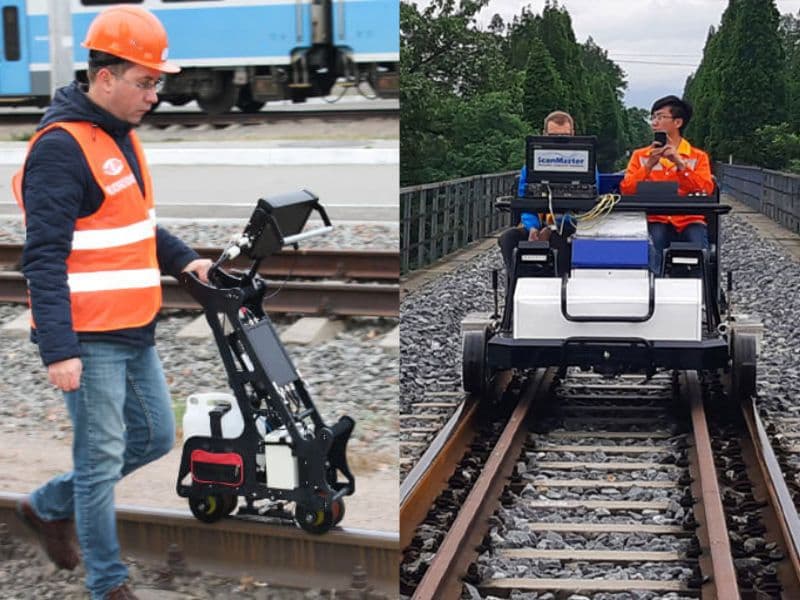
An ultrasonic rail detection cart tests rail at walking pace with 0°, 37–45° and 70° probes. Where carts beat test cars, FRA 213.238 rules and a worked day.
Railway Testing and Inspection
Ultrasonic testing sends 1–10 MHz sound into steel and times the echoes. How pulse-echo, angle beam, PAUT and TOFD work, what UT misses, and the codes.
Railway Testing and Inspection
Ultrasonic testing for railways explained: 0°, 37–45° and 70° probes, test car, hi-rail and cart runs, valid searches and the 4-hour verification rule.