
Heavy Haul Rail Inspection: UT for High-Tonnage Track
Heavy haul rail inspection: why 286k–315k lb axle loads speed up rail defect growth, how tonnage sets the 213.237 test interval, and where UT falls short.
Category
24 articlesPage 1 of 3
Heavy haul rail inspection: why 286k–315k lb axle loads speed up rail defect growth, how tonnage sets the 213.237 test interval, and where UT falls short.
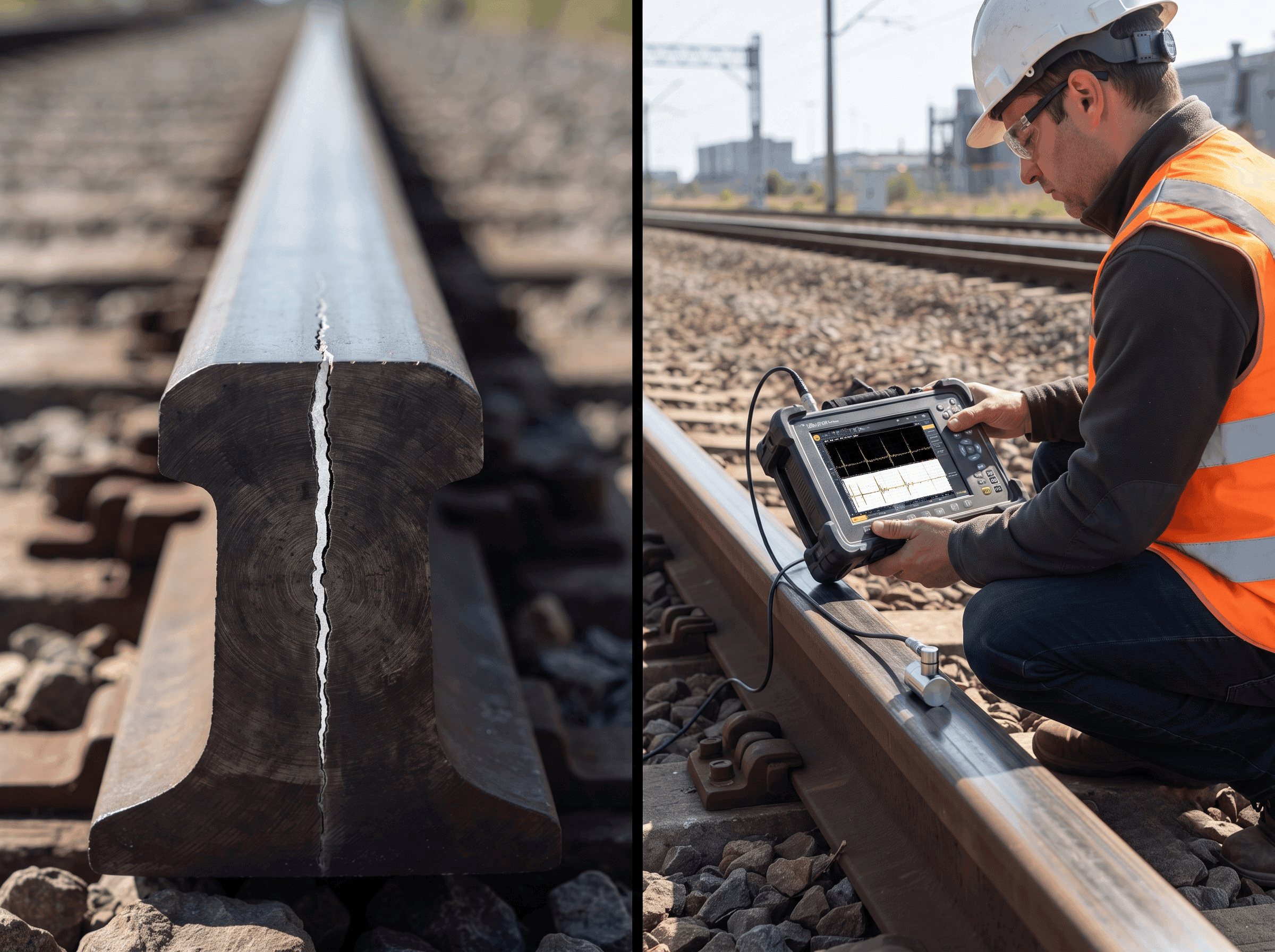
A vertical split head is a lengthwise split in the middle of the rail head, defined in 49 CFR 213.113. How it forms, how UT finds it and which action applies.
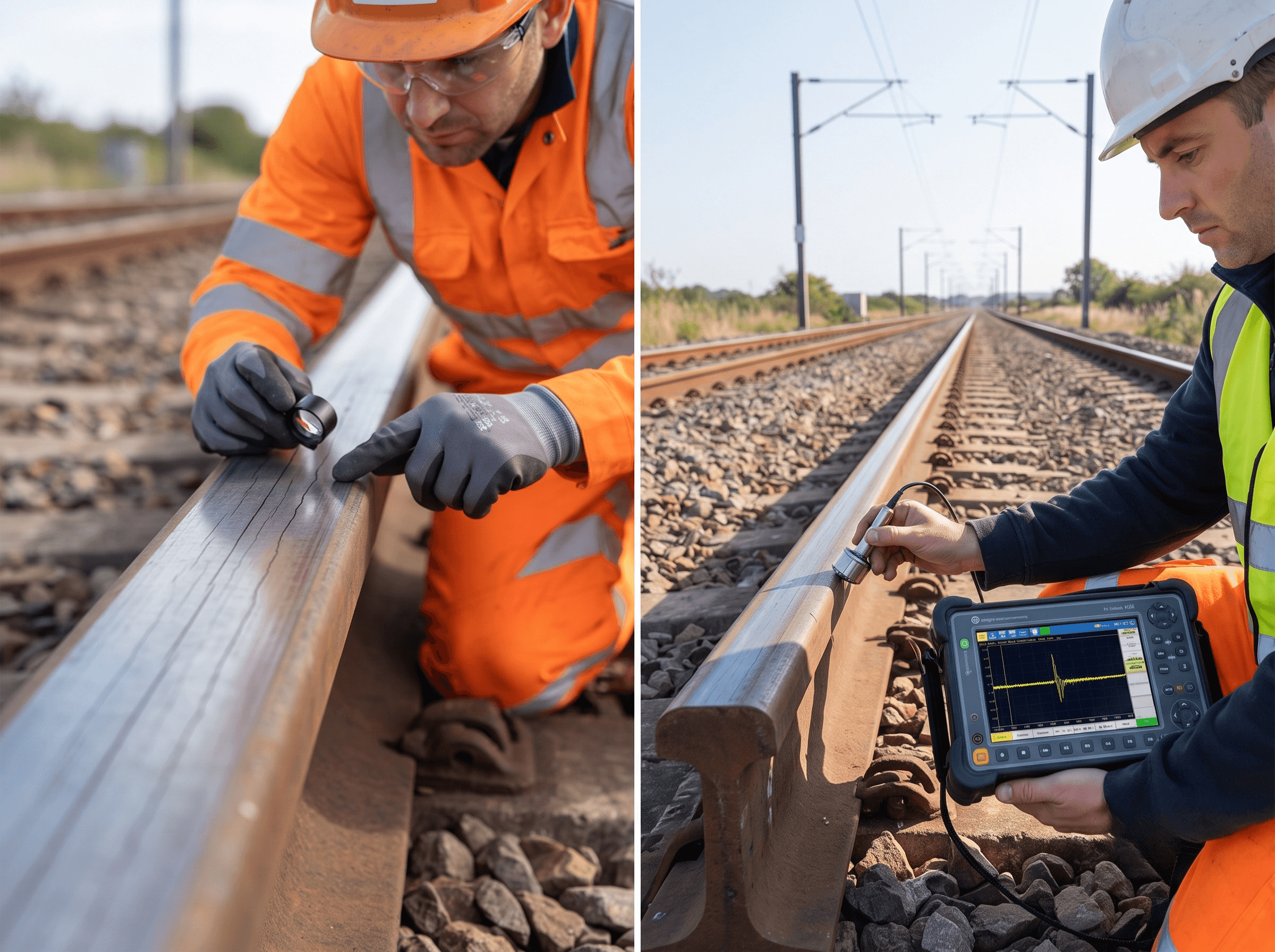
Head checks in rail are gauge corner cracks 2–5 mm apart that can hide detail fractures from UT. Crack depths, 213.113(d)(7), 213.237(h) and grinding.
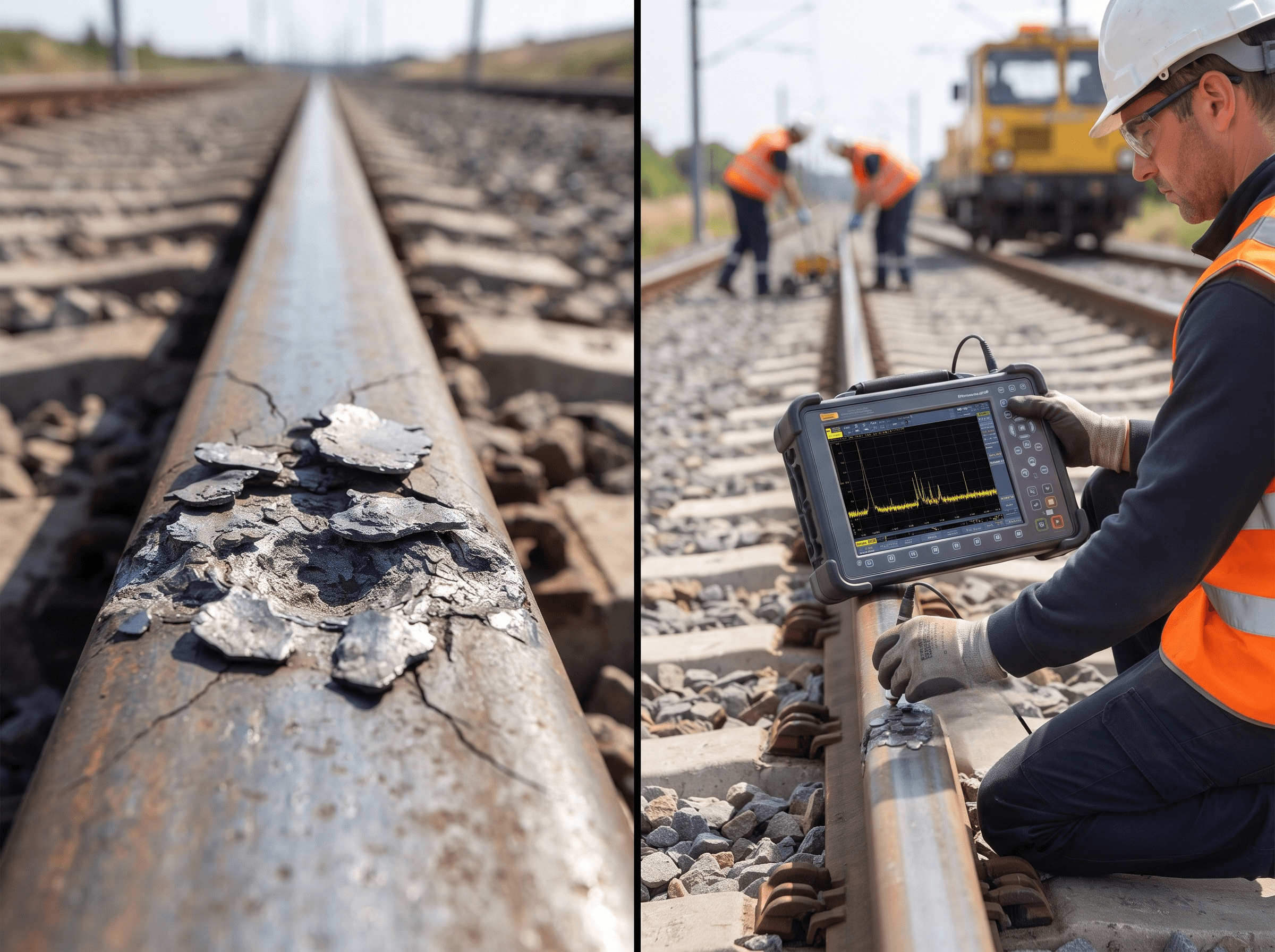
Rail shelling and spalling are different head defects. Shells start below the gauge corner, mask ultrasonic tests and seed detail fractures. How to verify.
Enhance rail safety and efficiency with Rail predictive maintenance using AI, IoT sensors, and data-driven railway operations.
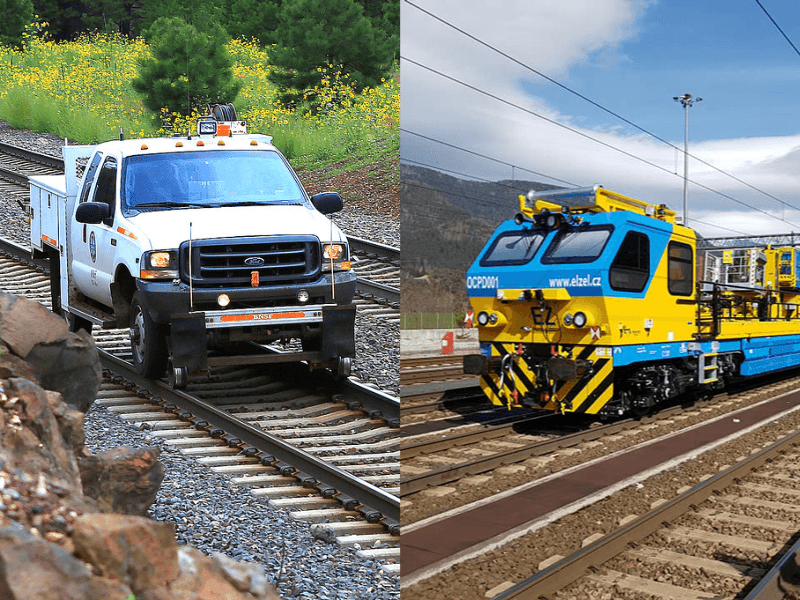
Discover how railway maintenance vehicles enhance safety, reduce costs, and extend track life with smart technology and modern inspection systems.
Automated track inspection means three systems: geometry cars, rail flaw test vehicles and vision systems. The FRA rule, real speeds and limits of each.
Predictive maintenance reduces rail track failures by detecting flaws early, improving safety, cutting costs, and extending railway infrastructure life.
AREMA rail flaw detection guidance sits in MRE Chapter 4, Sections 4.1 to 4.6. FRA rules 213.237, 213.238 and 213.113 set intervals, operators and repairs.
Discover how modern railway operations combine technology, safety systems, and smart management to boost efficiency and ensure secure travel.