Rail infrastructure projects depend heavily on a reliable manual for ultrasonic testing to maintain safety across high-traffic railway systems. A properly developed manual for ultrasonic testing helps procurement teams define inspection quality, defect detection standards, and vendor responsibilities before any rail testing begins. Without a detailed manual for ultrasonic testing, railway operators often face inconsistent inspection results, missed rail flaws, and costly maintenance disputes.
Rail networks operate under constant stress from heavy axle loads, temperature changes, and high-speed operations. Even a small internal rail crack can trigger catastrophic derailments if inspection requirements remain unclear. That reality makes rail inspection Request for Proposal (RFP) documents more than procurement paperwork. They function as operational safety documents.
Modern railway authorities now prioritize highly detailed ultrasonic testing specifications in every inspection contract. These specifications determine how vendors inspect rails, classify defects, and report findings. However, many procurement teams still underestimate the technical depth required in rail inspection RFPs. That gap creates major compliance risks, especially when international standards, probe configurations, and operator qualifications are poorly defined.
What Is a Manual for Ultrasonic Testing in Rail Inspection?
A manual for ultrasonic testing in rail inspection is a technical framework that defines how inspectors evaluate rail integrity using ultrasonic sound waves. The document establishes inspection methods, equipment requirements, defect reporting systems, and operator qualifications.
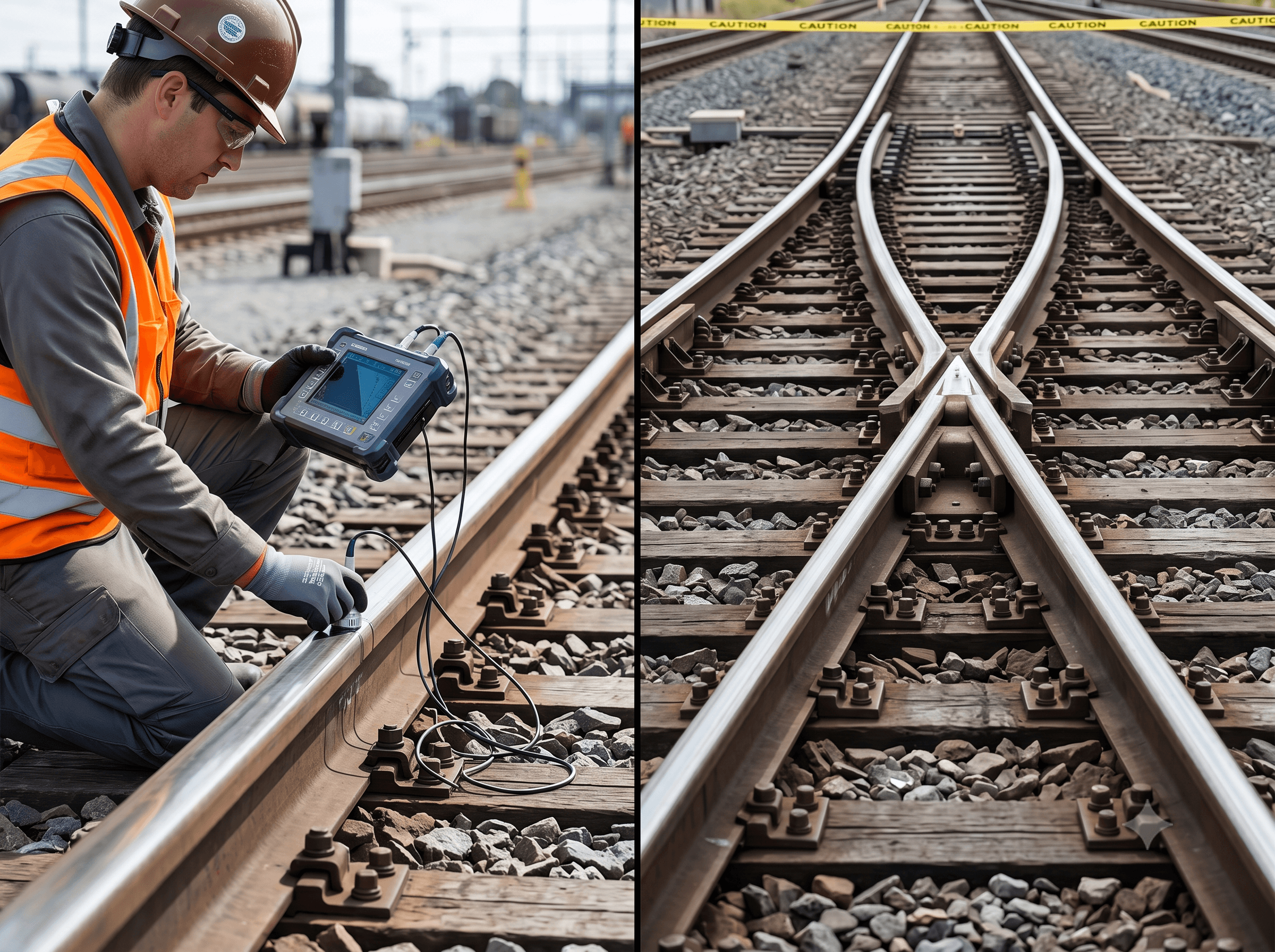
Ultrasonic testing, commonly called UT, uses high-frequency sound waves to identify hidden defects inside steel rails. The process sends sound pulses into the rail material and measures the reflected signals. If internal cracks or discontinuities exist, the sound waves return differently, allowing inspectors to pinpoint the defect location.
Rail operators prefer ultrasonic testing because it detects flaws before they become visible on the rail surface. This non-destructive testing method also minimizes operational disruptions compared to destructive inspection techniques.
Several railway authorities worldwide rely on UT for routine maintenance because it provides:
- High internal defect detection accuracy
- Faster inspection coverage over long rail networks
- Reduced manual dismantling requirements
- Improved preventive maintenance planning
- Reliable weld inspection capabilities
Most modern railway systems use pulse-echo and time-of-flight measurement techniques. Pulse-echo systems detect reflected sound signals from flaws, while time-of-flight calculations determine the exact depth of a defect.
A well-prepared RFP must clearly define which UT methods vendors should use. Otherwise, inspection results may vary significantly between contractors.
Another critical element within rail inspection procedures involves USFD systems.
“Early defect detection remains the most effective strategy for preventing rail failures and extending track life”: International Railway Engineering Journal
What Is USFD Commonly Used For?
USFD is commonly used to detect internal rail defects at operational speeds without interrupting railway traffic flow.
Railway authorities use Ultrasonic Speed Flaw Detection systems to inspect long track sections efficiently. Unlike conventional manual testing, USFD systems can scan rails continuously while mounted on specialized rail vehicles.
Key applications of USFD in rail inspection include:
- Internal crack detection within rail heads and webs
- Identification of transverse defects before fracture growth
- Weld zone inspection for hidden fusion failures
- Continuous monitoring of heavily used track corridors
USFD systems significantly improve inspection efficiency across large railway networks. Many operators now combine manual UT and automated USFD inspections for higher reliability.
Still, inspection performance depends heavily on how the RFP defines technical requirements. Poorly written specifications can weaken even the most advanced testing systems.
That leads directly into the next challenge procurement teams face.
Core Components Every Rail Inspection RFP Must Include
A technically sound rail inspection RFP must define every operational and compliance requirement clearly. Vague language often creates disagreements between railway operators and testing vendors.
The most effective RFPs include detailed specifications covering inspection methodology, reporting standards, and certification requirements. These documents reduce ambiguity while ensuring consistent inspection quality.
The following components form the backbone of a strong rail inspection RFP:
- Scope of Inspection
The RFP should specify track mileage, rail profiles, traffic density, inspection zones, and environmental conditions. - Testing Methodology
Procurement teams should define whether vendors must use manual UT, USFD systems, phased array UT, or combined inspection methods. - Equipment Specifications
The document should identify acceptable probe frequencies, calibration requirements, sensitivity levels, and scanning speeds. - Operator Qualification Standards
The RFP must specify certification levels such as PCN, CSWIP, or ASNT qualifications. - Reporting Format and Defect Classification
Vendors should follow standardized reporting structures for defect severity, location tracking, and digital mapping outputs. - Compliance and Certification Requirements
International standards such as ISO, EN, and ASME references should appear clearly throughout the document. - Timelines and Mobilization Terms
Inspection schedules, emergency response timelines, and mobilization requirements must remain clearly defined.
Many procurement failures occur because organizations focus heavily on pricing while overlooking technical consistency. A lower-cost proposal often creates higher long-term maintenance expenses when inspection quality declines.
Strong RFP structures also improve vendor accountability. Contractors can no longer rely on vague interpretations when defect classifications and testing methodologies remain fully documented.
Several rail operators now include digital reporting mandates within procurement frameworks. These systems support predictive maintenance strategies and long-term infrastructure monitoring.
Yet another important issue still remains unresolved. International compliance standards continue to shape how every manual for ultrasonic testing should be written across global rail projects.
With the core components laid out, a critical question emerges, what international standards actually govern how this manual for ultrasonic testing must be written? The answer shapes everything.
What Is the ISO Standard for Ultrasonic Testing?
ISO 16810 and ISO 17640 serve as the primary international standards governing ultrasonic testing procedures and weld inspections.
These standards establish testing principles, calibration procedures, operator responsibilities, and reporting requirements across industrial inspection projects. Railway authorities frequently reference these standards when drafting inspection RFPs.
The table below outlines the most relevant standards for rail ultrasonic testing:
| Standard | Scope | Relevance to Rail |
| ISO 16810 | General ultrasonic testing principles | Foundation for all UT work |
| ISO 17640 | Weld inspection by UT | Rail weld zone assessment |
| EN 13674 | Rail product specification | European rail inspection standard |
ISO 16810 defines the general principles of ultrasonic testing, including terminology, sound wave behavior, and equipment calibration practices. It forms the baseline framework for most rail inspection procedures worldwide.
ISO 17640 focuses specifically on weld inspections using ultrasonic testing. Rail weld zones remain among the highest-risk defect areas within railway infrastructure. Because of this, most rail inspection RFPs reference ISO 17640 directly.
EN 13674 adds another layer of importance within European railway systems. The standard governs rail manufacturing and product specifications while supporting rail defect assessment frameworks.
Procurement teams frequently use these standards to build compliance clauses into rail inspection contracts. Vendors must demonstrate that their procedures align with these international requirements before qualification approval.
Many organizations also integrate standard references directly into acceptance criteria. This approach reduces disputes during post-inspection reviews because testing expectations remain measurable and internationally recognized.
A strong standards framework also improves consistency across multiple contractors working within the same rail network. That consistency becomes critical when defect histories require long-term comparison.
However, standards alone cannot guarantee inspection quality. The technical configuration of probes and testing equipment introduces another major layer of complexity.
Standards set the floor but what happens when the RFP needs to go further and specify exactly how many probes a testing system must carry? That answer is more technical than most procurement teams expect.
Probe Configurations and Testing Equipment Specifications
Probe configuration plays a major role in rail defect detection accuracy. Different probe angles and frequencies identify different flaw types within the rail structure.
Modern rail testing systems often use multiple probes simultaneously to inspect rail heads, webs, and foot sections during a single scan. More probe coverage generally improves defect detection reliability.
Self-Propelled Rail Testing systems typically use between 16 and 70 probes depending on inspection complexity and track speed requirements.
The most common probe types include:
- Normal beam probes for vertical defect detection
- Angle beam probes for transverse crack identification
- Surface wave probes for near-surface defect inspections
Rail inspection RFPs should specify minimum probe counts, beam angles, scanning coverage, and calibration frequencies. Without these details, vendors may submit lower-grade systems that fail to detect critical flaws consistently.
Many advanced rail networks now require phased array ultrasonic testing within high-risk corridors. Phased array systems provide improved imaging accuracy and better defect characterization compared to conventional UT systems.
These technologies also support digital data storage and advanced defect visualization. As rail infrastructure ages globally, procurement teams increasingly demand these capabilities within inspection contracts.
Still, equipment alone does not guarantee reliable inspection results. Skilled personnel remain equally important within every manual for ultrasonic testing.
Operator Qualification Standards in the RFP
Operator certification standards directly influence inspection reliability and reporting accuracy. Even advanced UT systems can produce poor results when unqualified personnel conduct inspections.
Most railway authorities require inspectors to hold internationally recognized certifications before participating in rail testing projects.
The most widely accepted qualification systems include:
- PCN Level II and III certifications
- CSWIP ultrasonic testing qualifications
- ASNT SNT-TC-1A certification frameworks
PCN and CSWIP certifications verify technical competency in ultrasonic testing procedures, equipment calibration, and defect interpretation. Level III personnel typically supervise inspection programs and approve final reporting procedures.
ASNT SNT-TC-1A standards remain highly influential across North American infrastructure projects. Many global railway operators also reference these qualifications within multinational contracts.
RFP documents should clearly specify minimum certification levels for operators, supervisors, and reporting personnel. Procurement teams should also request documented evidence of previous rail-specific ultrasonic inspection experience.
Several rail authorities now include mandatory re-certification requirements within long-term inspection contracts. This ensures operators remain updated on evolving technologies and standards.
At the same time, inspection qualification requirements continue evolving alongside new automation technologies. Advanced digital systems, phased array platforms, and AI-assisted analytics are already reshaping the future of railway ultrasonic testing and the next section explores how these developments affect procurement standards even further.
What Is the ASME Standard for Ultrasonic Testing?
ASME Section V, Article 4 governs ultrasonic testing procedures for industrial inspection applications.
The American Society of Mechanical Engineers developed this framework to standardize ultrasonic examination methods across pressure vessels, pipelines, structural systems, and industrial infrastructure. Although rail systems primarily follow ISO and EN standards, many multinational infrastructure projects still reference ASME procedures within procurement specifications.
ASME standards help procurement teams define:
- Calibration procedures
- Inspection acceptance criteria
- Equipment sensitivity requirements
- Personnel responsibilities
- Reporting consistency standards
The relationship between ASME, ISO, EN, and ASTM standards often creates confusion during rail procurement planning. However, each framework serves a slightly different operational purpose.
The table below compares the most commonly referenced standards for ultrasonic testing:
| Standard Body | Key Document | Primary Use |
| ASME | Section V, Article 4 | Pressure vessels and structural UT |
| ISO | ISO 17640 | Weld ultrasonic testing globally |
| EN | EN 13674 | Rail product specifications |
| ASTM | E317, E164 | US rail and structural testing |
Railway authorities often combine multiple standards inside a single manual for ultrasonic testing. This hybrid approach allows procurement teams to address regional compliance obligations while maintaining international inspection consistency.
For example, European rail projects frequently prioritize EN and ISO standards, while multinational contractors may still use ASME calibration references internally. Similarly, ASTM standards remain influential across North American infrastructure systems.
A technically strong RFP should clearly identify which standards override others when conflicts appear. This prevents disputes during acceptance testing and final reporting reviews.
Some rail procurement teams also include mandatory calibration traceability clauses linked directly to ASME or ASTM procedures. These clauses improve accountability during audits and accident investigations.
Still, understanding standards alone does not solve every procurement challenge. One of the biggest risks emerges during vendor selection itself.
Knowing the standards is one thing but how does a procurement team actually evaluate competing vendors against a manual for ultrasonic testing? The scoring framework in the next section makes that far more manageable.
Building a Vendor Evaluation Framework for Rail UT RFPs
A rail inspection RFP becomes ineffective when vendor evaluation criteria fail to match the technical specifications inside the document.
Many procurement teams focus heavily on pricing without adequately measuring operational capability. That approach often produces inconsistent inspections, reporting disputes, and long-term maintenance risks.
A strong vendor evaluation framework should prioritize technical performance over cost alone. Most large railway authorities now apply weighted scoring systems to improve contractor selection quality.
The following criteria typically form the foundation of vendor evaluation frameworks:
- Equipment Certification and Calibration Records
Vendors should provide proof of recent calibration and certification for all ultrasonic testing systems. - Operator Qualification Levels
Procurement teams should verify PCN, ASNT, CSWIP, or equivalent certifications for all inspection personnel. - Previous Rail-Specific UT Project History
Experience in railway infrastructure inspection matters significantly more than general industrial UT experience. - Data Reporting Software and Defect Mapping Capability
Modern rail projects increasingly require digital mapping and automated reporting platforms. - Mobilization Time and Fleet Readiness
Vendors should demonstrate operational readiness for emergency rail inspection deployments. - Compliance With the Manual for Ultrasonic Testing Submitted
Every proposal should clearly demonstrate alignment with the technical inspection manual.
Most successful procurement programs apply a 70/30 scoring structure. Technical competency receives approximately 70 percent of the evaluation weight, while pricing receives 30 percent.
This model encourages higher-quality inspections instead of low-cost procurement shortcuts.
Several rail infrastructure agencies also conduct practical equipment demonstrations before awarding contracts. These demonstrations help evaluators verify actual defect detection performance under operational conditions.
Industry analysts continue emphasizing the importance of rail-specific experience during vendor evaluation.
“Rail ultrasonic testing requires operational specialization that standard industrial inspection experience cannot fully replace.” — Railway Infrastructure Compliance Review
Another growing trend involves mandatory cybersecurity requirements for digital defect reporting systems. Since many rail inspection programs now rely on cloud-based reporting platforms, procurement teams increasingly evaluate data security standards alongside inspection capability.
Yet even highly qualified vendors can create operational problems if reporting systems lack consistency. That issue becomes especially serious when defect classifications influence maintenance decisions and legal accountability.
Defect Classification and Reporting Requirements
Defect classification forms the backbone of every rail ultrasonic testing program. Without standardized defect categories, inspection data becomes inconsistent and difficult to interpret.
Rail operators rely on defect classifications to prioritize maintenance actions, monitor rail deterioration trends, and reduce derailment risks. That responsibility makes reporting accuracy a central requirement within every rail inspection RFP.
Most railway authorities divide defects into severity-based categories depending on crack depth, orientation, and operational risk.
Common Rail Defect Types Detected by Ultrasonic Testing
Ultrasonic testing systems commonly identify several critical rail defect categories during inspection operations.
The most frequently reported defects include:
- Transverse cracks: among the most dangerous rail defects because they can trigger sudden rail fractures
- Horizontal split heads: internal separations developing within the rail head area
- Shelling and head checks: surface and subsurface fatigue damage caused by wheel contact stress
- Weld defects: including porosity, incomplete fusion, and inclusions within welded rail sections
- Bolt hole cracks: stress-related fractures forming near joint bolt holes
Accurate classification allows maintenance teams to determine whether defects require immediate rail replacement, monitoring, or scheduled repair.
Most advanced RFPs now require vendors to include the following information in every defect report:
- Exact defect location chainage
- Rail line identification
- Estimated defect depth
- Severity rating classification
- GPS mapping references
- Supporting ultrasonic scan images
Several rail operators also reference the UIC 712 Rail Defect Catalogue within procurement specifications. This internationally recognized framework standardizes defect terminology and reporting classifications across railway systems.
Digital reporting requirements continue expanding rapidly across the rail sector. Many modern RFPs now mandate:
- GIS-based defect mapping
- Cloud-accessible inspection databases
- Automated defect trending analysis
- Real-time reporting dashboards
These tools improve long-term maintenance planning while supporting predictive asset management strategies.
Still, even advanced digital systems cannot compensate for poorly structured RFP documentation. Many procurement failures begin long before inspection work actually starts.
Common Mistakes in Rail Inspection RFP Writing
Rail inspection procurement documents often fail because technical requirements remain incomplete or poorly structured.
These mistakes frequently create vendor disputes, inconsistent inspections, and operational safety risks.
The most common RFP writing mistakes include:
- Vague scope definitions
Some RFPs fail to specify track mileage, rail profiles, inspection frequency, or traffic classifications. - Missing probe configuration minimums
Vendors may propose inadequate systems when probe count requirements remain undefined. - No operator certification clause
Unqualified personnel can produce unreliable inspection results and inaccurate defect reporting. - Absence of standard references
Missing ISO, ASME, EN, or ASTM references create confusion during acceptance reviews. - No defect reporting format requirement
Inconsistent reporting structures make long-term maintenance tracking extremely difficult.
Many procurement teams also overlook mobilization planning. Emergency rail inspections often require rapid deployment capability, especially after derailments or extreme weather events.
Another frequent issue involves unclear acceptance criteria. Vendors may interpret defect thresholds differently if the manual for ultrasonic testing lacks precise classification guidance.
Some organizations also fail to define calibration intervals and equipment validation requirements. Over time, improperly calibrated systems can generate unreliable inspection data.
In several documented cases, poorly written RFPs contributed directly to delayed maintenance actions because vendors disputed defect severity classifications after inspections concluded.
These challenges explain why rail infrastructure organizations increasingly seek specialized support during procurement planning.
Final Thoughts
A manual for ultrasonic testing serves as far more than a technical reference document within modern rail infrastructure projects. It establishes inspection expectations, defines compliance standards, supports vendor accountability, and strengthens railway safety management across every stage of procurement and inspection execution.
Strong rail inspection RFPs must clearly define standards, probe configurations, operator qualifications, reporting frameworks, and vendor evaluation criteria. Without these elements, inspection quality becomes inconsistent and operational risks increase significantly.
International standards such as ISO, ASME, EN, and ASTM continue shaping how rail ultrasonic testing programs operate worldwide. At the same time, digital defect mapping, phased array systems, and predictive analytics are transforming the future of rail inspection technology.
Organizations that invest in technically detailed procurement frameworks position themselves for safer operations, stronger compliance outcomes, and more reliable infrastructure performance. In the years ahead, the role of ultrasonic testing within railway asset management will only continue expanding as global rail networks demand greater safety, speed, and inspection precision.
Key Takeaways
- A detailed manual for ultrasonic testing improves railway inspection consistency and operational safety outcomes.
- International standards like ISO and ASME strengthen compliance across modern rail inspection projects.
- Probe configurations significantly influence the accuracy of ultrasonic rail defect detection systems.
- Vendor evaluation frameworks should prioritize technical capability instead of selecting only low-cost proposals.
- Certified ultrasonic testing operators help reduce reporting errors and improve inspection reliability significantly.
- Digital defect mapping systems support predictive maintenance planning and long-term railway asset management.
- Poorly written rail inspection RFPs often create disputes, delays, and unnecessary operational risks.
- USFD systems enable continuous high-speed rail inspections without interrupting active railway traffic operations.
- Standardized defect classification systems improve maintenance decisions and strengthen legally defensible reporting procedures.
- Advanced phased array ultrasonic testing technologies continue reshaping future railway infrastructure inspection strategies.
FAQs
What is ultrasonic testing of railway track?
Ultrasonic testing of railway track is a non-destructive inspection method used to detect internal rail defects before visible failures occur. The process uses high-frequency sound waves to identify cracks, weld defects, and structural flaws inside rails without damaging the track.
What are the two types of ultrasonic testing?
The two main types of ultrasonic testing are pulse-echo testing and through-transmission testing. Pulse-echo testing detects reflected sound waves from internal flaws, while through-transmission testing measures sound passing through the material to identify discontinuities.
What are the three types of probes?
The three common ultrasonic testing probes are normal beam probes, angle beam probes, and surface wave probes. Each probe type helps inspectors identify different rail defect orientations and structural irregularities.
What is the difference between SDS and SRT?
SDS systems generally focus on stationary or slower defect scanning methods, while SRT systems are self-propelled rail testing systems designed for high-speed continuous rail inspection. SRT technology provides faster coverage across long railway networks with multiple probe configurations.
How many probes will be used in DRT?
Dual Rail Testing systems typically use multiple probes ranging from 16 to over 70 probes depending on inspection requirements, scanning speed, and railway infrastructure complexity. The exact number depends on the rail testing technology and defect coverage requirements.