
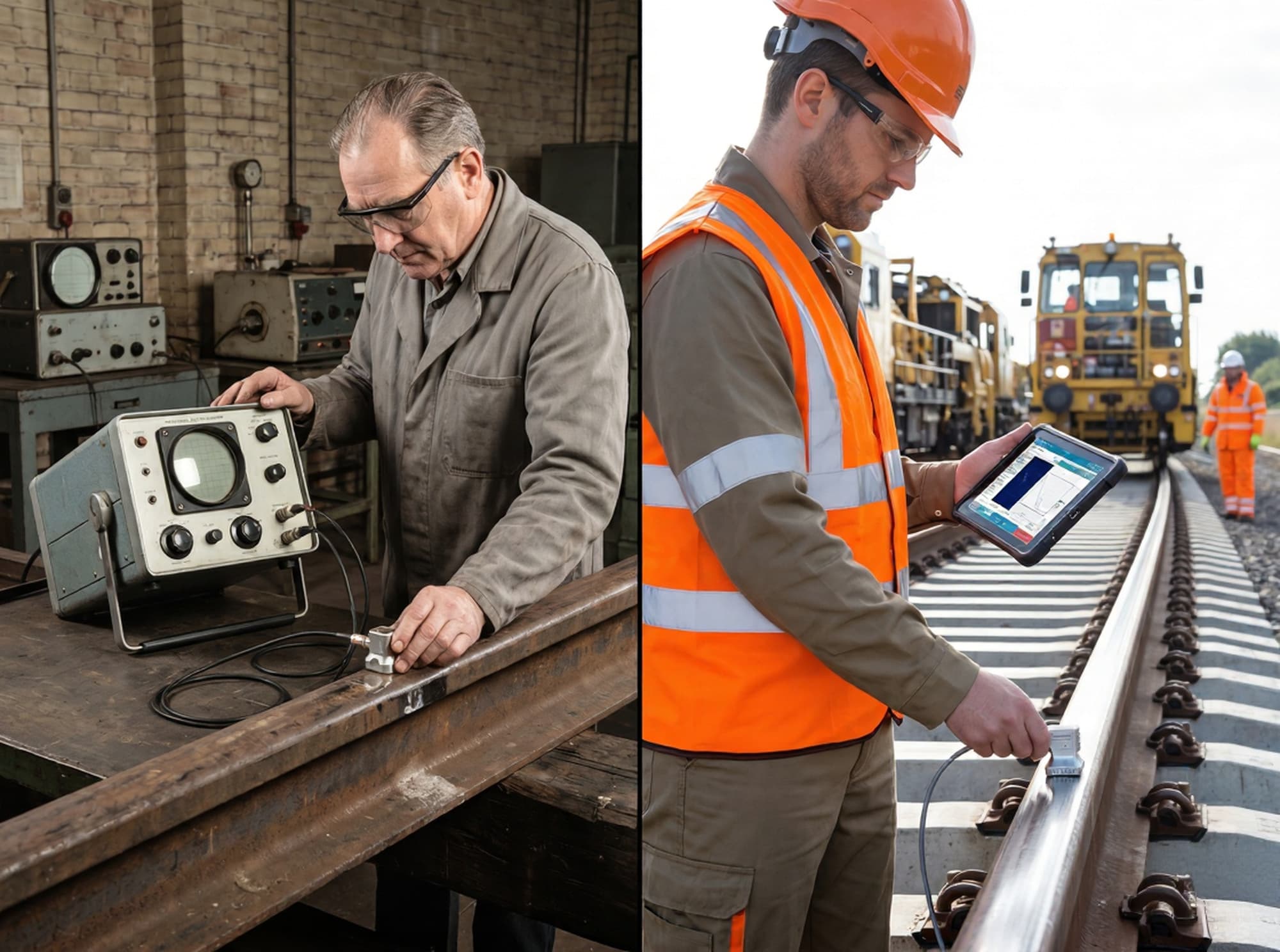
The History of Non-Destructive Testing reveals a fascinating journey of innovation driven by the need for safety and reliability. The History of Non-Destructive Testing highlights how industries learned to detect flaws without compromising structural integrity. The History of Non-Destructive Testing continues to shape modern engineering, ensuring quality across aerospace, manufacturing, and energy sectors. From rudimentary visual inspections to advanced digital imaging, this evolution underscores humanity’s relentless pursuit of precision.
Today, non-destructive testing (NDT) plays a pivotal role in safeguarding critical infrastructure and industrial operations. It enables engineers and inspectors to identify defects before they escalate into catastrophic failures. Without NDT, modern advancements such as aircraft, pipelines, and skyscrapers would face unprecedented risks. Understanding its historical roots provides valuable insight into how quality assurance evolved into a cornerstone of industrial excellence.
As industries continue to innovate, the story behind this essential discipline becomes even more compelling. But where did it all begin, and what inspired the earliest methods of inspection? The answers lie in the origins of non-destructive testing.
What Is the Introduction of Non-Destructive Testing?
Non-destructive testing refers to a range of inspection techniques used to evaluate materials, components, and systems without causing damage. It allows industries to detect imperfections, ensure safety, and maintain quality without compromising the usability of the tested object. This principle has become indispensable in sectors where reliability is paramount.
At its core, NDT operates on a simple yet powerful concept: identify flaws without altering the material’s integrity. Engineers rely on these methods to detect cracks, voids, corrosion, and inconsistencies. By preserving the tested component, organizations reduce costs, prevent accidents, and extend the lifespan of valuable assets.
The introduction of non-destructive testing was driven by necessity. As industrialization expanded during the 19th century, machinery and infrastructure grew more complex. Failures became more frequent and costly, prompting engineers to seek safer and more reliable inspection methods. Traditional approaches such as dismantling or destructive sampling proved inefficient and expensive.
Key benefits of non-destructive testing include:
- Ensuring safety in critical industries such as aerospace and construction
- Enhancing product quality and reliability
- Reducing maintenance costs and operational downtime
- Supporting regulatory compliance and industry standards
- Extending the service life of equipment and structures
Today, NDT is widely used in industries such as oil and gas, power generation, manufacturing, automotive, and marine engineering. Its applications range from inspecting aircraft wings to evaluating nuclear reactors. As technology continues to evolve, the importance of NDT grows even more significant.
With the fundamentals established, attention naturally shifts to the origins of this remarkable discipline. How did early civilizations inspect materials before modern technology existed? The journey into the past unveils the roots of innovation that shaped today’s inspection methods.
The Early Origins: How It All Began
The earliest forms of non-destructive testing date back centuries, long before scientific instruments emerged. Ancient craftsmen relied on simple observational techniques to assess the quality of their work. Visual inspection served as the primary method for identifying cracks, irregularities, and structural weaknesses.
Blacksmiths, for instance, evaluated metal strength by observing its color and sound during forging. Similarly, builders in ancient civilizations inspected stone structures for visible flaws. These rudimentary methods laid the foundation for modern inspection techniques, demonstrating humanity’s early awareness of quality assurance.
One of the earliest known practices resembling NDT was the “ring test.” Artisans struck materials such as pottery or metal and listened to the resulting sound. A clear, resonant tone indicated structural integrity, while a dull sound suggested hidden defects. This auditory evaluation remains relevant in certain industries today.
The Industrial Revolution in the 18th and 19th centuries marked a turning point in the development of non-destructive testing. Rapid industrialization increased the demand for reliable machinery, railways, and infrastructure. As production scaled, so did the risk of structural failures. Engineers urgently required more dependable inspection techniques to prevent costly accidents.
Railway systems played a crucial role in advancing early NDT practices. Inspectors used oil-and-whiting methods to detect cracks in metal components. By applying oil to a surface and coating it with chalk, hidden flaws became visible as the oil seeped through. This technique represented one of the first documented methods of liquid penetrant testing.
Key early inspection methods included:
- Visual Inspection (VT): The oldest and most fundamental form of quality assessment
- Hammer Testing: Used to detect flaws through sound variations
- Oil-and-Whiting Method: A precursor to modern liquid penetrant testing
- Dimensional Measurement: Ensured precision in manufactured components
These techniques reflected the ingenuity of early engineers who sought to prevent failures without damaging valuable materials. Their innovations laid the groundwork for the sophisticated technologies used today.
But simple visual checks could only go so far. What breakthrough finally gave engineers a way to see inside materials without cutting them open? The answer changed everything and it came from an unexpected direction.
Who Invented Non-Destructive Testing?
Non-destructive testing does not have a single inventor. Instead, it evolved through the contributions of numerous scientists, engineers, and innovators over centuries. Each breakthrough built upon earlier discoveries, shaping NDT into a comprehensive and indispensable discipline.
One of the most influential milestones occurred in 1895, when German physicist Wilhelm Conrad Röntgen discovered X-rays. This groundbreaking achievement revolutionized the scientific world and introduced a new method for examining internal structures without causing damage. The discovery laid the foundation for radiographic testing, the first formal NDT technique.
Dr. Erwin Encke further advanced radiographic inspection in the early 20th century. His work in Germany demonstrated how X-rays could detect internal defects in industrial components. Engineers quickly recognized the potential of this technology, particularly in inspecting welds and castings.
Radiography soon became an essential tool for quality assurance across industries. Its ability to reveal hidden flaws transformed inspection practices and elevated safety standards worldwide.
The Role of X-Rays in Shaping Early NDT
X-ray technology marked the beginning of modern non-destructive testing. It allowed inspectors to visualize the internal structure of materials without dismantling them. This breakthrough represented a significant leap forward in engineering and scientific analysis.
During World War I, radiography gained widespread recognition for its ability to inspect munitions and detect defects in military equipment. Engineers relied on X-rays to ensure the reliability of weapons and machinery, reducing the risk of failure on the battlefield.
The adoption of radiographic testing expanded rapidly across industries, including manufacturing and transportation. By the early 20th century, it had established itself as a cornerstone of non-destructive evaluation.
As radiography advanced, it set the stage for further innovations. Yet, the journey of non-destructive testing was far from complete. New pioneers emerged, introducing groundbreaking methods that would redefine the field.
Who Is the Pioneer of NDT?
Several individuals played pivotal roles in advancing non-destructive testing, but one name stands out as a true pioneer Dr. Floyd Firestone. His groundbreaking invention revolutionized the inspection industry and transformed quality assurance practices.
In 1940, Firestone developed the Reflectoscope, an ultrasonic testing device that used high-frequency sound waves to detect internal defects. This innovation enabled inspectors to identify flaws with remarkable accuracy, even in thick and complex materials. Ultrasonic testing soon became a cornerstone of modern NDT.
Firestone’s contribution marked a significant milestone in the evolution of inspection technologies. His work demonstrated how scientific ingenuity could enhance safety and reliability across industries.
Another major advancement emerged in the railway sector. Sperry Rail Service introduced magnetic flux leakage testing in the 1920s to detect flaws in railroad tracks. This method significantly reduced derailments and improved transportation safety, reinforcing the importance of NDT in public infrastructure.
Together, these pioneers laid the groundwork for modern inspection techniques. Their contributions transformed non-destructive testing into a scientific discipline supported by research, innovation, and industrial demand.
With radiography and ultrasonic testing now on the scene, it seemed NDT had reached its peak but the next few decades would prove that the most transformative chapter was still ahead.
NDT Through the World Wars: A Period of Rapid Growth
The two World Wars accelerated the development of non-destructive testing, transforming it from an emerging concept into a critical industrial practice. The demand for reliable military equipment drove governments and engineers to refine inspection methods at an unprecedented pace.
During World War I, radiographic testing played a crucial role in examining munitions and weaponry. Engineers relied on X-rays to detect defects in shells and ensure their reliability. This innovation significantly reduced equipment failures and improved battlefield safety.
The interwar period witnessed further advancements. Magnetic particle testing gained prominence in the 1920s and 1930s, particularly in railway and manufacturing industries. These developments enhanced the detection of surface and subsurface flaws in ferromagnetic materials.
World War II marked a turning point in the widespread adoption of NDT. The production of aircraft, ships, and pressure vessels demanded stringent quality control measures. Governments invested heavily in research and development, accelerating the refinement of inspection technologies.
Radiography and ultrasonic testing became essential tools for ensuring structural integrity. Engineers used these methods to inspect welds, detect cracks, and verify material quality. The reliability of military equipment depended on the accuracy of these techniques.
The rapid expansion of NDT during this era laid the foundation for modern industrial standards. By the end of World War II, non-destructive testing had evolved into a structured and indispensable discipline.
Key NDT Milestones During WWI and WWII
| Period | Development | Method Used |
| WWI (1914–1918) | Shell and weld inspection | Radiography |
| 1920s | Railway track flaw detection | Magnetic Flux Testing |
| 1930s | Early ultrasonic experiments | Pulse-Echo Method |
| WWII (1939–1945) | Aircraft and ship hull inspection | Radiography and Ultrasonic Testing |
These advancements underscored the critical role of NDT in ensuring safety and reliability during times of global conflict. The lessons learned during the wars propelled the discipline into a new era of technological progress.
As the dust of World War II settled, industries recognized the transformative potential of non-destructive testing. The stage was set for unprecedented innovation, paving the way for standardized practices and cutting-edge technologies that would define the future.
Advancing the Legacy of Innovation
The History of Non-Destructive Testing continued to evolve after World War II, marking the beginning of a new technological era. As industries expanded globally, the History of Non-Destructive Testing became synonymous with safety, efficiency, and quality assurance. This transformative period refined inspection methods and established standards that remain essential in modern engineering.
With a solid foundation built during wartime, non-destructive testing entered a phase of remarkable innovation. The discipline matured into a scientific and standardized practice, supporting industrial growth and technological breakthroughs across the world.
What Are the 4 Types of NDT? The Methods That Defined the Modern Era
The four primary methods of non-destructive testing form the backbone of modern inspection practices. These techniques emerged from decades of research and technological advancements, ensuring reliability across critical industries.
1. Radiographic Testing (RT)
Radiographic Testing utilizes X-rays or gamma rays to examine the internal structure of materials. Originating from Wilhelm Röntgen’s discovery in 1895, this method became the first formalized NDT technique. It plays a vital role in inspecting welds, pipelines, and structural components in aerospace, manufacturing, and construction.
By producing detailed images of internal defects, radiography ensures accuracy and reliability. Its historical significance underscores its continued relevance in modern industries.
2. Ultrasonic Testing (UT)
Ultrasonic Testing employs high-frequency sound waves to detect internal flaws. Developed in the 1940s by Dr. Floyd Firestone, this technique revolutionized inspection methods through the invention of the Reflectoscope.
Today, ultrasonic testing is widely used in shipbuilding, aviation, and power generation. Its ability to measure thickness and detect subsurface defects makes it indispensable for ensuring structural integrity.
3. Magnetic Particle Testing (MT)
Magnetic Particle Testing detects surface and near-surface defects in ferromagnetic materials. This method gained prominence in the 1920s and 1930s, particularly within the railway industry.
By applying magnetic fields and fine particles, inspectors can identify discontinuities such as cracks and seams. Its efficiency and reliability make it a preferred choice in automotive and heavy engineering sectors.
4. Liquid Penetrant Testing (PT)
Liquid Penetrant Testing evolved from the oil-and-whiting technique used during the 19th century. It involves applying a dye to a material’s surface to reveal visible defects.
This method is widely employed in aerospace, manufacturing, and maintenance operations. Its simplicity and effectiveness ensure accurate detection of surface flaws without causing damage.
Together, these four techniques established the foundation of modern non-destructive testing. They continue to shape industries worldwide, ensuring safety and operational excellence.
Post-War Advancements and the Rise of Formal NDT Standards
Following World War II, industries recognized the importance of standardizing inspection methods. The rapid expansion of infrastructure and technology required consistent quality assurance practices. As a result, professional organizations emerged to guide the development of non-destructive testing.
One of the most influential milestones was the establishment of the American Society for Nondestructive Testing (ASNT) in 1941. This organization played a crucial role in setting global standards, promoting research, and providing professional certification.
During the 1940s to 1960s, industries adopted standardized procedures to ensure safety and reliability. Certification programs enhanced the credibility of inspectors, while international standards unified practices across borders.
Key developments during this era included:
- Formation of professional NDT societies and institutions
- Introduction of standardized testing procedures
- Development of certification and training programs
- Expansion of NDT applications in nuclear and aerospace industries
- Increased government investment in research and innovation
The Cold War further accelerated advancements in non-destructive testing. Nuclear energy programs demanded precise inspection methods to prevent catastrophic failures. As a result, new technologies and rigorous standards emerged to meet these challenges.
These developments strengthened the foundation of modern NDT, ensuring its role as a critical component of industrial safety.
The Digital Revolution and Modern NDT Techniques
The late 20th century witnessed a technological transformation that redefined inspection practices. The integration of computers and digital systems revolutionized non-destructive testing, enhancing accuracy and efficiency.
Between the 1970s and 1990s, digital radiography replaced traditional film-based methods. This advancement allowed inspectors to obtain instant images, reducing processing time and improving precision. Real-time analysis enabled quicker decision-making and increased productivity.
Phased array ultrasonic testing emerged as another groundbreaking innovation. This technique uses multiple ultrasonic beams to produce detailed images of internal structures. It offers greater accuracy and flexibility compared to conventional methods.
Eddy current testing also gained prominence during this period. Widely used in the aerospace industry, it detects surface and subsurface defects in conductive materials. Its effectiveness in identifying corrosion and cracks made it invaluable for aircraft maintenance.
From Film to Pixels: Digital Radiography’s Impact
Digital radiography transformed the inspection landscape by replacing traditional film with advanced imaging technologies. This innovation enhanced efficiency, reduced costs, and minimized environmental impact.
Key advantages of digital radiography include:
- Instant image acquisition and analysis
- Enhanced image clarity and resolution
- Reduced radiation exposure
- Improved data storage and retrieval
- Environmentally friendly processes
The adoption of digital tools marked a new chapter in the History of Non-Destructive Testing, enabling industries to achieve unprecedented levels of precision and reliability.
NDT in the 21st Century: Where History Meets Innovation
The 21st century has ushered in an era of unparalleled technological advancement. Modern non-destructive testing integrates artificial intelligence, robotics, and automation to enhance inspection capabilities.
Artificial intelligence and machine learning now analyze vast datasets to detect defects with remarkable accuracy. These technologies improve predictive maintenance and reduce human error, ensuring safer operations.
Drones and robotic systems have transformed remote inspections. They enable engineers to assess hazardous or inaccessible environments, such as offshore platforms, wind turbines, and nuclear facilities. This innovation enhances safety while reducing operational costs.
NDT also plays a critical role in renewable energy. Wind turbines, solar installations, and hydroelectric facilities rely on inspection technologies to ensure efficiency and longevity. As sustainability becomes a global priority, non-destructive testing continues to support environmentally responsible practices.
Emerging applications include:
- Inspection of advanced composite materials
- Monitoring of smart infrastructure and IoT-enabled systems
- Quality assurance in additive manufacturing and 3D printing
- Evaluation of hydrogen and renewable energy systems
These advancements highlight the enduring relevance of non-destructive testing in a rapidly evolving technological landscape.
As technology races forward, one question looms large: can NDT keep pace with entirely new materials like composites and advanced alloys? The industry is already betting it can—and the results are striking.
Final Thoughts
The History of Non-Destructive Testing stands as a testament to human ingenuity and technological progress. From simple visual inspections and oil-based methods to AI-powered diagnostics, the journey reflects centuries of innovation driven by the pursuit of safety and excellence.
Throughout its evolution, non-destructive testing has transformed industries by ensuring structural integrity and operational reliability. It has protected lives, reduced costs, and supported advancements in aerospace, manufacturing, energy, and infrastructure.
Today, the History of Non-Destructive Testing continues to inspire innovation as emerging technologies reshape inspection practices. As industries adopt automation, artificial intelligence, and sustainable solutions, NDT remains a cornerstone of quality assurance and risk management.
Its legacy endures as a symbol of progress, safeguarding the future while preserving the integrity of the past.
Key Takeaways
- Non-destructive testing originated from simple visual inspections and oil-based methods used in early industries.
- The discovery of X-rays in 1895 revolutionized inspection by enabling internal defect detection without material damage.
- Industrialization and railway expansion significantly accelerated the demand for reliable and efficient inspection techniques.
- World Wars I and II played a critical role in advancing and standardizing non-destructive testing technologies.
- Radiographic, ultrasonic, magnetic particle, and liquid penetrant testing form the foundation of modern NDT practices.
- The establishment of professional organizations like ASNT helped formalize training, certification, and global industry standards.
- Post-war technological innovations introduced precision-driven methods that enhanced safety across aerospace, nuclear, and manufacturing sectors.
- The digital revolution transformed NDT through computerized imaging, phased array ultrasonics, and real-time inspection capabilities.
- Artificial intelligence, robotics, and drones are reshaping inspection processes by improving accuracy and operational efficiency.
- Non-destructive testing remains essential for ensuring safety, sustainability, and reliability in modern industrial and infrastructure development.
FAQs
Who developed NDT?
Non-destructive testing was not developed by a single individual but evolved through contributions from numerous scientists and engineers. Wilhelm Conrad Röntgen’s discovery of X-rays in 1895 laid the foundation for radiographic testing, while pioneers such as Dr. Floyd Firestone advanced the field with innovations like ultrasonic testing. Their collective efforts shaped modern NDT practices.
What are the 5 methods of NDT?
The five commonly recognized methods of non-destructive testing include Radiographic Testing (RT), Ultrasonic Testing (UT), Magnetic Particle Testing (MT), Liquid Penetrant Testing (PT), and Eddy Current Testing (ECT). These techniques are widely used across industries to detect defects and ensure structural integrity without causing damage.
What is the theory of NDT?
The theory of non-destructive testing is based on evaluating the physical properties of materials without altering or damaging them. It relies on scientific principles such as sound wave propagation, electromagnetic fields, radiation, and capillary action to detect flaws, measure thickness, and assess material integrity safely and accurately.
What is another name for non-destructive testing?
Another name for non-destructive testing is Non-Destructive Evaluation (NDE). It is also commonly referred to as Non-Destructive Inspection (NDI). While the terms differ slightly in context, they all describe techniques used to assess material quality and performance without causing damage.
What are the key principles of NDT?
The key principles of non-destructive testing include defect detection, material characterization, reliability assurance, and preservation of structural integrity. These principles ensure safety, enhance quality control, reduce operational risks, and extend the lifespan of components across industries such as aerospace, manufacturing, and energy.