
Class I Railroads in USA: What Are They, History, and Why Do They Matter in 2026
Learn about Class I railroads in the USA, their history, operations, and why they remain vital for the economy and trade in 2026.
Insights
271 articlesPage 11 of 28
Learn about Class I railroads in the USA, their history, operations, and why they remain vital for the economy and trade in 2026.
Learn about Short Line Railroads in the USA, their history, how they work, and why they matter in 2026 for jobs, rural growth, and freight transport
Explore the complete history of railroads in America, from early tracks to modern freight, and their lasting impact on the nation.
Ultrasonic testing Level 1 under SNT-TC-1A: 40 h training, 210 h UT and 400 h NDT experience, exams, vision checks, and how ISO 9712 and NAS 410 differ.
TOFD rail inspection explained: tip diffraction, the depth equation, dead zones, the ISO, ASTM and ASME standards, and why TOFD isn't routine on rail.
Learn essential commuter rail safety tips for passengers and operators, covering risks, rules, emergency response, and ongoing safety improvements.
Learn essential railway safety rules every worker must follow to prevent accidents, handle emergencies, and stay safe on tracks, trains, and equipment.
CWR means continuous welded rail: rail welded into lengths over 400 ft (49 CFR 213.119). Neutral temperature, sun kinks, welds, UT and CWR plans explained.
Explore the types, problems, and solutions of rail joints, including maintenance tips and modern alternatives for safer, efficient railway tracks.
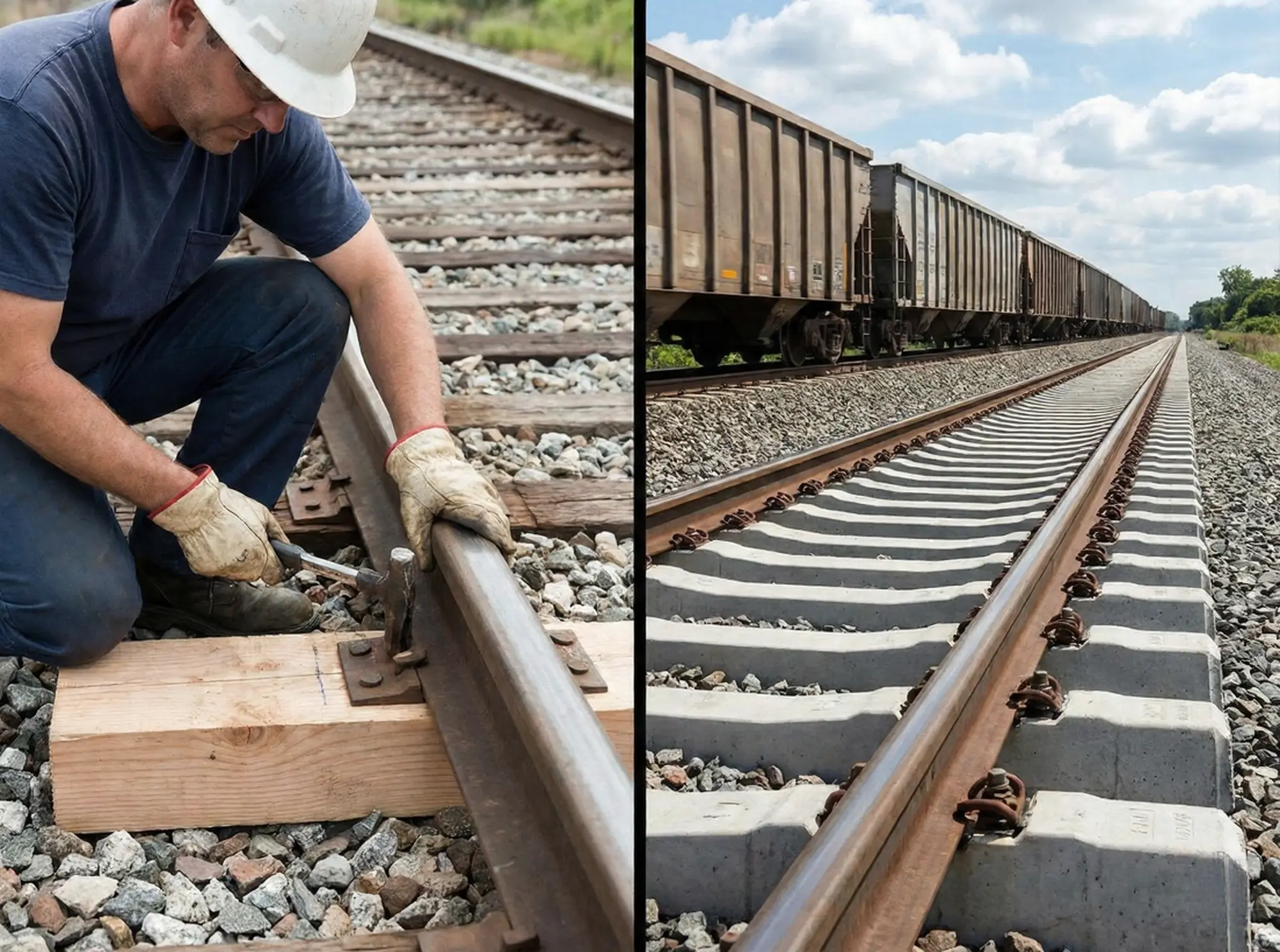
learn what rail ties are, how they work, materials used, maintenance needs, and why they matter for railway safety and efficiency.