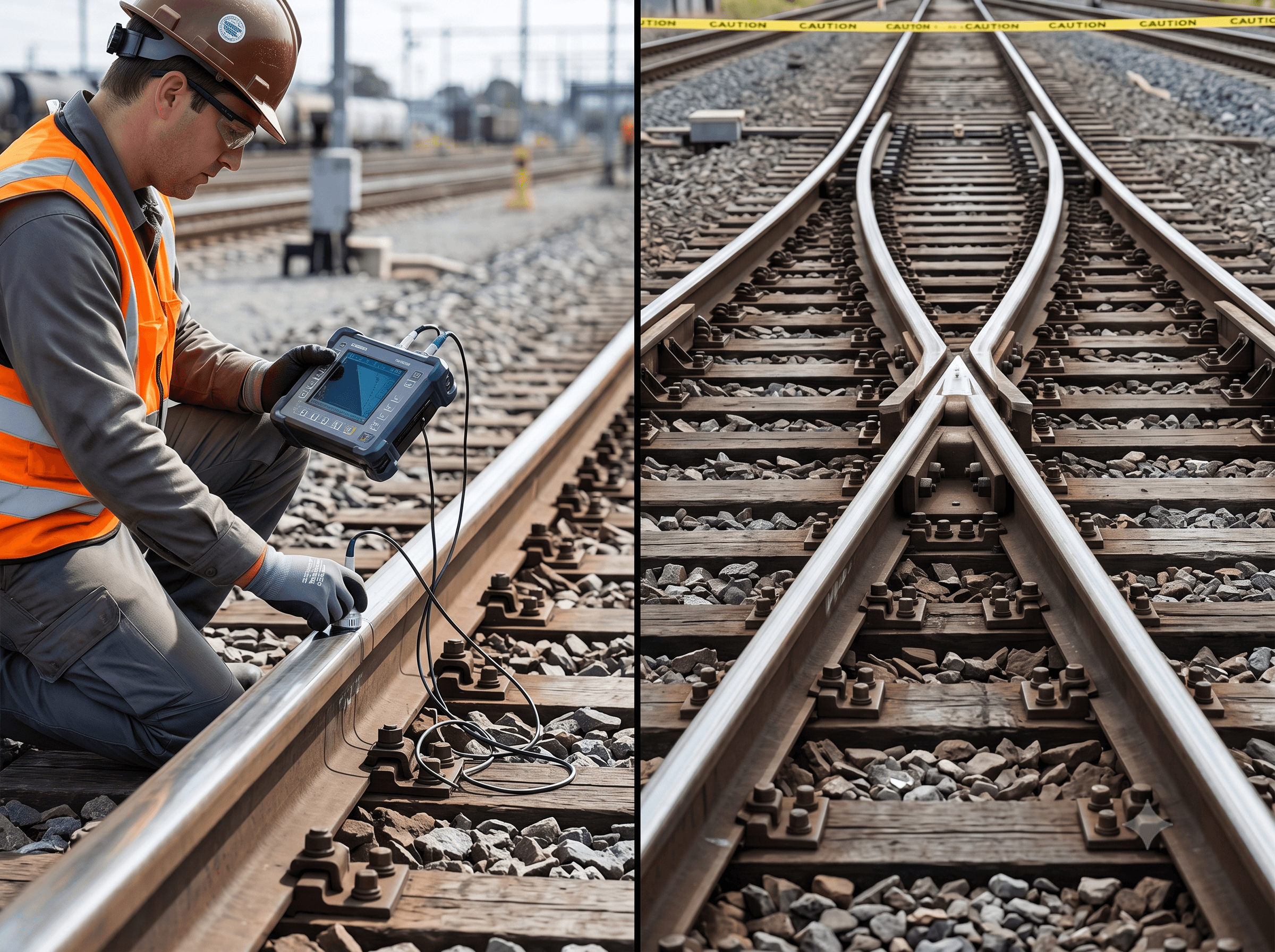

Bridge Approach Rail Inspection: What Fails at the Bridge End and How UT Finds It
Bridge approach rail inspection under 213.237, 213.119 and Part 237: why rail fails at the bridge end, which joints and welds to test, and a worked plan.
Category
11 articlesPage 1 of 2
Bridge approach rail inspection under 213.237, 213.119 and Part 237: why rail fails at the bridge end, which joints and welds to test, and a worked plan.
Grade crossing rail inspection: why UT misses web corrosion under crossing surfaces, the 49 CFR 213.237 rules that apply, and what owners should specify.
Relay rail inspection under 49 CFR 213.237: plug rail must be tested and stay under 30 MGT since its last test. UT, classification and records explained.
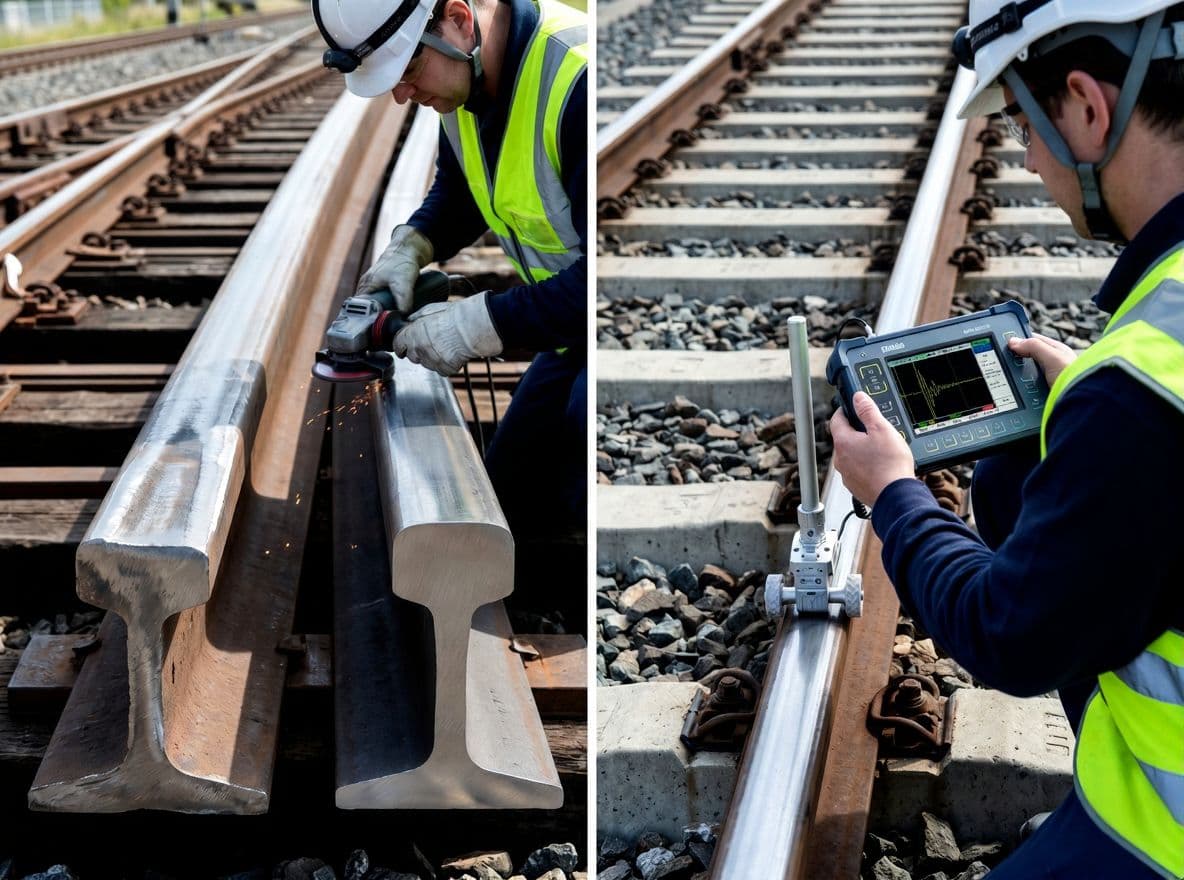
Rail grinding removes about 0.006–0.008 in. per pass. How it changes UT coupling, clears shelling that masks defects, and fits 49 CFR 213.237 test intervals.
Rail joint inspection under 49 CFR 213.121 and 213.119: why rail flaw UT misses joint bar cracks, how joint-bar UT finds them, and CWR joint intervals.
The Sperry rail car began induction rail testing in 1928. Ultrasonics followed from 1949, and FRA has required internal rail testing since 1971. Dated timeline.
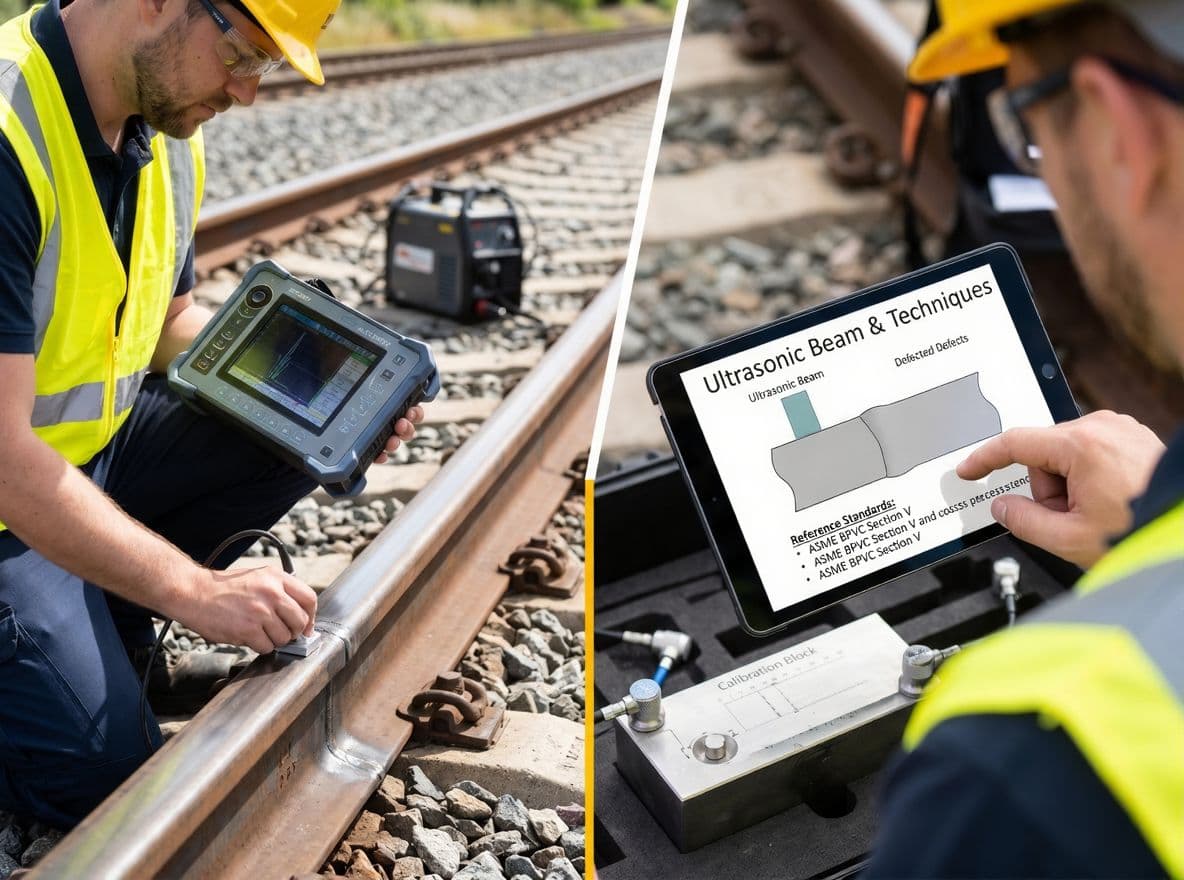
Rail inspection RFP clauses for ultrasonic testing: cite 49 CFR 213.237, 213.238, 213.241 and 213.113, set valid-search, verification and reporting terms.
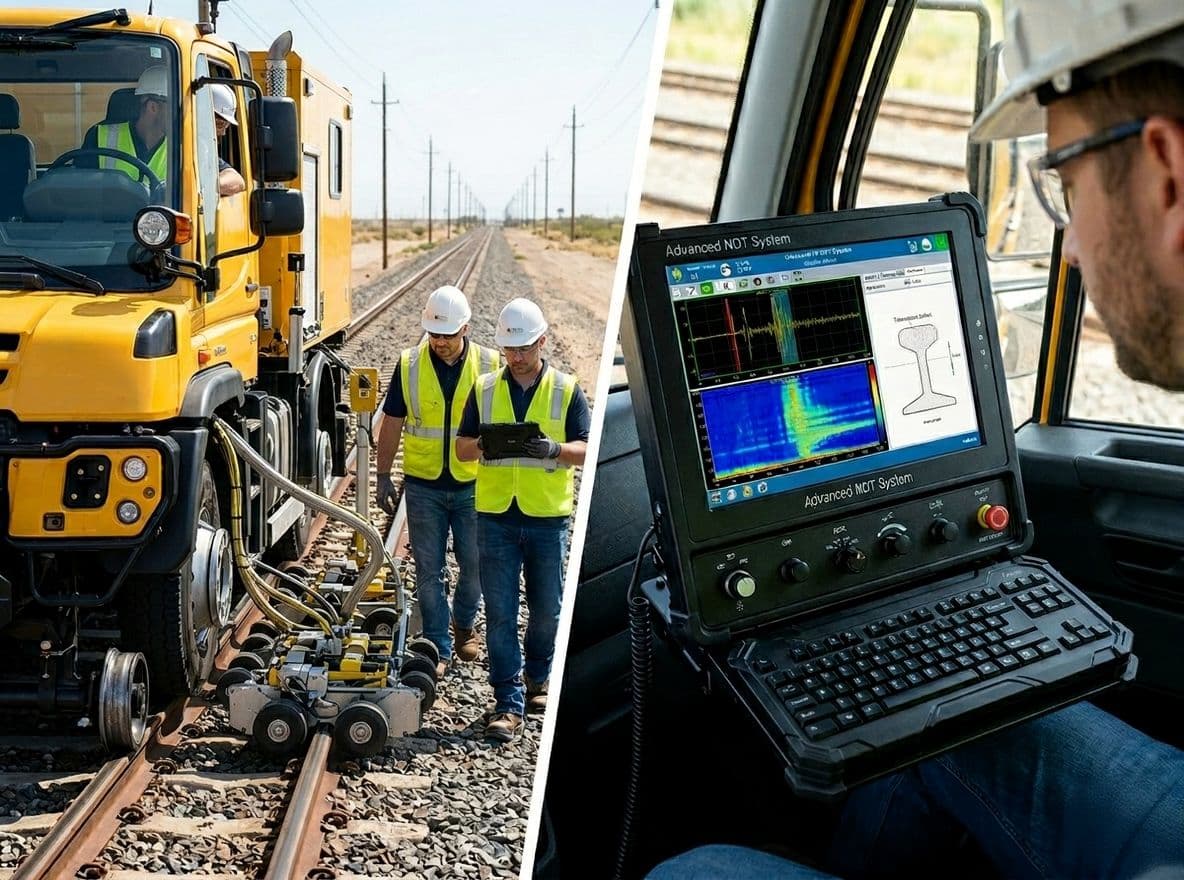
Learn how the Mobile Ultrasonic Rail Testing System helps railway operators detect hidden rail defects and reduce costly infrastructure failures.
Rail profile types set the 0° base-echo time and 70° head coverage: 57.1 µs on 115RE vs 63.0 µs on 136RE. Worked examples for older, girder and worn rail.
Flash butt weld inspection for rail: plant vs in-track welds, flat spots and trim cracks, AWS D15.2 and AREMA rules, UT probe angles, base limits, records.