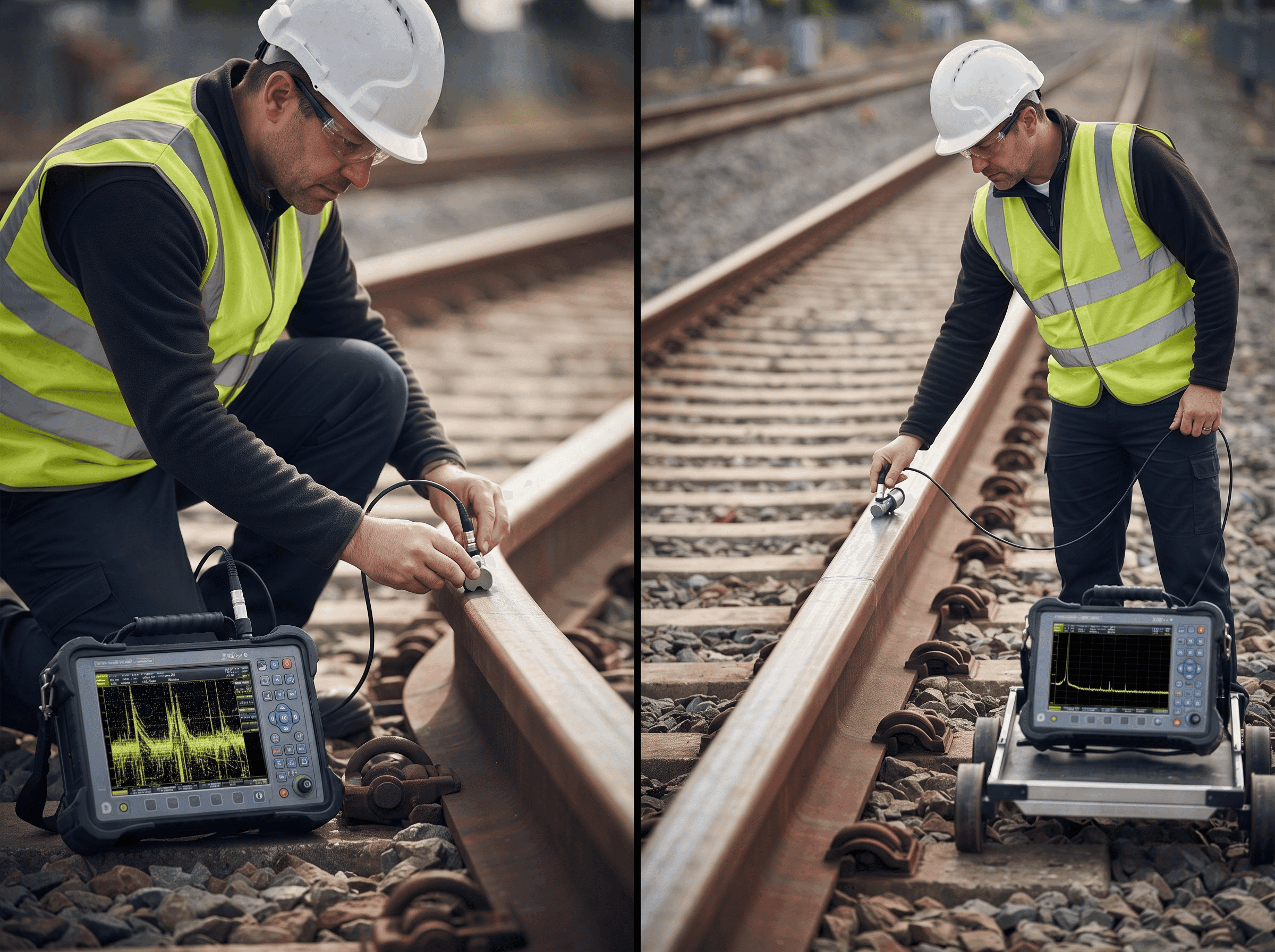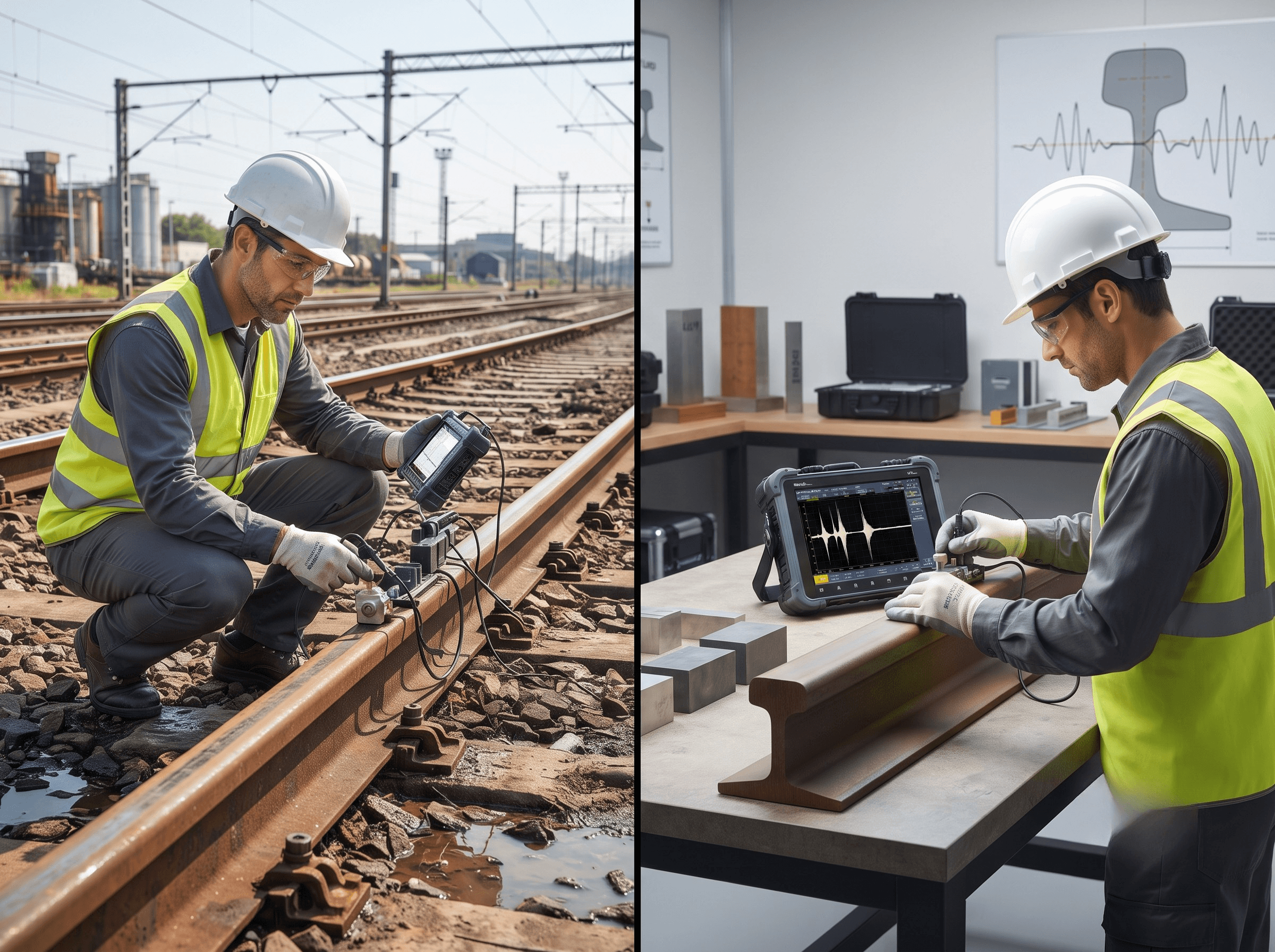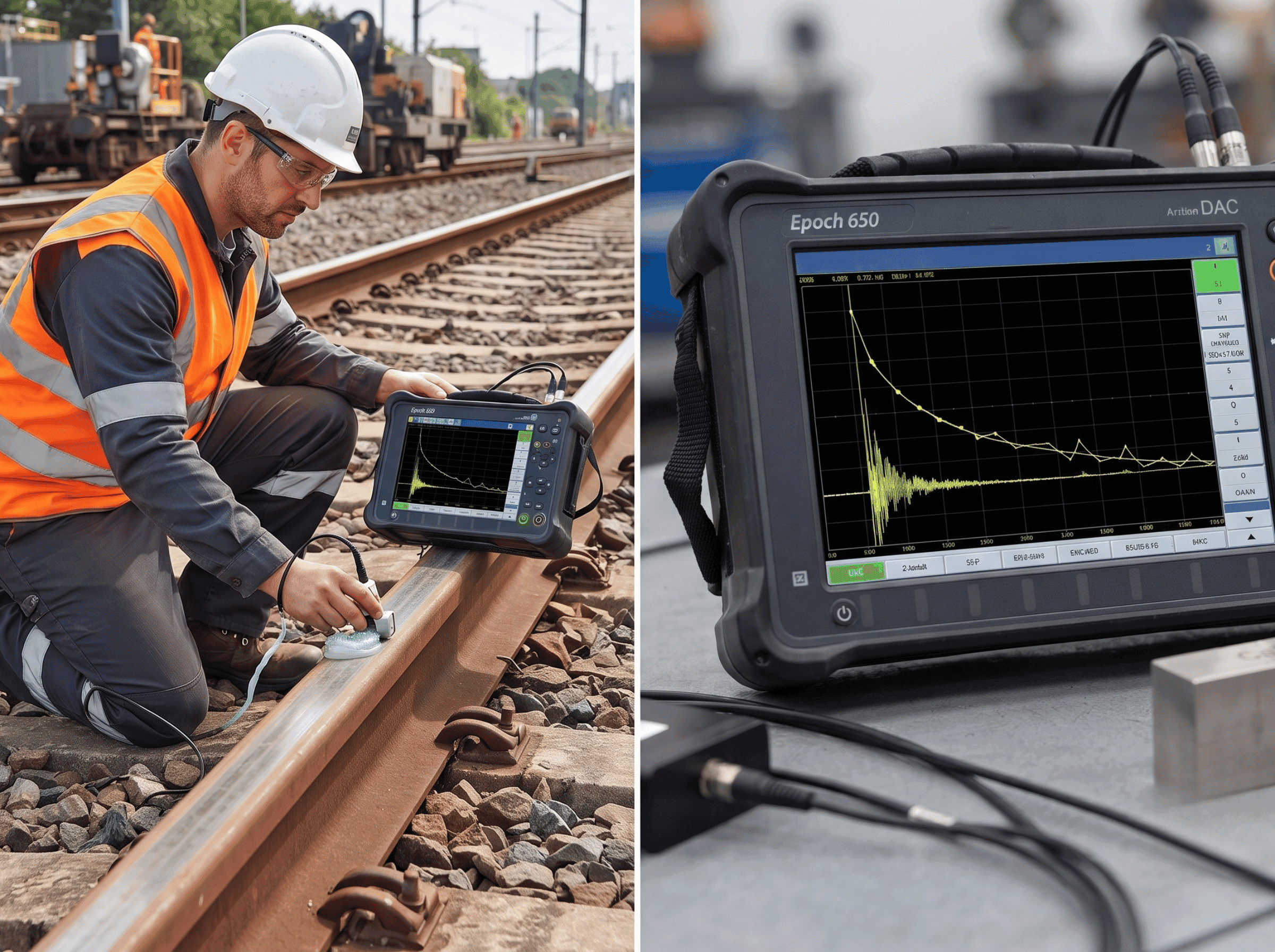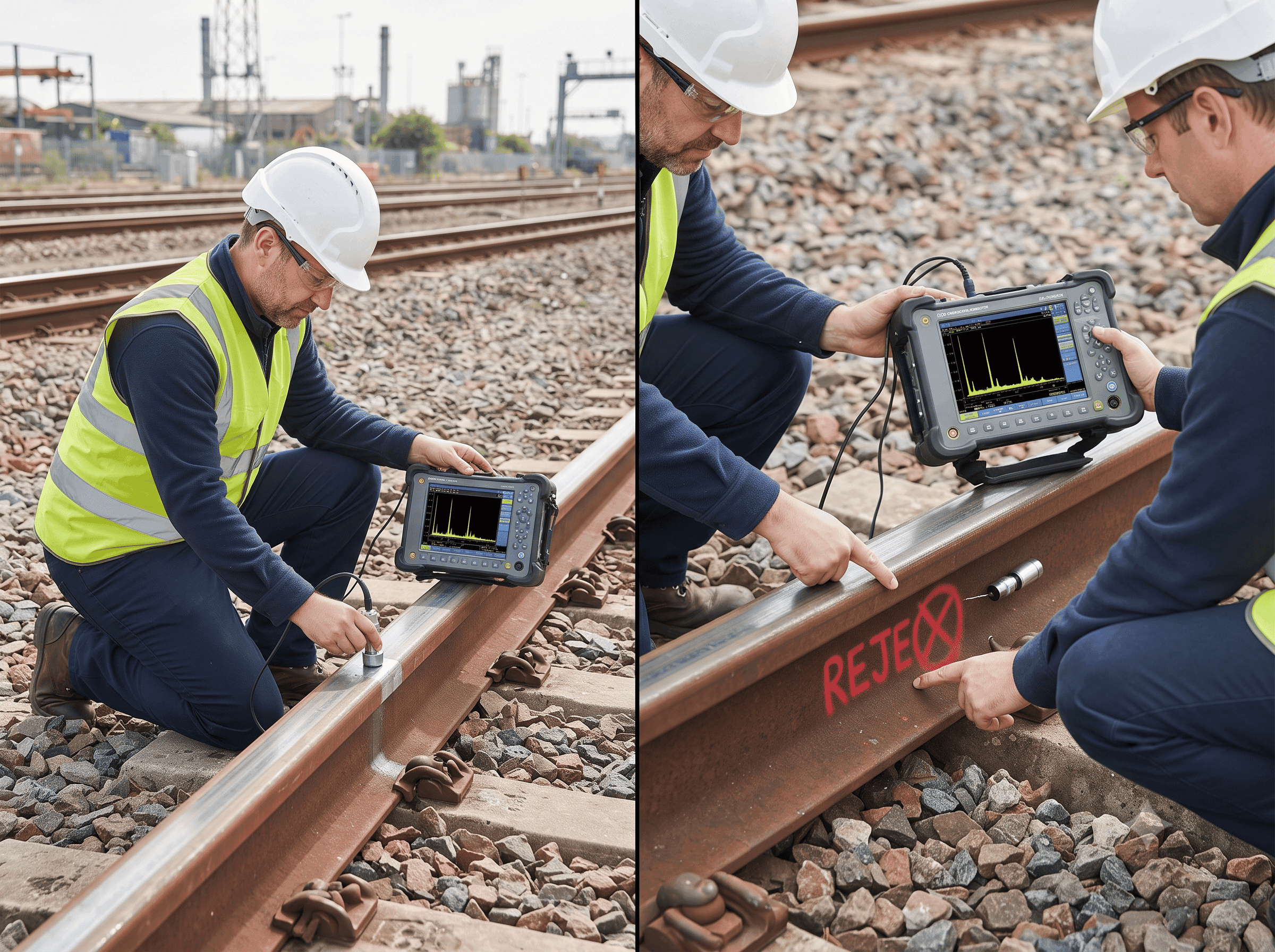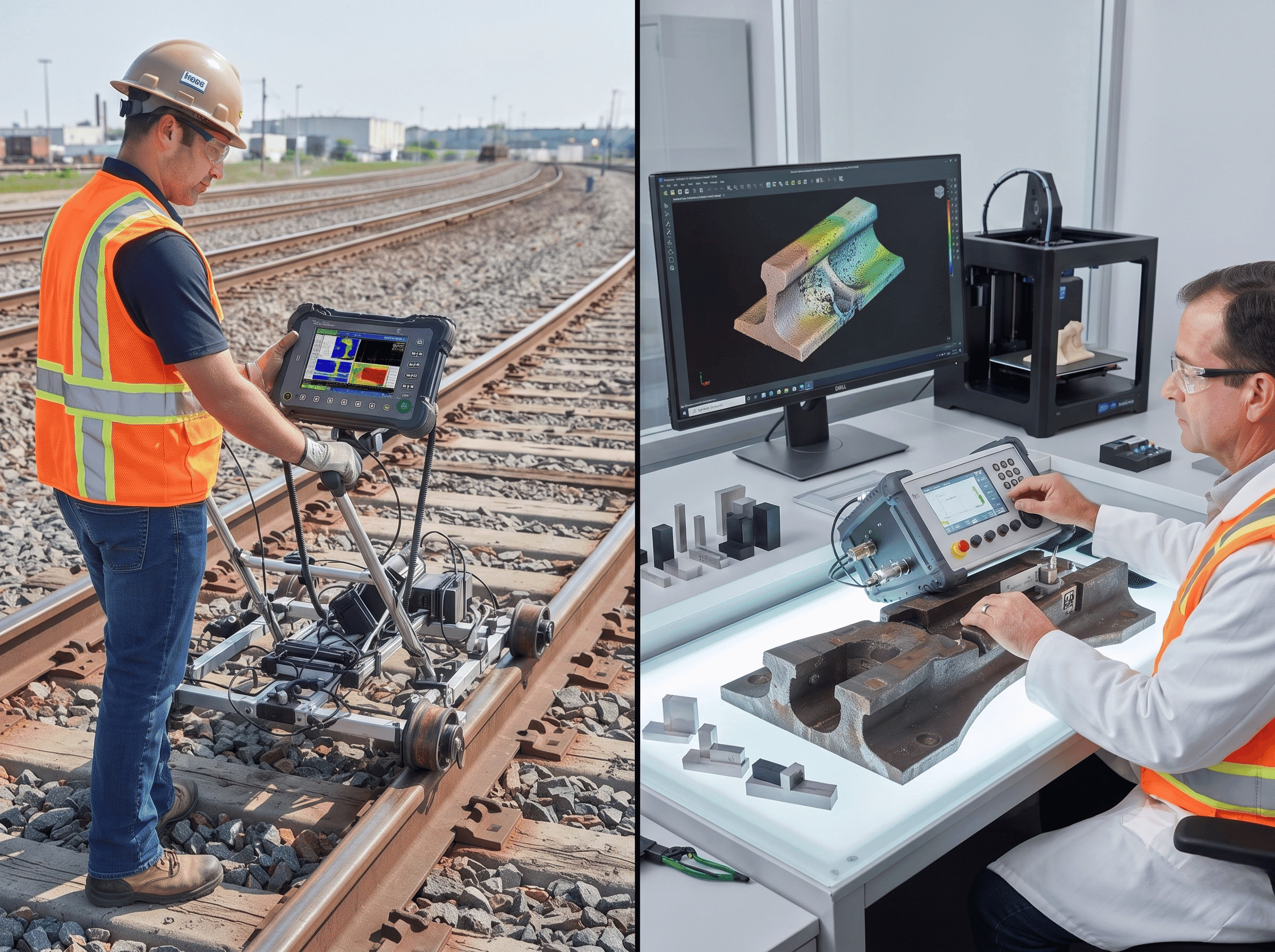
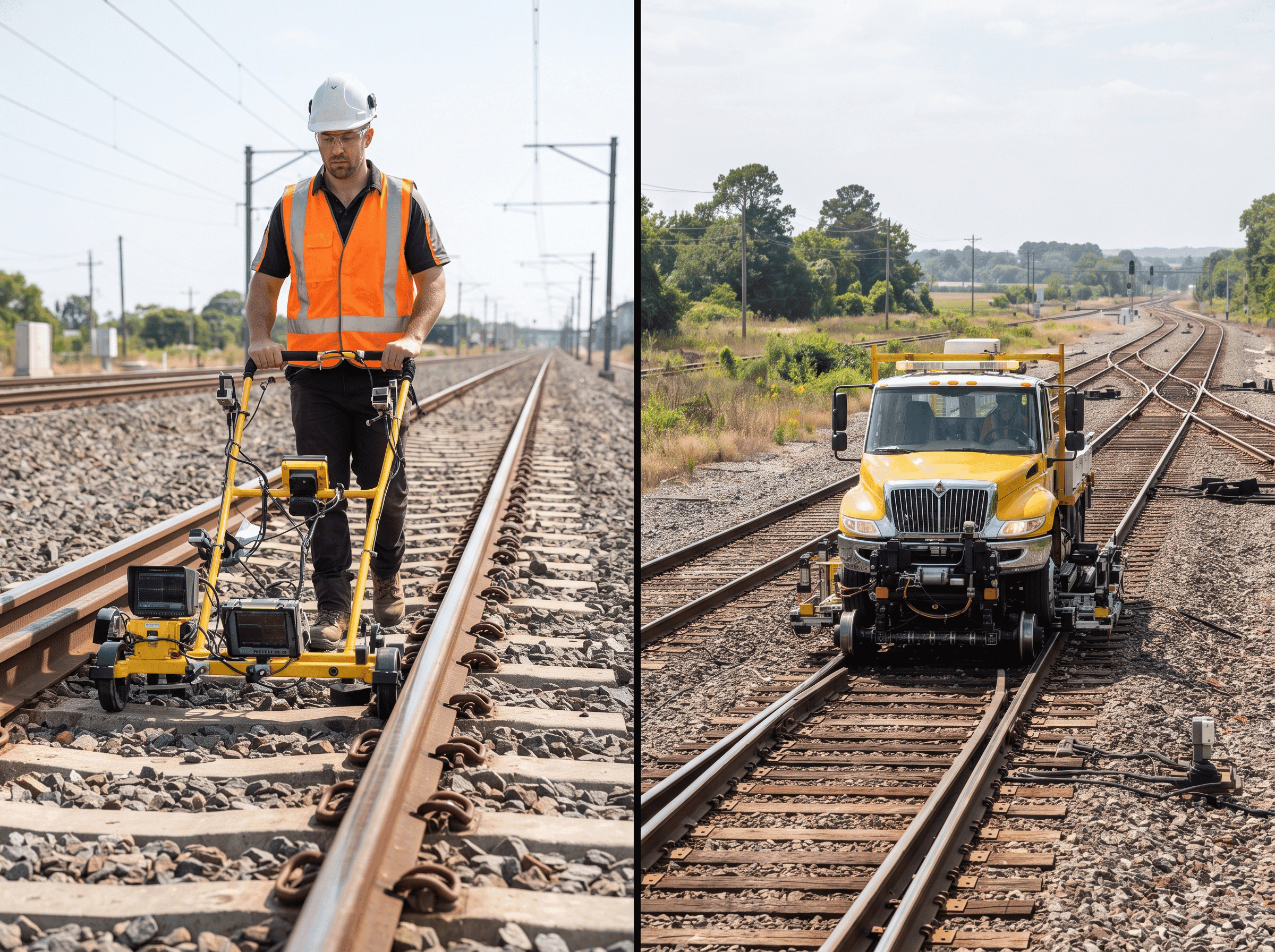
How Often Must Rail Be Tested? Rail Testing Frequency Requirements
Explore with rail testing frequency requirements, FRA inspection intervals, ultrasonic testing, and key factors that support safer railroad maintenance.
Insights
266 articlesPage 3 of 27
Explore with rail testing frequency requirements, FRA inspection intervals, ultrasonic testing, and key factors that support safer railroad maintenance.
Learn how Near Field vs Far Field in UT affects ultrasonic beam behavior, echo amplitude, probe selection, near-field calculations, and defect interpretation.
Find out how False Calls in Rail UT occur, which defects and probes matter, and how reliable UT methods improve rail inspection accuracy.
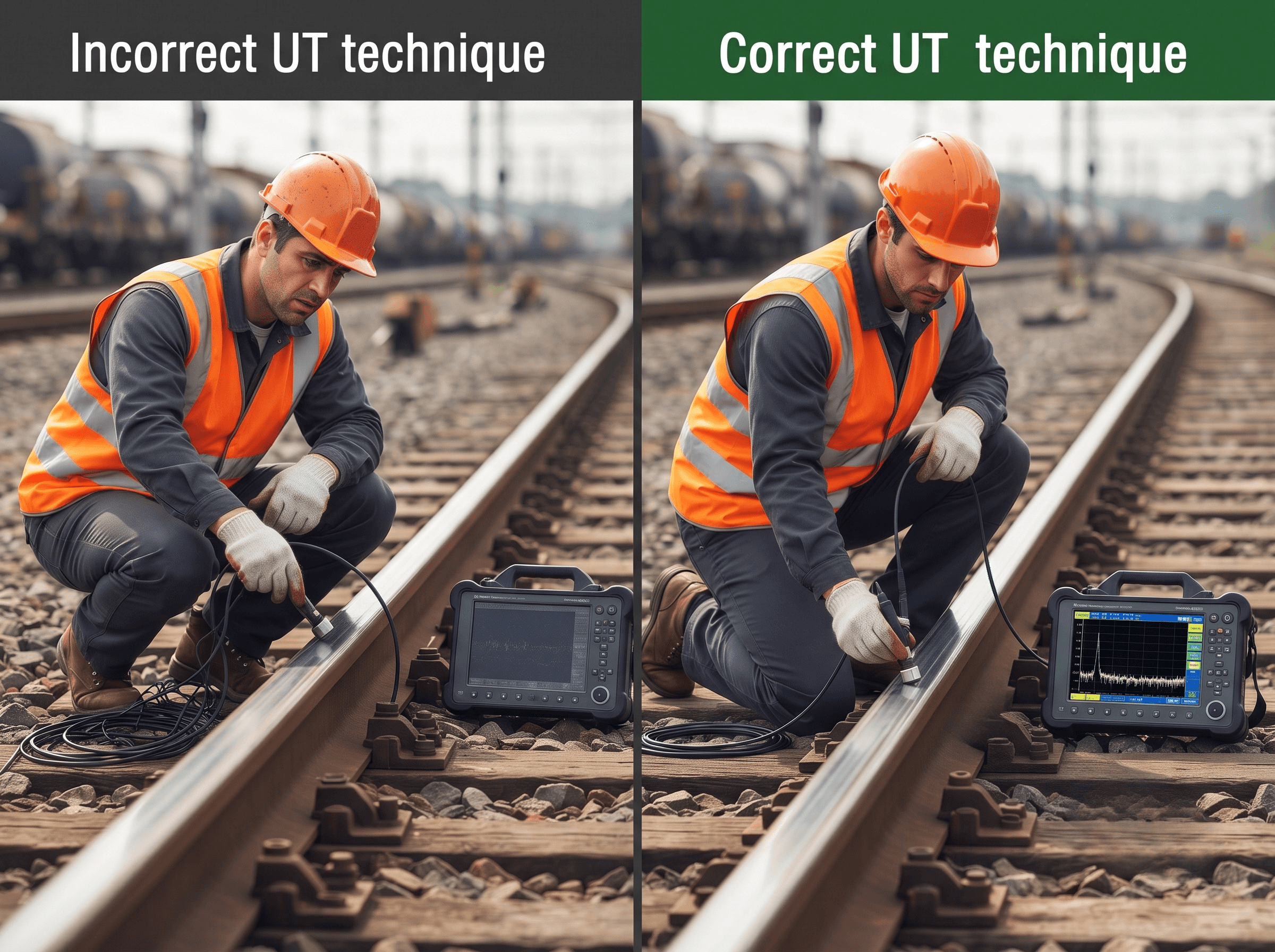
Learn common ultrasonic testing mistakes in rail inspection and discover how proper calibration, and verification improve flaw detection.
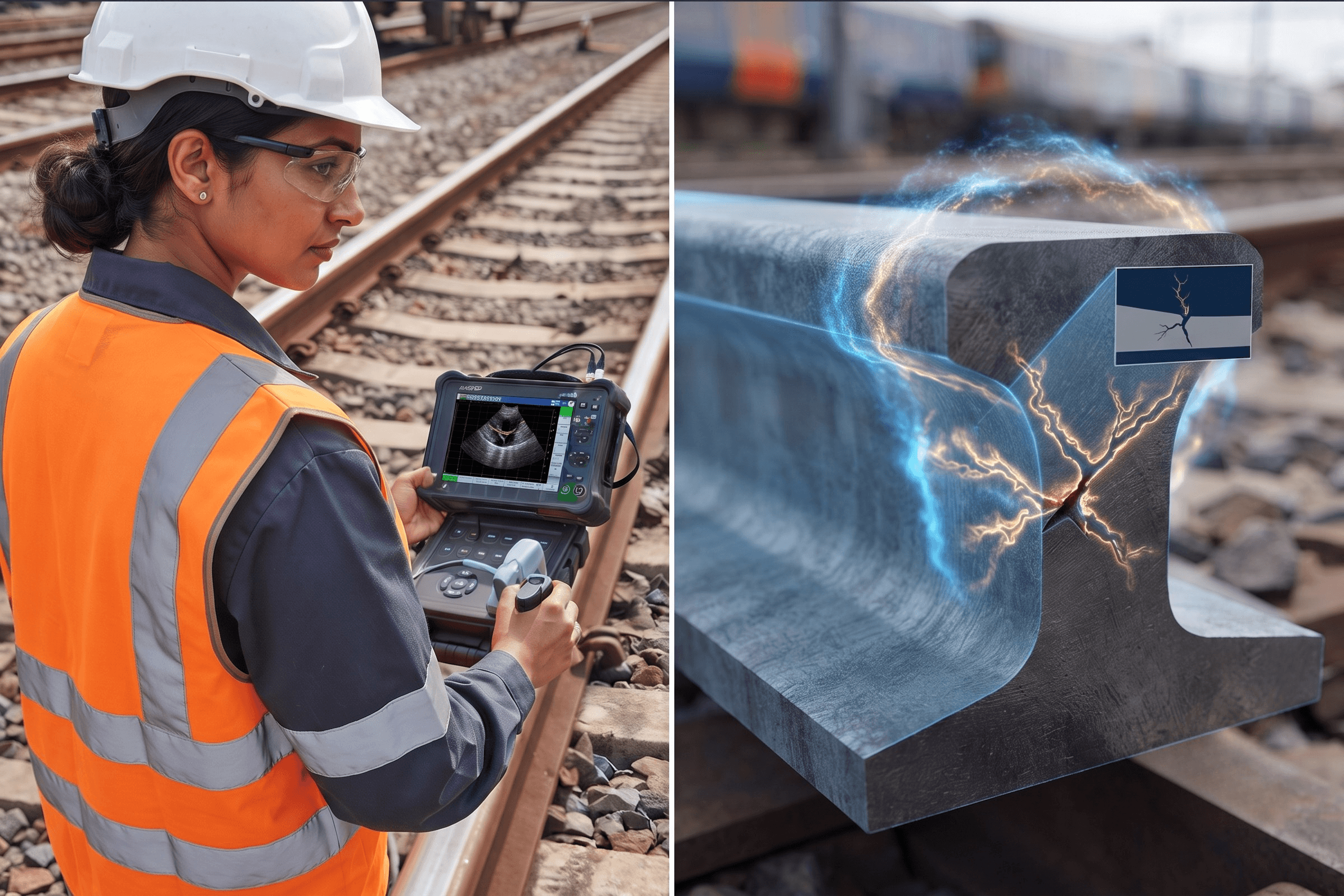
Learn how surface wave ultrasonic testing detects shallow rail cracks that conventional UT can miss, improving railway safety, and reliability.
Learn how DAC curve ultrasonic testing improves flaw sizing accuracy, how a DAC curve is created, and where it is applied in weld & inspections.
Ultrasonic testing acceptance criteria define reject levels under AWS D1.1, ASME, and API 1104, covering reference levels, and thickness limits.
Discover ultrasonic testing formulas covering wavelength, acoustic impedance, beam spread, and attenuation and start reading the guide now!
Discover how a Compound Fissure in Rail forms, spreads, and gets detected under FRA rules, read the complete rail safety and defect inspection guide now.
Vertical Split Head in Rail detection using advanced ultrasonic testing prevents catastrophic failures and identifies hidden rail defects early