
Insulated Rail Joint Inspection: How UT Detects Hidden Failures
Insulated rail joint inspection under 49 CFR 236.59 and 213.121: bonded vs non-bonded joints, end post and track circuit failures, and where UT falls short.
Category
7 articles
Insulated rail joint inspection under 49 CFR 236.59 and 213.121: bonded vs non-bonded joints, end post and track circuit failures, and where UT falls short.
Rail inspection after derailment: what 49 CFR 213, 225 and NTSB rules require, what 213.237 doesn't, and a worked UT scope with a reopening timeline.
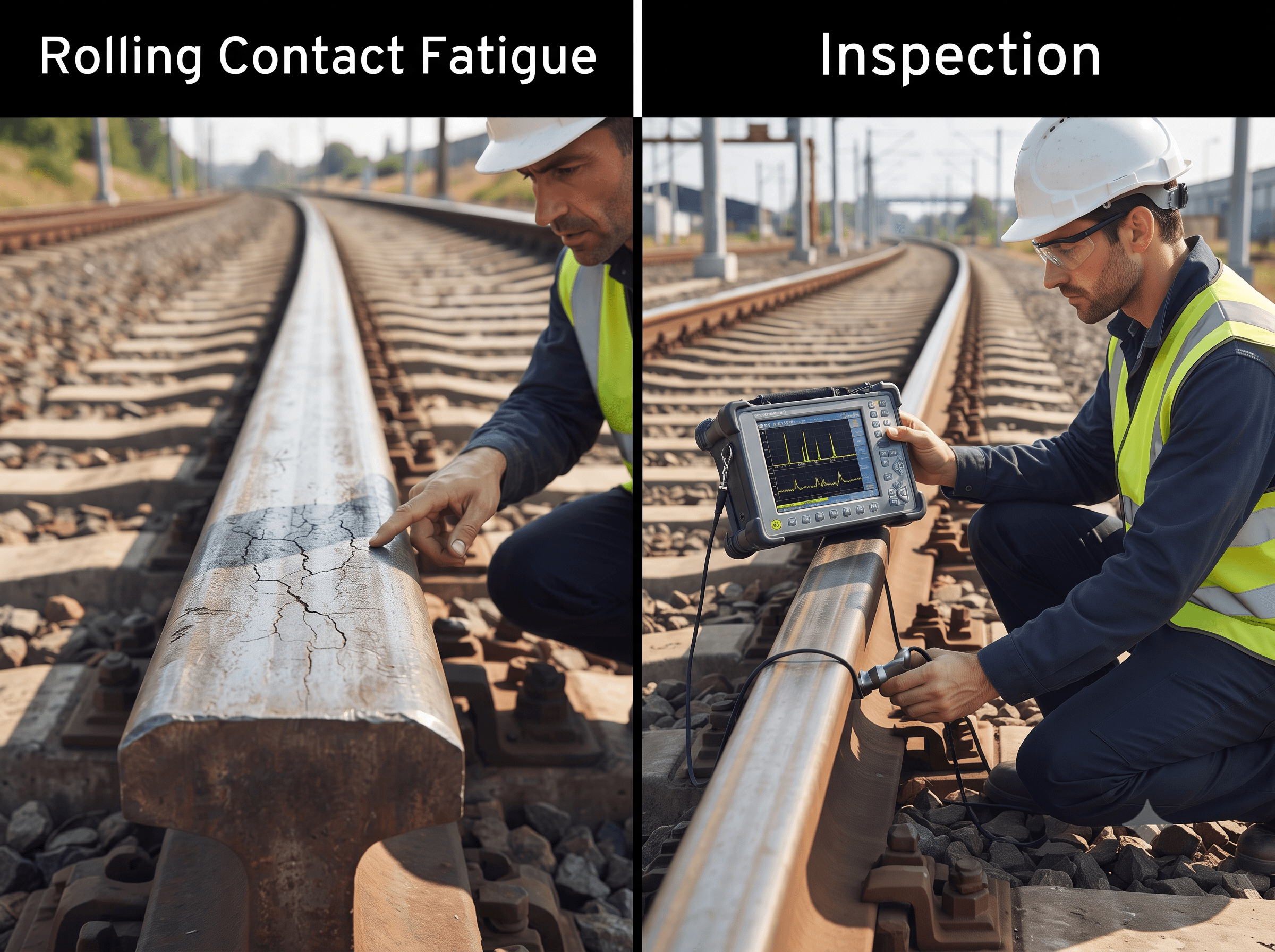
Rolling contact fatigue in rail causes head checks, shells and squats that can mask UT. How 213.113 and 213.237(h) apply, and how crack depth guides grinding.
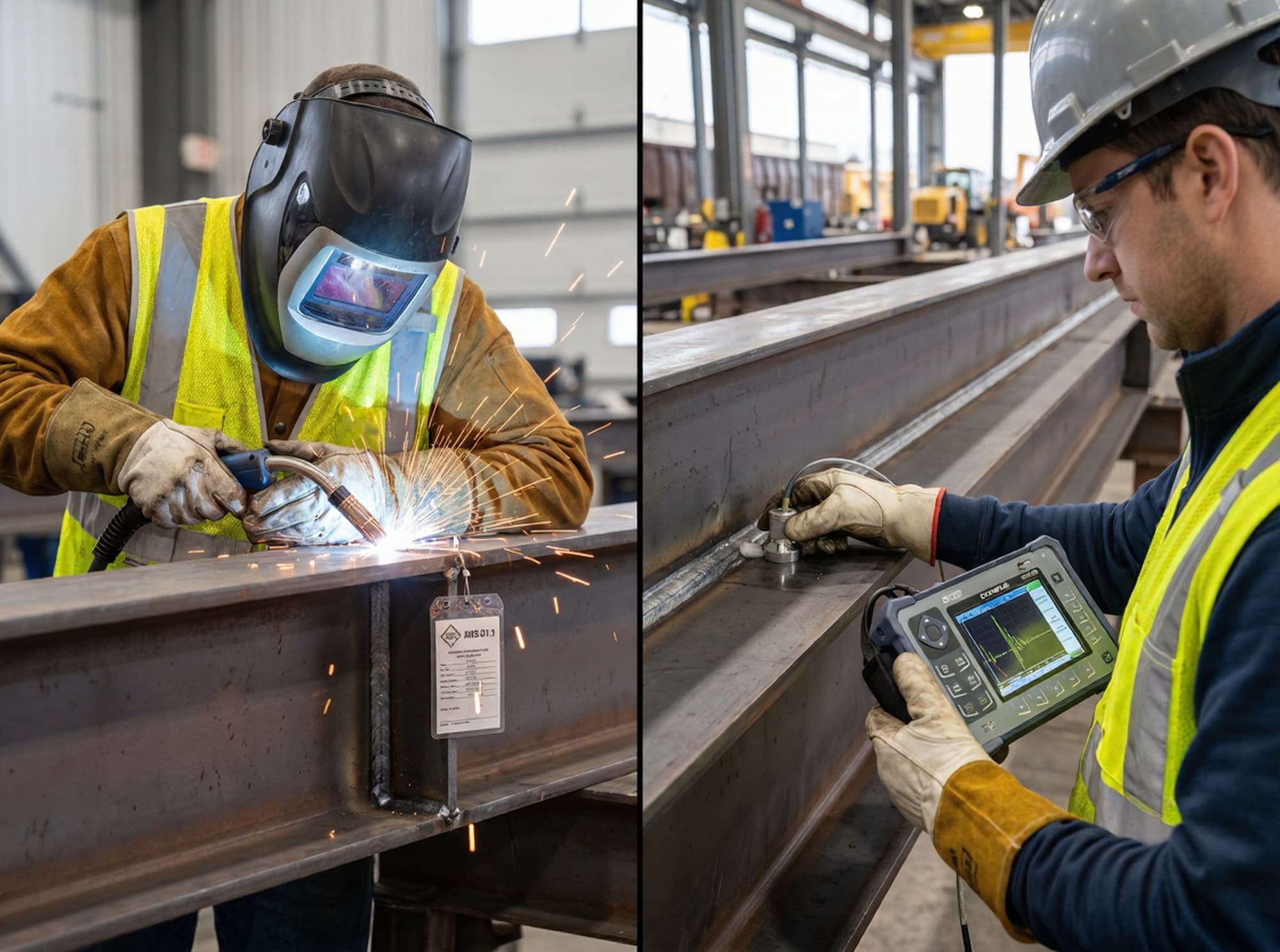
AWS D1.1 acceptance criteria explained: Table 8.1 visual limits for static vs cyclic welds, the UT rating d = a − b − c, Classes A–D, and who decides on UT.
A rail inspection RFP by track class: 213.237 test intervals, 213.233 visual frequency, excepted track, 213.113 actions and a mixed Class 2/3/4 example.
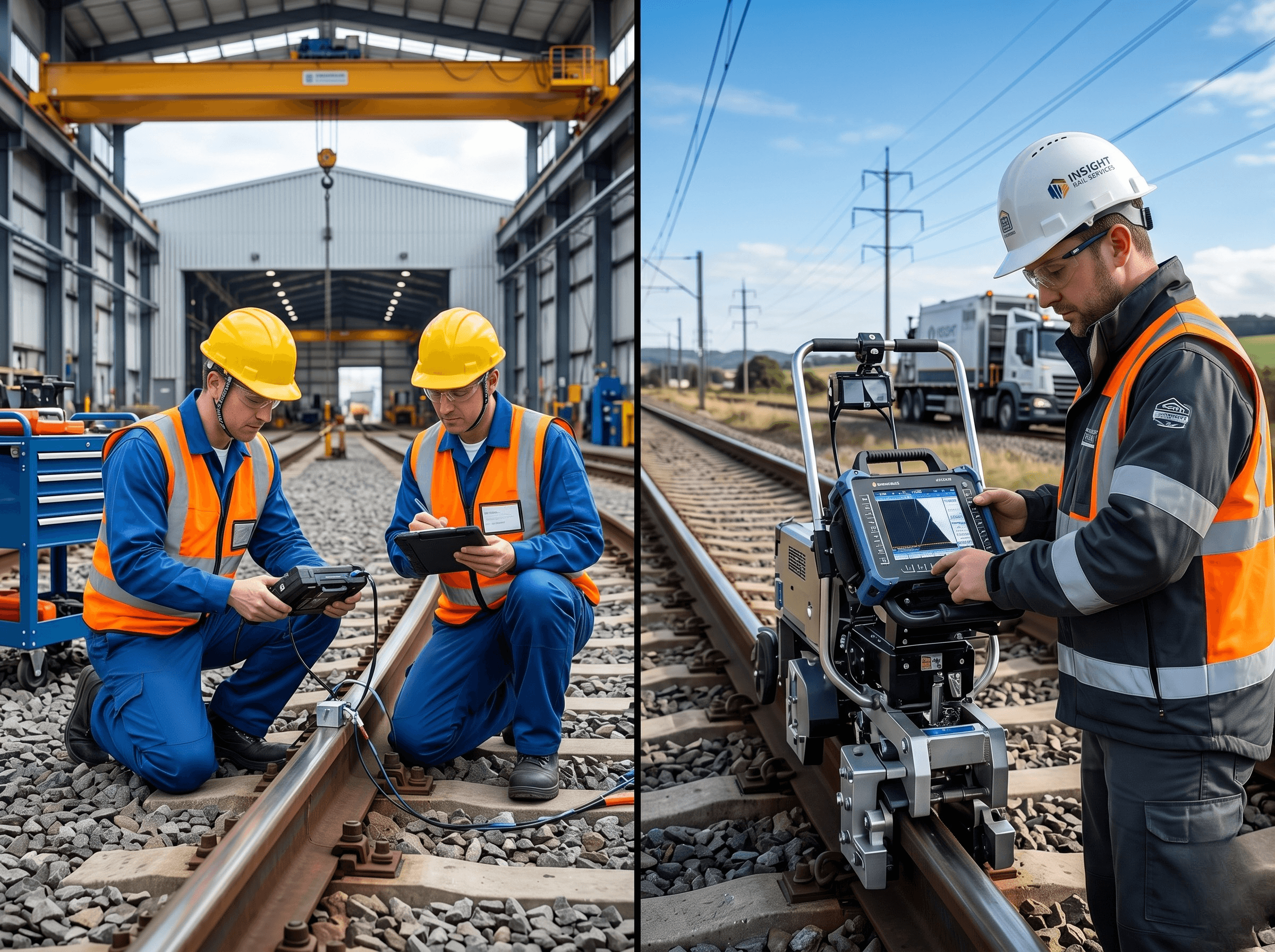
In-house vs outsourced rail inspection for rail flaw testing: what 213.238 and Part 243 commit you to, a break-even model, hybrid options and owner duties.
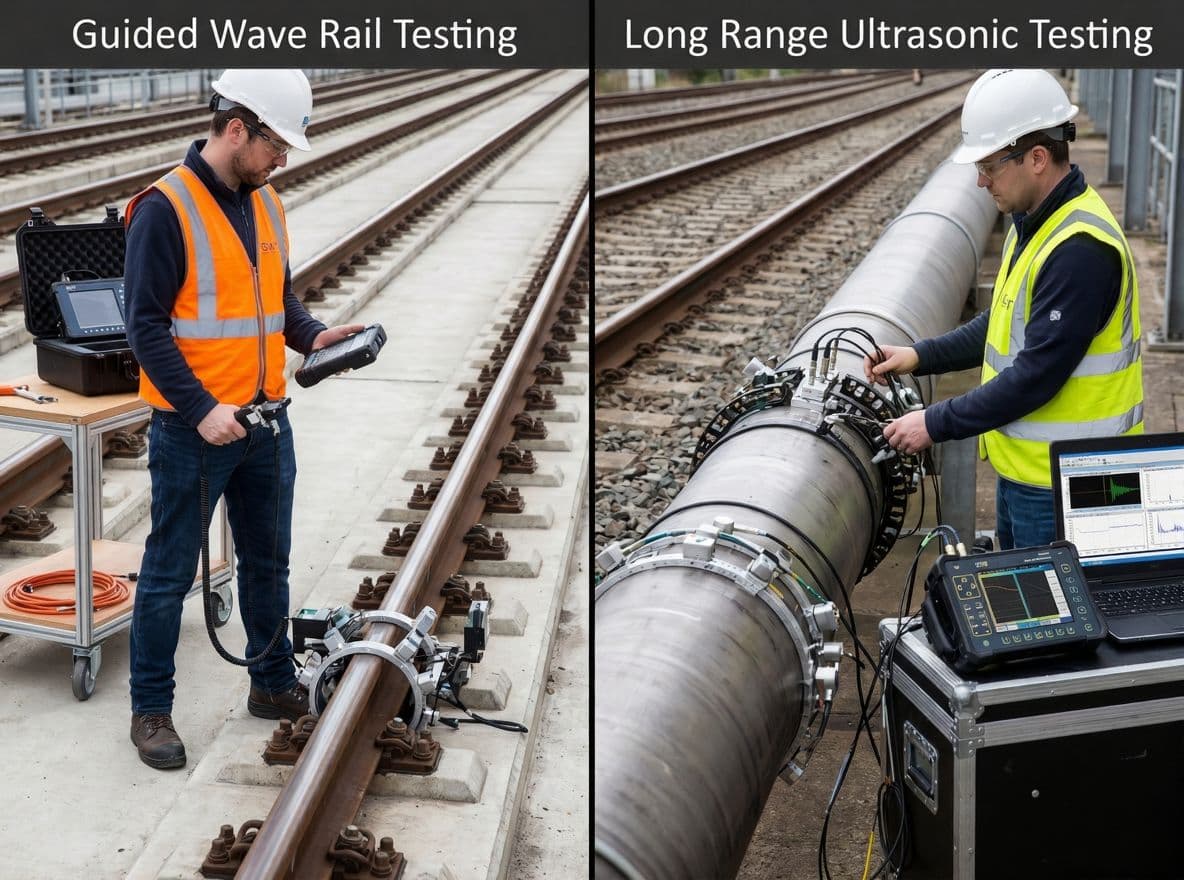
Guided Wave vs Long Range Ultrasonic Testing explained with 9 facts. Learn differences in range, cost, speed, and applications for rail inspection.