
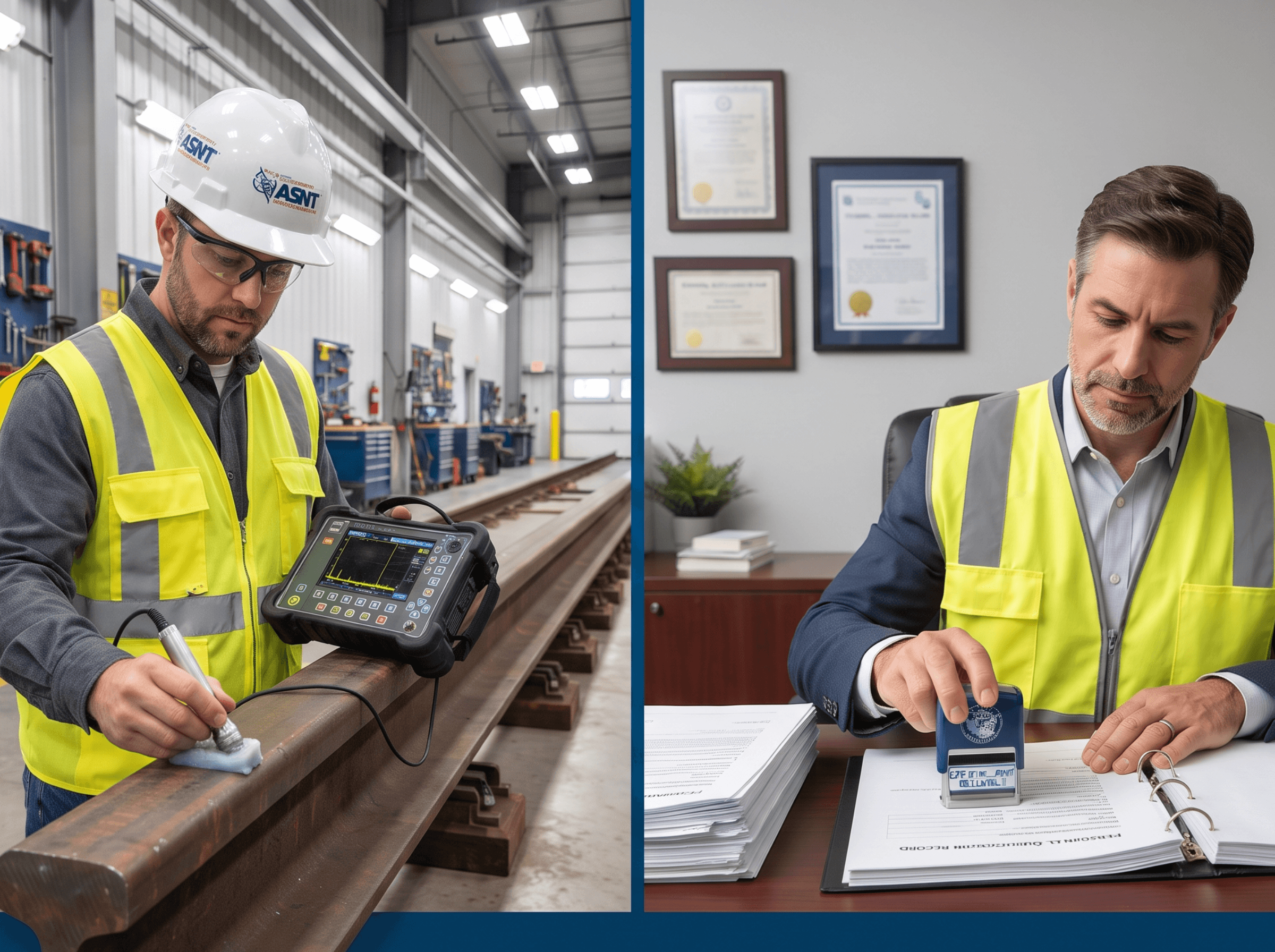
The non-destructive testing industry depends on certified professionals who understand SNT-TC-1A requirements. These standards establish the foundation for quality assurance across aerospace, manufacturing, and energy sectors. Organizations must ensure their NDT personnel meet SNT-TC-1A requirements to maintain operational safety and regulatory compliance.
The path to certification demands dedication, technical knowledge, and practical hands-on experience. This comprehensive guide explores every aspect of SNT-TC-1A requirements, from foundational concepts to advanced applications.
What is SNT-TC-1A certification?
SNT-TC-1A certification stands as the benchmark for non-destructive testing personnel across North America. The American Society for Nondestructive Testing established these standards to standardize competency levels. This certification system ensures that qualified technicians possess both theoretical knowledge and practical skills.
The origins of this framework trace back decades of industry experience. Organizations identified critical gaps in NDT training consistency across different companies and regions. These standards emerged as a response to this fragmentation, creating unified certification pathways. Today, the standards remain the most widely recognized qualification framework for NDT professionals.
Origins and Development of the Framework
The development of these standards reflected genuine industry challenges. Companies struggled when technicians from different backgrounds lacked consistent expertise. Early pioneers in non-destructive testing recognized that formal standards were essential for safety. These requirements officially emerged from consensus among industry leaders and engineering experts.
Throughout the 1970s and 1980s, adoption accelerated rapidly. Major manufacturers, particularly in aerospace and defense, mandated certification for all personnel. Quality managers discovered that enforcing these standards reduced defects and improved reliability. The standards evolved continuously as technology advanced and inspection methods improved.
Current iterations incorporate modern testing technologies. Recent updates address emerging challenges in digital radiography and advanced ultrasonic methods. SNT-TC-1A requirements now reflect two decades of cumulative industry experience. Regulatory bodies worldwide acknowledge these standards as a gold standard for certification.
Global Recognition of Certification Standards
International markets increasingly require compliance from their suppliers. European manufacturers often specify SNT-TC-1A requirements alongside their own ISO standards. This dual recognition demonstrates the robustness of these certification standards. Companies operating globally understand that meeting these standards provides competitive advantage.
The integration of these requirements into quality management systems strengthened their credibility. ISO 9001 auditors frequently reference SNT-TC-1A requirements when evaluating inspection programs. Major procuring agencies demand documentation from contractors meeting these standards. This widespread acceptance reflects consistent quality associated with proper certification.
Now that the foundational understanding of these standards is established, what exactly does compliance entail? The answer lies in exploring the core framework itself.
The SNT-TC-1A framework
Every organization pursuing certification must understand the structural approach. The framework consists of three distinct competency levels with progressive responsibility. SNT-TC-1A requirements define specific qualifications for each level. This tiered system ensures personnel develop expertise systematically and thoroughly.
The structure addresses both knowledge and practical application. Certified professionals understand inspection principles deeply before advancing to higher levels. SNT-TC-1A requirements demand that technicians prove competency through rigorous assessment. This progressive validation distinguishes certification from informal training programs.
Three-Tier Competency Levels
Level 1 certification represents the entry point. These technicians perform routine inspections under direct supervision and established procedures. SNT-TC-1A requirements for Level 1 include basic knowledge of their assigned NDT method. Typical Level 1 responsibilities involve data collection and report preparation under oversight.
Level 2 certification elevates responsibility significantly. Level 2 technicians interpret results and establish inspection procedures independently. SNT-TC-1A requirements for Level 2 include comprehensive understanding of equipment and methodology. These professionals train others and make critical decisions regarding test validity. Level 2 certification typically requires more experience than Level 1.
Level 3 certification represents the highest achievement. Level 3 professionals develop new procedures and oversee entire testing programs. SNT-TC-1A requirements at Level 3 demand extensive knowledge and years of accumulated experience. These experts certify other technicians and ensure compliance with these standards. The progression from Level 1 through Level 3 typically spans years.
Industries Requiring Certification Compliance
Multiple sectors depend heavily on proper certification:
- Aerospace and aviation operations rely on standards for structural inspections
- Oil and gas pipeline systems require certification for weld quality assurance
- Manufacturing and fabrication plants implement these standards in production control
- Power generation facilities demand certification for safety-critical equipment
- Transportation and vehicle production utilize these standards in component testing
Each industry sector applies SNT-TC-1A requirements in specific ways. Aerospace companies emphasize ultrasonic and radiographic methods. Oil and gas operations focus on advanced techniques aligned with these standards. Manufacturing environments often employ multiple NDT methods covered by certification. The versatility of these requirements explains their widespread adoption across industries.
But understanding the framework is one thing discovering the actual education and training mandates is quite another. So how are candidates truly prepared to meet these rigorous standards?
Educational requirements for certification
Formal education forms the foundation of meeting these standards. Candidates must complete structured classroom training before attempting practical assessments. The curriculum covers both general principles and method-specific topics. Educational institutions recognized for training maintain strict quality standards.
Technical knowledge domains addressed in training are comprehensive. Physics principles underlie all NDT methods covered by SNT-TC-1A requirements. Candidates study how materials respond to various inspection techniques. This theoretical foundation enables professionals to troubleshoot problems and adapt procedures appropriately.
Core Training Areas
Effective training addresses multiple technical domains:
- Fundamentals of non-destructive testing and inspection principles
- Specific NDT method training aligned with certification standards
- Safety and quality protocols per industry specifications
- Documentation and reporting standards required by regulatory bodies
- Regulatory compliance aspects of SNT-TC-1A requirements in various industries
Instructors emphasize that knowledge extends beyond memorization. Candidates must understand why specific procedures exist. Classroom discussions explore real-world applications of these standards. This comprehensive approach ensures technicians truly master technical concepts.
Practical experience mandates
SNT-TC-1A requirements specify minimum hands-on experience hours. These practical requirements cannot be substituted with additional classroom time. Candidates gain experience under qualified supervision as mandated by these standards. The balance between theory and practice strengthens competency development.
Supervised training ensures candidates apply knowledge correctly. Experienced mentors guide technicians through complex inspection scenarios. Candidates document their experience thoroughly to verify compliance with standards. This mentorship approach accelerates learning and ensures quality control.
Experience Hours by Level
| Certification Level | Minimum Hours Required | Training Duration | Theory vs. Practical |
| Level 1 | 40-80 hours | 4-8 weeks | 40% Theory / 60% Practical |
| Level 2 | 120-400 hours | 6-12 months | 30% Theory / 70% Practical |
| Level 3 | 1,000+ hours | 2+ years | 25% Theory / 75% Practical |
The experience hours reflect industry consensus about competency development. These hours ensure technicians gain adequate hands-on exposure. Time spent on practical work cannot be rushed or abbreviated. Organizations that invest properly develop highly capable technicians.
Examination and assessment processes
SNT-TC-1A requirements assessments evaluate both knowledge and skills. Written examinations test theoretical understanding required by these standards. Practical demonstrations assess technical ability across multiple methods. Candidates must achieve passing scores on both components to receive certification.
The written examination covers comprehensive technical content. Questions address fundamental principles, equipment operation, and standards interpretation. Candidates must demonstrate mastery before advancing to practical testing. Passing the written examination demonstrates readiness for hands-on evaluation.
Practical demonstrations involve real inspection tasks. Candidates must detect and accurately report flaws according to specifications. Examiners evaluate technique, safety practices, and result interpretation. Successful completion confirms competency in NDT practices.
Retesting procedures provide candidates with opportunities to demonstrate competency. SNT-TC-1A requirements allow limited retesting to accommodate nervous candidates or minor failures. Retesting timelines balance fairness with scheduling efficiency. Candidates who fail must understand weaknesses before attempting reassessment.
Assessment scheduling accommodates working professionals. Testing centers offer multiple session times throughout the year. Candidates can schedule examinations based on their preparation timeline. This flexibility encourages qualified professionals to pursue proper certification.
NDT personnel qualification standards
Understanding professional qualification frameworks extends beyond basic certification. SNT-TC-1A requirements establish comprehensive pathways for career development and specialization. Organizations recognize that qualified personnel directly impact operational safety and product quality. The qualification framework addresses both initial competency and ongoing professional advancement.
Personnel qualification involves systematic assessment of technical capabilities. Professionals pursuing SNT-TC-1A requirements must demonstrate competency through documented evidence. Career pathways within SNT-TC-1A requirements accommodate different specialization choices. This structured approach ensures consistent quality across the non-destructive testing industry.
Level-Based Competency Progression
Competency progression follows the three-tier structure established by SNT-TC-1A requirements. Each level builds upon previous knowledge and practical experience. Career advancement through SNT-TC-1A requirements tiers requires substantial time investment. Many technicians spend years transitioning from Level 1 to Level 2 certification.
Level 1 technicians develop foundational knowledge of NDT principles. These professionals gain practical experience under supervision before advancing. SNT-TC-1A requirements ensure Level 1 technicians achieve basic competency before independent work. This entry-level foundation prevents errors and maintains quality standards.
Level 2 advancement marks significant professional growth. Technicians at this level interpret complex inspection results. SNT-TC-1A requirements for Level 2 demand comprehensive understanding of equipment operations. These professionals establish procedures and train junior technicians effectively. Level 2 specialists often become department leaders within organizations.
Level 3 represents mastery and deep technical expertise. These highly qualified professionals develop new inspection methodologies. SNT-TC-1A requirements at Level 3 include extensive field experience. Level 3 certification qualifies individuals to certify other technicians. This highest tier carries substantial professional recognition and responsibility.
Specialization Options Within Certification
SNT-TC-1A requirements allow specialization in specific NDT methods. Technicians may focus on ultrasonic testing, radiography, or other disciplines. Specialization within SNT-TC-1A requirements enhances career marketability. Specialized expertise commands premium compensation in competitive job markets.
Professionals can pursue SNT-TC-1A requirements in multiple methods simultaneously. Dual-method certification demonstrates comprehensive technical knowledge. Organizations value technicians certified in multiple approaches. This versatility makes professionals invaluable to their employers.
Method-specific applications of certification
Different industries employ various NDT methods covered by SNT-TC-1A requirements. Ultrasonic testing represents one of the most widely used techniques. Radiographic testing follows similar certification standards. This method involves exposure to radiation under strict safety protocols.
Eddy current testing offers another specialized application area. Visual inspection remains fundamental across all certification levels. Liquid penetrant testing rounds out the primary NDT method categories. Each method requires specific expertise and SNT-TC-1A requirements compliance.
Sector-Specific Variations
Different industries apply certification standards with specific emphasis areas:
- Aerospace-specific requirements demand stringent quality standards for safety
- Marine and offshore operations address corrosion and fatigue concerns
- Power plant standards focus on structural integrity monitoring
- Manufacturing-specific requirements emphasize production efficiency standards
With multiple methods and sectors demanding compliance, how do certified professionals maintain credentials while ensuring continuous improvement? This question leads directly to renewal and compliance procedures.
Maintenance, renewal, and continuous compliance
Certification represents an ongoing commitment, not a one-time achievement. Annual renewal procedures maintain certification status. Continuing education credits ensure technicians remain current with industry developments. SNT-TC-1A requirements demand that professionals demonstrate continuous learning engagement.
Record-keeping and documentation prove essential for maintaining certification. Professionals must preserve training records and assessment documentation. Specific documentation standards apply for compliance verification. Quality assurance programs monitor SNT-TC-1A requirements compliance throughout organizations.
The Renewal Process
Step-by-step renewal procedures for certification include:
- Submit renewal application with complete current documentation
- Complete required continuing education hours per certification standards
- Pay annual renewal fees promptly
- Undergo competency verification if required by program guidelines
- Update credentials and formal certifications
- Maintain complete records for SNT-TC-1A requirements compliance audits
Renewal timelines align with calendar years for most certifying bodies. Professionals receive renewal reminders well in advance. Certifying bodies allow sufficient time for continuing education completion. Late renewals may result in certification expiration and required retesting.
Continuing education ensures technical knowledge remains current. New inspection technologies emerge regularly requiring SNT-TC-1A requirements updates. Training programs address cutting-edge developments in NDT methods. Continuing education covers regulatory changes and industry best practices.
Career advancement and professional benefits
Career progression opportunities increase significantly with certification. Salary compensation reflects certification levels and specialization. Level 3 certified professionals command the highest compensation packages. Experience combined with SNT-TC-1A requirements certification creates premium career opportunities.
Global mobility improves for certified professionals. International recognition of these standards facilitates career opportunities worldwide. Companies value employees with professional certifications. Professional networking through certification communities strengthens career advancement pathways.
Professional Development and Return on Investment
Certification demonstrates commitment to professional excellence. Return on investment becomes evident through salary increases. Career advancement accelerates for certified technicians. Organizations prioritize promotions for certified personnel.
Training investments pay dividends throughout careers. Employers often sponsor professional development for key personnel. Certification programs improve employee retention and satisfaction. Professional development strengthens organizational capabilities significantly.
Common challenges and practical solutions
Cost considerations present significant barriers to pursuing certification. Training programs require substantial financial investment. Travel expenses for examinations add to overall costs. Time management challenges arise when balancing training with employment responsibilities.
Employer support accelerates certification completion. Corporate sponsorship programs cover training expenses. Flexible work schedules accommodate continuing education requirements. Organizations benefit substantially from investing in their personnel.
Solutions and best practices for certification pursuit include:
- Corporate sponsorship programs reduce financial barriers
- Online training modules provide flexibility for professionals
- Mentorship programs accelerate learning progress
- Flexible scheduling options accommodate working professionals
- Group training reduces overall SNT-TC-1A requirements costs
Financial assistance programs support professional development. Some organizations offer tuition reimbursement for certification. Educational institutions provide flexible payment options. Financing arrangements make professional development accessible to more candidates.
As the NDT industry continues evolving and standards become increasingly stringent, understanding certification requirements represents an essential investment in professional success.
Final Thoughts
SNT-TC-1A requirements establish comprehensive standards for NDT personnel qualification. These standards ensure consistent quality across the non-destructive testing profession. Professional competency development follows structured pathways outlined by SNT-TC-1A requirements. Organizations worldwide depend on certified technicians for operational safety.
The certification framework addresses both initial training and continuous development. These standards balance theoretical knowledge with practical application skills. Career advancement opportunities reward professionals pursuing SNT-TC-1A requirements certification. Industry trends suggest increasing importance of SNT-TC-1A requirements compliance.
Future developments will likely expand certification scope and capabilities. Technological advances will drive new SNT-TC-1A requirements standards. Professional commitment to certification ensures ongoing excellence.
Organizations seeking qualified NDT personnel recognize certification value. Professionals pursuing SNT-TC-1A requirements benefit from structured advancement pathways. These standards represent the highest benchmarks in non-destructive testing.
FAQs
What are the 4 types of NDT?
The primary NDT types are ultrasonic testing, radiographic testing, eddy current testing, and liquid penetrant testing. Each method detects different flaw types and materials effectively.
What is the difference between ASNT and SNT-TC-1A?
ASNT is the certifying organization that administers SNT-TC-1A requirements standards. SNT-TC-1A represents the specific certification standard they maintain and enforce consistently.
How to get NDT level 3 certificate under SNT-TC-1A requirements?
Complete Level 1 and Level 2 certifications first, accumulate 1,000+ hours of experience, complete advanced training, and pass comprehensive written and practical examinations.
How long is NDT level 2 training per SNT-TC-1A requirements?
Level 2 training typically requires six to twelve months of combined classroom instruction and supervised practical experience depending on prior experience.
Is NDT certification worth pursuing under SNT-TC-1A requirements?
Yes, certification significantly enhances career prospects, earning potential, and professional credibility in the non-destructive testing industry substantially today.