
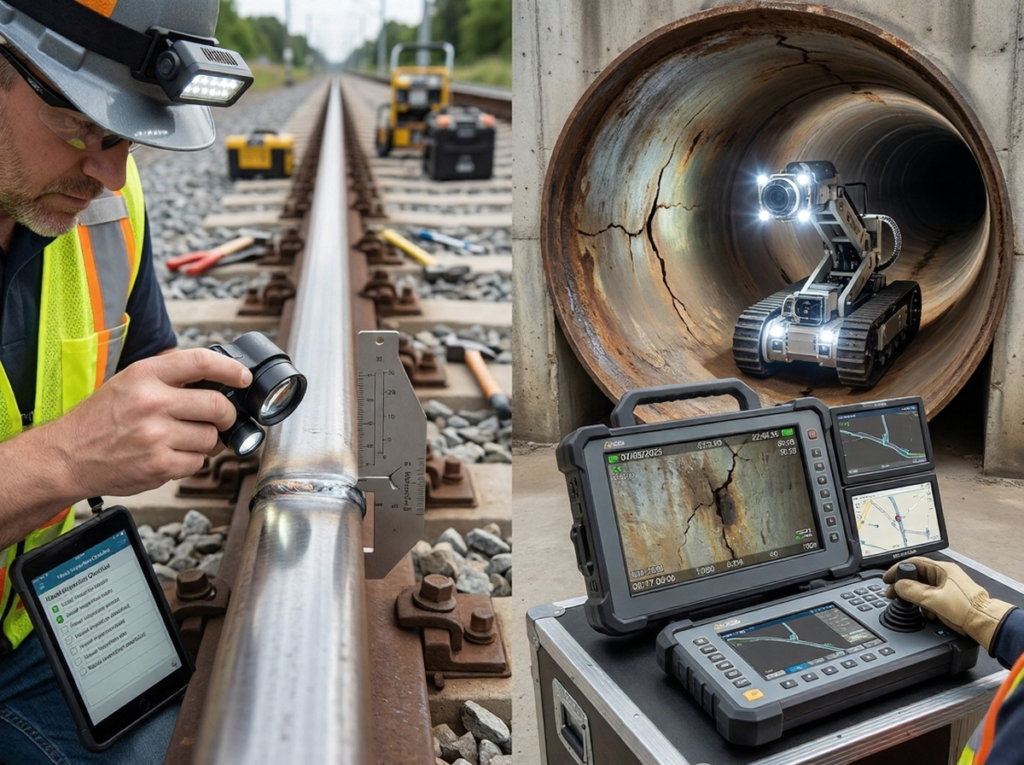
Visual Testing (VT) stands as the oldest and most widely used inspection technique in non-destructive testing. In many industries, Visual...
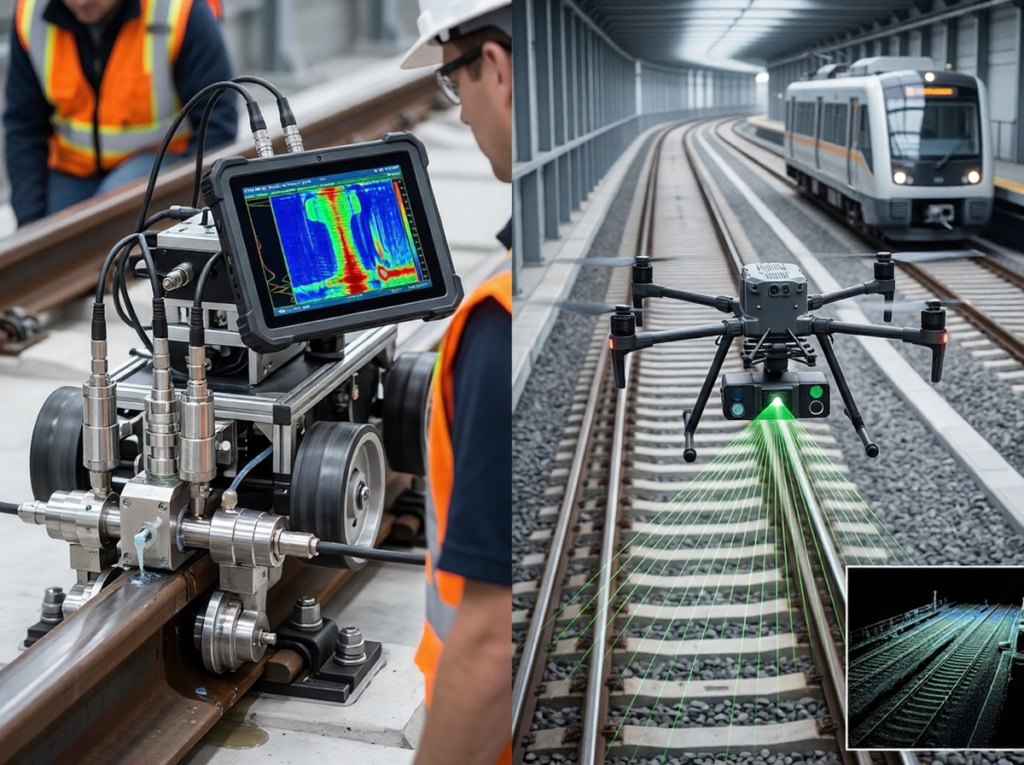
Innovations in Rail Inspection Technology
Rail networks carry millions of passengers and tons of freight every day. Maintaining these systems requires constant monitoring, and rail...
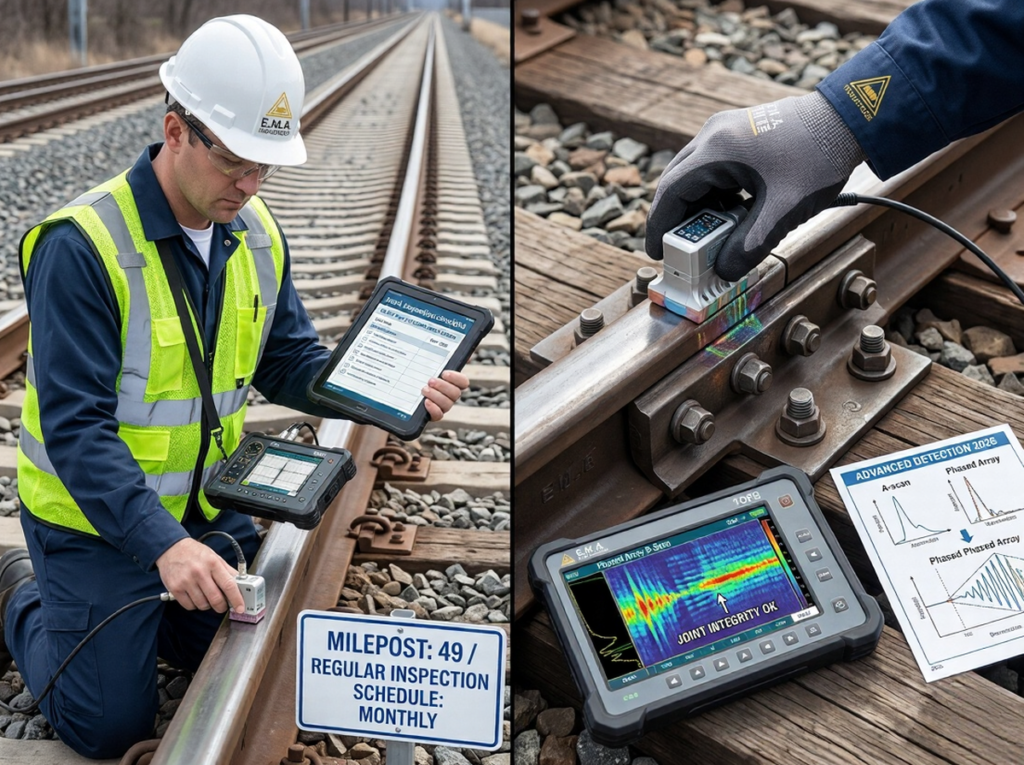
Importance of Regular Railway Track Inspections: A Guide For 2026
Railway tracks are the backbone of safe and reliable train travel, but many people don’t realize how critical regular inspections...
Types of Sound Waves Used in Rail Inspection
Railway safety depends on detecting rail defects before they cause accidents or service disruptions. One of the most effective ways...
The Science Behind Ultrasonic Testing for Railroad Tracks: A USA Guide For 2026
Railroad safety depends on detecting hidden defects before they become serious problems. Ultrasonic testing (UT) has become the go-to method...
How Ultrasonic Waves Detect Flaws in Steel: A USA Guide For 2026
Steel is the backbone of countless industries in the USA, from bridges and pipelines to aerospace and manufacturing. Ensuring its...
Ultrasonic Testing Level 3: The Highest NDT Certification
In industries where safety failures can cost millions and risk lives, inspection accuracy is non-negotiable. Ultrasonic Testing Level 3 represents...
Ultrasonic Testing Level 2: Certification and Career Guide For 2026
If you’re considering a career in nondestructive testing or looking to advance your skills, Ultrasonic Testing Level 2 certification could...
FRA Track Safety Standards (49 CFR Part 213): A Guide For 2026
Railroad safety is critical for protecting passengers, crews, and cargo across the United States. The FRA Track Safety Standards (49...
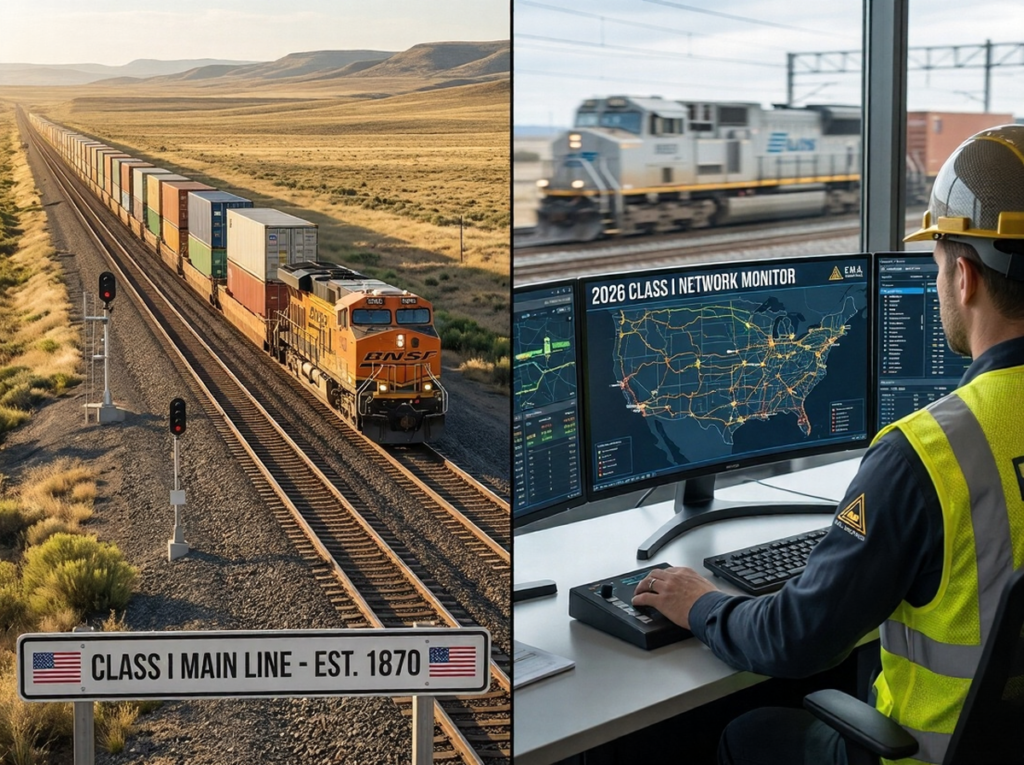
Class I Railroads in USA: What Are They, History, and Why Do They Matter in 2026
Class I railroads are the backbone of freight transportation in the United States, moving millions of tons of goods across...