
Sun Kink Railroad: Causes of Track Buckling & Prevention
A sun kink is a heat buckle in continuous welded rail. See the thermal force math, 49 CFR 213.119 CWR plan rules, slow orders and where NDT fits in.
Author
267 articlesPage 3 of 27
A sun kink is a heat buckle in continuous welded rail. See the thermal force math, 49 CFR 213.119 CWR plan rules, slow orders and where NDT fits in.
Slow order railroad rules under 49 CFR 213.113: verify within 4 hours, apply remedial actions A to I at 10, 30 or 50 mph, and a worked timeline to rail change.
FRA Part 213 sets no gauge face wear limit. See the 213.53 gage limits by class, where rail wear limits come from, how to measure wear and why it affects UT.
The Sperry rail car began induction rail testing in 1928. Ultrasonics followed from 1949, and FRA has required internal rail testing since 1971. Dated timeline.
49 CFR 213.237 requires internal rail testing every 370 days or 30 MGT on Class 4–5 track. Valid searches, failure limits, records and RFP tips explained.
Rail failure statistics from FRA data: 990 derailments in 2025, 1.85 per million train-miles, and why broken rails and welds lead track-caused main-line wrecks.
A slag inclusion is flux residue trapped between weld passes. Causes, prevention, the UT A-scan signature, and AWS D1.1, ASME VIII and B31.3 limits.
Lack of fusion in welds is a planar flaw that UT finds best with the beam normal to the bevel face. Probe angles, PAUT, TOFD and D1.1 and ASME acceptance.
Ultrasonic testing acceptance criteria by code: AWS D1.1 classes, ASME VIII and B31.3 length limits, API 1104 and 49 CFR 213.113 rail defects, worked through.
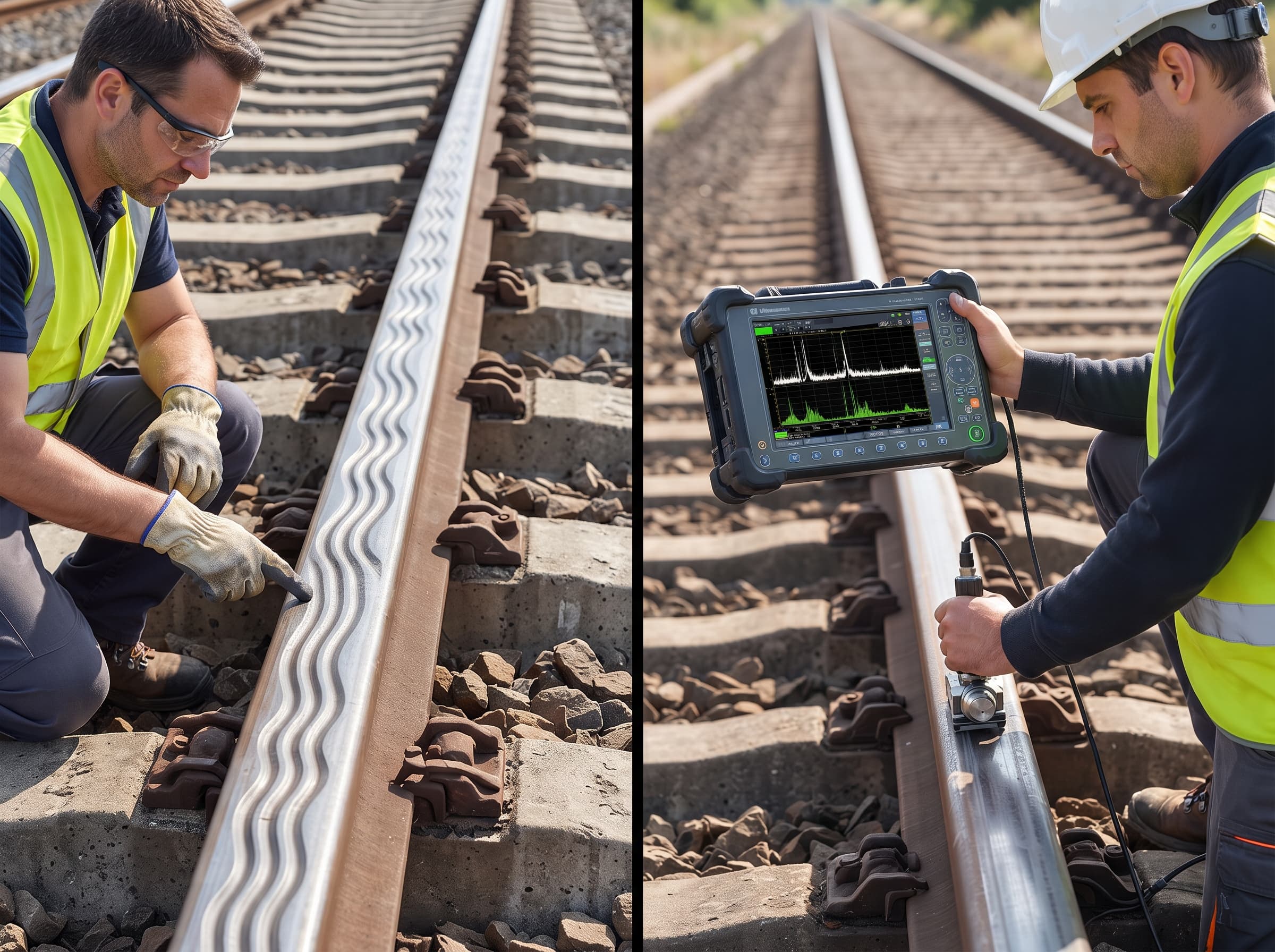
Corrugation on rail is a periodic wear pattern, often 1 to 3 in. long. How to measure it, turn train speed into frequency, and keep rail UT searches valid.