
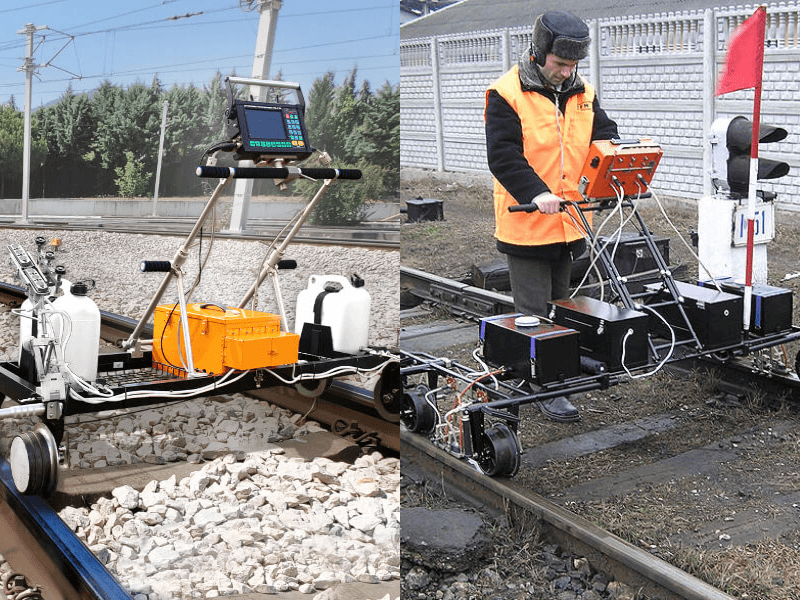
Is a tiny flaw in a railway track enough to cause a disaster? The answer is yes, and that’s why flaw detection is one of the most critical tasks in the railway industry. Even the smallest crack or defect can compromise the safety of trains, passengers, and cargo. As rail systems age and traffic increases, the need for reliable flaw detection methods has never been more urgent.
This article dives into the practical side of keeping railway infrastructure safe. You’ll learn about the most common rail defects, the latest rail flaw detection technologies, and proven rail inspection techniques used around the world.
From ultrasonic rail inspection to eddy current testing and other non-destructive testing in railways, we’ll walk through how each method works, what it detects, and where it fits into a complete rail track inspection strategy.
Whether you’re in engineering, maintenance, or rail operations, this guide will help you understand what keeps tracks safe, and trains running smoothly.
Common Types of Rail Defects
When it comes to flaw detection in railways, understanding the most frequent types of rail defects is the first step. These flaws, if left unchecked, can lead to derailments, delays, and costly repairs. While advanced rail inspection techniques help in identifying such issues early, it’s crucial to recognize where and how these defects form.1. Transverse Fissures
Transverse fissures are internal cracks that start from the center of the rail head and spread outward. They’re especially dangerous because they’re not visible on the surface, making them hard to spot without proper rail flaw detection tools like ultrasonic rail inspection. These fissures can grow with repeated stress from passing trains and eventually lead to rail breakage.2. Longitudinal Cracks
Unlike transverse fissures, longitudinal cracks run parallel to the length of the rail. These cracks often develop due to thermal stress, improper welding, or manufacturing defects. In high-speed rail networks, even a small longitudinal crack can rapidly expand, making regular rail track inspection essential.3. Head Checks and Squats
These are surface-level defects caused by repeated wheel-rail contact. Head checks appear as fine cracks on the rail head, while squats are slightly deeper deformations. Over time, they can propagate into more severe defects. Eddy current rail testing is particularly effective for identifying these types of flaws because of its sensitivity to surface and near-surface cracks.4. Bolt Hole Cracks
Bolt hole cracks form around the holes used to join rail sections. Stress concentrations and fatigue in these areas make them prone to cracking. They’re a leading cause of joint failures in older tracks. Specialized rail inspection techniques are needed to scan these critical zones during scheduled maintenance.5. Weld Defects
Welding is a common method to join rails, but it can introduce flaws like porosity, inclusions, or incomplete fusion. Poor welds compromise structural integrity and often require rework. Non-destructive testing in railways, especially ultrasonic testing, is widely used to assess weld quality without damaging the rail. Now that you know the most common rail defects, the next question is how do we detect them before they become dangerous? The answer lies in a powerful set of tools known as non-destructive testing.Non-Destructive Testing (NDT) Methods in Railways
Non-destructive testing (NDT) refers to techniques used to evaluate the condition of rail components without physically altering or damaging them. In the context of railway flaw detection, NDT is the gold standard for inspecting infrastructure while keeping operations running smoothly.Why NDT Matters in Rail Inspections
The railway environment is harsh, exposure to weather, vibrations, and continuous loads takes its toll. NDT allows for detailed flaw detection in rails, welds, and joints without the need to cut, dismantle, or disrupt traffic. This makes it ideal for both routine inspections and emergency checks. Key benefits of NDT include:- Detecting internal and surface defects before they become critical.
- Reducing downtime and avoiding unnecessary replacements.
- Enabling automated rail inspection using high-speed testing vehicles.
- Supporting better maintenance planning and asset life extension.
Advantages Over Destructive Testing
While destructive testing involves cutting or breaking components to examine them, NDT preserves the rail's usability. This is especially important for in-service tracks where interruptions can be costly. Some clear advantages of NDT include:- Safety: Inspections can be done while the rail is in use.
- Cost-efficiency: Less labor-intensive and no material waste.
- Speed: Fast detection of defects using tools like eddy current sensors and ultrasonic rail probes.
- Accuracy: High sensitivity to even microscopic flaws.
Ultrasonic Rail Inspection
Ultrasonic rail inspection plays a vital role in internal flaw detection within railway tracks. This non-destructive testing method is widely used to uncover defects that lie beneath the surface, areas where visual checks fall short. By using high-frequency sound waves, this technique identifies flaws such as transverse fissures, longitudinal cracks, and weld defects before they escalate into safety hazards. The principle behind ultrasonic testing is straightforward. A probe sends sound waves into the rail, and when these waves hit a flaw, they reflect back. These echoes are captured and analyzed to determine the size and location of the defect. This allows maintenance teams to act proactively and reduce the risk of derailments caused by internal rail issues. There are several ultrasonic testing methods used in rail defect detection, each with its own advantages:- Conventional Ultrasonic Testing (UT): Uses a single probe to emit and receive sound waves. While cost-effective, it provides limited detail and coverage.
- Phased Array Ultrasonic Testing (PAUT): Employs multiple elements in a probe to scan multiple angles, producing clearer and more detailed images.
- Electromagnetic Acoustic Transducers (EMAT): Generates ultrasonic waves using electromagnetic fields, useful for testing rails without surface preparation or couplants.
- Laser Ultrasonic Testing (LUT): A contactless method using lasers to send and detect ultrasonic waves. Still in development for widespread field use, it shows promise for automated rail systems.
Eddy Current Rail Testing
While ultrasonic inspection looks beneath the surface, eddy current rail testing is focused on detecting surface-level and shallow flaws. It's a fast and efficient technique used to spot early signs of damage, including fatigue cracks, head checks, and corrosion. This method operates by inducing an electromagnetic field into the rail using a probe. When the current encounters a defect, the flow is disrupted. These disruptions are measured and used to identify the presence and nature of flaws. The advantage? It’s completely non-contact, making it ideal for rail inspection techniques that involve continuous scanning or rough surfaces. Eddy current testing is especially effective for:- Detecting cracks in the rail head and gauge corner.
- Spotting corrosion and pitting damage.
- Inspecting bolt holes and weld edges for micro-cracks.
Magnetic Flux Leakage (MFL) and Other Electromagnetic Techniques
In railway maintenance, flaw detection goes beyond just visual and ultrasonic methods. Magnetic Flux Leakage (MFL) is another powerful tool used to identify both surface and subsurface rail defects, especially in regions prone to corrosion, cracks, or material loss. MFL works by magnetizing a section of rail. When there's no defect, the magnetic field flows uniformly. But when the field encounters a flaw, such as a crack or void, it "leaks" from the surface. Sensors detect this leakage and convert it into signals that reveal the size and location of the defect. This method is particularly useful for:- Detecting corrosion pits in rail webs and heads.
- Identifying deep flaws that may go unnoticed in visual inspections.
- Scanning large sections of track quickly.
- Non-contact testing with minimal surface preparation.
- Capability to detect both surface and shallow subsurface flaws.
- Faster scanning speeds compared to manual NDT methods.
Visual and Optical Inspection Methods
Despite the growing use of high-tech rail inspection tools, visual inspection remains the first line of defense in railway maintenance. Maintenance crews regularly walk the tracks, visually checking for wear, deformation, cracks, and misalignment. This low-tech method is often used to spot immediate safety concerns or confirm findings from advanced rail inspection techniques. Visual checks help detect:- Surface wear and scarring.
- Broken or loose bolts and joints.
- Signs of fatigue near welds and joints.
- Continuous monitoring over long distances.
- Objective, repeatable inspections not affected by human fatigue.
- Real-time alerts for visible defects like squats, cracks, or wear.
Advanced Thermal and Acoustic Techniques
As rail infrastructure evolves, so do the tools for detecting subtle and early-stage defects. Thermal and acoustic methods have emerged as valuable assets in the pursuit of precise flaw detection, especially for detecting cracks invisible to the naked eye or conventional testing. One such innovation is Inductive Thermography. This method involves applying an alternating current to the rail, which generates heat due to eddy currents. Surface cracks and head checks disrupt the heat flow, creating temperature anomalies that can be captured using infrared cameras. This allows inspectors to identify shallow, surface-breaking defects quickly and with minimal contact. Benefits of inductive thermography include:- High-speed scanning capability.
- Excellent sensitivity to surface-level flaws.
- Ability to inspect rails without removing coatings or paint.
- Identifying growing fatigue cracks in real time.
- Monitoring weld joints under stress.
- Locating hard-to-see internal flaws during live loading.
Automated and High-Speed Inspection Systems
Modern rail networks demand fast, accurate, and continuous flaw detection across long distances. Manual inspections, while essential, are no longer sufficient on their own. That’s why the development of automated rail inspection systems, especially high-speed vehicles equipped with multiple non-destructive testing (NDT) tools, has transformed the landscape. Today’s rail inspection vehicles use a mix of technologies, including:- Ultrasonic rail inspection
- Eddy current rail testing
- Thermal and optical imaging
- Magnetic flux leakage systems
- Real-time data collection and defect mapping.
- Reduction in human error and inspection time.
- Enhanced safety through early detection and preventive maintenance.
Challenges and Future Directions in Rail Flaw Detection
Rail flaw detection has come a long way, yet it still faces key challenges that limit its effectiveness in ensuring long-term track safety. While current rail inspection techniques such as ultrasonic testing, eddy current rail testing, and magnetic flux leakage offer impressive accuracy, they are not without drawbacks. One major limitation is the incomplete detection of subsurface flaws. For instance, visual and optical methods can miss early-stage internal defects, and even advanced NDT tools like EMAT or AET may struggle with complex rail geometries or environmental interference. Moreover, many techniques require skilled operators and frequent calibration, which can slow down large-scale inspections and add to operational costs. Additionally, data interpretation remains a bottleneck. Although modern systems generate massive amounts of inspection data, converting that data into actionable insights demands robust analytics and experienced personnel. Misinterpretations can lead to either unnecessary maintenance or missed threats, both of which carry significant consequences. But the future of railway flaw detection looks promising. Researchers and engineers are now exploring emerging technologies that combine speed, sensitivity, and automation. For example:- AI-powered defect classification systems that reduce false positives and improve pattern recognition.
- Hybrid inspection platforms that merge ultrasonic, thermal, and electromagnetic testing for holistic coverage.
- Drones and robotic crawlers that can access hard-to-reach areas without disrupting rail service.
- Digital twin models to simulate and predict defect progression based on real-time inspection data.
Conclusion
Railways are more than just steel tracks and moving trains, they’re lifelines that carry economies, connect cities, and keep people moving safely every day. Behind this seamless operation is a constant, invisible battle against wear, pressure, and time. And at the heart of that fight is flaw detection. What was once a slow, manual task has evolved into a sophisticated system of sensors, data, and precision engineering. From ultrasonic rail inspection to AI-powered visual systems, the tools we use today are a reflection of how seriously we take rail safety. Yet, even with all this progress, there’s no room for complacency. The next leap in railway safety won't come from one perfect method, it will come from how well we integrate, automate, and innovate across every part of the inspection process. Whether it’s a surface-level crack or a hidden weld defect, detecting it early can mean the difference between business as usual and a catastrophic failure. In the end, flaw detection isn’t just about technology, it’s about responsibility. And with every scan, test, and data point, we’re making the rails safer for everyone who depends on them.Key Points
- Flaw detection is critical for identifying both surface and internal defects in rail tracks before they pose safety risks.
- Common rail defects include transverse fissures, longitudinal cracks, head checks, bolt hole cracks, and weld defects, each requiring specialized inspection methods.
- Non-destructive testing (NDT) methods like ultrasonic, eddy current, and magnetic flux techniques are preferred over destructive testing due to their efficiency and safety.
- Ultrasonic rail inspection is effective for internal flaw detection, using sound waves to identify issues within the rail material; it includes methods like conventional UT, Phased Array, EMAT, and laser UT.
- Eddy current testing is used to detect surface and near-surface flaws such as corrosion and fatigue cracks, especially in high-stress rail areas.
- Magnetic Flux Leakage (MFL) and Alternating Current Field Measurement (ACFM) detect surface and subsurface flaws using electromagnetic principles and are valued for their speed and sensitivity.
- Visual and optical inspections remain foundational for routine rail maintenance, and machine vision has enhanced these methods, though they are limited in subsurface flaw detection.
- Thermal and acoustic techniques, such as inductive thermography and acoustic emission testing, are increasingly used for real-time and dynamic flaw monitoring.
- Automated and high-speed inspection systems like the GTC-80X integrate multiple NDT methods, enabling faster, more accurate flaw detection across large rail networks.
- Ongoing innovation, including AI, robotics, and predictive analytics, is essential to overcoming current limitations and ensuring safer, more efficient railway operations.