
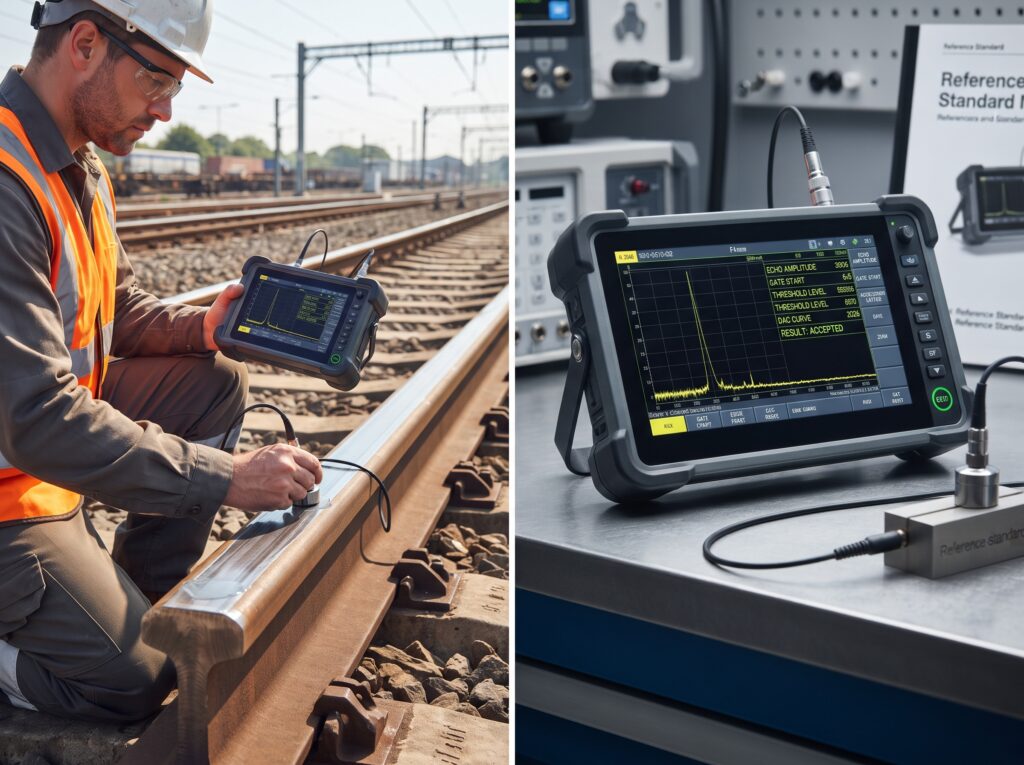
Ultrasonic testing acceptance criteria becomes particularly important in 2026, as several ultrasonic testing standards are now available in updated editions....
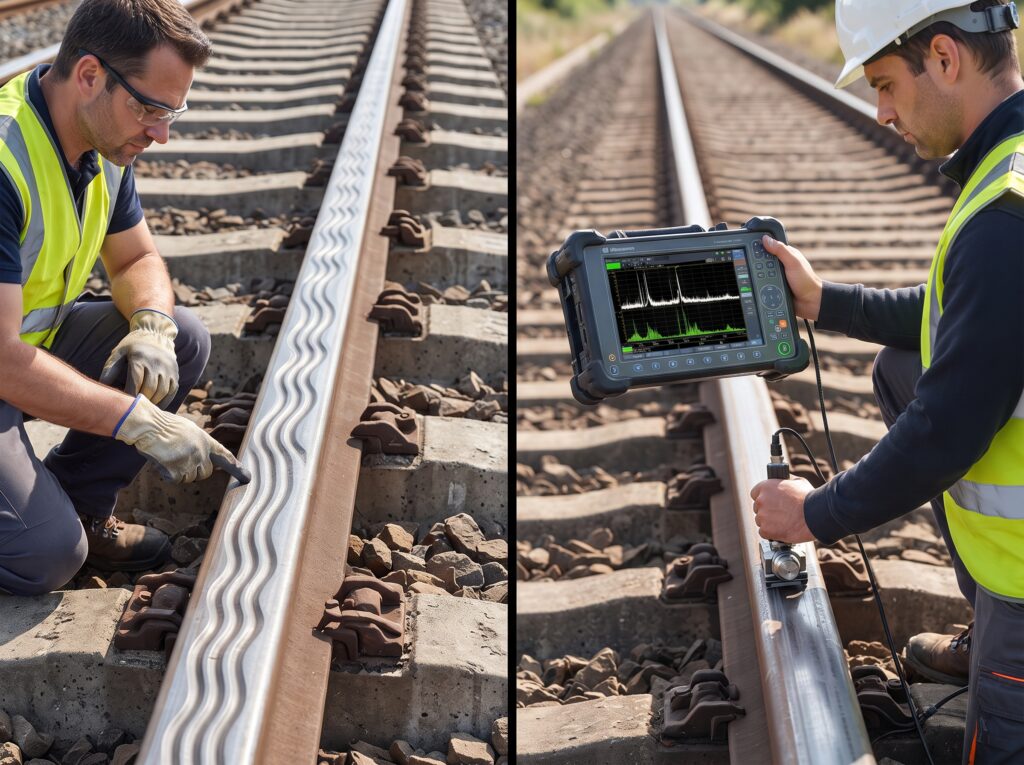
Corrugation on Rail: Causes, Measurement & Impact in 2026
Corrugation on rail is one of the most recognisable forms of rail-surface deterioration, yet its causes are far more complex...
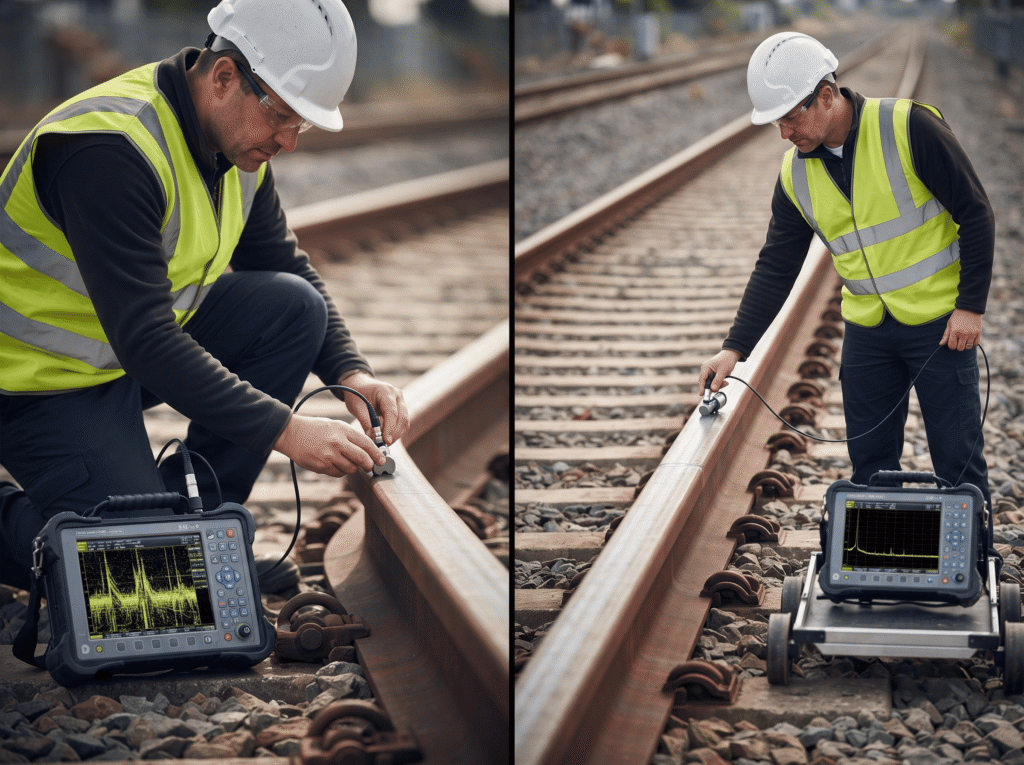
Near Field vs Far Field in UT: What Inspectors Must Know
In ultrasonic testing, Near Field vs Far Field in UT describes two distinct regions of the sound field produced by...
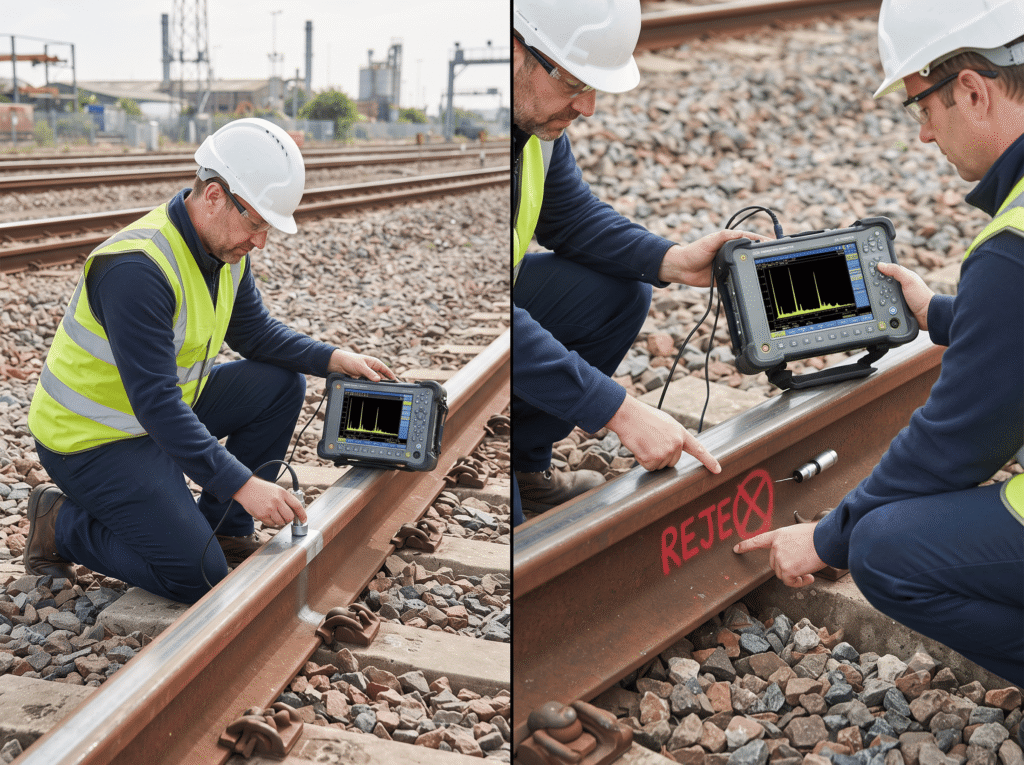
Ultrasonic Testing Acceptance Criteria: Reject Levels
A weld can look flawed on an ultrasonic screen and still pass. That’s the part most people outside the trade...
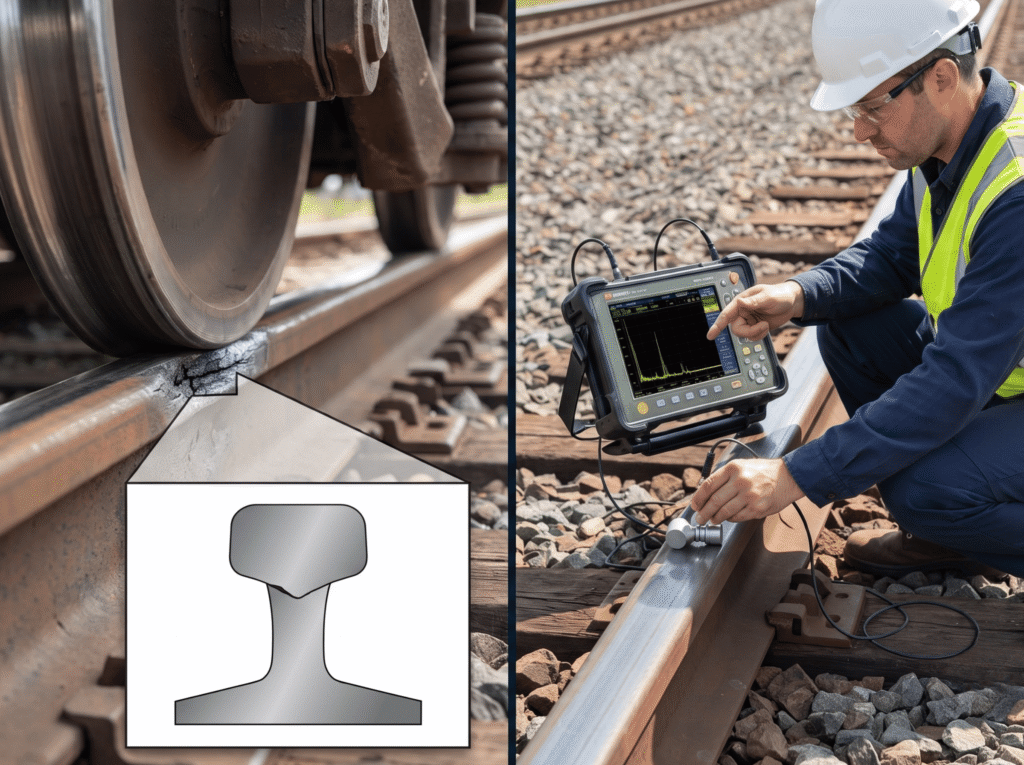
Transverse Fissure in Rail: Causes, Detection & Analysis
Transverse Fissure in Rail represents one of the most critical safety challenges facing modern railway systems. This progressive crosswise fracture...
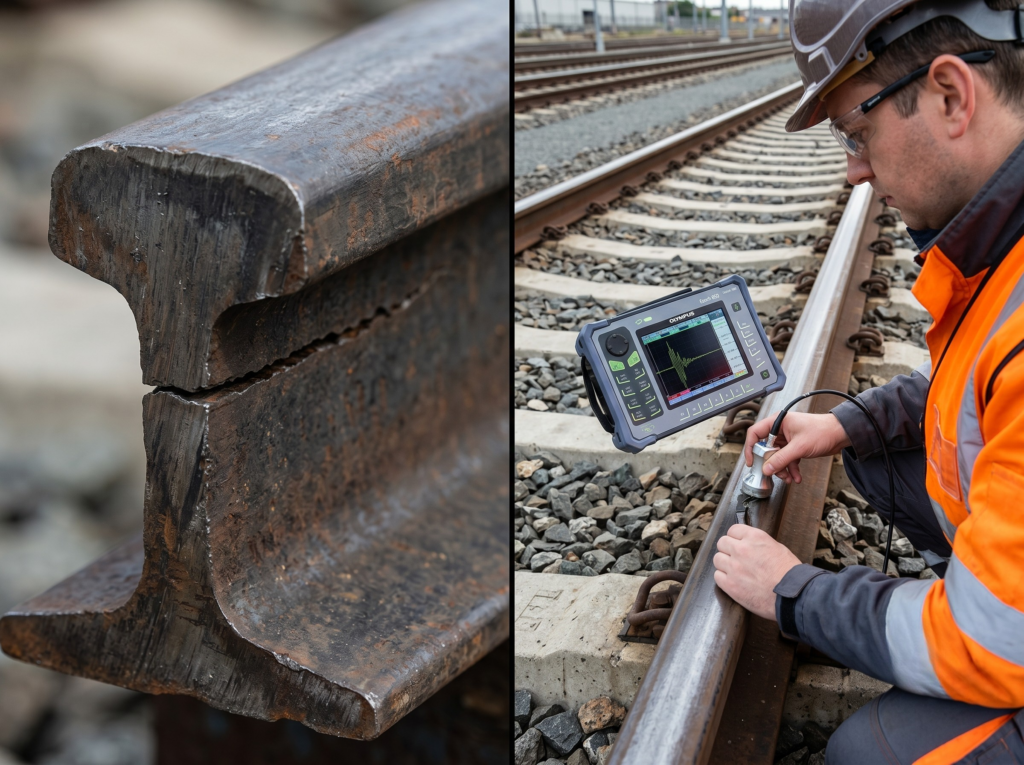
Horizontal Split Head Rail: What It Is and How Ultrasonic Testing Finds It
Rail safety depends on catching hidden problems before they become catastrophes. A horizontal split head rail represents one of the...
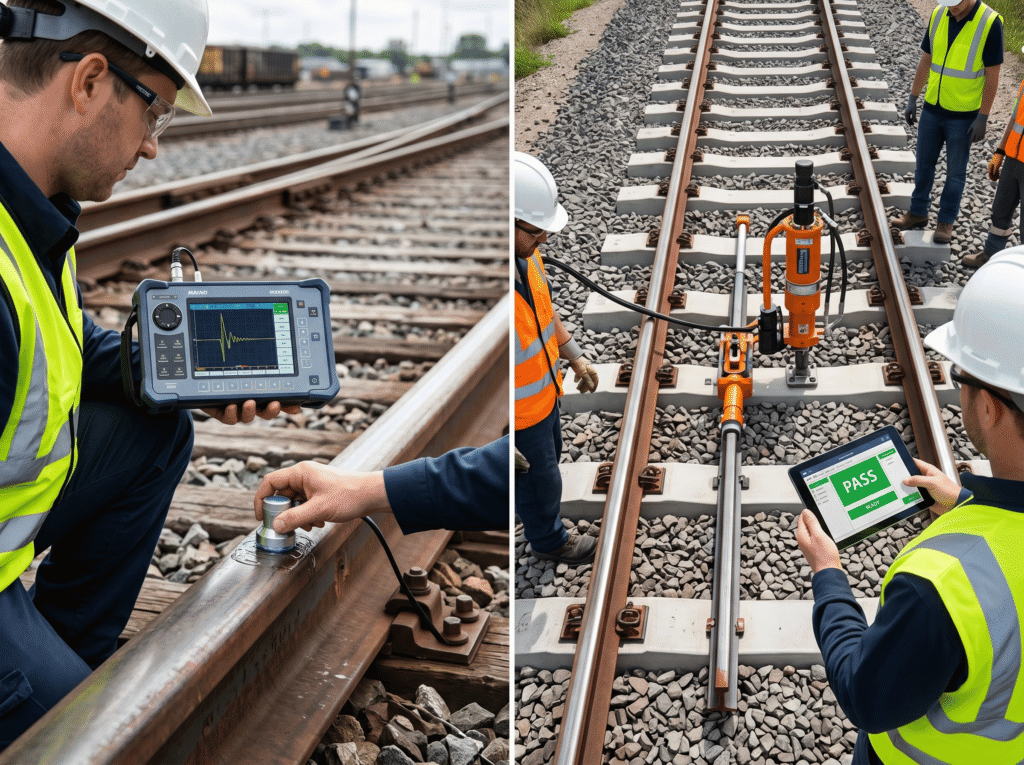
Railroad Failure Analysis: Ultrasonic Testing & Prevention
Every year, thousands of derailments occur on railroad networks, causing deaths and billions in damages. Railroad failure analysis represents the...
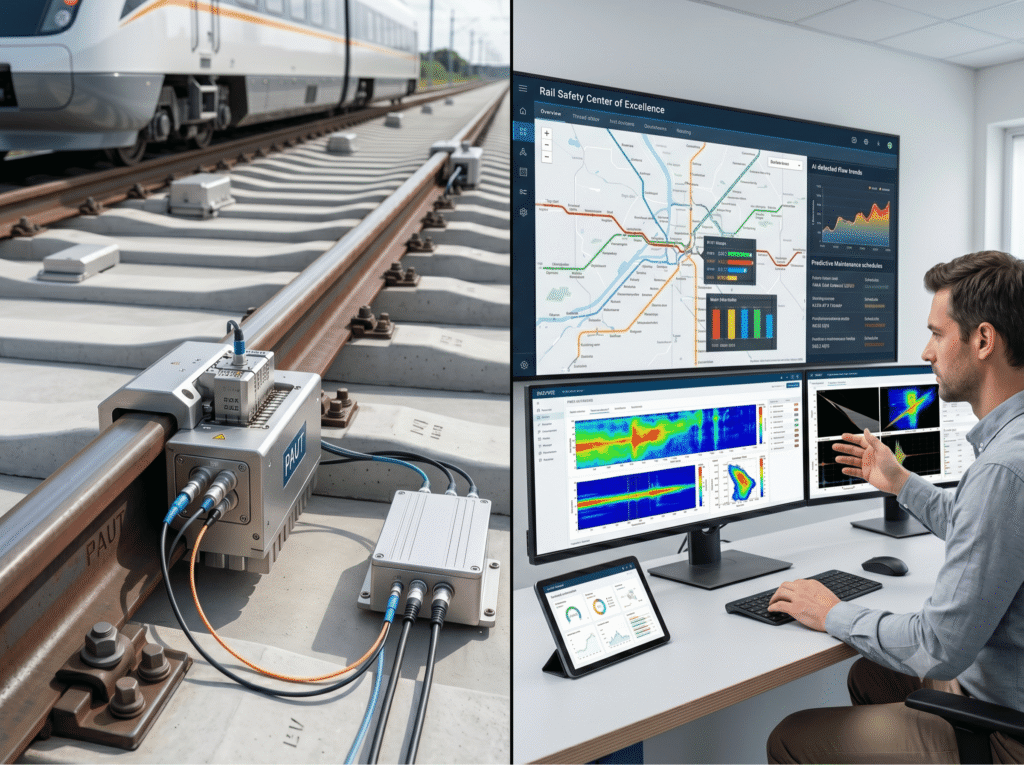
Ultrasonic Testing Technology Rail Safety Complete Guide
Railway systems transport millions of people every single day across the globe. Safety remains the top priority for every railway...
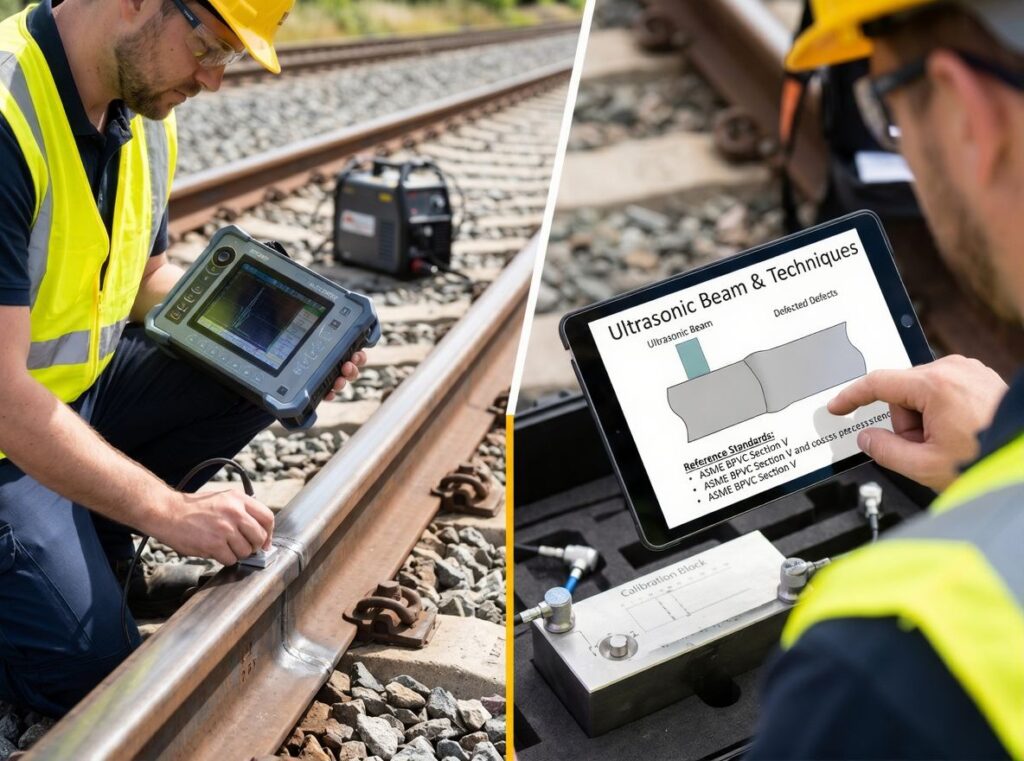
Flash Butt Weld Inspection: Ultrasonic Testing Standards
Flash butt weld inspection stands as a critical process in ensuring the strength and reliability of welded joints across demanding...
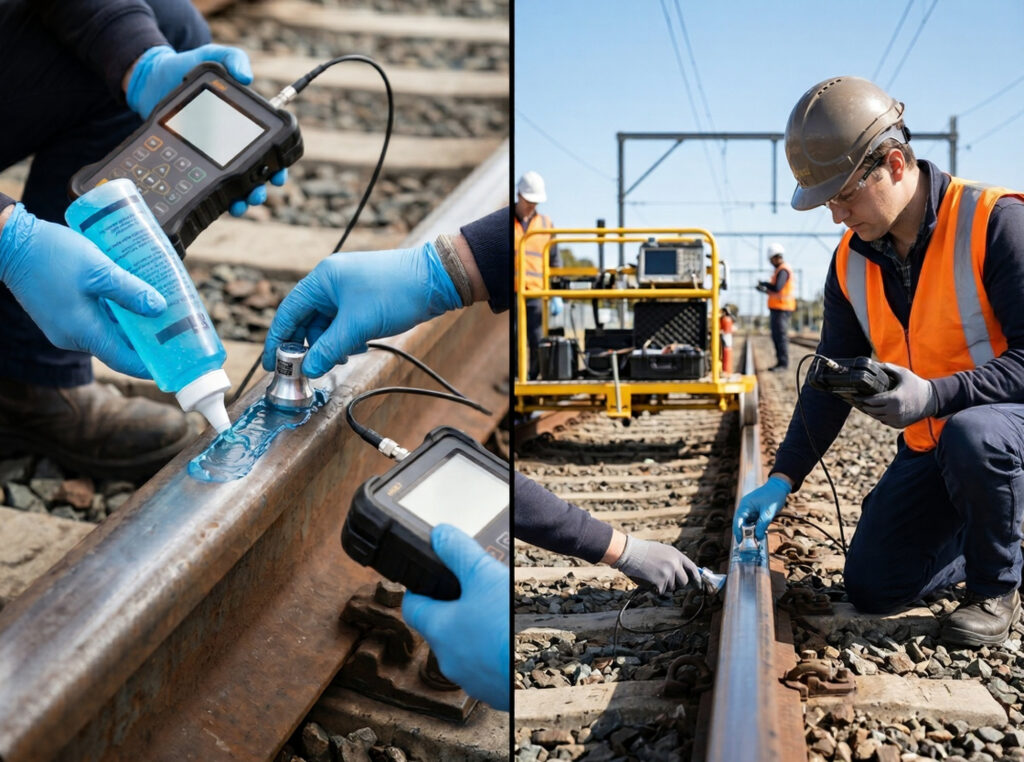
Ultrasonic Couplant for Rail Inspection: Selection, Field Performance, and Best Practices
Rail inspection failures often trace back to something surprisingly small: poor acoustic contact. Ultrasonic couplant plays a critical role in...
- 1
- 2