
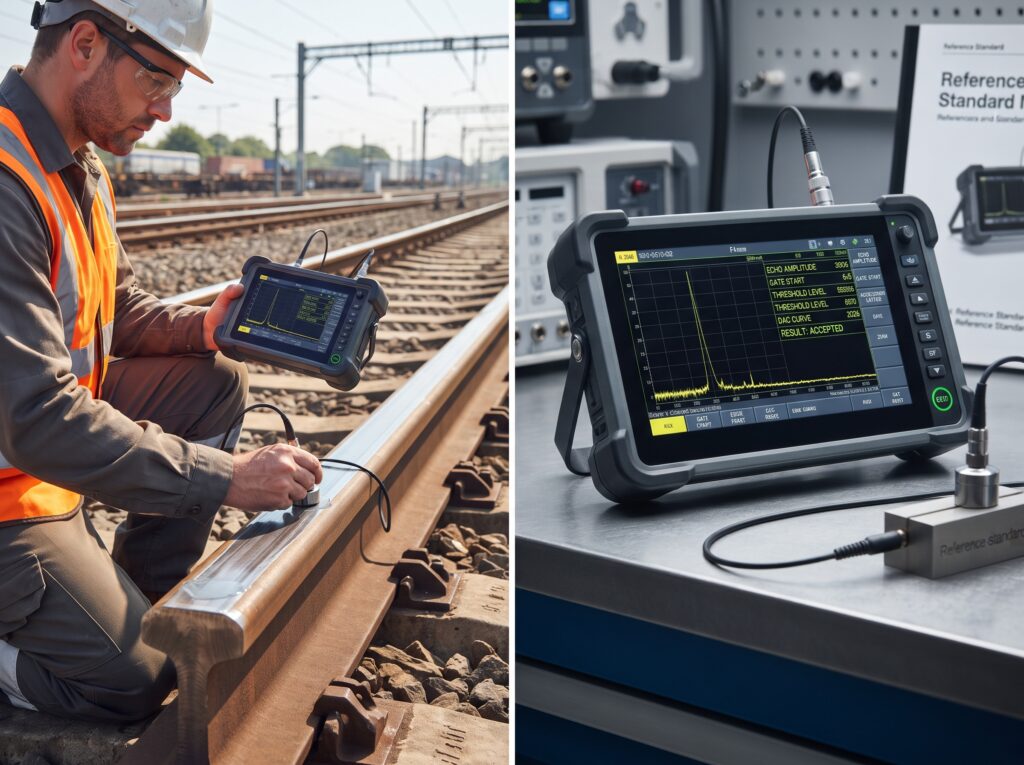
Ultrasonic testing acceptance criteria becomes particularly important in 2026, as several ultrasonic testing standards are now available in updated editions....
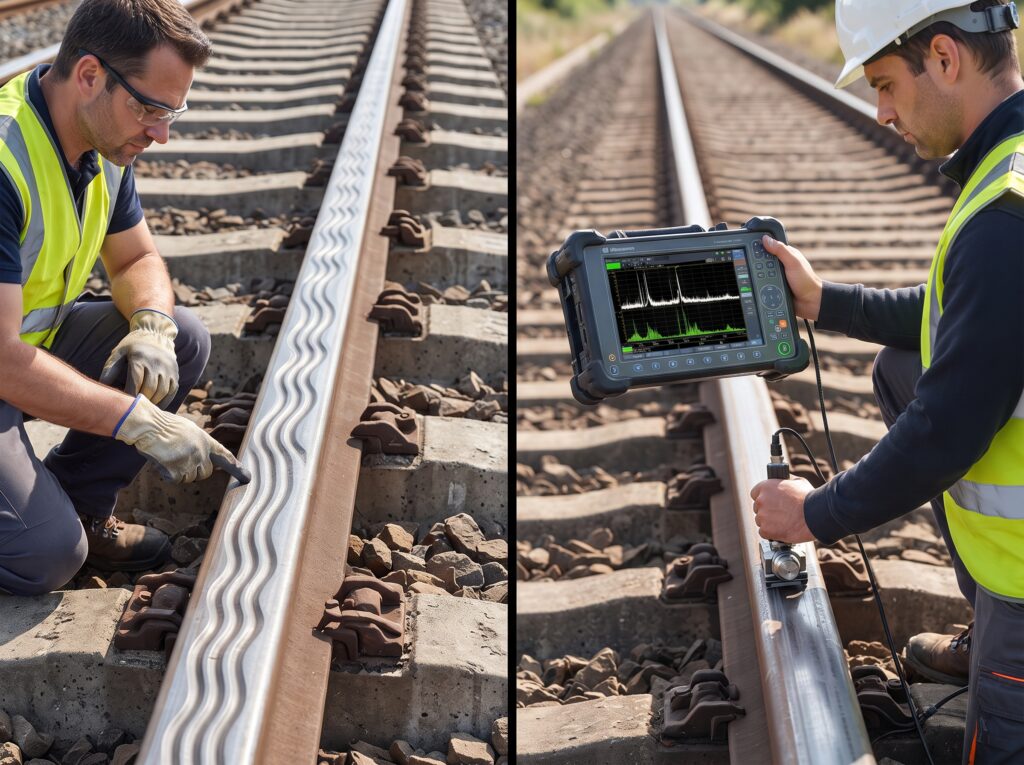
Corrugation on Rail: Causes, Measurement & Impact in 2026
Corrugation on rail is one of the most recognisable forms of rail-surface deterioration, yet its causes are far more complex...
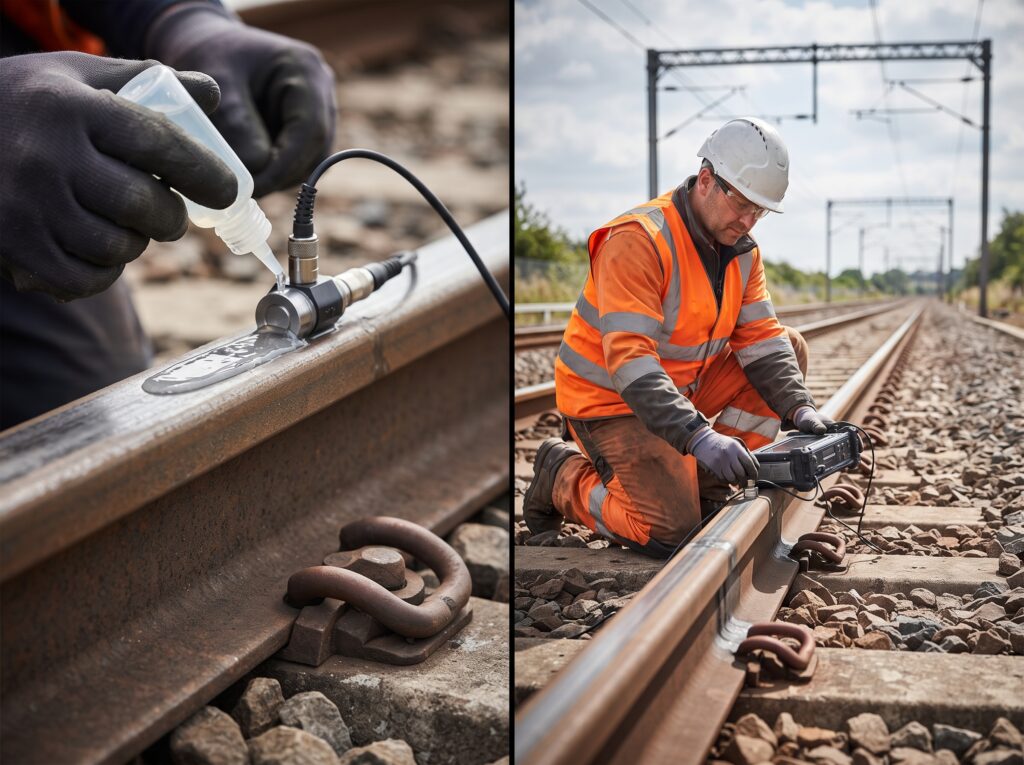
Ultrasonic Rail Inspection Checklist: 10 Best Practices
An ultrasonic rail inspection checklist gives inspection teams a structured way to detect hidden rail defects before those defects develop...
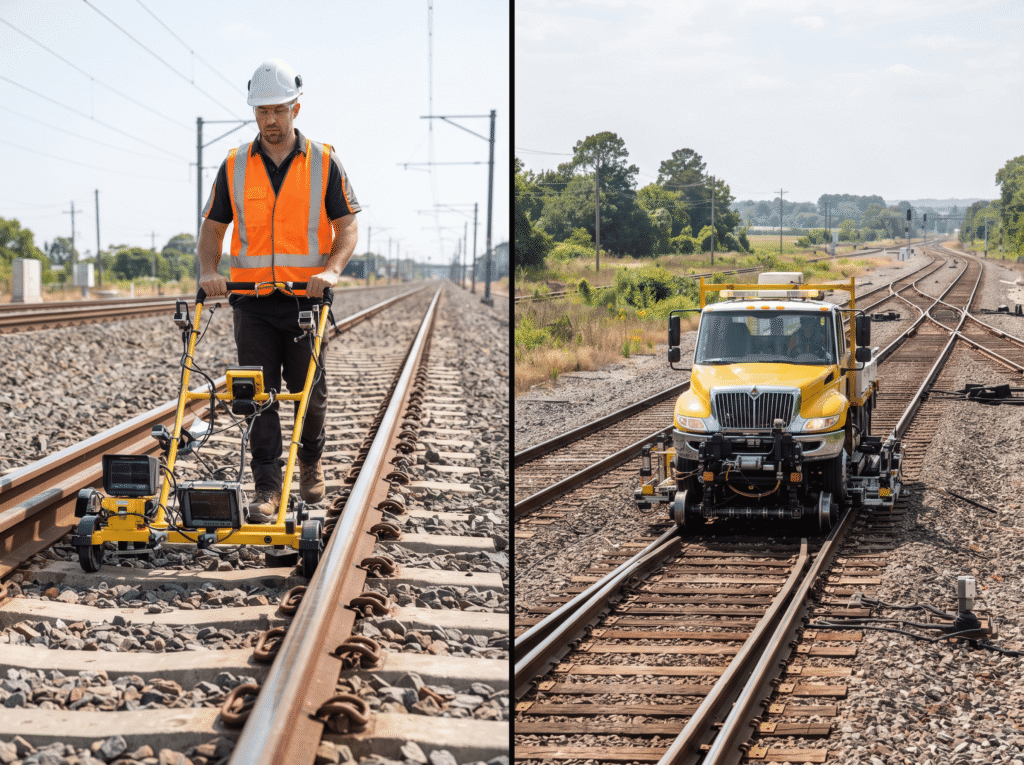
How Often Must Rail Be Tested? Rail Testing Frequency Requirements
Rail testing frequency requirements play a central role in keeping railroad infrastructure safe, reliable, and fit for continued service. Requirements...
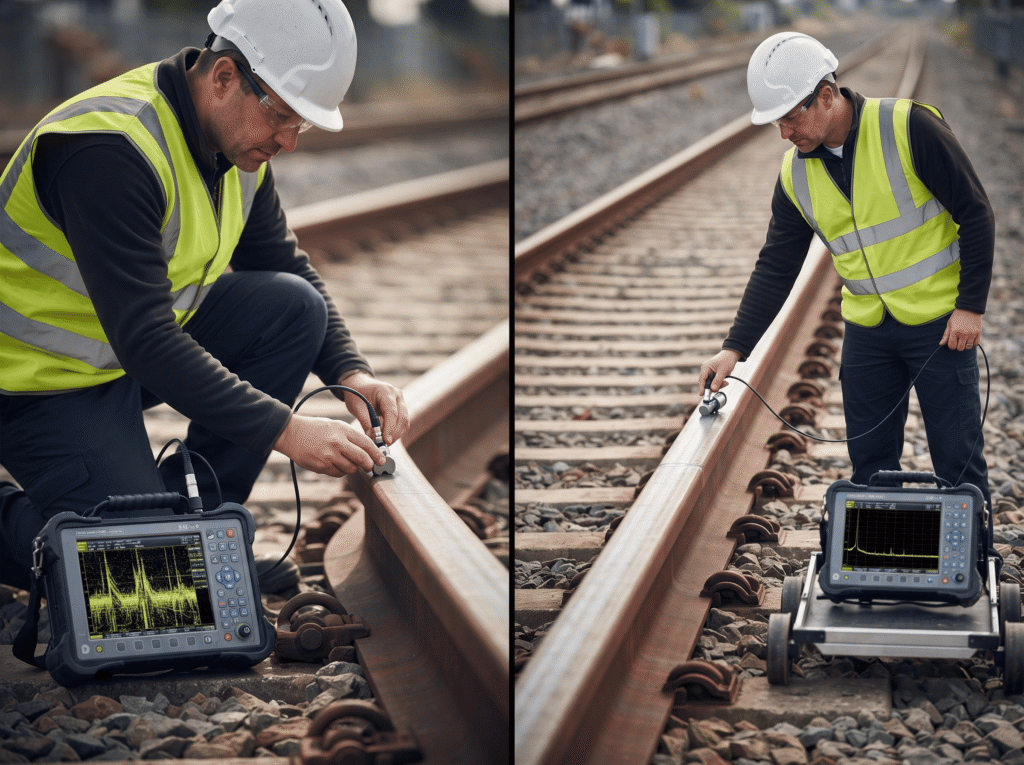
Near Field vs Far Field in UT: What Inspectors Must Know
In ultrasonic testing, Near Field vs Far Field in UT describes two distinct regions of the sound field produced by...
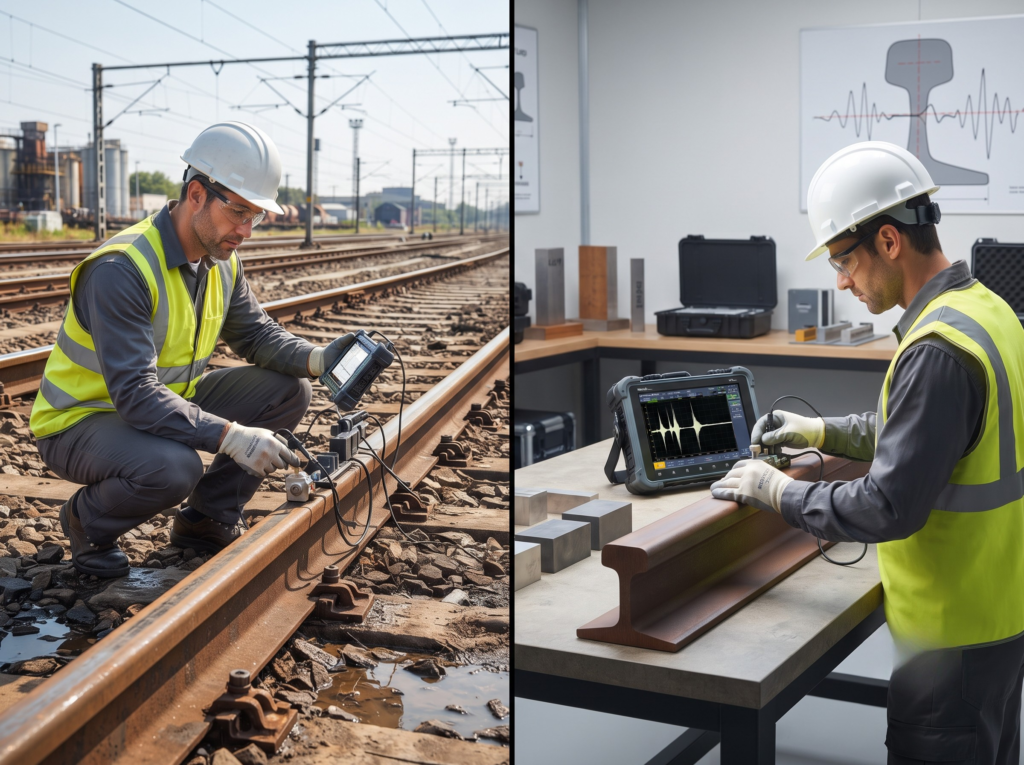
False Calls in Rail UT: Critical Causes and Solutions 2026
A signal appears on an ultrasonic rail inspection system, but does it always mean there is a defect in the...
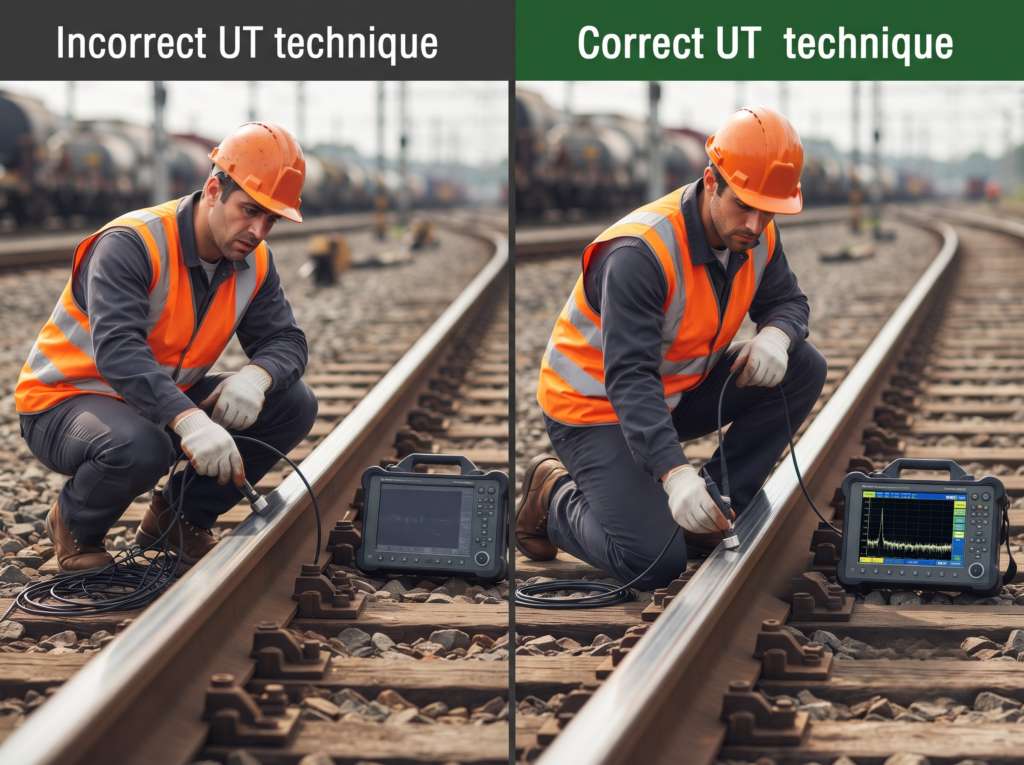
Ultrasonic Testing Mistakes & How to Avoid Them in 2026
Ultrasonic rail inspection plays an important role in identifying internal defects that may not be visible during a routine visual...
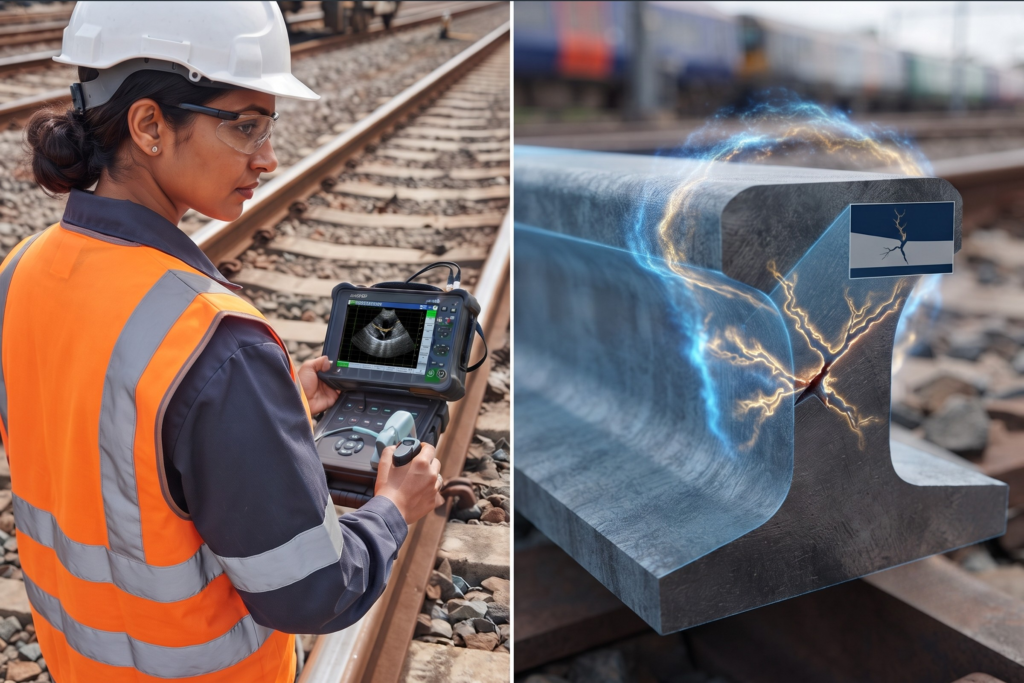
Surface Wave UT for Rail: Detecting Cracks Others Miss
Railways take a beating every single day. Heavy axle loads, changing weather, constant vibration, and millions of wheel passes slowly...
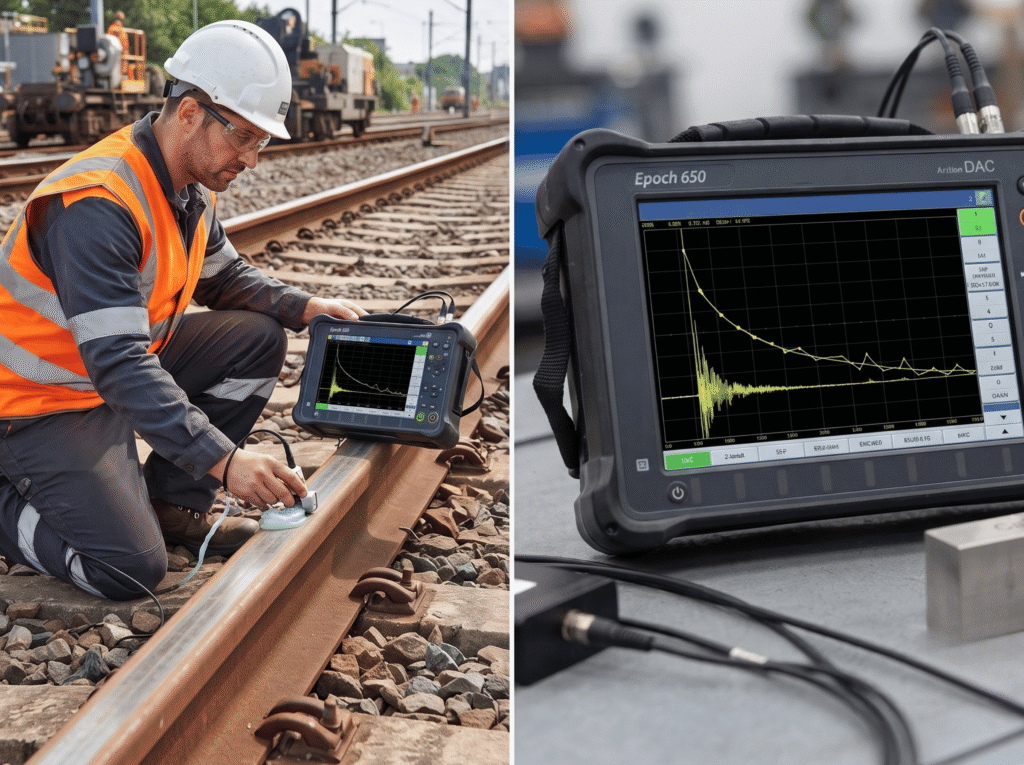
DAC Curve Ultrasonic Testing: Distance Amplitude Correction
A DAC curve ultrasonic testing procedure is one of the most reliable calibration methods used to improve flaw detection accuracy...
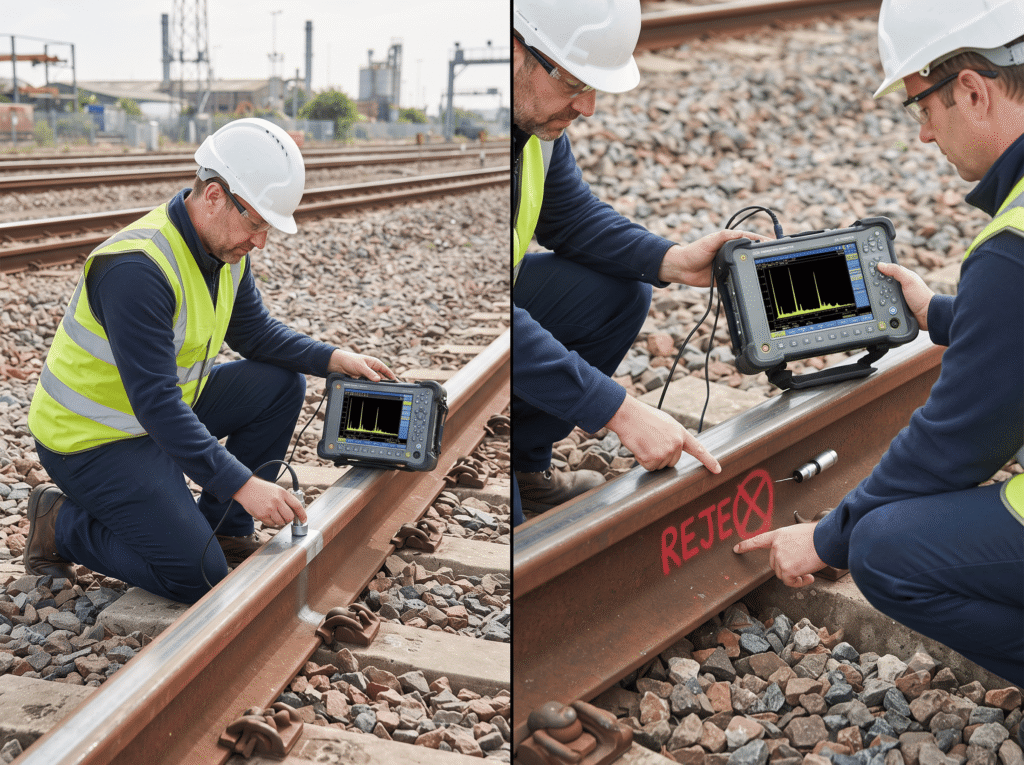
Ultrasonic Testing Acceptance Criteria: Reject Levels
A weld can look flawed on an ultrasonic screen and still pass. That’s the part most people outside the trade...